
The Clorinda F1 eggplant is a mid-early Dutch hybrid with consistently high yields and large, classic dark purple fruits. Let's learn what makes this hybrid variety special and the specifics of its cultivation.
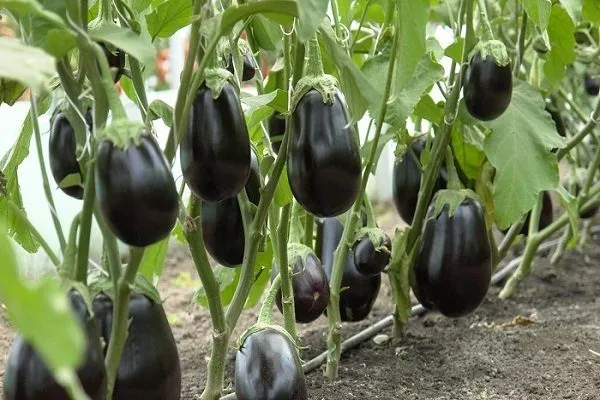
The Clorinda eggplant tolerates adverse weather conditions.
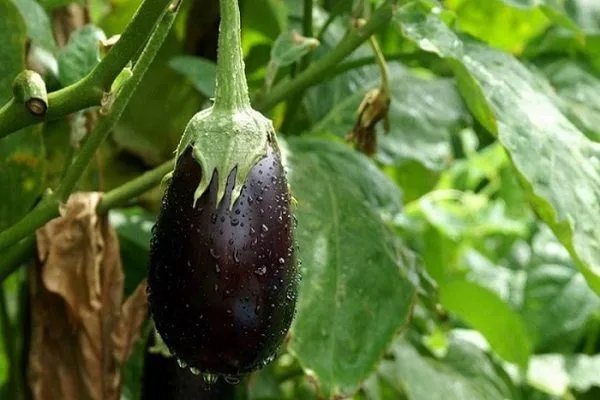
The Clorinda eggplant has a small number of seeds.
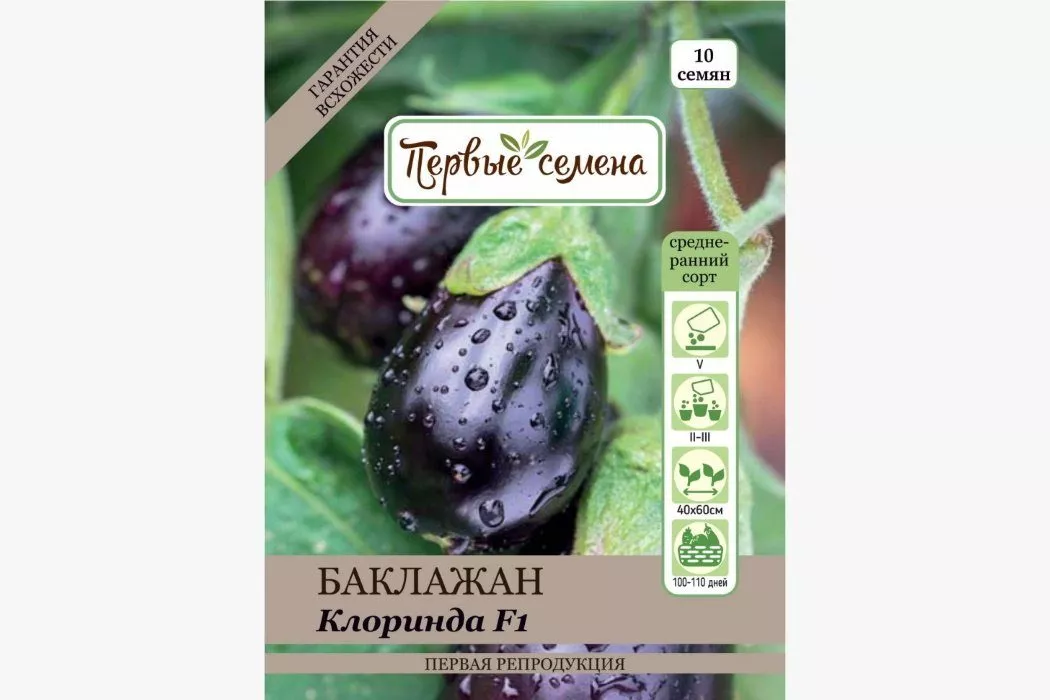
Eggplant Clorinda
Description of the culture
Clorinda F1 is an early-ripening, versatile hybrid developed by Dutch breeders. It grows equally well both under cover and in the open ground.
The Dutch hybrid "Clorinda" is included in the State Register and is suitable for cultivation in all regions of Russia.
Brief description:
- Bush. Semi-spreading, upright, it reaches a height of 70-80 cm. Under cover, it grows up to 90 cm. The stems are purple, pubescent, with short internodes. The leaves are medium-sized, with serrated edges.
- Fruit. The shape is oval or oval-pear-shaped. The color is dark purple, the skin is glossy. The length of the fruit is 12-20 cm. The flesh is white, dense, and practically seedless.
Main characteristics of the hybrid "Clorinda":
| Characteristics/parameters | Description/Meaning |
| Ripening time | From the day of planting to ripening it takes 110 days |
| Productivity | 2.2 kg per 1 sq. m – in open ground, 3.2-6 kg – in a greenhouse |
| Fruiting | Long-lasting, bears fruit until frost |
| Fruit weight | 250-300 g, maximum – 1 kg |
| Taste | No bitter taste |
| Application | Universal |
| Disease resistance | High, has immunity to tobacco mosaic virus |
| Resistance to adverse conditions | Tall, tolerates cold weather well |
Advantages and disadvantages of the variety
The numerous advantages of the Clorinda variety allow gardeners to overlook some of its shortcomings.
Pros:
- able to grow in temperate climates;
- withstands adverse weather conditions;
- tasty fruits;
- high and stable yields;
- there are few seeds in the pulp;
- can grow in open ground, in hotbeds and greenhouses;
- high immunity, especially resistant to viral diseases;
- long fruiting;
- The bushes require almost no shaping.
Cons:
- seeds are expensive;
- It is impossible to collect seeds yourself, since hybrids do not pass on their varietal characteristics to future generations.
Growing Clorinda seedlings
It is recommended to grow the 'Klorinda' eggplant using seedlings. Sowing seeds directly into the ground is only possible in southern Russia, as the delicate seedlings do not tolerate sudden temperature fluctuations or cold snaps.
Optimal timing
Seedlings are usually grown indoors. The sowing time is determined by counting two months from the expected transplanting date. Eggplant seedlings It grows in 60-75 days, and if the weather does not allow you to plant it on time, you will have another half month in reserve.
Sowing eggplant seeds for seedlings is done from the end of February to mid-March.
Selection and preparation of soil
Planting soil is purchased at a local organic store. This substrate has a balanced composition and contains all the nutrients necessary for growth. Seedlings planted in store-bought soil don't require additional fertilizer—they have sufficient nutrients until they're ready to be planted.
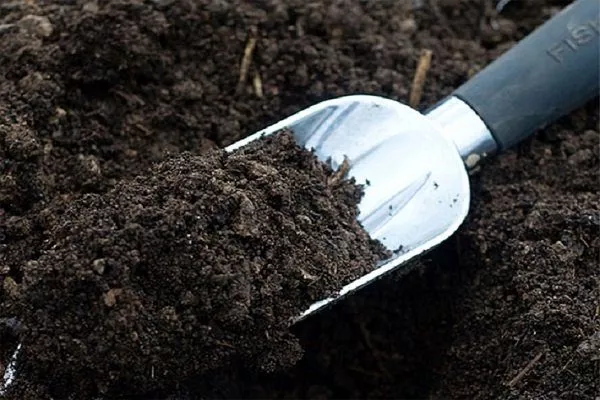
If it is not possible to purchase a substrate, prepare a soil mixture by mixing:
- peat – 6 parts;
- sand – 1/2 part;
- compost – 2 parts;
- turf – 1 part.
The soil for seedlings can be prepared in advance, starting in the fall. Store it at temperatures below 0°C.
Freshly prepared soil mixture must be sterilized by heating before planting. Place it in the oven, spread it out to a 5 cm layer, and set the temperature to no more than 70°C and 90°C.
After calcination, the soil is completely disinfected, but needs to be restored – it is allowed to rest for 2-3 weeks before sowing the seeds.
Seed preparation
Eggplant seeds are sold ready to sow—they're already treated and disinfected. If the packaging doesn't indicate treatment, you'll have to do it yourself.
Preparing seeds for sowing:
- Disinfection. Immerse the seeds in a 1% solution of potassium permanganate for 20 minutes.
- Stratification. Place disinfected seeds in hot water (+50 °C) for 30 minutes.
- Stimulation. Immediately before planting, soak the seeds in a growth stimulant, such as Epin. Many gardeners use aloe vera juice or 3% hydrogen peroxide heated to 40°C as a growth stimulant. Soak the seeds in aloe vera for 24 hours, and in hydrogen peroxide for 10 minutes.
- ✓ Optimum soil temperature for seed germination: +25…+28 °C.
- ✓ Required seeding depth: 1 cm.
Sowing seeds
Seeds are sown in disinfected containers filled with soil. Trays or individual cups are most convenient for planting, as they eliminate the need for picking.
A less desirable option is sowing in containers. Sow the seeds densely, and when two cotyledon leaves appear, transplant them into larger containers.
Sowing seeds in individual containers:
- Moisten the cups filled with soil.
- Plant 1-2 seeds in each cup. Center the seeds and press them 1 cm deep.
- Cover the seeds with soil and cover the crops with transparent material to create a favorable microclimate for them.
- Place the seeds in a warm place. The optimal temperature is between 25 and 28°C.
- Ventilate the crops daily to remove condensation that accumulates on the film or glass. Water the soil as it dries; overwatering is absolutely necessary.
- Seedlings will emerge within 10-15 days of sowing. When this happens, remove the plastic or glass cover and move the seedlings to the sunniest spot.
According to reviews, "Clorinda" has a 100% germination rate, so it's best to plant only one seed, as the second sprout will still need to be pinched.
Caring for seedlings
To grow strong, healthy, and viable seedlings, you need to not only care for them—water and feed them—but also create favorable growing conditions—temperature, light, etc.
Features of caring for Clorinda seedlings:
- Temperature. For 2-3 days after the first sprouts appear, the daytime temperature is reduced to 16 to 18°C. Then it is raised again to 24 to 25°C. Nighttime temperatures are maintained at 14 to 15°C. The seedlings should have access to fresh air, but drafts are not allowed.
- Lighting. The optimal daylight hours for 'Clorinda' are the same as for all eggplants: 12-14 hours. If necessary, the seedlings can be illuminated with fluorescent or phytolamps. These are turned on in the mornings and evenings. If the weather is cloudy, the lamps are also turned on during the day. The distance from the lamps to the seedlings should be 30-50 cm.
The duration of illumination should not exceed 14 hours, otherwise the plants will begin to grow green mass and will not produce ovaries. - Watering. Water the seedlings sparingly, only at the roots. Sprinklers are not recommended for eggplants. When watering, maintain a moisture balance, avoiding either drying out or overwatering.
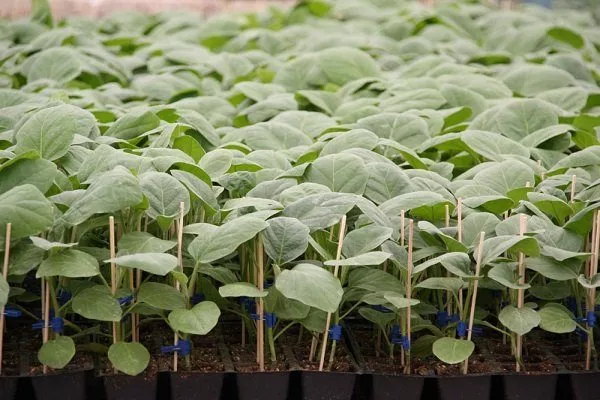
- Picking. Seedlings sown in rows in containers require picking. They are transplanted when the seedlings have developed one or two true leaves. The seedlings are then transplanted into individual containers. Before picking, the soil should be moistened to make the seedlings easier to remove.
- Top dressing. The first time seedlings are fed is two weeks after germination. If seedlings are transplanted, the feeding is done two weeks after transplanting. What to feed seedlings with:
- First feeding. You can feed the plants with potassium nitrate (30 g per 10 liters of water) or Kemira-Lux (20-30 g per 10 liters of water). Another option is to dilute ammonium nitrate (5 g), superphosphate (15 g), and potassium sulfate (10 g) in a bucket of water.
- Second feeding. You can feed the plants with organic matter. Apply it 10 days after the first feeding. You can also prepare a chicken manure solution by mixing the manure infusion with water at a ratio of 1:15.
- Third feeding. A week before planting, fertilize the seedlings with superphosphate and potassium salt. Dissolve 70 g and 30 g of each in 10 liters of water.
- Hardening. Ten to fourteen days before transplanting into open ground, seedlings are gradually hardened off by being placed outdoors for short periods. Gradually, these "walks" are extended, lasting several hours. Hardening off the seedlings not only acclimates them to temperature fluctuations but also to direct sunlight.
Growing in open ground
Eggplants are planted in open, sunny areas with well-drained, fertile soil. Slightly acidic soil (pH 6.3 to 6.8) is recommended.
Areas where nightshade crops such as potatoes, peppers, tomatoes, and eggplants were previously grown are not suitable for planting.
Transplanting seedlings to a permanent location
Seedlings with 8-10 leaves are planted in mid-May in pre-prepared soil. In the fall, manure or humus is added to the soil and the soil is dug over.
Before planting, prepare the soil by adding organic fertilizers. Use rotted manure at a rate of 0.5 kg per square meter, or store-bought complex fertilizers with a nitrogen, phosphorus, and potassium ratio of 1:2:1.
The procedure for planting seedlings in the ground:
- Prepare holes 20-25 cm deep. They should comfortably accommodate the roots of the seedlings, along with the root ball. Space adjacent plants 30 cm apart, and rows 40-50 cm apart.
- Water the holes with a weak solution of potassium permanganate. Pour 500 ml of the solution into each hole.
- Carefully remove the seedlings from the cups. To make removal easier, water them with warm, settled water 2 hours before transplanting.
- Place the seedling in the hole and carefully cover the roots with soil. Gently firm the soil with your fingers and water the plantings.
- Mulch the plantings with dry soil or humus – it will retain moisture in the substrate, which will reduce the frequency and amount of watering.
Watering
Eggplants are watered early in the morning with warm, settled water. The optimal water temperature is 24 to 25°C. Watering eggplants Watering is carried out as the soil dries out—approximately once a week. Watering frequency is increased during dry periods and during fruit ripening.
After the water has been absorbed, loosen the soil under the bushes and between the rows, being careful not to damage the plant roots located close to the surface. Hilling is recommended for eggplant bushes.
Top dressing
Fertilizers are applied 4-5 times during the season. It is recommended to apply additional fertilizer every two to three weeks.
The order of feeding:
- Fertilizer is applied for the first time after the seedlings have rooted. A complex fertilizer can be used.
- Every two weeks, the plantings are watered with a fermented herbal infusion. When the fruits ripen, a complex fertilizer is added to this dressing.
- First feeding: 2 weeks after planting, with complex fertilizer.
- Second feeding: at the beginning of flowering, with herbal infusion.
- Third feeding: during fruiting, with potassium-phosphorus fertilizers.
Fertilizer options:
- dilute 1 liter of liquid manure in 15 liters of water;
- mix potassium sulfide (5 g), urea (10 g), superphosphate (10 g), wood ash (250 g) and dissolve them in 10 liters of water;
- prepare a 3% solution of boric acid for foliar feeding during flowering;
- Dissolve 20 g of ammophoska in 10 liters of water.
Formation of bushes
Bushes perceive pruning and pinching as stress, so they are not necessary. This procedure is performed to achieve a compact bush.
Formation rules:
- the procedure begins when the bush reaches 25 cm in height;
- leave 4-5 strong lateral shoots, cut off all the others with pruning shears;
- remove stepchildren in a timely manner;
- regularly pick off yellowed leaves, as well as underdeveloped and damaged fruits;
- It is recommended to tie Clorinda bushes to trellises or other supports.
Diseases and pests
Although immune to tobacco mosaic, the variety can be affected by various fungal and bacterial infections:
- blackleg;
- various types of rot;
- Colorado beetle;
- whitefly;
- cruciferous flea beetle;
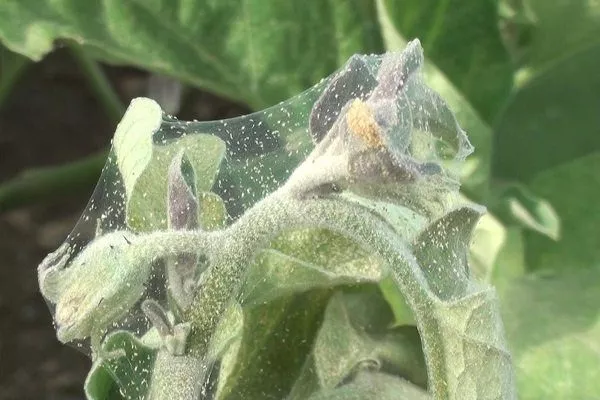
- spider mite.
Methods of control:
- Insecticides such as Fitoverm, Aktara, etc. are used against insects.
- Disinfection of seeds before planting.
- When signs of disease appear, plants are sprayed with Zircon, Trichodermin or Fitosporin.
- To prevent diseases, sprinkle the soil with bleach or wood ash.
- Spraying dry kaolin clay helps prevent flea beetle infestation.
Collection, storage and use of fruits
Eggplant harvesting Begin approximately 90 days after sowing, when the fruits reach technical maturity. This is determined by their color—they should turn dark purple—and their size—they should be 12-20 cm long.
Rules for harvesting and storing crops:
- The fruits are cut with pruning shears.
- Do not allow the fruits to become overripe, as they become bitter.
- Picked fruits can be stored in a cellar or refrigerator, wrapped in paper or plastic wrap. They will keep for 2-4 weeks.
Features of cultivation and possible difficulties
If you don't know the intricacies of growing "Clorinda," or violate the variety's agricultural practices, problems in the form of disease or reduced yields will inevitably arise.
What you should pay attention to:
- The variety grows well in any soil—open or closed—and can be planted in a greenhouse 2-3 weeks earlier. In a greenhouse, you can avoid growing seedlings by sowing seeds directly into the beds.
- When growing Clorinda, it's important to prevent excessive soil moisture. When growing under cover, monitor the moisture content not only in the soil but also in the air. Excessive moisture makes the variety susceptible to fungal attack.
- This variety requires regular fertilizing. If nutrition is insufficient, the fruits become smaller and the number of ovaries decreases. Fertilize the plant at least five times after planting.
A gardener will share his experience growing "Clorinda" in the following video:
Reviews from gardeners
The Clorinda F1 eggplant, despite its short growing season, ripens not only in the south but also in regions with short, cool summers. This hybrid is quite demanding, requiring regular watering and fertilizing, but it withstands harsh weather conditions and delights gardeners with a reliable harvest.