
When you have too many eggplants left over after harvesting, it's worth considering freezing them. This method will preserve not only the freshness of the product, but also its flavor and nutritional properties. There are various ways to do this, but it's important to pay attention to the preparation of the blue ones (as eggplants are commonly called).

Can you freeze eggplants?
Of course, yes, but freezing eggplant requires a special approach that differs from standard methods used for other vegetables. By following a specific sequence of steps, you can successfully preserve this healthy vegetable for winter. You can learn about other storage methods. Here.
Unlike regular freezing, where fresh vegetables are simply placed in the freezer without any pre-treatment, eggplants require special attention, as they contain bitterness that should be removed before freezing. It's commonly believed that freezing alone will remove the unpleasant taste, but this isn't true.
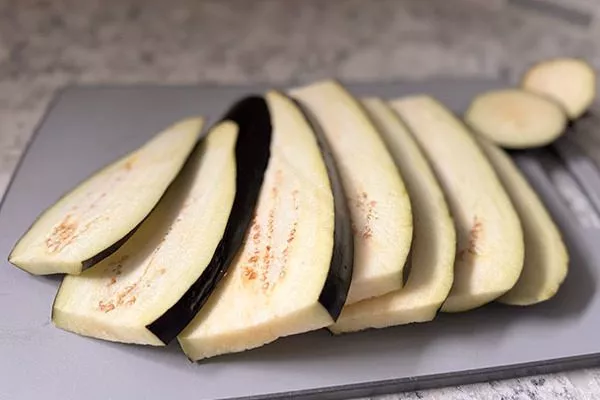
Eggplant's structure resembles a sponge, holding onto juices that contribute to negative changes, even after freezing. Therefore, heat treatment is considered essential. To remove bitterness, remove excess moisture using paper or cloth towels.
Which eggplants can be frozen?
For successful freezing of eggplants, careful selection of the source material is crucial. The quality of the fresh fruit determines how well the flavor and nutrients will be preserved in the frozen product.
Key criteria:
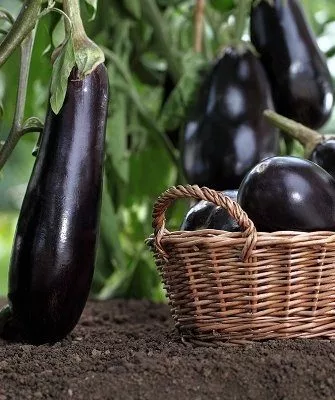
- To preserve, select only fully ripe specimens, indicated by a rich purple hue. Another sign of ripeness is the rapid return of the flesh after pressing.
- Young, fleshy, medium-sized eggplants are suitable for freezing; ideally, they weigh around 200-250 g and are up to 20-25 cm long. These fruits contain a minimal amount of seeds and tough veins.
- It is important to choose eggplants with green stems, as dry stems indicate long-term storage and loss of beneficial properties.

- The ideal eggplant has a firm texture and a uniform, blemish-free color. Avoid very light-colored fruits, unless they're a special variety, as they can be unripe, tough, and tasteless when cooked.
- For freezing whole, use only select, undamaged eggplants. If there are any small bruises, trim them off and freeze the remaining portion in pieces.
- The skin of a quality eggplant should be smooth and shiny.
- An eggplant's appearance can indicate the presence of harmful substances. For example, the appearance of green spots indicates the presence of solanine, a toxic compound formed when the fruit is exposed to light for long periods of time. Solanine is dangerous, so such vegetables should be discarded.
- It is not recommended to eat fruits with high serotonin levels. To determine the presence of this substance, simply cut into the eggplant. If the flesh darkens quickly, this indicates an excess of serotonin, and it is best to set the fruit aside.
Freezing options and what to cook with them?
The choice of cutting form for vegetables is determined by how they will be used later.
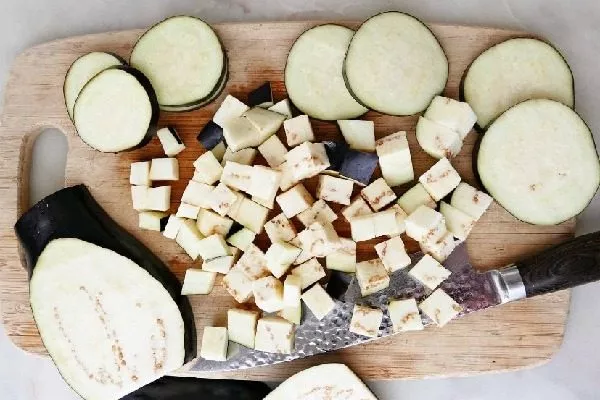
Eggplants can be cut in different ways:
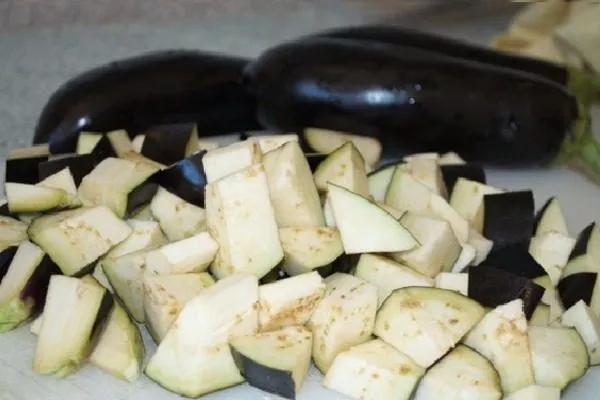
- for stews and soups, cutting into cubes or strips is suitable;
- to make rolls or lasagna, it is better to cut the eggplants lengthwise into long slices;
- circles are recommended for frying or baking;
- For stuffing, the eggplants are cut in half lengthwise.
There are several popular eggplant recipes that can be prepared at any time of year. The most famous of these are:
- Eggplant caviar is a popular summer dish that is often prepared for the winter.
- Eggplant rolls stuffed with tomatoes and cheese. The eggplants are sliced thinly lengthwise. Garlic cream cheese can be used as a filling.
- Pot roast with diced eggplant added.
Preparation
Almost all eggplant varieties are suitable for freezing, but pre-heating is key. Freezing raw eggplants will degrade their flavor and change their texture after thawing, making them tough.
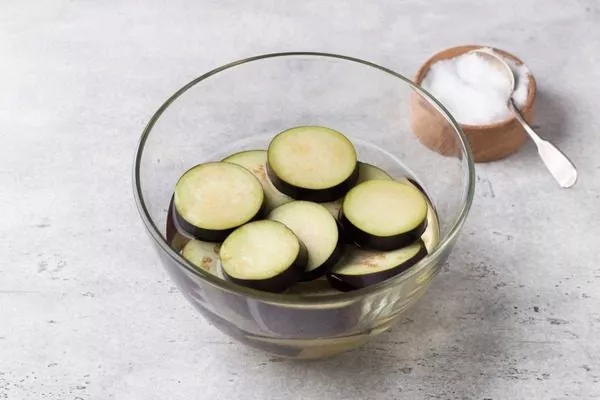
Variations:
- Salt. If the eggplant is bitter, slice it and soak it in a brine solution for 30 minutes (2 tablespoons of salt per 1 liter of water). Alternatively, generously salt the sliced eggplants. After half an hour, rinse the vegetables thoroughly and let them dry.
You will learn why these vegetables are bitter and how to prevent them from becoming bitter. Here. - Blanching or baking in the oven. The most accessible methods for preparing vegetables for freezing.
How to freeze eggplants for the winter – options
There are several methods for freezing eggplant, each with its own pre-treatment. It's important to keep in mind that the method used affects the final flavor of the product.
Eggplants fried in vegetable oil
The amount of vegetables is up to you, but it's important to maintain the correct salt ratio. For every 1 kg of eggplant, you'll need 1 tablespoon of salt.
Preparation process for freezing:
- Wash and dry ripe eggplants thoroughly.
- Slice vegetables into slices at least 5 mm thick. Slices that are too thin may burn and the skin may peel off.
- Place the mugs in a bowl, add salt and leave for an hour.
- Rinse the eggplants to remove any bitterness and pat dry with paper towels.
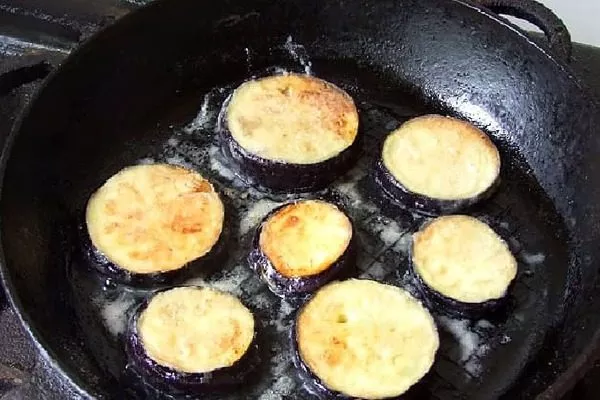
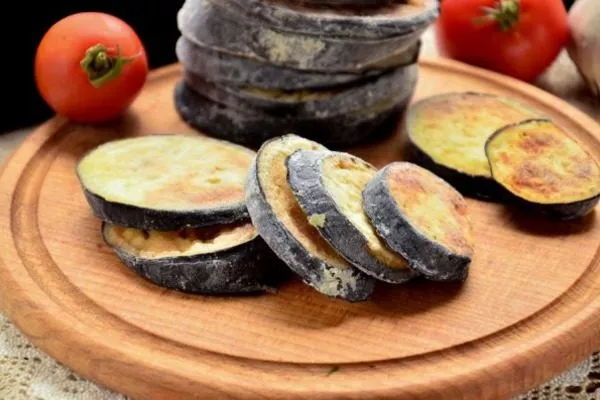
- Fry each circle in a hot frying pan with oil until golden brown, add salt if desired.
- Pat the fried eggplants dry with a paper towel to remove excess oil.
- Place the circles on a wire rack, cover with plastic wrap and place in the freezer for 1.5 hours to pre-freeze to prevent them from sticking together.
- Place the eggplants in airtight bags, removing any air. It's recommended to distribute the product among individual portions.
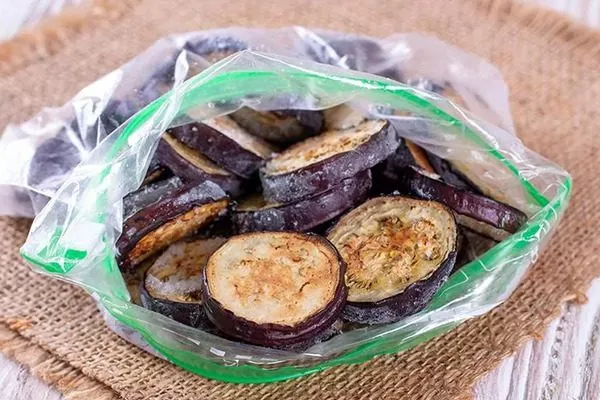
- Label each bag, indicating the type of treatment, weight, and date.
- Remove air from the bag - you can use a straw.
Freezing baked eggplants
Preparing baked eggplants for freezing begins with choosing a cutting method, although this doesn't significantly affect the final result. You can cut the vegetables into rounds, slices lengthwise, or even into strips, like French fries. However, round slices are preferable due to their speed of preparation and ease of storage.
Next, do this:
- Lightly grease a clean and dry baking sheet with vegetable oil.
- Place the sliced eggplants in the oven. Preheat the oven to 180 degrees Celsius.
- Place the baking sheet with vegetables in a preheated oven for about 30 minutes.
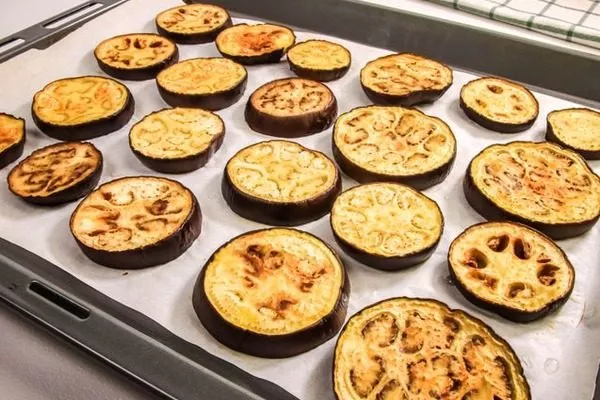
To achieve even browning on both sides, it is recommended to turn the vegetables over after 15 minutes of baking.
Stewed eggplants for freezing
To ensure perfectly cooked eggplants, fry them in very hot oil in a cauldron or frying pan. The key is to add all the eggplants to the pan at the same time. This stimulates the release of moisture, which is essential for braising, not just frying.
What to do next:
- After frying, let the eggplants cool.
- Drain off any excess liquid if there is any.
- Place the circles on a paper towel to remove any remaining moisture.
- After removing excess moisture, pack the vegetables into sealed bags.
Freezing blanched eggplants
This is the most popular and harmless technology:
- First, bring water to a boil in a saucepan.
- Then add a small amount of salt and lemon juice.
- Submerge the sliced eggplants in a boiling salty-acidic solution for just five minutes.

- Then carefully remove them and immediately place them in a bowl of ice water to quickly cool them.
- After this, place the eggplants on paper towels to dry slightly.
- Once the vegetables have cooled completely and any excess moisture has evaporated, pack them in a bag and place them in the freezer for long-term storage.
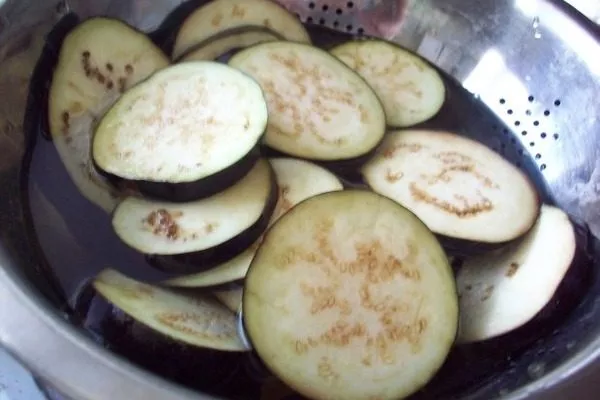
Boiled eggplants for freezing whole
The main advantage of cooking eggplant whole is the maximum preservation of the vegetable's vitamins. There are two options for preparing eggplant whole:
- The first method requires soaking the eggplants in a salt solution for three hours. Such a long time is generally not recommended, but since the eggplant is whole, soaking won't significantly affect its texture.
Next, just boil the vegetables until they are half-cooked.
- The second method doesn't require soaking. Boil the prepared eggplants in lightly salted water for twenty minutes. Then carefully remove them and let them cool.
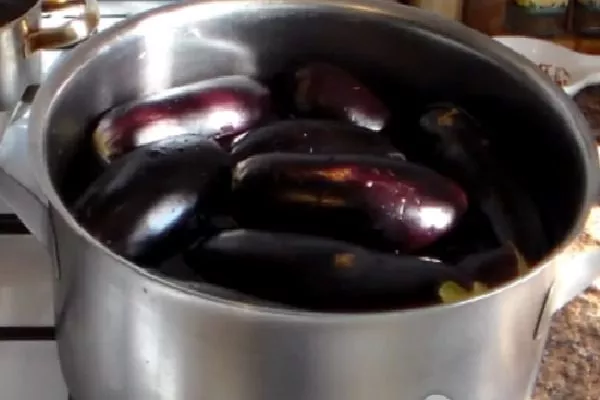
Once cooled, cut the eggplants into slices of your choice and place them in the freezer for future storage or use. You can wrap the whole vegetables in plastic wrap and freeze them immediately after cooling.
Freezing fresh eggplants for the winter at home
Eggplants are rarely frozen immediately after harvesting, as pre-heating improves their flavor. However, fresh fruit is ideal for short-term storage, typically up to a month and a half. The preserving process takes about an hour and a half. There's no need to defrost the vegetables before adding them to a dish.
To prepare the preparation you will need:
- salt;
- cling film;
- plastic bags;
- baking sheet.
Instructions for freezing fresh eggplants for the winter:
- First, peel the vegetables, remove stems and excess twigs.
- Then cut the pulp into any convenient shape: cubes, strips, circles, or half rings. Use this method based on the dishes you plan to prepare this winter.
- Remove bitterness by soaking in a brine solution.
- After this, thoroughly rinse and dry the chopped pieces.
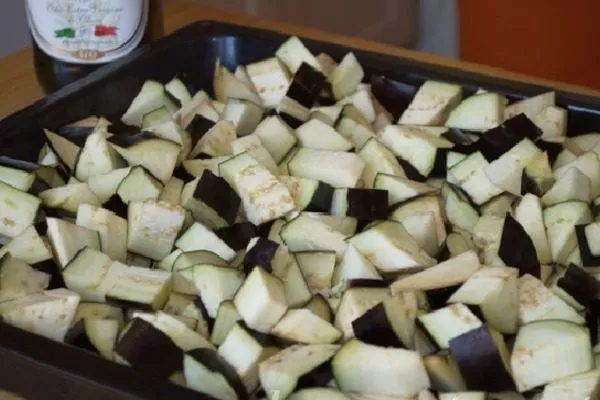
- Place them on a baking sheet, previously covered with cling film, so that they do not touch each other.
- Place in the freezer for an hour.
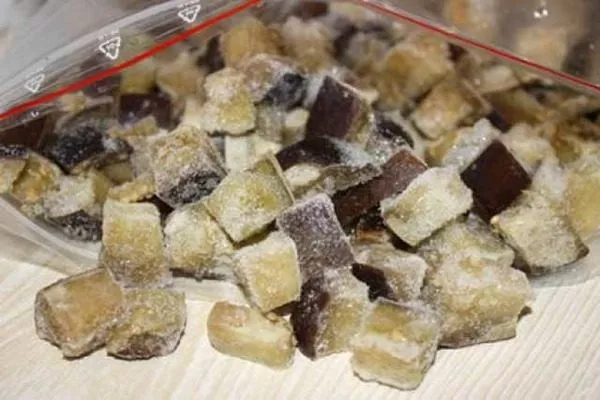
- After an hour, remove the baking sheet, divide the frozen pieces into bags and store them in the freezer.
How and how long to store?
The optimal shelf life of frozen vegetables is up to a year, but after six months, they gradually lose their nutritional value. It's recommended to use frozen vegetables before spring.
Storage features:
- For freezing, it's best to use airtight plastic containers or strong plastic bags, especially vacuum-sealed ones. Glass containers with lids are an alternative, although they require more space.
- Avoid storing vegetables at temperatures below -12 degrees Celsius, as this may negatively affect their structure.
Proper defrosting of eggplants
If you plan to make eggplant caviar, transfer the frozen vegetables from the freezer to the refrigerator in advance. This ensures a gradual and gentle thawing process.
Once the eggplants have softened slightly, remove them from the refrigerator and let them defrost completely at room temperature. Avoid sudden temperature changes to preserve the texture of the vegetables.
Helpful Tips
To avoid a rubbery texture and loss of flavor, eggplants must be cooked thoroughly before freezing. But there are other nuances to keep in mind:
- Eggplants cut into rounds, large or small strips, cubes, or strips are all suitable for frying before freezing. Vegetables cut using the first three methods can be blanched. Eggplants can be baked whole or sliced.
- When choosing a slicing method, consider how you plan to use the frozen eggplants.
- Before slicing, taste the eggplants for bitterness. If they taste bitter, sprinkle them with salt, stir, and let them sit for 30 minutes. Then drain, rinse thoroughly, squeeze lightly, and dry. Some eggplants don't emit any bitterness at all, so taste them first.
- There's no need to defrost eggplants before cooking. Many dishes use them immediately after removing them from the freezer.
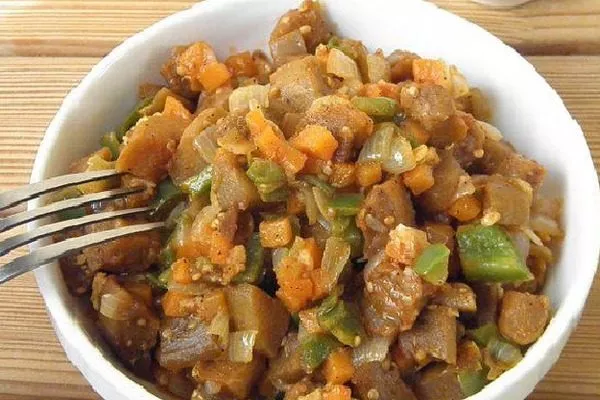
- Frozen eggplant can be used in the same dishes as fresh, but frying or baking it first will reduce the cooking time. Rolls can also be made from defrosted strips.
- To prepare eggplant slices for freezing, first pat them dry with a paper towel to remove excess moisture. If you plan to fry them, remove any excess oil.
- For easy identification, label the eggplant container to distinguish it from other frozen foods. You can label the package itself, but it's easier to include a note with the name inside.
- It's recommended to freeze coarsely chopped eggplants first on a flat surface, spaced apart, and then transfer them to a bag for long-term storage. This will prevent them from sticking together.
Eggplants cut into cubes or strips can be immediately portioned, but remember that refreezing vegetables is not recommended.
For home cooks who have a large eggplant harvest or don't have time for full-scale canning, freezing the eggplant at home for the winter is an excellent solution. This method preserves the vegetable's nutritional properties and freshness. Despite the simplicity of the overall concept, some preparation is still required.