
When growing a crop as demanding and demanding as eggplant, gardeners must pay special attention to shaping the plant. This involves pinching the tops, removing side shoots, training the plant into 1-3 trunks, and tying it to supports. Proper shaping is the key to a bountiful, high-quality harvest and maintaining the health of the plant.
Necessity of the procedure
Eggplant bushes tend to grow too large if left untrained. Due to the intense growth of vegetative mass, fruiting capacity is reduced. Greenhouse plants are particularly susceptible to this problem. Regular and proper shaping can help resolve this issue.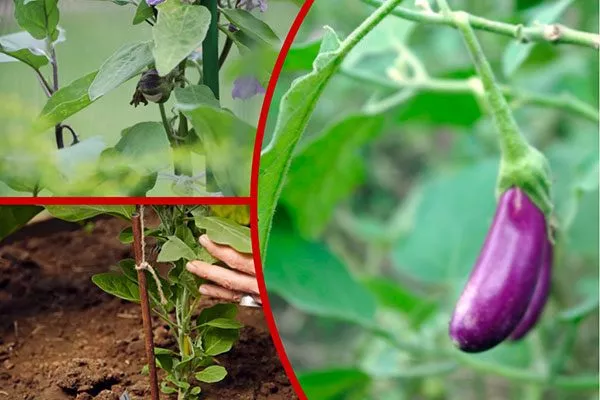
By regularly using this agricultural technique, gardeners prevent vegetable crops from becoming overgrown. It allows them to achieve positive results in terms of yield and fruit quality:
- absence of unnecessary layers;
- more uniform distribution of shoots;
- formation of healthy foliage, a large number of flowers and fruit ovaries;
- optimal distribution of nutrients across all above-ground parts of the crop;
- formation of a strong “skeleton” that can withstand the load of the crop and is not susceptible to lodging;
- giving the bush a compact size.
You can avoid the need for shaping by growing eggplants in spacious outdoor garden plots (without shelter). This is especially true for areas with mild, warm climates.
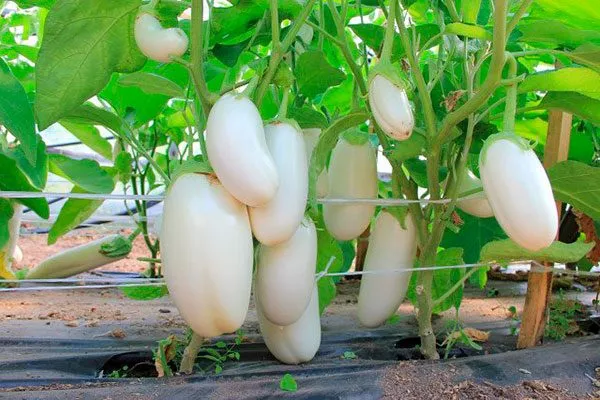
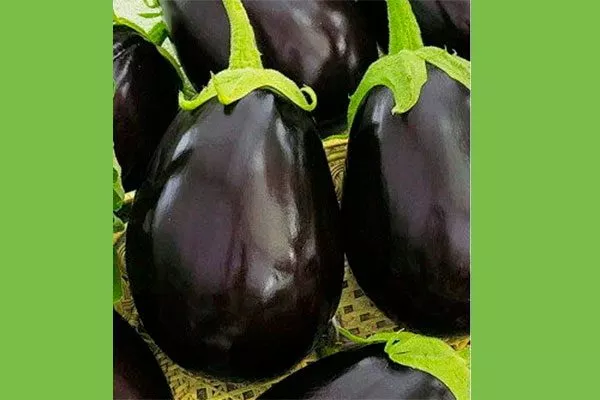
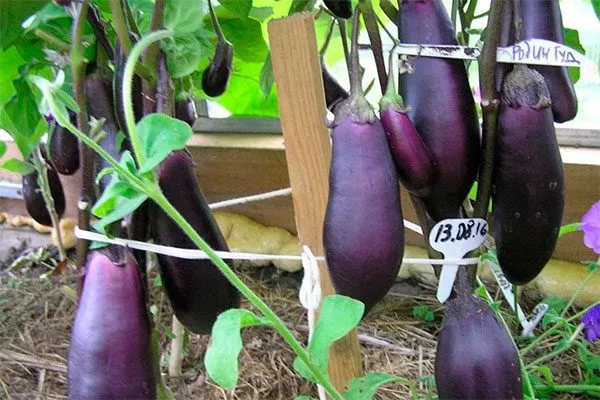
Experienced gardeners who don't want to waste time and effort on shaping grow varieties characterized by small size and moderate bush development:
- White Night;

- Delicacy;
- Robin Hood;
- Diamond.
Increasing crop yields
The main goal of gardeners with this formative procedure is to increase the productivity of their plantings. Yields increase by removing excess material from the bush and leaving strong buds. The few stems receive maximum nutrition, light, and air for abundant fruiting.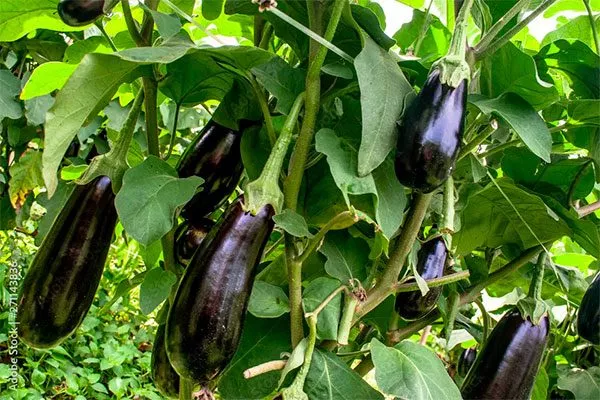
Eggplants grown in protected soil are primed to develop green mass. The following factors contribute to their transformation into dense thickets:
- application of large volumes of organic and mineral fertilizers;
- frequent watering.
In such an environment, plantings tend to be low-yielding. Pruning, however, allows them to be reconfigured for fruiting.
Pinching out side shoots and training a bush into several stems are procedures that increase its yield, in particular:
- increase the number of fruits;
- accelerate their maturation;
- improve quality (vegetables become larger and tastier).
Prevention of diseases and pests
The lack of proper shaping leads to uncontrolled growth and dense bushes in eggplant plants. This creates an unhealthy environment inside the plant: damp, poorly ventilated, and shaded. This creates a favorable environment for the habitation and reproduction of pathogenic microorganisms:
- fungi;
- pathogenic bacteria.
In such conditions, vegetable crops are often susceptible to late blight, gray mold, powdery mildew, and blackleg. They are also more susceptible to attacks from harmful insects.
Improving lighting
Eggplant is a sun-loving plant. It requires plenty of light for best results when growing:
- proper development;
- maintaining strong immunity;
- good flowering and fruiting;
- ripening of the crop on time;
- excellent taste.
If you neglect pruning, shaded plantings are inevitable. This can lead to poor photosynthesis in the foliage. A plant suffering from a lack of light produces few inflorescences and ovaries. Fruit ripening is delayed and uneven. Their sugar content is minimal.
Making care easier
By systematically removing side shoots and leaving 1-3 stems on the eggplant bush, you can give it a neat shape. Compact plants that are easily visible and accessible from all sides are easier to care for:
- tie them up;
- treat against diseases and pests;
- carry out loosening and weeding;
- water;
- apply fertilizers;
- harvest.
Thanks to the shaping process, the bed looks well-groomed. The bushes are moderately foliated, not overcrowded, and not prone to lodging.
Peculiarities of pinching out eggplants
Pruning a crop of excess shoots is a procedure that requires proper execution. Familiarize yourself with all the nuances of this process to achieve positive results. If you do it incorrectly, you risk harming the plants in your garden.
Choosing the right time to remove stepsons
Remove unwanted shoots from the eggplant bed that emerge from the leaf axils once they reach 3-5 cm in size. Perform this procedure no earlier or later than this point:
- by cutting off a short shoot (less than 2 cm long), you will certainly damage the stem;
- If the shoot has already reached 7-10 cm, removing it can harm the bush (a large wound will take a long time to heal, reducing the plant's immunity and sapping its strength).
Perform side-sonning in the morning, when the plant tissues are moist and the shoots are firm. The day should be dry and sunny to allow the wounds to dry quickly.
Preparatory work
Before you begin removing side shoots from your eggplant plants, wait until they reach a height of 25-30 cm and the first flower fork appears. Next, prepare for the procedure:
- Stock up on suitable tools. This could be pruning shears or a knife with a sharp blade.
- Disinfect it. Use alcohol or a potassium permanganate solution. This will prevent infection during pruning.
- Inspect the plant and determine which parts you will remove and which you will not. You will need to remove the side shoots growing below the fork and the first flower. These are shoots that originate in the leaf axils.
- Prepare an antiseptic, fungicide, or wood ash powder, which you will use to treat the wounds on the bush after the procedure is completed.
Preparatory work for shaping the bush consists of the same steps. These will also require installing a support, tying the plant to it, and pinching out the top growth point.
Basic technique for removing stepsons
Perform the procedure of removing unnecessary shoots by pinching them off (or breaking them off), following the step-by-step instructions:
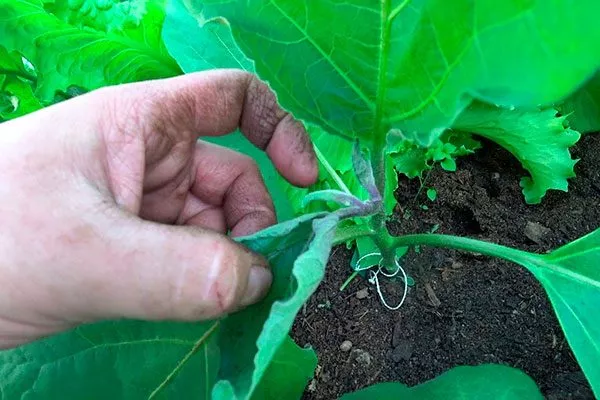
- Grasp the shoot with two fingers: your thumb and index finger. Hold it by the base, just below the stem.
- Break off the shoot, directing it sideways. Don't pull it up or down. This will likely damage the skin of the main stem.
- Dust the wound with crushed ash or treat it with a fungicide (for example, Fitosporin-M).
If you prefer to remove side shoots with a knife, carefully cut them off, leaving stumps about 0.5 cm high. Remember to disinfect the cuts to prevent infection.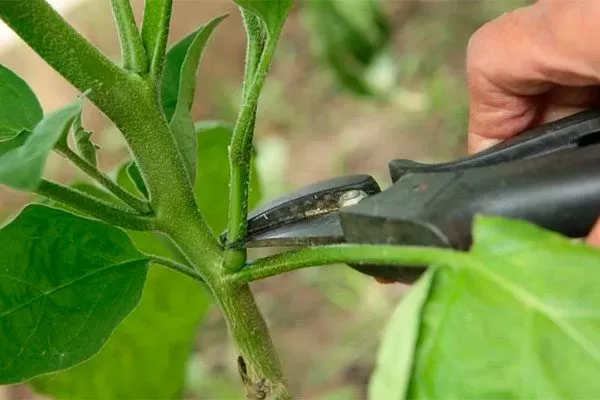
Periodicity
Perform the procedure of removing shoots growing from leaf axils regularly throughout the growing season. Begin this procedure after transplanting the seedlings into protected or open ground. Repeat this procedure as often as necessary, as new shoots will continually appear. Maintain the following frequency:
- every 7-10 days is the average frequency;
- Once every 5 days - during the period when the crop is actively growing (June-July).
Rapid formation of side shoots is facilitated by abundant watering of plantings and the application of nitrogen-rich fertilizers.
Regularly performing this care will help you maintain the plant in optimal shape and reduce stress. Prevent excess shoots from growing too large to ensure that side-shooting is as painless and hassle-free as possible.
When shaping the bush, remove excess foliage and shoots at least once every 10-14 days. Pay particular attention to this procedure during flowering. Four weeks before harvest, completely remove all weak shoots and unnecessary foliage to ensure the plant focuses its energy on ripening the harvest.
Eggplant bush formation schemes
There are various ways to shape this vegetable crop. There are several planting patterns. Choose the most appropriate one based on the variety, growing conditions (outdoor or indoor), and your personal preferences.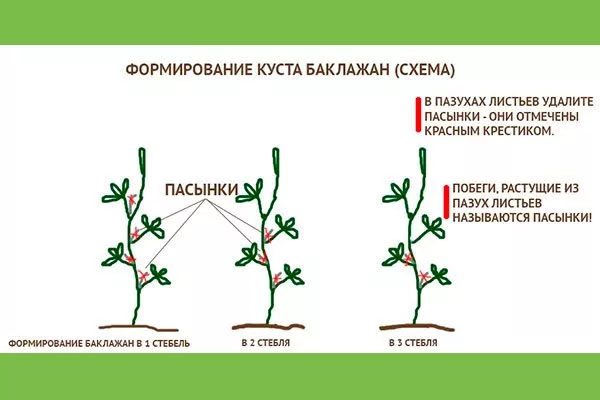
Formation into one stem
Train eggplants into a single trunk if you're growing tall varieties, including indeterminate hybrids. This pattern is recommended for greenhouses with limited interior space.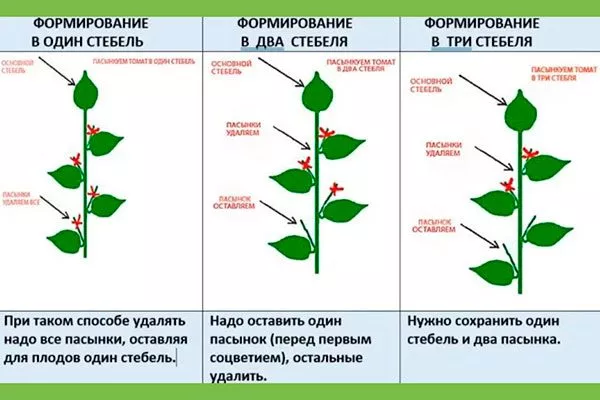
Form the bushes into 1 stem by following this sequence of actions:
- Remove all side shoots and stepsons without exception, starting from the root collar and up to the very top, leaving only 1 main (central) stem.
- Tie it to a secure support. This could be a trellis or a tall stake.
- Systematically remove emerging side shoots and offshoots. Leave only buds and fruit buds on the main stem.
Formation in two stems
The double-stemmed design is considered universal and the most popular among gardeners. It is suitable for medium-sized and indeterminate eggplant varieties/hybrids grown in greenhouses and open beds.
Begin shaping the bush when the main shoot reaches a height of 25-35 cm and the first large bud (branching point) appears on the main stem. Follow the step-by-step instructions:
- Remove all shoots and leaves up to the fork (below the first flower).
- Pinch off the top of the main stem above the bud or let the stem grow further if the variety is very tall.
- Stepchildren will emerge from the leaf axils below the pinched area. Keep only one, the one you think is the strongest. It should be located slightly below the first flower. Regularly remove the remaining shoots, located below and above this fork.
A bush formed according to this scheme consists of two trunks growing from a fork. Tie each of them separately.
Formation into three or more stems
Maintaining a 3-4-stemmed planting is recommended for compact, low-growing eggplant varieties characterized by moderate growth rates. This approach is also suitable for open-bed plantings, provided there is ample feeding space.
Sometimes gardeners use the three-trunk system for very vigorous varieties of crops grown in a greenhouse with good artificial lighting.
Form the bushes into 3 stems, following the step-by-step algorithm of actions:
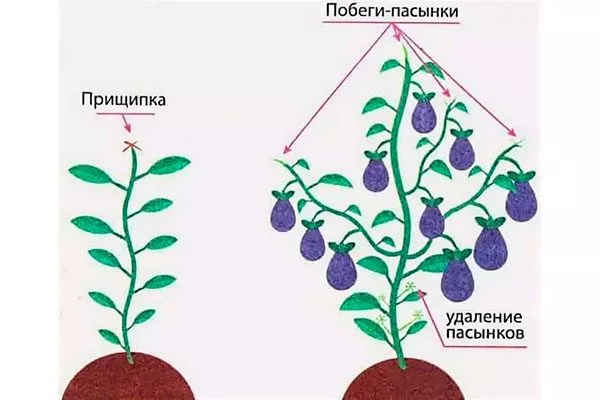
- Pinch the main shoot above the first flower.
- Leave the 2 strongest shoots located below the fork.
Gardeners rarely use the four-trunk system. It's suitable for bushes grown in spacious outdoor areas. The design is similar (instead of two shoots located below the fork, three will be required).
How and when should you pinch?
Begin this procedure once the stem reaches a height of 30 cm. By pinching the top of the main stem, you will achieve the following results:
- slow down the growth of the culture;
- accelerate the appearance of young buds;
- will help the plant stay compact and neat.
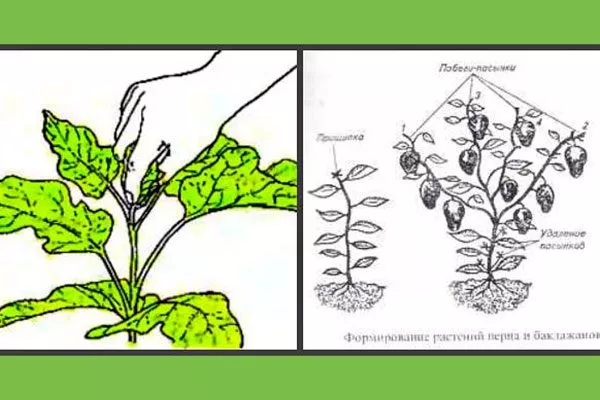
You can do without pinching when growing eggplants in open ground, if the climate in your region is not very damp.
How to tie up eggplants?
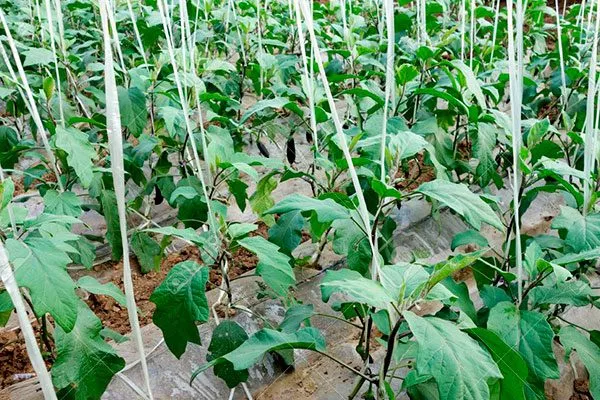
The procedure of securing the bush's stems to supports is recommended for tall varieties that produce large and heavy fruit. Without support, there is a high risk of shoot breakage and damage to the fruit lying on the ground. Staking also provides other positive effects:
- contributes to improved lighting and ventilation of plantings;
- reduces the likelihood of crop damage by fungal infections;
- simplifies care and harvesting.
To support the bush, you can use a wooden stake, a metal rod, or a trellis. To secure the plant to the trellis, you'll need soft fabric straps, twine, or special garden clips. Wire is not suitable for this purpose, as it can damage the stem.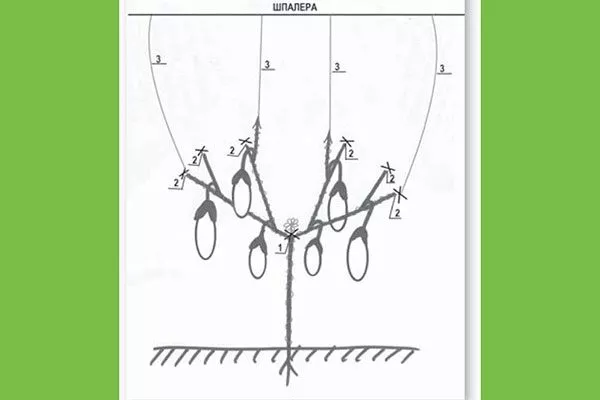
When performing the garter procedure, follow a few rules:
- Be sure to secure the main stem below the fork;
- do not tighten the ties so as not to squeeze the shoot;
- If you are growing a bush with several trunks, tie up each of them separately;
- Using a trellis as support, attach stems to horizontal rows of twine as they grow;
- start practicing gartering after the plant reaches a height of 30-35 cm.
Nuances of formation in different conditions
When shaping eggplant bushes, consider the specifics of this procedure, depending on the growing environment. Shaping under plastic cover and in open beds has its own nuances that every gardener should be aware of.
In the greenhouse
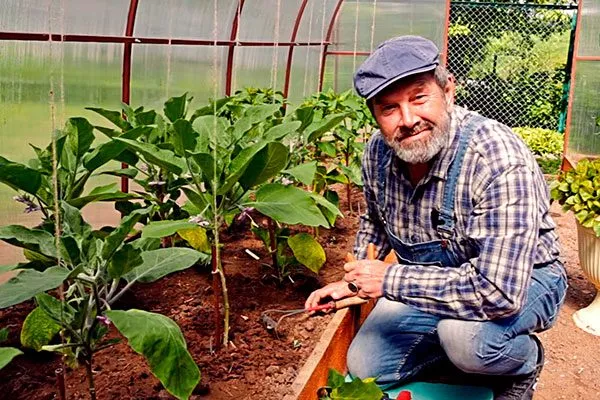
Eggplants grown in protected soil develop quickly. They are characterized by abundant green growth. Greenhouse-grown eggplants tend to have low yields. To solve this problem, gardeners use pruning. When performing this procedure, consider the following points:
- pinch the top of the main stem after the seedlings have grown;
- use a single- or double-stemmed plant design scheme;
- 12-16 days after shortening the central shoot, when young shoots appear, leave only one of the most powerful stepsons below the pinching point (forming the bush into 2 trunks);
- in the future, remove shoots and excess greenery appearing from the leaf axils;
- During the eggplant flowering period, take care to adjust the number of ovaries to prevent branches from breaking (the bush should not be overloaded with fruits, especially if the variety has large and heavy ones);
- Carry out all formative procedures with extreme care, as the stems of greenhouse plants are fragile and succulent and prone to breakage.
In open ground
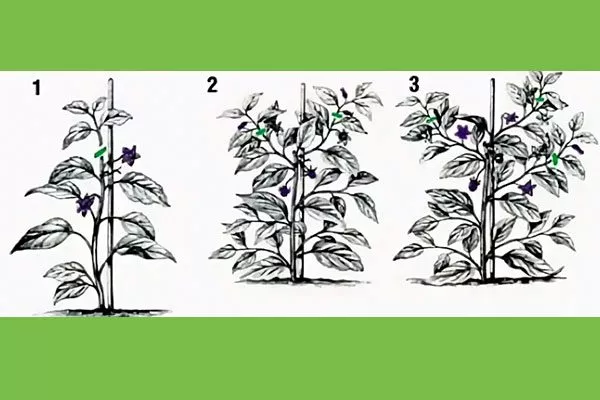
When shaping eggplant bushes growing in outdoor garden plots, keep the following in mind:
- grow plants in several stems (from 2 to 4 pieces);
- 14 days after planting the seedlings in a permanent place, remove their tops;
- After branches appear, select several strong stems and remove all the rest;
- remove stepchildren regularly;
- do not overdo it when removing the foliage at the bottom of the bush (in an open bed, the soil exposed near the stem will dry out quickly);
- Determine the need for leaf removal based on weather conditions: if the summer is dry and hot, leave most of the foliage to protect the soil from drying out; during the rainy season, remove the entire layer from the bottom to prevent contact with damp soil and the plants from becoming infected with fungi;
- After completing the work, sprinkle the eggplant planting with pure wood ash powder to help the plants recover faster;
- shape the bushes on a dry and cloudy day.
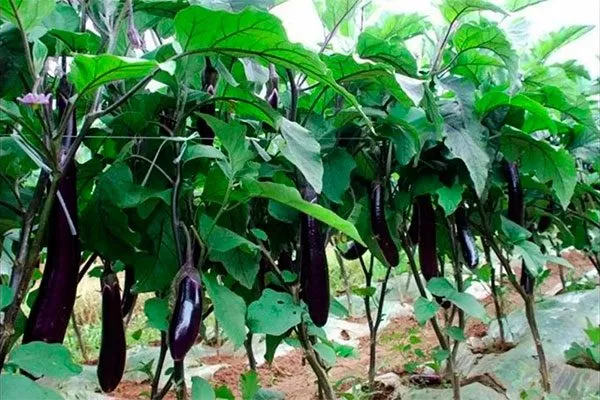
Possible errors
When performing the formative procedure, gardeners can make a number of mistakes that can lead to various complications, including reduced crop yields. Among the most common of these are:
Helpful tips
Gardeners with years of experience growing this vegetable crop offer beginners several recommendations regarding bush shaping:
- Prune your plantings in the morning or after sunset. Avoid pruning in hot weather. Eggplants will need more time to recover from the pruning than if you do it in warm, cloudy weather.
- Avoid removing side shoots after rain or watering. Dampness increases the risk of wound rot and fungal infection. Make sure the day is dry.
- Removing shoots slows down the plant's growth. Avoid over-pruning to avoid damaging the plant. Moderation in removing excess shoots is especially important when growing varieties that don't tend to become dense or grow vigorously.
- Avoid pruning early-ripening eggplant varieties. They produce fruit quickly and have a short growing season.
- Remove leaves and ovaries by hand. Gently pinch the shoot with your fingers, bending and straightening it several times. It should break off cleanly.
- Trim thick shoots with sharp pruning shears or a knife. Be sure to disinfect the tool before use to prevent fungal infection.
- When shaping your bushes, first remove all dried and deformed leaves. Leave the young, vigorous foliage.
- Once you've completed shaping, don't be lazy in tying the bush to the support. Use soft ties to avoid damaging the stems.
- Regularly ventilate greenhouses where shrubs are grown. This helps reduce the risk of spreading various diseases. This procedure is especially necessary after pruning.
Bush training is an important procedure when growing eggplants. It increases yield and fruit quality, prevents the spread of infections, and makes plant care easier. It yields excellent results when performed correctly, including adhering to the correct timing and guidelines, and using appropriate techniques. Our tips will help you achieve success.