
It's not enough to simply grow a harvest; it's important to preserve it for a long time, especially if it was abundant. It's important to know the basic storage conditions and methods for eggplants, which determine their shelf life. Special guidelines have been developed for this purpose.
Which eggplants are suitable for long-term storage?
| Name | Ripening period (days) | Disease resistance | Fruit color |
|---|---|---|---|
| Diamond | 120-140 | High | Dark purple |
| Romantic | 120-140 | Average | Violet |
| Policeman | 120-140 | High | Dark purple |
| Station Wagon-6 | 120-140 | High | Violet |
| Sofia | 120-140 | Average | Dark purple |
| Torpedo | 120-140 | High | Violet |
| Namesake | 120-140 | Average | Dark purple |
| Teddy Bear | 120-140 | High | Violet |
- ✓ Resistance to temperature and humidity fluctuations.
- ✓ Peel thickness: the thicker the peel, the better it is preserved.
Not all eggplant varieties are suitable for long-term storage—early-ripening varieties are not suitable, so mid- and late-ripening varieties (with a growing season of 120-140 days or more) are the best choice. Among the vast variety, experts highlight the following varieties:
- Diamond;
- Romantic;
- Policeman;
- Station wagon-6;
- Sofia;
- Torpedo;
- Namesake;
- Mishutka, etc.
For winter storage, vegetables that meet the following requirements are used:
- fully ripened, since, unlike other nightshades (for example, tomatoes), eggplants are not able to ripen after harvesting;
- even shape - without any curvatures that may indicate improper growing technology or diseases;
- uniform dark purple color - which indicates that the vegetable is ripe on all sides (but there are varieties that have a different color, so be guided by the varietal data);
- free from stains, dents and damage – cracks, insect holes, scratches, etc.;
- with an elastic structure;
- with a smooth and slightly shiny surface;
- with a green stalk;
- with no signs of disease.
If you pick eggplants before they're ripe, they'll quickly spoil. The ripeness of many vegetables can be easily determined by their appearance, but this isn't the case with eggplants, as their skins remain a uniform color during the last month of their growing season.
Experienced gardeners use a trick: they pick up the vegetables and check their weight. Unripe ones are light, while ripe ones are heavy (full-bodied). Overripe ones are easy to spot: light-colored spots appear on the surface, and the flesh loses its firmness.
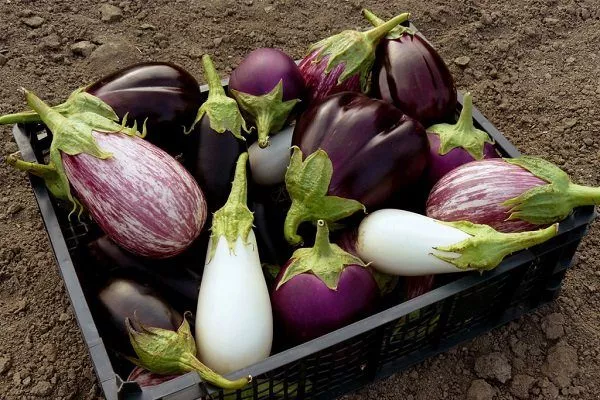
Conditions for preserving vegetables
There are general parameters that ensure eggplants retain all their nutritional properties, appearance, and other quality indicators when fresh. They are as follows:
- air humidity – minimum 75%, maximum 85%;
- air temperature for long-term storage – from -10 to +6°C, for short-term storage – no higher than +20°C.
How to prepare eggplants?
To ensure eggplants last as long as possible, they need to be properly prepared. There are general rules for all storage methods, beginning with harvesting:
- Pick vegetables from the bushes when the weather is dry, but make sure there is no extreme heat, so give preference to morning or evening time;
- Do not tear off the eggplants, but cut them using garden pruning shears or a sharp knife;
- Be sure to leave the stalk at a length of about 4 cm - this way the vegetable will be stored longer;
- harvest time – before the onset of frost (if the eggplants are not yet ripe by this time, cover them with plastic wrap overnight);
- Immediately after harvesting, place the products in a dark and dry room to dry, but be sure to ventilate it (for about 20-28 hours);
- if there is no room, place them outside in a shaded place (if there is no such place, then simply cover the eggplants with burlap);
- If there are lumps of soil on the surface, do not wash them off with water, but brush them off with a soft cloth or brush.
It's best to store eggplants that you've grown and picked yourself—that way, you can be sure everything was handled according to the proper instructions.
Methods of storing fresh food
After the eggplant harvest season, people crave freshly prepared dishes right up until spring. Experts have developed various methods for storing the vegetable, based on consumer preferences and shelf life.
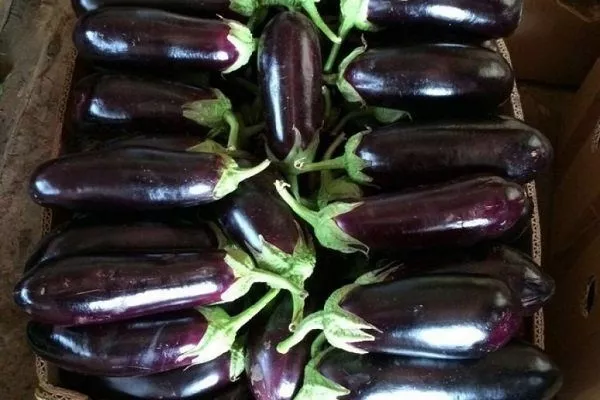
In the basement or cellar
The shelf life in a basement is 2 to 4 months, but at a temperature of 3 to 5°C. A ventilation system is essential, otherwise the eggplants will become moldy.
There are several ways to preserve the culture in a cellar or basement:
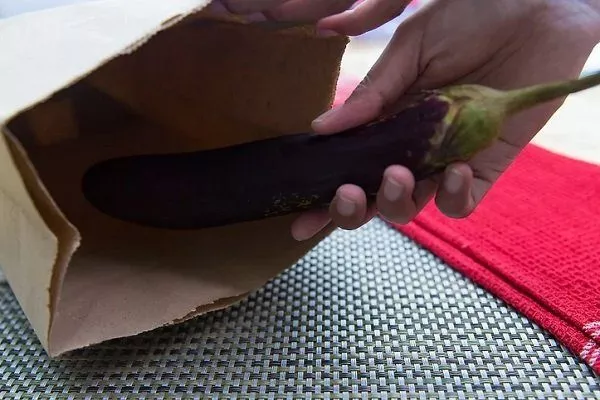
- In paper on straw. Wrap the prepared eggplants in paper (it is not recommended to use printed paper, as printing ink has a negative effect on the eggplant itself and the beneficial substances it contains).
Spread dry straw on the shelves to a depth of 2-3 cm, then place all the vegetables on top. Cover with natural fabric bags (they should be perfectly dry). If the temperature drops below 3°C, cover with warm blankets. - In sand or ash. You'll need wooden boxes. It's best to have gaps between the slats. If not, make small holes (to prevent ash or sand from spilling out). Place the raw materials in a 2 cm layer on the bottom, then lay the eggplants out horizontally. Cover them with the material.
Place the vegetables again and sprinkle with sand/ash. Make 3-5 layers. No need to cover them with anything. - In paper bags. They need to be airtight, as you'll need to place 1-3 eggplants in each, squeeze out all the air, and tie them tightly with string. Then, place the bags in any drawer and leave them on the floor.
- In sawdust. This is an unusual method that requires planting in two stages. First, dig a hole in the basement soil to the height of one and a half eggplants. Fill it with sawdust (straw can be substituted). Insert the vegetables so that the stems are at the bottom. This is the first row.
In the second row, plant the eggplants with their stems facing upward, but be sure to place them between the ones in the first tier. Sprinkle with sawdust. Wait 1–2 days, then inspect each vegetable for spoilage.
Wrap all the healthy eggplants in paper and lay them out in the same way as before, but swap the vegetables in the rows - the first one will be the ones that were previously in the second one.
In apartment conditions
This option is suitable for city dwellers who lack a cellar or other suitable storage conditions for eggplants. Avoid storing them in the kitchen, near heating appliances, gas or electric stoves, or in brightly lit areas. If left at room temperature, they will only last for 3-5 days.
Optimal locations and conditions:
- In the pantry. This method is used if the room is located away from radiators, such as a hallway. The shelf life is a maximum of 30 days, but if the temperature does not exceed 7-8°C, it can last 60-70 days.
To do this, wrap each eggplant in paper and place it in a cardboard box in no more than 3 layers. - On the balcony. If it's insulated, the conditions and methods are the same as for a loggia. If the balcony is open, you'll need to insulate the drawers. To do this, place a warm blanket, vest, or similar underneath, covering them from all sides and from above.
Place the vegetables, wrapped in plastic wrap (this will retain heat), in a wooden box and cover with a lid. Alternatively, sprinkle the container with straw or sawdust, which will retain heat. The shelf life is 1 to 2.5 months. - On the loggia. Storage is identical, but without insulating the box. In this case, the vegetables can be eaten within 1-1.5 months. To extend storage to 2 months, place the eggplants in a cloth mesh bag with the stems facing up and hang them in a dark place.
In the refrigerator
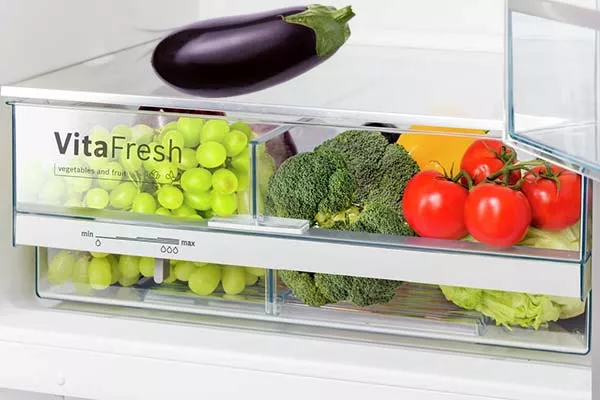
The shelf life varies from 7 to 15 days. How to store in the refrigerator:
- Dry the vegetables thoroughly.
- Wrap each one in separate paper in 2 layers.
- Place into containers and cover with lids.
- Place in the fruit compartment.
- Change the paper every 2-3 days.
In the freezer
Eggplants have the longest shelf life in the freezer – up to 6-12 months. The lower the temperature, the longer the shelf life. It's important to keep the thermometer reading below -11°C. Unlike other vegetables, eggplants are not frozen fresh, as this degrades the flavor and reduces the micronutrient content.
The first thing you need to do is prepare the vegetables:
- Wash thoroughly under running water.
- Trim off the ends and any areas where there is even the slightest damage.
- Cut as needed (slices, cubes, large rings, etc.).
- Make a saline solution: take 100 g of salt per 1 liter of water.
- Soak the eggplants in the brine for 30-60 minutes (the larger the pieces, the longer the soaking time). This process neutralizes the eggplant's characteristic bitterness.
- Carry out heat treatment using the chosen method.
- Place vegetables on paper towels to dry completely if blanching or boiling and to drain off any fat if frying.
- Place the eggplant pieces in a flat container in one layer so that they do not touch each other.
- Place in the freezer until completely frozen.
- Remove and pour into an airtight container - a vacuum plastic bag or plastic container.
- Do this with all the eggplants.
- Divide into portions and place in the freezer for long-term storage.
- Check each eggplant for signs of disease and pests.
- Cut the eggplants according to your intended use: cubes for stews, rounds for grilling.
- Pre-blanch to preserve color and texture.
Heat treatment methods:
- Blanching. This method is suitable for eggplants cut into small pieces. Place them in a colander and plunge them into boiling water for 4-5 seconds, then remove and pat dry.
- Boiling. Throw vegetables into salted boiling water and cook for 5-6 minutes.
- Baking. Grease a baking sheet with a thin layer of vegetable oil and arrange the slices in a single layer. Bake at 200°C for 7-10 minutes.
- Frying. Fry the vegetables in a frying pan on both sides over high heat, without bringing them to full readiness.
Thanks to light heat treatment, semi-finished products are obtained, from which stews, sautés, appetizers, and other things are later prepared.

In polyethylene
This method is most often used by summer residents, since no one is in the house during the winter, so the air temperature is cool enough and optimal for eggplants.
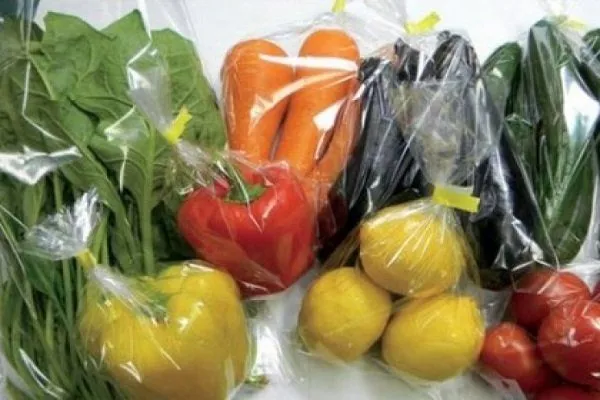
To store, simply place the vegetables, 1-2 at a time, in plastic bags, tie them, and poke holes in them. Then, place them in cardboard or wooden boxes. The shelf life is 1-2 months (the lower the temperature, the better).
Other storage ideas
It's not always convenient to use fresh or semi-prepared eggplants, as they require time for further preparation. Therefore, many lovers of this vegetable choose to preserve, pickle, ferment, and so on. Sometimes it makes sense to use drying and curing methods.
In dried or cured form
This method allows you to save space in the refrigerator, on the balcony, or in the cellar. Dried and cured eggplants are used in soups, sauces, and appetizers. In the latter case, the vegetables are pre-boiled and only then fried, marinated, etc.
The shelf life of dried eggplants is at least 12 months, while dried ones are no more than 4-6 months, since during drying the fruits are not dried completely, but left semi-dry.
How to store:
- dry – in cloth bags, glass jars, in a suspended state at room temperature with a humidity level of no more than 50-70%;
- dried - in a glass container, pour in vegetable oil and be sure to keep in the refrigerator.
The process begins with thinly slicing the vegetables. This can be done in three ways:
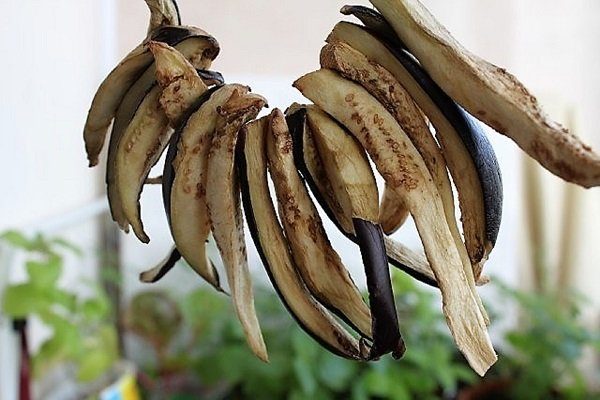
- In the air. To do this, string eggplant circles on a thread so that there is a gap of 0.5-1 cm between them, hang them in a ventilated room, but preferably outside under a canopy (so that they are not exposed to direct sunlight).
They are dried for 6-10 days and cured for 3-6 days. The duration depends on conditions (humidity, air temperature), but warm and dry weather is essential.

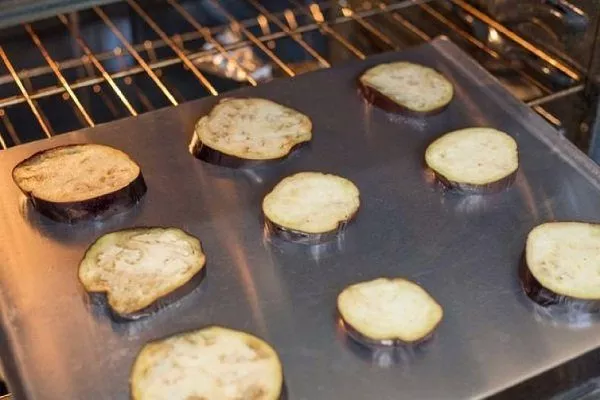
- In the oven. Preheat the oven to 200°C, arrange the slices in a single layer on a dry baking sheet, and place them in the oven. Bake for about 20-30 minutes, then reduce the temperature to 100°C. Open the lid and dry for 5-6 hours (3-4 hours for air-dried).
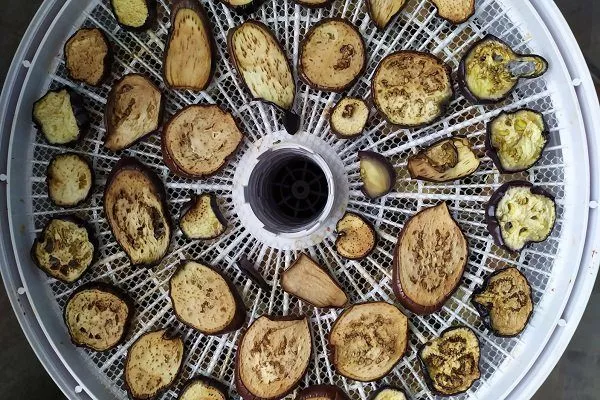
- In an electric dryer. Place the eggplants in the dehydrator and set the desired setting (the parameters vary by model and are specified in the dehydrator's instructions). The average drying time is 8 hours, and the drying time is 4-5 hours.
In canned
This is a universal and common method for storing eggplants, giving them a shelf life of 12-18 months. The vegetable can be used to make both full-fledged appetizers and semi-finished dishes. There are a huge number of recipes to suit every taste – caviar, salads, sautés, and much more.
Caviar is especially popular. It's easy to prepare, and there are plenty of recipes. Watch our video to learn how to make eggplant caviar with adjika:
In salted and fermented
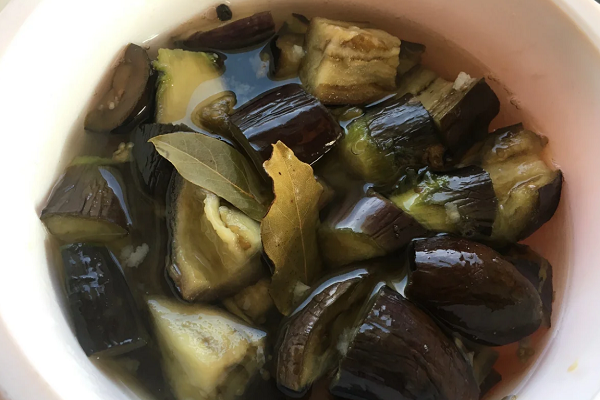
Pickled and fermented eggplants can be stored for up to two months, preferably in the refrigerator. Simple preparations result in delicious, ready-to-eat dishes.
Universal pickling recipe:
- Prepare the ingredients: eggplant, salt, garlic, and dill. Adjust the amount to taste, but salt should make up 2 to 3% of the total weight of the vegetable.
- Cut the fruits into any shape, chop the dill and garlic with a knife.
- Combine all ingredients, add salt and mix thoroughly.
- Place a lid/flat plate on top, and put some weight on it.
- Leave at room temperature for 2 to 4 days, depending on the temperature—the higher the temperature, the faster the process. You can tell when the eggplants are ready by the texture of the brine that forms from the juice—it should become cloudy.
- Place in the refrigerator and you can consume it in 3-5 days.
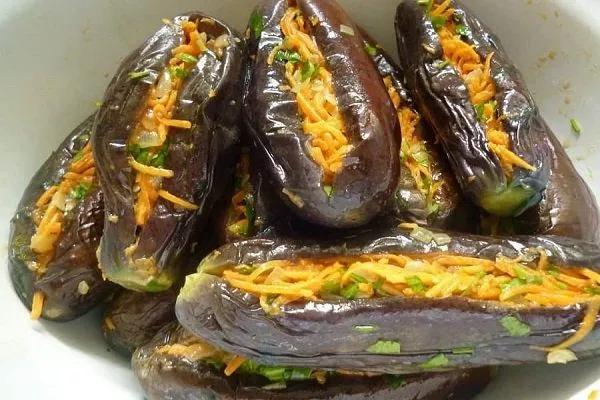
If you are a fan of pickled vegetables, prepare eggplants as follows:
- Cut whole fruits lengthwise into 2/3 pieces.
- Boil in salted water for 8-12 minutes (depending on size).
- Separately prepare the filling with garlic, parsley, dill, cilantro, and carrots. You can also add any other ingredients you like, such as nutmeg, onions, or walnuts.
- Remove the eggplants from the water and let them drain.
- Place the prepared filling inside and wrap the fruit with thread.
- Place the vegetables as tightly as possible in an enamel pan.
- Prepare the brine: boil water, add salt (30 g of salt per 1 liter of water).
- Pour the water over the eggplants and put pressure on them.
- Leave in a warm place for 3-4 days, then move to cooler conditions.
Preserving eggplants for a long time is easy; the main thing is to follow basic storage requirements. If you live in a private home, follow this advice: leave the eggplants in the garden beds, covering them with sawdust, straw, and other insulating materials to prevent them from freezing.