
The main reason eggplants taste bitter is the presence of solanine. It is a toxic organic compound belonging to the alkaloid group. It is most often formed when agricultural practices are not met and serves as a defense against pests and diseases. However, it is not the only factor affecting the vegetable's flavor.
Incorrectly selected variety
| Name | Ripening period | Fruit shape | Peel color | Fruit weight |
|---|---|---|---|---|
| Maxik | 90–95 days | Slightly elongated | Dark purple | 250–300 g |
| Hippopotamus | 90–95 days | Slightly elongated | Dark purple | 250–300 g |
| Valentina | 90–95 days | Long cylindrical | Almost black | 250 g |
| Lilac fog | 90–95 days | Elongated pear-shaped | Deep lilac | 150–200 g |
| Nancy | 90–95 days | Pear-shaped | Dark purple | 90–130 g |
| Quartet | 90–95 days | A small melon | Violet-white | 100–120 g |
| Purple Miracle | 90–95 days | Elongated | Almost black | 150–200 g |
| Epic | 90–95 days | By type of mango | Purple, glossy | 240–250 g |
| Diamond | 100–115 days | Classical | Glossy | 120–150 g |
| Sailor boy | 100–115 days | Melon-like | Purple with whitish stripes | 130–150 g |
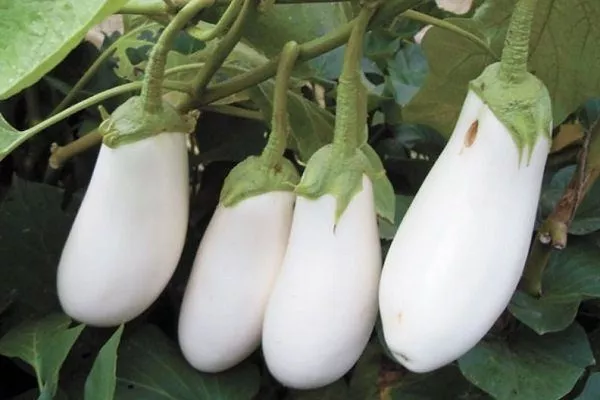
| Ping Pong | 100–115 days | Egg-shaped | White | 120 g |
| Comet | 100–115 days | Not specified | Very dark | 200 g |
| Pelican | 100–115 days | Cylindrically smooth | Not specified | 120 g |
| Swan | 100–115 days | Not specified | White and smooth | 230–250 g |
| Bull's forehead | 140–160 days | Wide, pear-shaped | Black | 200–250 g |
| Black beauty | 140–160 days | Egg-shaped, wide and not long | Not specified | 700–800 g |
| Brunette | 140–160 days | Not specified | Dark purple | 130–200 g |
There are varieties that taste bitter even under the best growing conditions. Vegetable lovers will have to learn to select crops that suit their needs.
Among the main varieties, the following are distinguished:
- varieties that, when cared for, can prevent the occurrence of bitterness;
- hybrids (designated F1) that have been bred specifically to have only a mild flavor.
Among the early ripening varieties, ripening in 90–95 days, the following stand out:
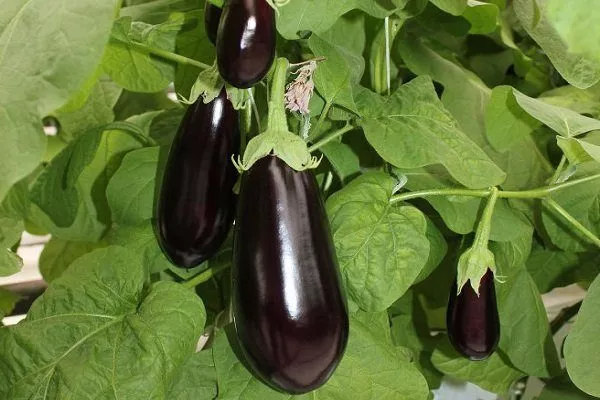
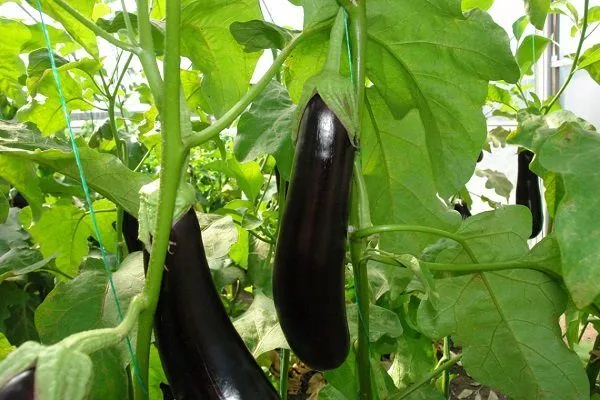
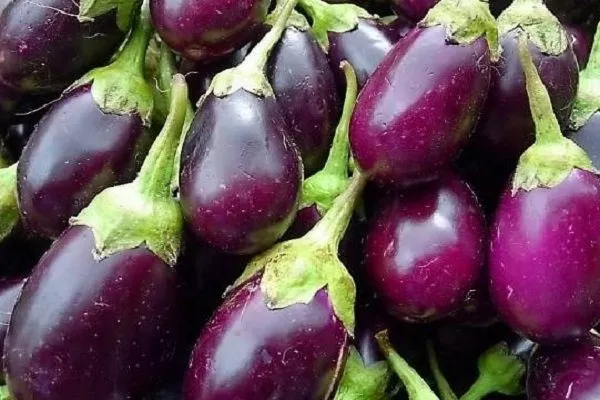
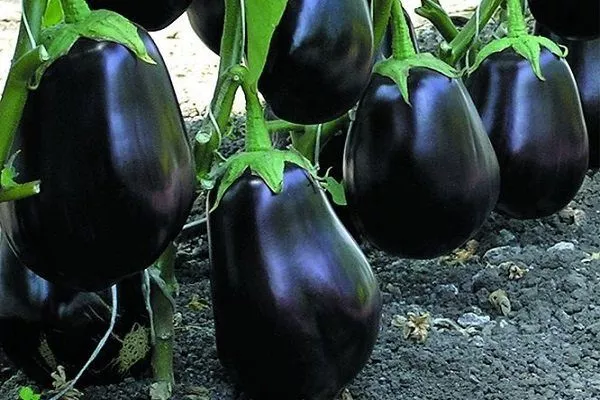
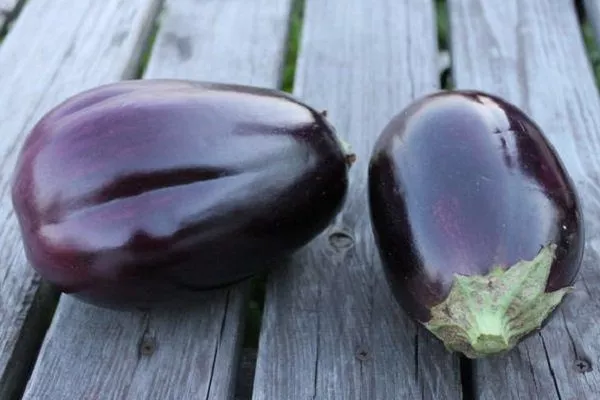
- Maksik, Behemoth. The fruits have a slightly elongated shape, smooth dark purple skin, and weigh from 250 to 300 g.

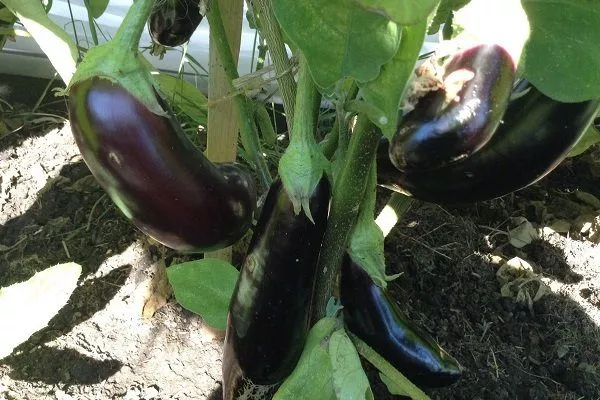
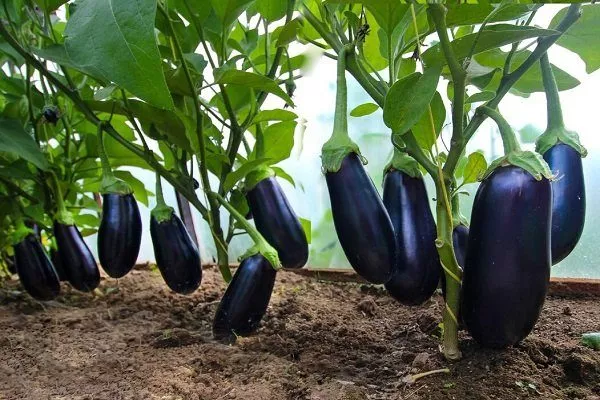
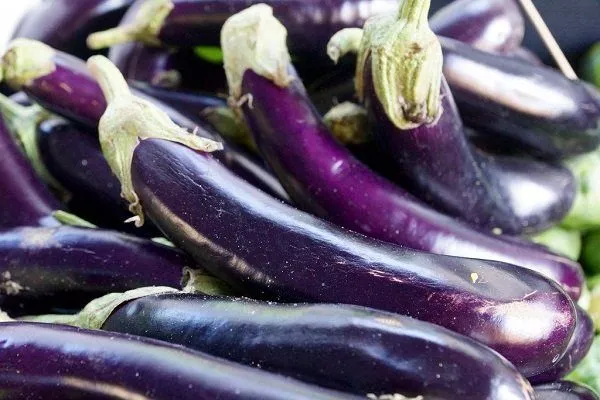
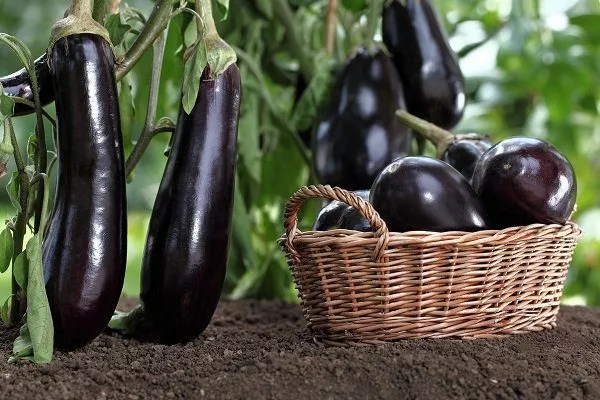
- Valentina. The color is almost black, the shape is long and cylindrical, and the skin is smooth. Each fruit weighs approximately 250 g.
- Lilac fog. Not grown in greenhouses. It requires insect pollinators. It has an elongated pear-shaped form with a vibrant, deep lilac color. Weight: 150–200 g.
- Nancy. The fruits are pear-shaped and dark purple. Their weight ranges from 90 to 130 g.
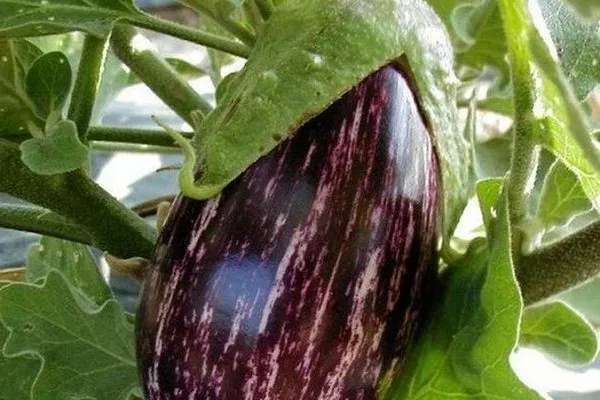
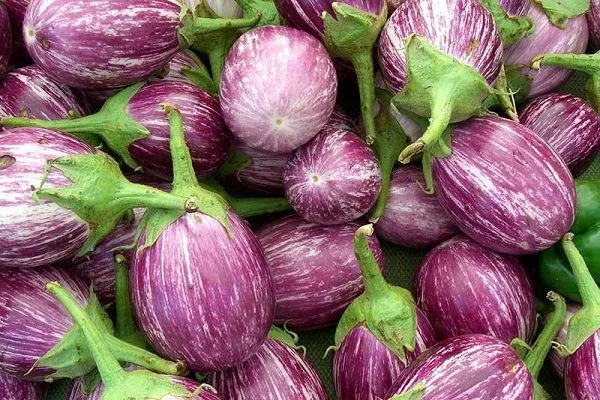
- Quartet. The shape resembles a small melon, the color is striped (purple-white), the weight is 100-120 g.
- Purple miracle. The peel surface is glossy, the color is almost black, the shape is elongated, the weight is from 150 to 200 g.
- Epic. Shape: mango-like, color: purple, glossy, weight: 240–250 g.
Mid-season varieties, ripening in 100–115 days:
- Diamond. Classic appearance with a glossy surface. Weighs from 120 to 150 g.
- Sailor boy. The shape is melon-like, the color is purple with thin whitish stripes (the pattern is discontinuous throughout the entire length of the vegetable). Each fruit weighs 130–150 g.
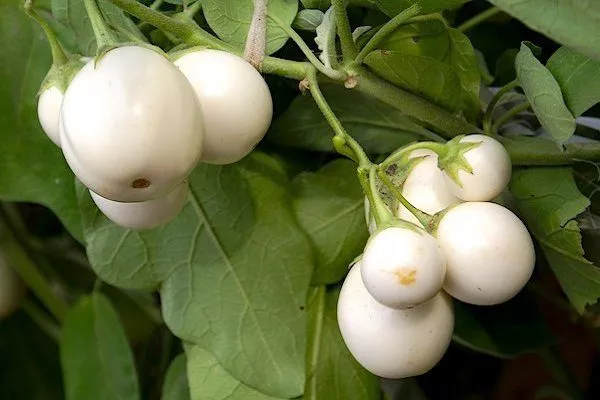
- Ping Pong. Small eggplants (up to 120 g) with an egg-shaped form. Distinguishing features include white skin.
- Comet. It is distinguished by its very dark color and average weight of 200 g.
- Pelican. Considered rare. Cylindrical shape, weight up to 120 g.
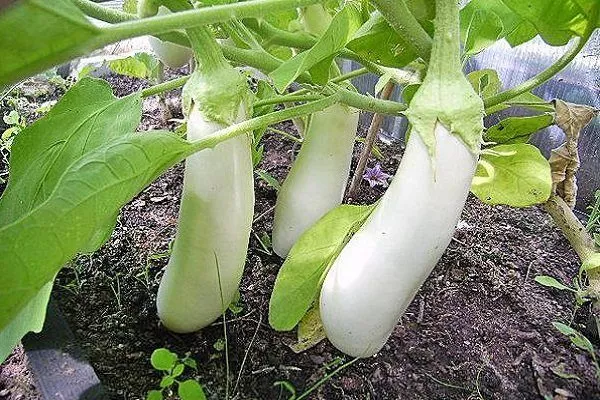
- Swan. The skin is white and smooth, weight up to 230–250 g.
Late-ripening varieties (ripening period from 140 to 160 days):
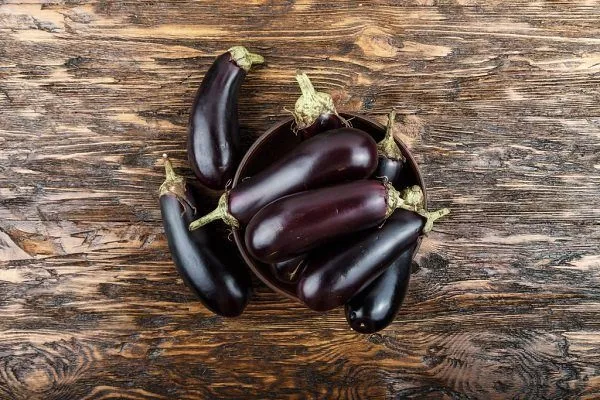
- Bull's forehead. The peel is black, the weight is 200–250 g, the surface is glossy, the shape is wide, pear-shaped.
- Black beauty. The largest hybrid eggplant (weighing 700–800 g). The fruit is ovoid, wide, and short.
- Brunette. The peel is dark purple, the weight is from 130 to 200 g, the surface is glossy.
Disrupted watering regime
This problem most often occurs during dry summers, when the soil dries out quickly. However, there are many varieties that develop bitterness when overwatered.
For open plantings, the volume of water should be approximately 6 liters per square meter, with a subsequent increase to 10 liters. frequency of watering climate and weather conditions influence, but in any case, once a week will be enough.
- ✓ The optimal water temperature for irrigation should not be lower than +20°C to avoid stress on plants.
- ✓ Watering should be done early in the morning or late in the evening to minimize evaporation and ensure maximum water absorption by the roots.
In a greenhouse, each bush will require up to 5 liters of water. The frequency of watering depends on the microclimate of the facility.
The video contains detailed information on the correct watering of eggplants:
A sudden change in weather
Eggplant is a warm-weather vegetable native to the south. It dislikes sudden fluctuations in air and soil temperature. It reacts to weather changes by accumulating bitterness in the flesh. This is especially true during the period of fruit formation and ripening.
If the region experiences frequent weather fluctuations, greenhouse cultivation is the only option. Alternatively, covering the plants with plastic film is recommended.
Late cleaning
The longer an eggplant sits in the garden, the greater the risk of bitterness. Solanine tends to accumulate over time. Therefore, the younger the vegetable, the less toxin it contains. Therefore, it's important to harvest it quickly.
Early-ripening varieties are harvested no later than 90 days after sowing. Mid-season varieties are harvested within 110 days, and late-ripening varieties within 150 days.
It's helpful to follow the expiration dates on the packaging. However, harvesting should be done 5-10 days earlier than the manufacturer's instructions.
- Collect all overripe fruits immediately to prevent solanine from accumulating in the remaining ones.
- Increase the frequency of checking the ripening of the remaining fruits to every 2-3 days.
- Perform an unscheduled fertilization with potassium fertilizers to strengthen the plants.
Determining overripeness is easy. The fruits become as follows:
- the skin is too tough;
- elasticity - absent or weak;
- the pulp is soft;
- the shade is dirty.
How to grow eggplants without bitterness?
Proper cultivation can prevent bitterness in eggplants. It's important to consider the nuances of paired grafting, the subtleties of seedling cultivation, and the proper agricultural care.
Growing seedlings
There are special requirements for sowing and growing seedlings. They must be strictly adhered to:
- Buy only zoned seeds - they grow easily in the specified region;
- Treat the seeds in a light pink solution of potassium permanganate - with a strong immune system, the vegetable no longer needs to produce solanine to protect itself from external adverse factors;
- Sow seeds to a depth of 2 cm, leaving at least 3 cm between seedlings;
- be sure to cover with film to keep the temperature at + 27–28°C;
- When the sprouts appear, feel free to move the box with seedlings to the windowsill where the sunlight is, but make sure that the rays are not directed at the greenery;
- Grow seedlings at a temperature of + 22°C before transferring them to open ground;
- Pick out the seedlings when 3 true leaves have formed - the container should be at least 500 ml in volume.
Paired grafting
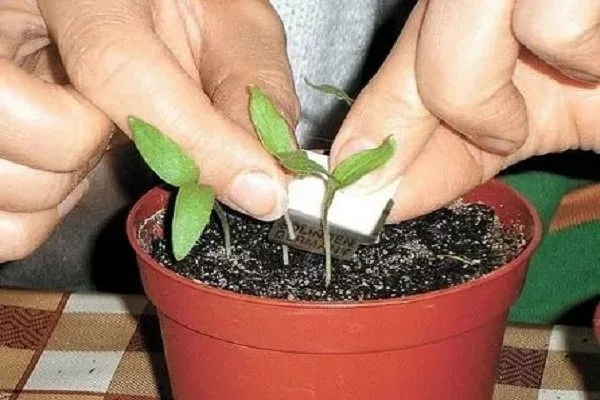
Grafting is a mandatory procedure for eggplants. It is done when the plant reaches 15 cm in height. The stem should be at least 0.5 cm in circumference. Paired grafting is performed as follows:
- Take 2 seedlings in your hands and place them so that they are at the same level.
- Using a sharp blade, make a 0.2 cm cut in the same places on each seedling.
- Connect them with cuts and immediately wrap tightly with cling film.
- Leave for 7 days. Then inspect the bushes—one will be weaker. Cut off its top 1–2 cm above the cut.
- Wait another 7 days, then transplant into a greenhouse or garden.
This results in a single plant, but with a powerful double root system.
Further care
Following simple agricultural care guidelines will allow you to reap a bountiful harvest of large, and most importantly, non-bitter, fruits. Key points:
- moisten the soil properly and in a timely manner;
- transplant and transplant at precise times;
- apply fertilizer to strengthen the vegetable’s immunity;
- do not allow over-ripening.
How to remove bitterness?
If you still can't get the vegetable to taste bitter, the only option is to correct the situation during cooking. There are several options.
The most common method is soaking in salted water. This is the traditional method our great-grandmothers used. The salt draws out the juices along with the bitter substances. Here's how:
- Dissolve 1 tablespoon of table salt per 1 liter of water.
- Cut the vegetables into rings or cubes (optional).
- Place in a basin and fill with the resulting solution.
- Place a plate or lid with a weight on top.
- Leave for 40–45 minutes, rinse under running water.
Salt can also be used dry. Unlike soaking in water, this process is quicker. To do this, sprinkle the sliced eggplants with coarse table salt and let them soak for 20 to 30 minutes. Then rinse and dry. Monitor the amount of salt to prevent the vegetables from absorbing too much.
Similar to salt soaking, the vegetable's bitterness is removed using milk. This product also softens the eggplant's hardened skin. The process:
- Cut the vegetables as in the previous case.
- Place them in fresh, homemade milk.
- Leave for 30 minutes.
- Squeeze the fruits.
- Place on a cloth or paper towel to dry.
Heat treatment quickly and effectively removes unpleasant tastes. No salt is added to the water. This procedure can be performed in two ways:
- Pour boiling water over pre-cut eggplants, leave for 5-7 minutes, discard in a colander, squeeze out;
- Throw the eggplants into boiling water and boil for 2 minutes, remove and squeeze out the liquid.
A less popular option is freezing the product. It's rarely used, as not all dishes can be cooked after defrosting. The process involves the following steps:
- Wash whole eggplants and dry them with a towel.
- Cut the fruits into thin slices.
- Place in 1 layer on a baking sheet, tray or any flat dish.
- Place in the freezer.
- Keep for at least 4 hours.
- Remove and let defrost.
- Squeeze out the liquid.
- If necessary, dry it slightly or cook the dish immediately, but keep in mind that after heat treatment the vegetable acquires a puree-like consistency.
The easiest way to remove bitterness from eggplant is to simply peel and seed the vegetable. Solanine is most concentrated in the seeds and skin. The procedure is as follows:
- Using a knife, cut off the peel by 0.2–0.5 cm (depending on its thickness).
- Cut the fruit into 2 parts lengthwise.
- Use a spoon to remove the seeds.
Bitter eggplants are not recommended for consumption due to the risk of solanine poisoning. The toxin can be prevented during the growing season by following proper agricultural practices. If bitterness is not achieved, the flavor can be removed by processing before cooking.
This is a very relevant topic. My eggplants always taste bitter. This year, I followed your advice and tried soaking them in milk. The result was simply superb! Now I'll be using your other tips as well—on planting and subsequent care. I hope they won't be bitter next year.