
The Ethiopian eggplant is an excellent choice for vegetable lovers. It is renowned for its high yield, excellent taste, and beautiful appearance. By following proper cultivation practices and creating optimal growing conditions, you can reap a bountiful harvest of juicy and healthy blue fruits.
Description of the plant and fruits
It is distinguished by its compact size and early ripening period. The plants have a semi-spreading habit and reach a height of about 60-70 cm. The stems are strong and slightly pubescent. The bushes are covered with large, dark green leaves with wavy edges.
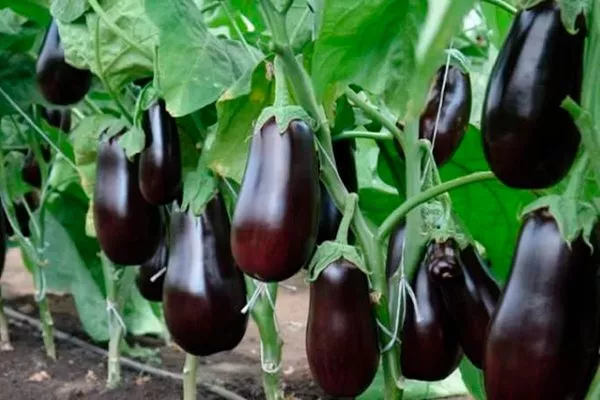
The fruits are elongated, pear-shaped, and have a pointed tip. The skin is dark purple, smooth, and shiny. The fruit has tender, juicy white flesh, and small, light-brown seeds. An eggplant weighs on average 200-300 g.
Characteristics
The variety was developed in Ethiopia, a country in East Africa. It is one of the oldest cultivated varieties in the region. Ethiopian vegetables were brought to Russia in the early 20th century and have since been widely cultivated in the southern regions of the country.
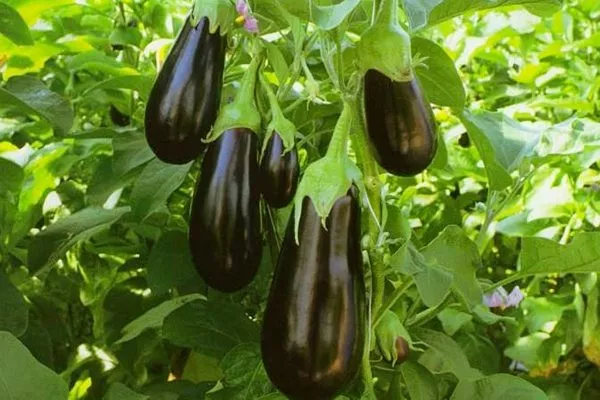
The crop has adapted well to local climate conditions and is popular with gardeners due to its low maintenance and high yield. Characteristics of the variety:
- Early ripening period (fruits ripen 100-110 days after emergence).
- High yield (up to 10 kg per 1 sq. m).
- Resistance to major eggplant diseases and pests.
- Good transportability and shelf life of fruits.
- Suitable for growing both in open ground and in greenhouses.
Ethiopian eggplants are currently grown in many countries worldwide, including Russia, Europe, Asia, and the Americas. They are prized for their flavor, early maturity, and resistance to adverse environmental conditions.
Growing and care rules
Sow eggplant seeds for seedlings in late February or early March. Use loose, nutritious soil, such as a mixture of peat, humus, and sand in equal proportions. Plant the seeds 1-1.5 cm deep.
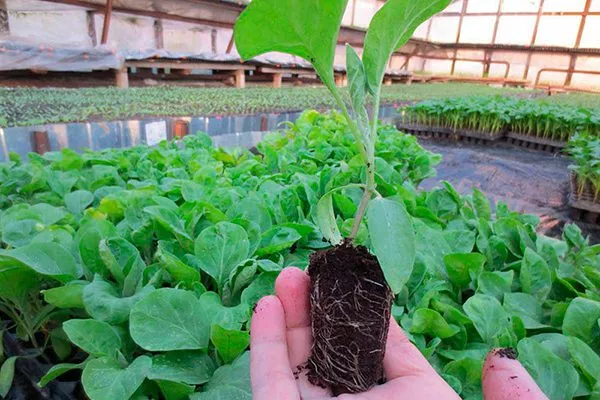
The optimal temperature for seed germination is 25-28°C. Provide sufficient lighting; supplemental lighting is recommended if necessary.
Growing seedlings:
- Once the seedlings emerge, provide the seedlings with good lighting and moderate watering.
- Dive the seedlings into separate containers at the stage of 2-3 true leaves.
- Two weeks before planting in open ground, begin hardening off the seedlings, gradually acclimating them to lower temperatures and sun exposure.
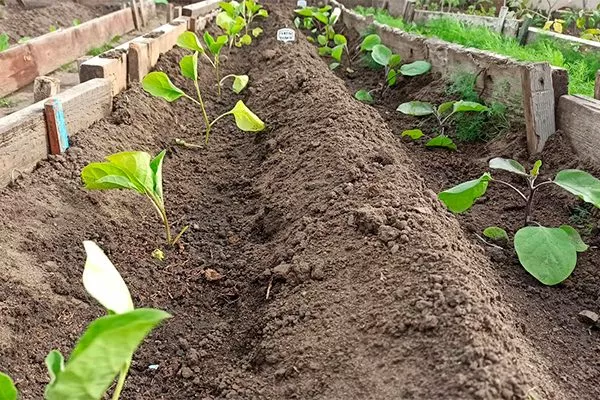
- Plant seedlings in open ground when the threat of frost has passed and the soil has warmed up to +15-18°C.
- Choose a sunny area protected from the wind.
- Before planting, add organic fertilizers, such as compost or humus, to the soil.
- Plant seedlings at a distance of 50-60 cm from each other.
- The planting depth should be the same as in the container where the seedlings were grown.
- After planting, water the plants and mulch the soil around them.
- ✓ Optimum soil temperature for planting seedlings: +15-18°C.
- ✓ Distance between plants when planting: 50-60 cm.
Further care:
- Water regularly, especially in hot and dry weather.
- Feed every 2-3 weeks with complex fertilizer.
- Loosen the soil and remove weeds.
- Shape the bushes by removing excess shoots and leaves to ensure better air circulation and sunlight access to the fruits.
- Protect against pests and diseases using organic or chemical plant protection products.
Analogues of the variety
| Name | Ripening period | Disease resistance | Fruit shape |
|---|---|---|---|
| Diamond | Average | High | Large, dark purple |
| Bagheera | Early | High | Cylindrical |
| Black Beauty | Early | High | Pear-shaped |
| Helios | Average | High | Cylindrical |
| Giselle | Early | High | Oval |
| Caviar | Average | High | Cylindrical |
There are eggplant varieties that have similar ripening times, fruit shape, and color to the Ethiopian. They have excellent flavor and are resistant to the plant's main diseases.
Analogues:
- Diamond. Characterized by large, dark purple fruits, it is resistant to major eggplant diseases.
- BagheeraIt has a cylindrical shape and dark purple skin. It is characterized by high yield and resistance to adverse growing conditions.
- Black BeautyA dark purple vegetable with a pear-shaped configuration. Valued for its excellent taste and disease resistance.
- Helios. The fruits are cylindrical and have dark purple skin. Suitable for growing in open ground and greenhouses.
- Giselle. "Blue" varieties are oval-shaped. The skin is dark purple. They are resistant to major diseases.
- Caviar. It has the same shape and color as Helios and is distinguished by its high yield and excellent taste.
The Ethiopian eggplant is a versatile variety that is deservedly popular among gardeners thanks to its high yield, excellent flavor, and disease resistance. Proper and timely care guarantees strong immunity and high yields.