
The Black Beauty variety is distinguished by its high yields and disease resistance. Gardeners are also drawn to its beautiful, large fruits with tender, non-bitter flesh. Let's learn about all the characteristics of this variety, how to plant it, and how to grow it.
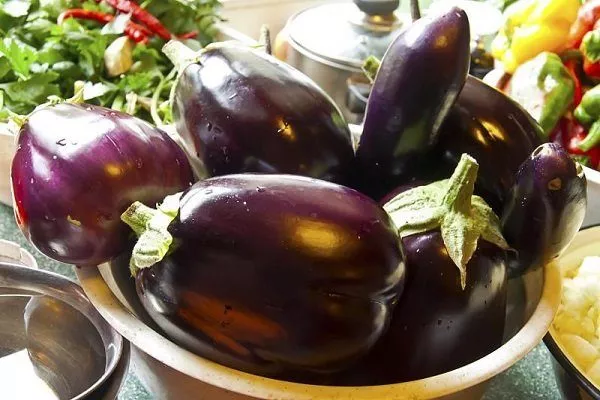
The Black Beauty eggplant produces a high yield.
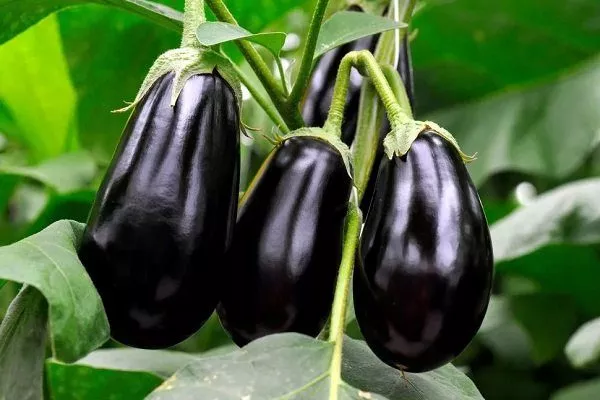
The black beauty tolerates transportation well.

Eggplant variety Black Beauty
The history of the selection of the Black Beauty eggplant
The "Black Beauty" eggplant variety is relatively new. It was developed by Russian breeders in the early 2000s. This new variety underwent three years of variety testing and was registered in the State Register in 2006.
The variety is suitable for both open and closed ground. It is recommended for cultivation in the North Caucasus and Central Black Earth regions. In the south of the country, "Black Beauty" can be grown without cover, while in the central part of the country and the Urals, it requires cover.
Description and characteristics of the variety
The "Black Beauty" variety earned its name for a reason. Both the plant and the fruit embody the best of eggplants.
Bushes
The bushes are compact and low-growing, with good branching. They are quite robust and can easily support the weight of their fruit.
Plant characteristics:
- height – 60-70 cm;
- stem pubescent;
- leaves are small, edges are serrated, color is emerald;
- the flowers are large, light purple, and continue to bloom throughout the season;
- the first fruits are formed in the lower part.
Fruit
The fruits of the Black Beauty have a beautiful appearance and excellent commercial qualities.
Fruit characteristics:
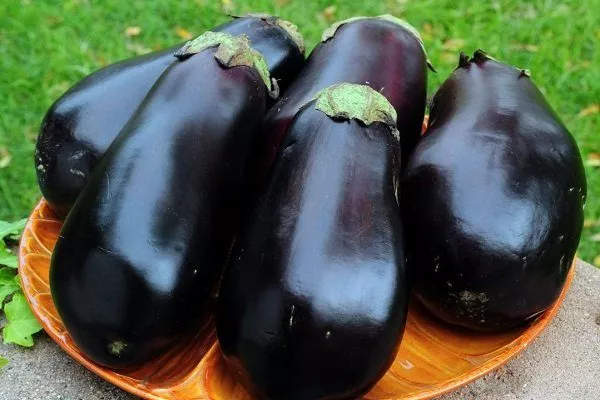
- shape – pear-shaped;
- length – 13-15 cm;
- diameter – 11-12 cm;
- weight – up to 900 g;
- skin color - dark purple;
- before reaching technical maturity, the fruit may have a white or pink tint;
- the skin is thin;
- there are practically no seeds;
- the pulp is creamy, with excellent taste characteristics, without a bitter aftertaste;
Characteristics
The variety belongs to the mid-season category and has excellent characteristics, which is why it is in demand among gardeners.
Characteristics of the Black Beauty eggplant:
| Characteristics/parameters | Description/Meaning |
| Ripening time | 120-140 days – in open ground, 100-120 days – in a greenhouse |
| Productivity | 12 kg per 1 sq. m, from one bush – 3-4 kg |
| Duration of fruiting | 2 months |
| Application | Universal |
| Disease resistance | High |
| Resistance to adverse conditions | High |
Applications of the Black Beauty fruits:
- drying;
- freezing;
- preparation of hot dishes and cold appetizers;
- canning;
- salting and pickling.
"Black Beauty" withstands harsh weather conditions. It continues to produce fruit even in cool and rainy weather, which is unusual for eggplants.
Advantages and disadvantages of the variety
A comparison of the pros and cons of this variety will help you decide on planting "Black Beauty".
Pros:
- high and stable yield;
- excellent marketability of fruits;
- simple agricultural technology;
- high immunity and vitality;
- universal use in cooking;
- Suitable for growing in any way – in open or closed ground;
- friendly ripening of fruits;
- the fruits tolerate transportation well;
- Eggplants retain their taste and commercial qualities during storage.
Planting and care features
To get an early harvest, eggplants are grown using seedlings, and "Black Beauty" is no exception. Let's learn how to properly prepare for growing seedlings, and how to care for it.
How to prepare seeds properly?
Seeds purchased from agricultural stores are usually treated and ready for planting. No preparation is required. However, untreated seeds or those collected at home must be prepared for planting.
Seed treatment procedure:
- Sorting. Select seeds that are abnormally sized. Seeds of similar size will germinate at the same time. Also, set aside any seeds with defects or signs of mold.
- Checking for germination. Soak the seeds in salt water for 20 minutes. Discard any seeds that float to the surface—they are not viable. After soaking, dry the seeds.
- Disinfection. There are several ways:
- Soak the seeds in a 1% potassium permanganate solution for 20 minutes.
- Soak the seeds in hot water (50°C) for 20 minutes. Then soak them in cold water for one minute.
- Treatment in a stimulator. For greater viability, soak the planting material in one of the following solutions:
- wood ash solution;
- sodium humate;
- honey solution;
- aloe juice;
- nitrophoska (10 g per 1 liter of water);
- ready-made preparations – Epin, Zircon, etc.
- Hardening. Place the processed and dried seeds in the refrigerator for 24 hours.
Eggplant seeds take a long time to germinate, so many gardeners prefer to germinate them before sowing.
Germination order:
- Place the seeds, washed in a saline solution, on damp gauze.
- Place the gauze with seeds in a shallow container.
- Place the seeds in a warm place to germinate, for example, near a radiator.
- Moisten the cheesecloth as needed. Don't allow the seeds to dry out, even for a short time.
- As soon as the sprouts appear, the seeds are ready for planting.
Choosing a container for seedlings
Eggplant seedlings have fragile root systems that don't respond well to transplanting. This is why most gardeners prefer to plant the seeds in individual containers to avoid the need for transplanting.
Growing seedlings in containers is also common practice. Once the seedlings reach a certain age, they should be transplanted into individual pots.
The following can be used as containers for growing seedlings:
- Individual containers (glasses). This is the optimal option for growing seedlings – they are grown in cups without picking.
- Peat pots. A convenient, but more expensive option. It eliminates the need for repotting. When it's time to plant the seedlings, they are placed in the soil directly in the pot.
- Peat tablets. When the seedlings grow up, they, along with the tablets swollen with water, are placed in individual containers filled with soil.
- Containers. This is the most inconvenient option. You can sow a lot of seedlings at once, but then they have to be transplanted—pricked out.
Soil preparation
The seedlings are grown in a nutrient substrate, which can be purchased at a specialty store or prepared independently.
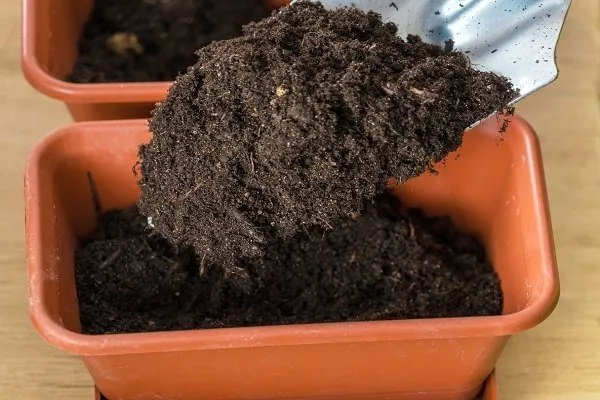
Soil requirements for seedlings:
- absence of weed seeds;
- complete disinfection – there should be no fungi or pests;
- high nutritional value;
- neutral acidity;
- loose structure.
Store-bought soil is convenient because it's completely ready to use and contains all the necessary nutrients. Moreover, these nutrients are included precisely enough to allow seedlings to grow without additional feeding. This type of substrate has one drawback: it's expensive.
To avoid buying substrate, gardeners prepare their own potting mix. Mix the ingredients in the following proportions:
- rotted manure or humus – 2 parts;
- peat – 1 part;
- rotted sawdust – 0.5 parts;
- coarse sand – 0.5 parts.
Any homemade mixture must be disinfected with a solution of potassium permanganate. It is also recommended to add a small amount of wood ash to the soil mixture – 1 cup per 10 liters of mixture.
Sowing seeds
Seed sowing for seedlings begins 60-75 days before the date of planting in the ground or greenhouse. Based on the region's climate, the sowing time is calculated to ensure seedlings grow by the designated date.
Eggplant seeds are typically sown in February or early March. The seedlings then emerge by May, when the soil and air are warm enough for planting.
Sowing seeds in the traditional way:
- Two hours before sowing, water the soil with a warm solution of potassium permanganate. Use a weak, pale pink solution.
- Place the seeds into the soil to a depth of 0.5-1 cm. Sowing is done in:
- Individual cups or peat pots. Place 1 or 2 seeds in the center of each cup.
- Containers. Sow seeds in rows, leaving 5-6 cm between each row. Space adjacent seeds 2 cm apart. Water the furrows with warm water before sowing.
- Cover the planted seeds with soil and compact them lightly with your fingers.
- Water the crops using a watering can or spray bottle with warm, settled water.
- Cover the seeds with a transparent material such as film or glass and place them in a warm place. The optimal temperature for seed germination is 20–26°C.
Pre-sprouted seeds sprout on the 5th day, unsprouted seeds sprout on the 8-10th day.
Caring for seedlings
Caring for seedlings is one of the most crucial steps in growing eggplants. To ensure strong seedlings, it's essential to create the most favorable conditions for these delicate and sensitive plants.
Care measures for Black Beauty seedlings:
- Watering. During the first 10 days after germination, water the seedlings once a week to avoid weakening them with overwatering. Use only warm water (25–28°C). As they grow, gradually increase the frequency and amount of watering, but do so carefully, as overwatering can lead to root rot.
When watering, avoid getting water on the leaves, as moisture can promote fungal diseases. As a preventative measure, water the seedlings with a weak solution of potassium permanganate. - Top dressing. Initially, the seedlings have sufficient nutritional reserves, but as they grow, additional feeding is necessary. A week before transplanting, the seedlings are given a single feeding with a complex fertilizer. Dissolve 25 grams of fertilizer in a bucket of water. The resulting solution is used instead of water for irrigation. Other fertilizers used for the initial feeding include Rastvorin, Kemira-Universal, Nitrophoska, and others.
The second feeding should contain potassium and phosphorus. Dissolve ammonium nitrate (1 g), superphosphate (1.5 g), and potassium sulfate (1 g) in 1 liter of water. You can also add an organic fertilizer, such as "Biohumus." - Temperature conditions. The crop reacts negatively to temperature fluctuations. Daytime temperatures should be between 23 and 25°C. Nighttime temperatures should not fall below 16°C, and daytime temperatures should not fall below 18°C.
- Lighting. For normal growth and development, seedlings require 12-14 hours of daylight. Insufficient light causes stems to stretch and thin, bud formation is delayed, and seedlings lose viability.
To avoid a lack of light, seedlings are placed on windowsills and additional lighting is provided, including LED or fluorescent lamps. - Hardening off seedlings. To ensure the seedlings survive transplantation safely and with minimal stress, acclimate them to lower temperatures well in advance—approximately two weeks beforehand. The temperature in the growing room is gradually reduced to 16°C.
Caring for eggplants in open ground
Temperature conditions are especially important for eggplants, watering and fertilizing. Only by providing the crop with favorable growing conditions can one expect a good harvest.
Timing of transplantation to a permanent location
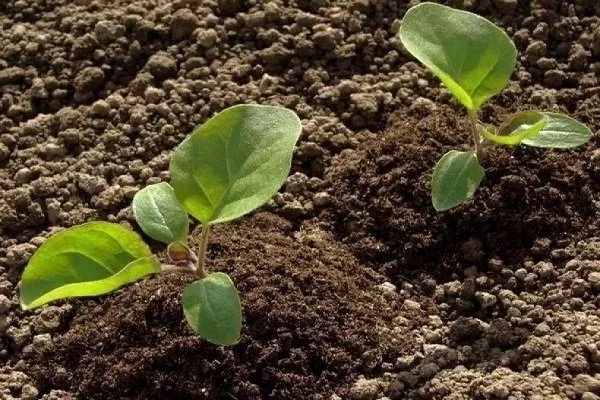
Black Beauty seedlings are planted in the ground two weeks later than in the greenhouse. Typically, the seedlings are transplanted in late May or early June, depending on weather conditions.
- ✓ The optimal soil temperature for planting seedlings should not be below +15°C.
- ✓ The distance between plants when planting should be at least 30 cm to ensure sufficient space for growth.
The air temperature serves as a guideline for planting eggplant seedlings; it should be consistently fixed at +15…+18 °C.
Transplanting seedlings into open ground
It is recommended to plant eggplant seedlings in the evening if the weather is sunny, or in the morning if it is cloudy.
Transplant rules:
- A few days before planting, watering is stopped.
- 1-2 hours before transplanting, water the seedlings generously to make it easier to remove the soil lump.
- Remove the plant from the container very carefully, pinching the stem of the seedling between your middle and index fingers. With your other hand, turn the container over and pull it toward you.
Transplantation procedure:
- Prepare planting holes. Depth: 25 cm. Distance between rows: 60-70 cm. Distance between adjacent plants: 30-50 cm.
- Remove the seedling from the pot and, holding the soil ball, quickly move it into the prepared hole. If the seedlings are grown in peat pots, there's no need to remove them—place them in the hole along with the pot.
- Compact the soil around the seedling stem moderately to prevent erosion, but do not compact it too much.
- Water the planted seedlings with warm, settled water, using 1.5-2 liters per plant.
- Cover the plantings with mulch—compost, peat, or straw. You can also use non-woven material. Spread it out and secure it before planting, then make holes in the desired locations.
Watering and fertilizing
The "Black Beauty" eggplant variety requires regular watering and fertilizing. This is especially important during the fruit formation period.
Watering rules:
- the bushes are watered for the first time 3-4 days after planting;
- watering frequency – once a week, taking into account the weather and amount of precipitation;
- watering rate – 30 l per 1 sq. m;
- water - warm and settled;
- during the period of fruit filling and in hot weather, the frequency of watering is increased;
- Plants are watered only at the roots; sprinkling is contraindicated.
After watering, the soil is loosened and weeded. Mulching helps prevent weed growth. Mulch also prevents moisture evaporation from the soil, allowing for less frequent watering.
To achieve a high yield, "Black Beauty" is fed with complex fertilizers. When applying them, consider the growing season. Initially, the plant requires nitrogen, and as the fruit begins to set and ripen, potassium and phosphorus are added.
- The first feeding should be carried out 2 weeks after planting the seedlings, using a complex fertilizer with a predominance of nitrogen.
- The second feeding should be carried out at the beginning of flowering, increasing the proportion of potassium and phosphorus.
- The third feeding should be carried out during the period of fruit formation, using fertilizers with a high potassium content.
Rules for applying fertilizers:
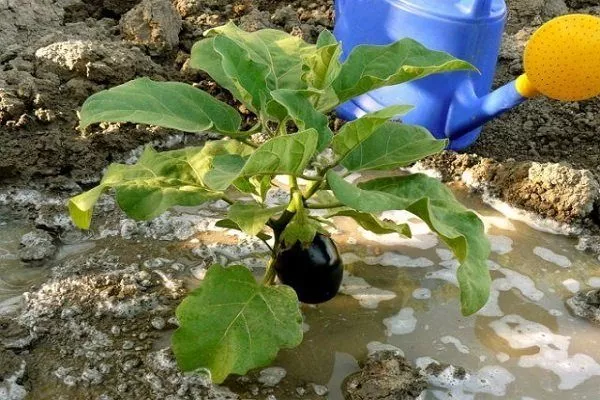
- Eggplants are fed every 10-14 days, but not less than 3-4 times per season;
- the crop should not be overfed with organic matter, since plants, having received a lot of nitrogen, can actively increase green mass to the detriment of yield;
- At the beginning of the growing season, the plant needs nitrogen, and when the fruits begin to set and ripen, it needs potassium and phosphorus.
Example of eggplant feeding:
- After transplanting to a permanent location, apply nitroammophoska (40 g per 10 liters of water). The recommended dose per bush is 0.5 liters.
- During flowering, apply a complex fertilizer and spray the bushes with a solution of boric acid - 2 g per 10 liters of water.
- During the fruit set period, a 1:10 mullein solution is applied. The recommended fertilization rate is 0.5 liters of mullein per plant.
- Next, as needed, complex fertilizers are added.
Bush formation
The goal of pruning is to limit the growth of the main stem. No more than a dozen fruit buds are left on each bush to ensure large fruits. Yellowed leaves and damaged fruits, if any, are regularly removed.
Pinching out side shoots is not necessary for this variety. It is usually done if the plant is weakened or if an earlier harvest is desired.
Treatment against diseases and pests
The variety is resistant to diseases, but requires preventive measures.
Recommended treatment:
- against late blight - with a solution of wood ash;
- A soap solution and Fitosporin help against tobacco mosaic;
- For gray rot, use Horus or Anthracnol;
- Black leg is prevented by Trichodermin.
The most dangerous pests:
- mole cricket - it is scared away with garlic and traps are set;
- slugs - mustard and pepper are scattered against them;
- Colorado potato beetle - pollinates bushes with ash.
Harvesting
Eggplants are being harvested Technical maturity occurs 30-40 days after flowering. Eggplants ripen gradually and are harvested selectively. The fruits should be dark in color and have firm flesh.
The fruits don't keep for long; they lose flavor and freshness after 2-4 weeks. For storage, they are placed in a cellar or refrigerator.
A gardener shares his experience growing the Black Beauty eggplant variety in the following video:
Reviews of the variety
The "Black Beauty" variety will only yield a good harvest under favorable growing conditions and with proper care. The reward for all this work will be high yields of delicious eggplants.