
The main distinguishing feature and advantage of the "Almaz" eggplant is its ability to grow and bear fruit in regions with short, cool summers. Let's learn about all the characteristics of this variety, how to grow it, and how to achieve high yields.
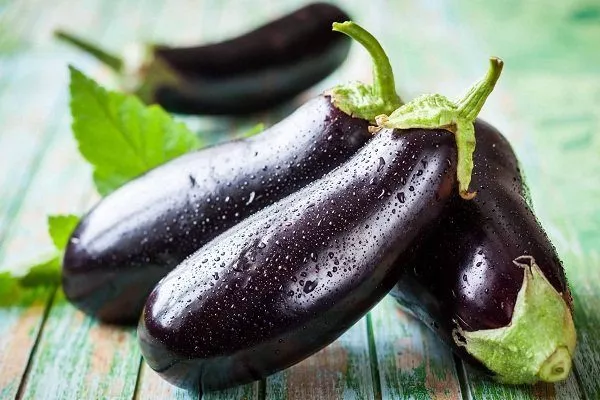
The eggplant variety "Almaz" does not contain bitterness.
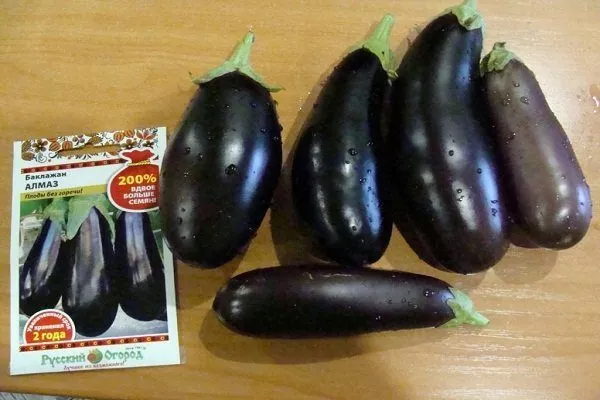
The Almaz variety has a high yield.
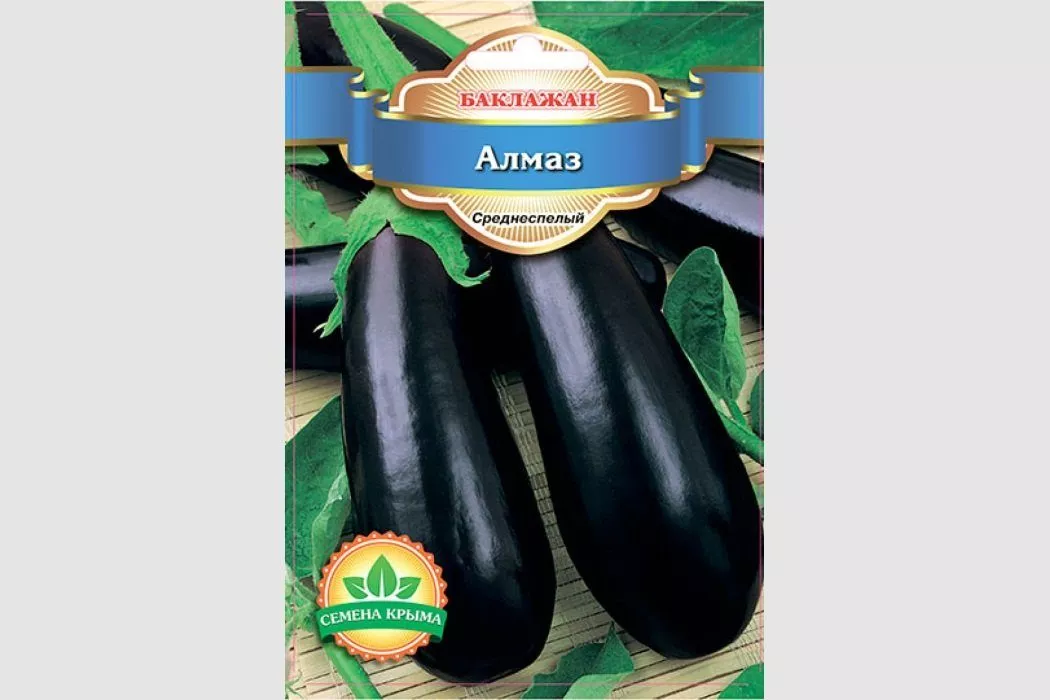
Eggplant Diamond
History of variety selection
The "Almaz" eggplant variety is about fifty years old. It was developed by Ukrainian breeders at the Donetsk Experimental Station. It was registered in the late 1980s. The rights and patent for the variety were later transferred to the "Intersemya" seed farm.
Eggplant Diamond: description of the variety
Eggplant is a heat-loving crop, but the "Almaz" variety can grow and produce fruit reliably in temperate climates. Read more about the varietal characteristics and qualities of this eggplant below.
Appearance of the plant
The bushes of this variety are compact, 45-60 cm tall. They are strong, stable, and have a well-developed root system.
Other features of the Almaz bushes:
- dense foliage cover;
- leaves are medium-sized, bright green, shape – extended oval;
- There are no spiny processes on the peduncle and calyx.
Fruit
The Almaz variety produces large, glossy fruits that turn brown when ripe. When fully ripe, the eggplants turn a deep purple.
Fruit characteristics:
- shape – cylindrical;
- length – 15-20 cm;
- diameter – from 4 to 7 cm;
- weight – 90-170 g;
- The pulp is white with a greenish tint, with a large number of seeds and no bitterness.
Seeds in ripe fruits are unsuitable for propagation—they're immature. To obtain planting material, overripe eggplants are needed.
The fruits of the "Almaz" variety are well stored and can be transported over long distances.
Productivity and fruiting
"Almaz" is a mid-season variety. The exact ripening time depends on climate, weather conditions, and care. This high-yielding variety produces fruit consistently throughout the season.
Characteristics of the variety:
- Productivity: from 5 to 7.5 kg per 1 sq. m.
- Ripening period: from the moment of emergence to the technical maturity of the fruit, it takes from 110 to 150 days.
Areas of use of fruits
The Almaz fruit has excellent flavor characteristics when cooked properly. Raw, the fruit is virtually tasteless, but when cooked, it develops a variety of flavors.
The fruits are used to make:
- hot dishes – eggplants are stewed, boiled, baked;
- cold appetizers;
- Winter preparations - eggplants are fermented, salted, and marinated.
Resistance to diseases and pests
The variety has average disease and pest resistance. There are diseases to which "Almaz" is very resistant, and to which it has very little immunity.
Features of the Almaz immunity:
- high resistance to stolbur and viral mosaic;
- average resistance to late blight and fusarium;
- poor resistance to insects.
The Colorado potato beetle is particularly dangerous for this variety; its larvae can quickly consume all the plant's leaves. Other pests that attack the Almaz include spider mites, mole crickets, aphids, slugs, and whiteflies.
In which regions is it best to grow this variety?
This variety can be grown in virtually all regions of Russia. In the south, it is grown in open ground, while in areas with cool summers, it is grown in greenhouses and under plastic covers.
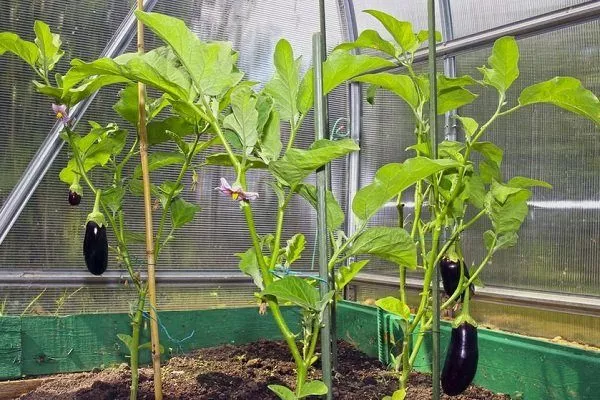
"Almaz" can be grown in the following regions:
- Central Volga region;
- Middle and Southern Urals;
- south of Western Siberia;
- Far East.
Advantages and disadvantages
The popularity of the Almaz eggplant among our gardeners is due to the advantages and benefits of this variety.
Pros:
- high yield;
- beautiful presentation of fruits;
- stability of fruiting;
- sufficient resistance to fungi and viruses;
- easy care and undemanding to growing conditions;
- pleasant taste without bitterness;
- shelf life and transportability;
- there are no thorns on the stalk.
The Almaz has few disadvantages:
- temperature requirements;
- the need for periodic feeding;
- the lower fruits touch the soil - this can cause rotting;
- susceptible to attacks by the Colorado potato beetle.
Features of planting and growing
In most regions, growing seedlings is the only viable way to harvest. In southern regions, it's possible to grow eggplants by sowing seeds directly into the ground, but this option is unproductive—most seeds fail to germinate.
- ✓ Optimum soil temperature for planting seedlings: not lower than +15°C at a depth of 10 cm.
- ✓ The need to use phytolamps for seedlings in regions with insufficient natural light: at least 10-12 hours of light per day.
Timing of sowing seeds for seedlings
Eggplant seeds are sown for seedlings from late February to mid-March. The period from germination to planting in open ground takes 60-75 days. Seedlings are planted in greenhouses a fortnight earlier.
In southern regions, seedlings are planted in May. In temperate latitudes, during this period, they can only be planted in a greenhouse or under plastic.
When choosing a transplanting time, consider the current weather. Eggplants are planted outdoors when the air temperature reaches 20°C.
Soil preparation
Soil options for growing seedlings:
- Ready-made soil mixture. It can be purchased at specialty stores. This soil requires no fertilization or disinfection—it's completely ready for use.
- Homemade. Mix equal parts garden soil, peat, and humus. Add 1 cup of ash per bucket of the mixture.
If the mixture is prepared independently, it must be disinfected from fungal infections, bacteria and insects.
Methods of soil disinfection:
- Preheat the oven to 100°C and soak the soil for 15 minutes. After heating, the soil needs time to recover, so let it rest for 7-10 days before using.
- Place the soil in the microwave for 5 minutes.
- Pour hydrogen peroxide solution into the soil. To prepare it, dilute 20 ml of 3% hydrogen peroxide in 1 liter of water.
- Place the soil in a container with a hole in the bottom. Pour boiling water or a weak solution of potassium permanganate over the soil.
Seed preparation
Seeds can be purchased at seed stores or harvested at home. In the latter case, the planting material must be prepared for sowing.
If the packaging of the seeds you purchased does not indicate that they have been “processed,” you will also have to go through several steps with them.
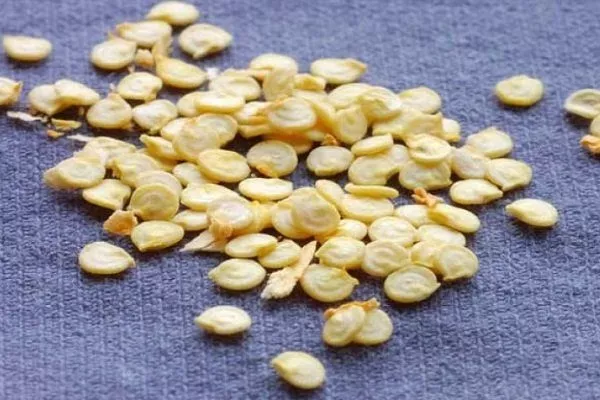
How to prepare seeds for sowing:
- Sorting. Place the seeds in room-temperature water. Discard any that float to the surface; they won't germinate.
- Calibration. Select seeds that are different in size from the normal ones to ensure uniform germination. This can be done manually, or if there are many seeds, using a special sieve.
- Disinfection. A 3% hydrogen peroxide solution is suitable for this purpose. Heat the solution to 50°C and soak the seeds in it for 3-5 minutes. A weak solution of potassium permanganate can also be used for treatment; soak the seeds in it for about half an hour.
- Stimulating growth. If you do not plan to germinate the seeds, treat them with growth stimulants, such as Kornevin, Zircon, or Epin.
Some gardeners prefer to germinate the seeds before sowing. To do this, wrap the seeds in gauze soaked in water for 2-3 days.
Only seeds collected from home can be germinated. Store-bought seedlings should not be germinated, as this will damage the protective fungicide coating.
Sowing seeds for seedlings
Eggplant seeds can be planted in individual cups or in larger containers. In the latter case, transplanting the seedlings into individual containers will be necessary.
Containers for growing seedlings must have holes for drainage.
Sowing order:
- Plant the seeds 2-3 cm deep in the seedling container. If sowing in containers, leave 2-3 cm between adjacent seeds and 5 cm between rows.
- Cover the seed holes with soil and water generously.
- Cover the seedlings with transparent material and place them in a warm, bright place. Ventilate the seedlings daily by removing the film or glass.
Caring for Diamond seedlings
The total period for growing seedlings is 2-2.5 months – during this entire period, it is necessary to water and feed the seedlings, providing them with optimal growing conditions.
Procedure for caring for eggplant seedlings:
- Until the seedlings emerge, maintain a temperature between 24°C and 26°C. Once the seedlings emerge, which will happen in about two weeks, remove the plastic or glass covering the seedlings. Once the seedlings emerge, lower the temperature by 2-3°C. Nighttime temperatures should not fall below 15°C and 16°C.
- Water the seedlings with a spray bottle, avoiding the soil from drying out or becoming too wet. Use settled, warm water. As the seedlings grow, reduce the frequency of watering—once every three days is sufficient for mature seedlings.
- Provide the seedlings with 10-12 hours of daylight by turning on phytolamps.
- The first feeding can be done two weeks after germination. Subsequent feedings should be done at two-week intervals.
Feed the seedlings with Kornevin or another growth stimulant. You can also use Foskamid or Kemira fertilizer. Alternatively, prepare a fertilizer mixture of superphosphate (45 g), potassium sulfate (20 g), and ammonium nitrate (10 g). - Seven to 10 days before transplanting outdoors, begin hardening off the seedlings. Place them outside for 30 minutes at first, then gradually increase the time, building up to several hours by the time of planting.
Transplanting seedlings to a permanent location
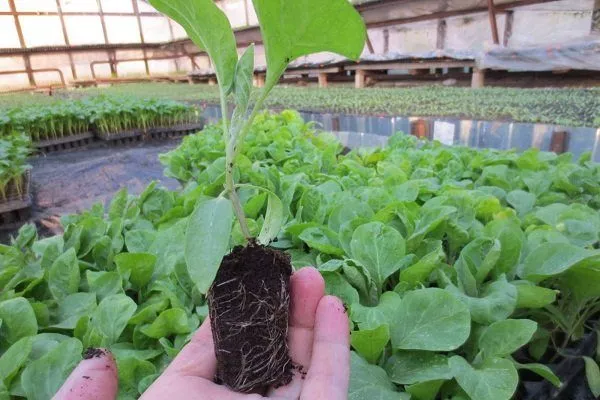
Almaz seedlings are planted outdoors at 50-70 days old. They should be planted in a sunny, draft-free area.
The soil where the seedlings will be planted should be well warmed. The approximate planting time for temperate climates is late May to early June. Daytime temperatures should reach 20°C.
Eggplants should not be planted after nightshade crops. The worst predecessors are potatoes, peppers, and tomatoes.
The procedure for transplanting seedlings into open ground:
- If you haven't prepared the soil for eggplants in the fall, do so three weeks before planting the seedlings. Dig the soil and apply fertilizer—a bucket of compost and two cups of ash per square meter.
- Water the seedlings the day before planting. Plant in the morning or evening, as the scorching sun can damage the seedlings.
- Prepare the holes. Their size should correspond to the root system of the seedlings. The approximate depth of the holes is 10 cm. The distance between adjacent holes should be 30-40 cm, and between rows – 50 cm.
- Fill the dug holes with warm water – 500 ml per hole.
- When the water has been absorbed, place the seedling in the hole along with the soil lump.
- Cover the roots with soil and compact it gently. Sprinkle the soil with mulch, such as dry grass.
Caring for the variety in open ground
Caring for the Almaz eggplant is standard: watering, fertilizing, and pest control. The only special feature is bush training, which accelerates fruit ripening.
Frequency and characteristics of watering
Eggplants require regular watering. It's important to keep the soil moist and prevent it from drying out. The frequency of watering depends on the age of the seedlings and the weather.
Features of watering eggplants:
- The first time eggplants are watered is a week after planting in the ground;
- adult plants are watered approximately once every 3-4 days, and during drought – daily;
- Warm water is used for irrigation.
After watering, the soil is loosened, and at the same time, weeds are removed – they cannot be left, as they take away nutrients and water from the plant, and can also become carriers of diseases.
Fertilizers: types and proportions
Fertilizing is done every 2-3 weeks. It's best to combine this with watering to prevent the dissolved fertilizer from burning the plant roots.
Recommended fertilizers:
- After transplant. Three weeks after planting the seedlings in the ground, the first feeding is carried out - a urea solution is added (30 g per 10 liters of water).
- During flowering. Water with a solution of superphosphate and urea—dilute 10 g per 10 liters of water. Apply 500 ml per plant. You can also use organic matter: dissolve 1 liter of mullein and 200 g of ash in 1 bucket of water.
- During fruiting. Water with a superphosphate solution—dissolve 40 g in 10 liters of water. Alternatively, dissolve 60 g of urea, 60 g of superphosphate, and 20 g of potassium chloride in 10 liters of water.
- After the fruits appear. Before watering, the soil is sprinkled with ash.
Bush formation
By shaping the bushes, it is possible to obtain the first ripe fruits faster.
- ✓ Tendency to form ovaries on stepsons, which requires special attention when shaping the bush.
- ✓ High sensitivity to the Colorado potato beetle, regular inspections and treatments are required.
Features of the formation of the "Almaz" variety:
- Only 2-3 stems are left—the strongest and tallest ones. The rest are removed so they don't drain the plant's life force.
- Pruning of excess shoots is done before flowering. When flowers appear on the bush, only yellowed leaves are removed.
- This variety's side shoots are not removed because it tends to form fruit buds on these shoots. Therefore, removing side shoots can negatively impact yield.
- Garter is essential, without it the plant may break.
Diseases and pests
"Almaz" has good immunity, but under unfavorable conditions it can be affected by various diseases and pests.
Common diseases of the Almaz variety and measures to combat them:
| Disease | Symptoms | How to fight? |
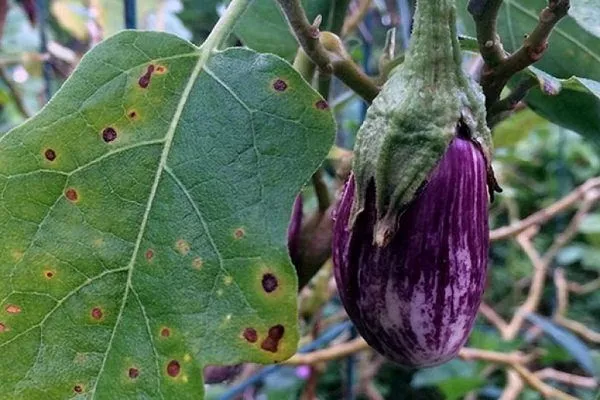
| Late blight | Brown spots appear on the leaves. The fruits rot, and the above-ground part of the plant dies. | Spray with Bordeaux mixture, copper sulfate, Quadris, Antracol, and HOM, and biopreparations such as Fitosporin and Baktofit. For prevention, treat with whey and garlic infusion. |
| Verticillium wilt | Water exchange within the plant is disrupted. Leaves turn yellow, and the bushes wilt. The center of the stem turns black. | For prevention, spray with Fitosporin and a solution of potassium permanganate. Fertilize with potassium and phosphorus. |
| Blossom end rot
| Light spots appear on the top of the fruit, leading to rotting. | For prevention, spray with potassium or calcium nitrate. |
Pest control:
- The Colorado potato beetle is the most important pest of the Almaz plant. Its larvae can consume all the leaves in a couple of days. Control methods:
- inspect the bushes daily and collect beetles before they lay eggs;
- Spray with chlorophos - dilute 30 g of the preparation in 10 liters of water, you can also use another insecticide.
- Whiteflies, spider mites, mole crickets, and aphids are controlled with systemic insecticides. Sprinkling wood ash and slaked lime between rows is also recommended.
Harvesting and storage
The harvest begins when the fruit reaches technical maturity. A dark purple color indicates that the fruit is ready for harvesting.
Peculiarities of harvesting and storing the Almaz eggplant:
- The fruits ripen gradually. Harvesting occurs several times per season, approximately once a week.
- It's recommended to regularly inspect the bushes, cutting off any fruit that reaches the ground. Prolonged contact with the ground leads to rot.
- The fruits are cut with sharp pruning shears.
- Before storing, the fruits are sorted, removing damaged and diseased ones.
- Good fruits are placed stem-side down on straw, covered with burlap, and left for 10-11 days. Afterwards, they are sorted again. The selected fruits are wrapped in paper and stored in a cool place.
- Eggplants are stored in a cool place—a cellar or refrigerator. If the fruit is stored in a cellar, they are placed in boxes.
Tips and recommendations
Experienced gardeners with extensive experience growing eggplants know many secrets for obtaining a large harvest, which they share with beginners.
Tips for gardeners:
- Avoid planting eggplants near potatoes to avoid attracting Colorado beetles.
- Sprinkle the soil with ash and moisten it – Colorado potato beetles are repelled by the smell of wet ash.
- It is better to plant seeds for seedlings immediately in separate cups, so as not to have to replant the seedlings again.
- Don't wait for the fruits to fully ripen. Harvesting begins when they reach the desired size. Over time, the fruits become coarser, and the seeds become hard.
- To reduce the frequency of watering in open ground, you need to mulch the soil.
Reviews from gardeners
A video review of the Almaz variety can be seen in the following video:
With its high yield and excellent taste, "Almaz" is easy to grow and maintain. If you can manage Colorado potato beetles and provide minimal care, you're guaranteed a good harvest.