
Artichoke is a perennial plant with large leaves and a straight stem. There are approximately 140 known varieties, but only 40 are edible. You can grow artichokes yourself by following a few simple but important farming guidelines.
Sowing artichoke seeds for seedlings in a greenhouse
Planning grow artichoke In a greenhouse, first establish the optimal sowing time. Don't forget the importance of preparing the seeds for the upcoming planting. This determines the speed of germination and the vigor of the plant.
How to prepare seeds?
To ensure a harvest in the first year, be sure to prepare the seeds. The seeds themselves are large, so there shouldn't be any problems.
- ✓ The water temperature for soaking seeds should be no lower than +25˚С and no higher than +30˚С.
- ✓ The use of a growth stimulator requires strict adherence to the concentration indicated by the manufacturer to avoid seed burn.
Follow the following procedure:
- Place the seeds in warm water and leave for about 10 hours to allow them to swell. You can use any growth stimulant instead of water (follow the instructions).
- Wrap the seeds in a damp bandage or gauze. To prevent moisture evaporation, wrap the gauze in plastic wrap. Place the seeds in a room with a temperature of 25°C and leave until they sprout (a white stalk appears).
- Next, place the seeds in moistened sand, which you've previously washed and calcined to disinfect. Cover with a lid and place on the bottom shelf of the refrigerator for 25-30 days, but no less than 15 days.
- When the sprouts reach 10 mm in length, the seeds are ready for planting.
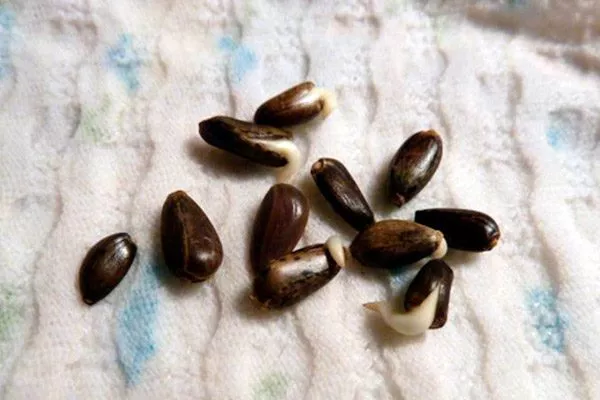
Keeping the seeds in the cold simulates winter conditions, so the plant appears to have "survived" the winter. As a result, flowering begins within the first year of cultivation.
Planting dates
The timing of artichoke planting depends directly on the climate in a particular region. In warm climates, planting in mid-May is acceptable. In colder regions, it's best to postpone planting until summer.
Timing of artichoke planting depending on the region:
- Moscow region – second half of May or early June.
- Central Russia – mid-May.
- Ural – early to mid-June. Greenhouse planting recommended.
- Siberia – mid-June. Greenhouse cultivation is recommended.
Artichoke grows very tall. The greenhouse should be spacious.
Selecting a site and preparing the soil
It's important to choose the right location for planting artichokes. The site should be dry enough to avoid waterlogging. It's best to choose a location that's not exposed to strong winds or drafts. A sunny, southern location is ideal.
To grow seedlings, prepare the substrate properly. To do this, mix equal parts of turf, humus, and sand. The soil should be fertile, nutritious, and well-drained.
Sowing technology
Prepare the greenhouse in advance. Use compost as fertilizer at a rate of 10 kg per square meter. Dig a trench about 3-4 cm deep and moisten it. Place the prepared seeds, cover with soil, and water.
Make sure the soil doesn't dry out and water the plants regularly. Once the weather becomes consistently warm, open the greenhouse periodically. This is necessary to strengthen and harden off the plants.
Peculiarities of growing seedlings from seeds at home
Anyone, including novice gardeners, can grow artichoke seedlings from seeds at home. Simply follow the guidelines below.
Preparation of seed material
The process of preparing the seed is the same as for growing artichokes in a greenhouse. You can simply sow the seeds in the soil, but don't expect them to bloom the same year. This method is used by gardeners who choose artichokes as ornamentals.
Selecting and preparing containers
There are no strict rules or requirements here. Artichoke seedlings are conveniently grown in individual containers. Plastic, clay, and peat pots are ideal for this purpose.
What substrate is suitable?
It's best to purchase ready-mixed soil from a specialist store. The best option is a substrate designed for growing vegetable seedlings. This soil contains the perfect balance of all the nutrients and elements necessary for the growth of strong seedlings.
Sowing seeds
Growing artichoke seedlings takes about two months. Plant the seeds in late March or early April. The planting process is simple:
- Place the prepared soil mixture into individual cups or pour it into a larger container. Moisten the soil with water from a spray bottle.
- Place the pre-prepared and sprouted seeds into the soil to a depth of 1-2 cm. Space the seeds at least 3 cm apart.
- Sprinkle the seeds on top with soil or peat, do not compact.
- Use a spray bottle to moisten the soil.
- Place the containers with the planted seeds on a well-lit windowsill and leave them there until the first green shoots appear. Moisten the soil periodically to prevent it from drying out, as this slows the seedlings' growth.
- At temperatures around 25°C, the first shoots appear much faster. To prevent the plants from stretching too much, use additional artificial lighting in the morning and evening.
- Once most of the sprouts have emerged and the first green leaves have appeared, move the containers to a cooler location (temperatures between 15 and 18°C). Don't forget to provide the seedlings with light.
- Approximately 15-20 days after planting, full-fledged leaves will form. When four leaves appear (this takes about two months), the plants are ready for transplanting into the open ground.
- ✓ Maintain the temperature in the room with seedlings within the range of +15…+18˚С after the first leaves appear.
- ✓ Provide seedlings with additional lighting for 12-14 hours a day to prevent stretching.
How to care for seedlings?
Caring for artichoke seedlings requires standard agricultural practices. The key is to water them regularly, fertilize, and prevent diseases.
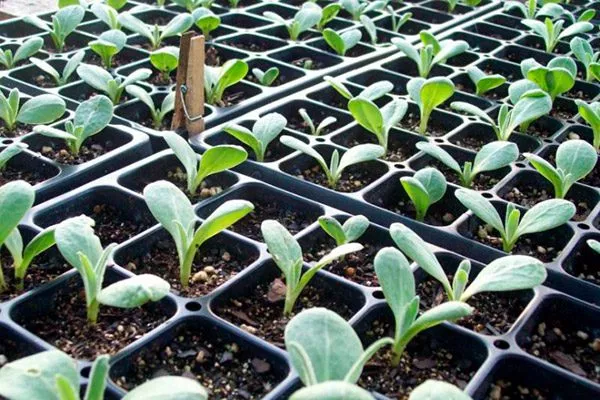
Watering
Water the plants in the afternoon and strictly every other day. Avoid overwatering the artichoke, as this will cause the plant to rot. Watering should be even and regular, so the soil doesn't dry out, which will cause the roots to dry out.
Fertilizers
To fertilize artichokes, use simple mineral complexes strictly according to the instructions (Nitroammophoska, Ammophos, etc.). Once the seedlings have grown well, apply foliar fertilizer (spray).
To prepare a nutrient mixture, mix superphosphate (1 teaspoon) with potassium chloride (3 teaspoons) and wood ash (1 teaspoon). This fertilizer strengthens plants and effectively repels harmful insects.
Prevention of diseases and pests
Artichokes can be susceptible to petal rot. Various types of aphids and slugs also prey on the plants. As a preventative measure, treat your plants with specialized products (Iskra, Aktara, etc.) in the spring.
Picking
When growing artichoke seedlings in a common container, transplanting is essential. This requires containers with a minimum capacity of 0.5 liters.
The procedure for picking artichoke seedlings:
- Prepare the soil or take a ready-made substrate and fill the containers.
- Make a hole in the center of each cup and fill it with soil.
- Water the seedlings in a common container and remove the plants one by one.
- Pinch the main root of each plant and plant the sprout in a new container.
- Place the cups with transplanted seedlings in a warm and well-lit place.
- After 10-15 days, fertilize the seedlings with mullein diluted in water in a ratio of 1:10.
- 15 days after the first feeding, apply a complex of mineral fertilizers (for example, Diammophoska) according to the instructions.
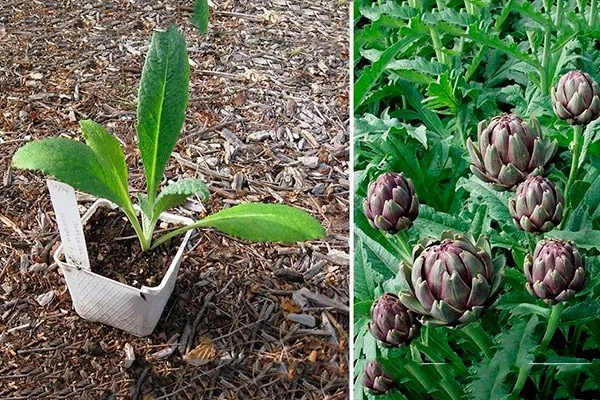
Artichokes are a healthy vegetable that is becoming increasingly popular. They can also be grown as an ornamental plant. Artichokes are quite expensive in stores, so many gardeners prefer to plant them in their own backyards.