
The Maroseyka raspberry has a long history, making it a tried-and-true variety, borne of both gardening experience and time. It is characterized by its hybrid form, thornlessness, and large fruit. It is suitable for both home gardens and large-scale commercial cultivation.
History of selection
Professor Viktor Valeryanovich Kichina created a unique raspberry variety. Using two Scottish hybrids, numbers 7324/50 and 7331/3, as a base, he began working in Moscow in 1970. The resulting hybrid received registration number M228, later named Maroseyka. The variety appeared on the Russian market in 1982.
Introduction to the variety
To understand whether a variety is worth cultivating, carefully read all of its characteristics and parameters.
External characteristics of the bush and berries, their taste and purpose
Maroseyka is a multi-bush variety that reaches a height of up to 170 cm. The crown is spreading, but can be trained into a tree-like configuration.
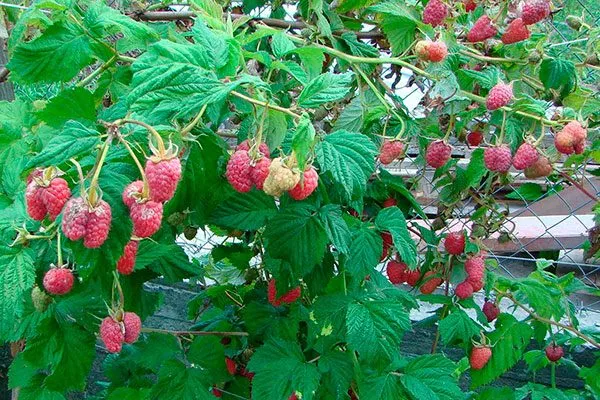
Varietal characteristics:
- Escapes. The dense yet flexible stems consist of 4 (+/- 1) nodes. They are covered with brownish-brown bark, which develops a waxy coating during hot weather (the plant's defense against fungi and pests). They are spineless, but their surface is covered with a felty pubescence.
Over the course of a year, the bush produces approximately 10 replacement shoots and 5 lateral shoots. The number of berries on a single lateral branch varies from 16 to 20. - Leaf blades. They are complex in structure—a single leaf contains several mini-blades with serrated edges that also curl. They are oval in shape, dark green on the outer surface and much lighter on the underside. The leaves are covered with white pubescence.
- Peduncles. They contain small, snow-white buds (maximum size 10 mm). They open after June 10, and flowering lasts approximately 10-20 days, depending on the weather and region. The inflorescences are racemose.
The flowers consist of a double perianth, numerous pistils, and pollen-bearing stamens. The corollas contain five petals and sepals. The first to bloom are the buds, located at the top of the shoots. - Berries. The drupes that make up the fruit are tightly bound together, preventing the berry from falling apart when picked. They are also firmly attached to the stalk, which does not separate during transportation. Each berry weighs an average of 14 grams.
Their shape is classic cone-shaped, but approximately 30% of the bush consists of fused fruits, which are distinguished by their beautiful heart-shaped form. The color is vibrant raspberry-red, with a slight pubescence.
The flesh is juicy and firm, and this variety peels off dryly. The flavor is mostly sweet, but also has a slight tartness.
The aroma is identical to the scent of wild raspberries, which particularly attracts the attention of consumers. - Drupes. There are numerous of them. Inside the pericarp is a hard intracarp—a pit containing a round seed, approximately 0.8–1.0 mm in size. The intercarpellate body is fleshy.
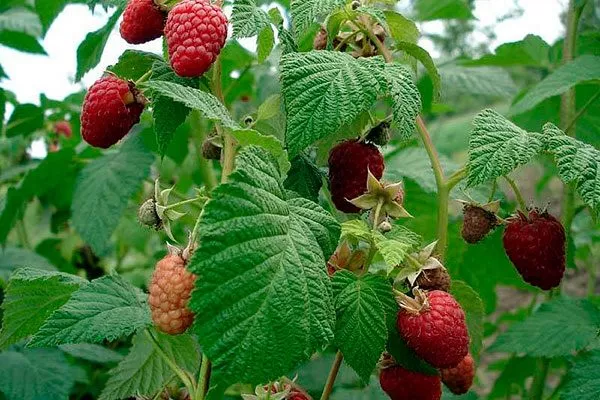
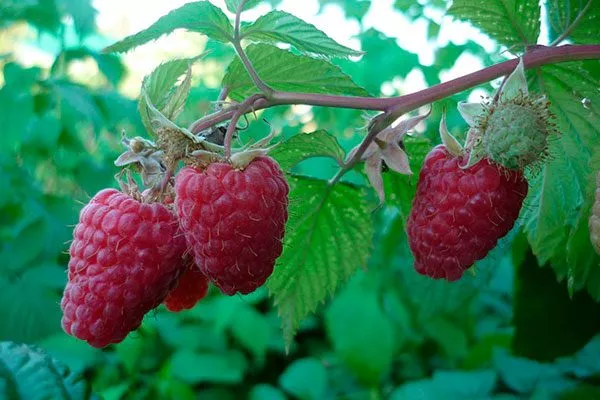
Maroseyka berries are versatile—they're not only eaten freshly picked, but also frozen, dried for winter tea, used to preserve jam, compotes, and to make unique raspberry wine and liqueur.
When ripe, the yield
Maroseyka belongs to a class of varieties that begin bearing fruit midseason. Harvesting begins between July 10th and 13th and continues for about a month. In the south, fruiting begins 10-12 days earlier due to more favorable weather conditions.
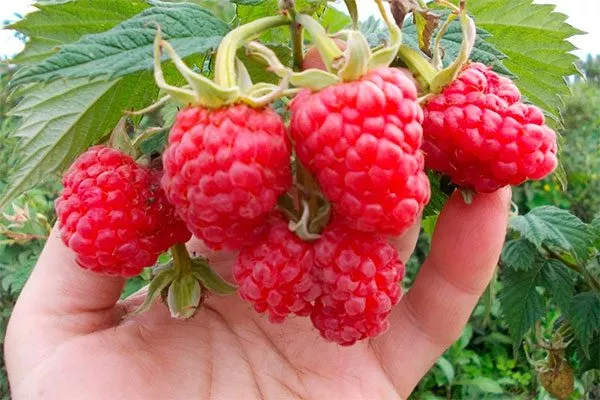
Maroseyka is highly productive. Each bush can yield up to 4.8-5.2 kg of sweet fruit. This variety can produce fruit for 12-15 years, but yields begin to decline after the 10th year.
Frost resistance, where can it be grown?
The Maroseyka variety was developed from Scottish varieties that already possessed some resistance to unpredictable weather conditions. Through selective breeding, their ability to withstand harsh winter frosts was enhanced.
Maroseyka adapts well to gardens in Moscow and the Moscow region, as well as other areas where winter temperatures do not drop below -25°C. In these climates, the plants produce a regular harvest and do not require complex protection measures during their winter dormancy.
Maroseyka can also be grown in more northern regions, such as Siberia, the Urals, and the Far East. However, in these conditions, the plant requires more careful attention and special winter protection measures.
Pollination
Raspberry is capable of self-pollination. However, the active participation of bees in the process significantly increases the yield of this plant. Raspberry flowers contain abundant fragrant nectar and pollen, attracting beneficial insects that, while collecting nectar, facilitate pollination by transferring pollen from the anther to the pistil.
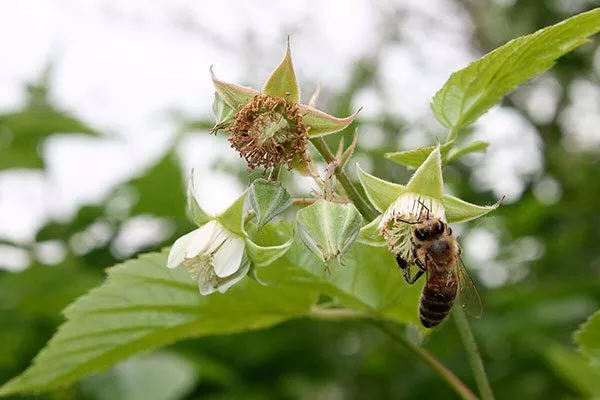
This action significantly accelerates the fruit formation process. Scientific research confirms that the presence of bees in raspberry fields can increase yields by 70-80%. Furthermore, honeybees are the leading raspberry pollinators, even surpassing wind pollination and other insects.
Fruiting method
Maroseyka is a variety whose fruit, in most cases, ripens only once during the entire season. This process continues throughout July and the first half of August, ending with the onset of cool autumn weather.
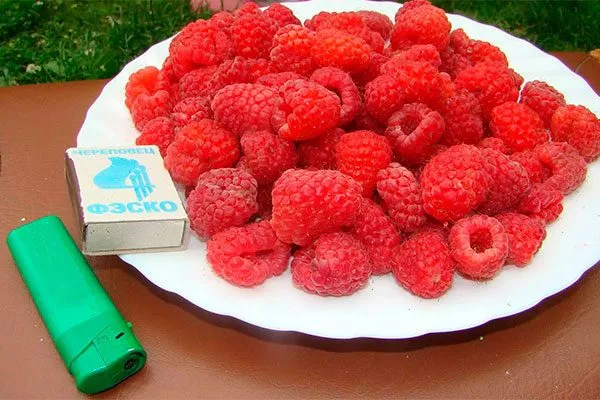
If all care recommendations are followed, Maroseyka promises consistent and high yields every year. The fruiting period lasts for 10-15 years.
Storage and harvesting
Maroseyka raspberries are grown for sale in limited quantities or for personal consumption. To increase shelf life, the berries are left on the stems. This promotes longevity and improves transportation conditions. To preserve the raspberries' attractive appearance, it is advisable to sell them close to the harvest site.
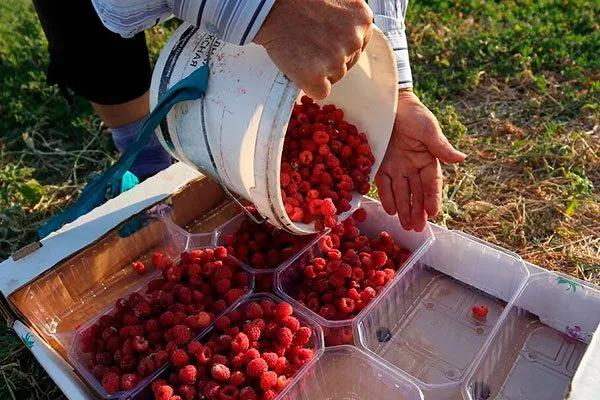
Other cleaning and storage features:
- The main harvest is collected during the first 20 days of ripening, with new harvests being made every 2-3 days.
- Raspberries are harvested early in the morning or late in the evening when the sun sets.
- The berries must be fully ripe, but not overripe (for transportation, it is permissible to pick them when they are not fully ripe).
- For harvesting, baskets with a capacity of 3-4 kg are used, in which the produce is sent for sale (if poured, the berries lose their attractiveness).
- The raspberry harvest can be stored at low temperatures for 5 days, after which it needs to be processed.
- Transportation is carried out in baskets packed in bags.
Landing features
The commercial cultivation of this variety was deemed ineffective due to the fact that the root system is close to the surface, which negatively affects the bushes' ability to withstand frost.
When choosing a planting site, it requires an open space, protection from the wind, and adequate light. Growing raspberries in low-lying areas is not recommended due to the risk of excessive moisture during thaws.
Features of planting operations:
- For landings They use the 150x50 formula, which ensures sufficient distance between bushes, given their large size and developed root system with many adventitious roots.
- Light, well-drained soils, such as loamy or sandy loam, with a pH of around 5.5-6, are best. If the soil is acidic, it should be treated a year before planting, using lime and dolomite flour at a rate of 2-2.5 kg per square meter.
- Before planting raspberries in areas overgrown with weeds, for 2-3 years before starting work, crops such as cabbage or potatoes are used to increase soil fertility.
- It is important that the groundwater level is at least 100-150 cm deep.
- The planting process takes place in early spring or autumn.
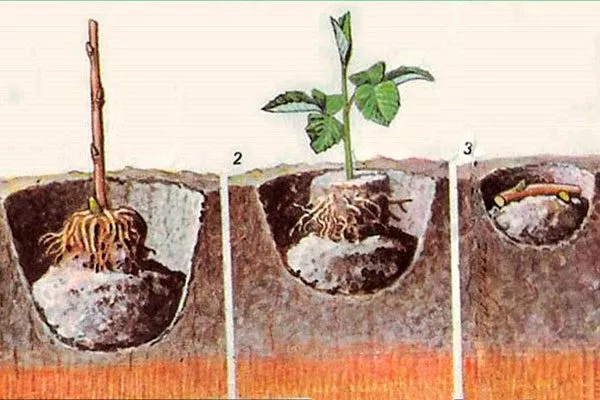
- The dimensions of the hole are 40-45x50-5 cm, which is slightly larger than the size of the root system of the seedling.
Landing algorithm:
- At the base of the hole, create drainage from pebbles or crushed stone and fill it with a mixture consisting of 2 parts peat, 1 part humus and the same amount of sand, add wood sawdust or rotted straw.
- In the center of the hole, form a mound where you will place the root system of the bush, ensuring close contact of the roots with the substrate.
- Carefully cover with soil so that the root bud is below the surface level.
- Create a small depression around the plant and pour water into it (about 2-3 liters per bush). Once the water has been absorbed, cover it with a layer of mulch made of sawdust or straw. If planting in the spring, this watering should be repeated 2-3 more times.
After planting, install a supporting structure near each bush and attach a fishing line to it to tie up long shoots.
Care instructions
Maroseyka is easy to care for. It doesn't require much attention; basic care is enough to produce abundant harvests annually for 8-10 years. Seedlings that reach 100 cm in height require support.
Watering and fertilizing
Soil moisture is essential for root development, which, in turn, increases plant resistance to low and high temperatures. Moisture requirements:
- Watering is necessary when the soil dries to a depth of 5-6 cm.
- Young plants and seedlings require more moisture for better adaptation.
- To water an adult bush, 13-15 liters of water is enough, which corresponds to 38-40 liters per 1 sq. m.).
- Scientists recommend using melted or rainwater, and first letting tap water settle or treating it with special softening agents.
- Do not allow the roots to dry out or become overwatered, which can lead to root rot.
- Preference is given to drip irrigation.
During the growing season, raspberries are fed three times:
- In the spring, before the sap begins to circulate, choose organic mixtures: mix chicken manure with 20 parts water to irrigate the plants. Ammonium sulfate, potassium, and nitrogen fertilizers are effective.
- During the fruiting season, when raspberries bear fruit, they require microelements:
- potassium;
- calcium;
- magnesium;
- phosphorus.
- In the fall, after harvesting, apply a third fertilizer using complex mineral fertilizers. This strengthens the plant for the winter months. The key components of this fall fertilizer are phosphorus and potassium. Nitrogen is not used, as it promotes growth.
Pruning and preparation for winter
One of the key aspects of garden maintenance is careful pruning of raspberries. This process increases yield and strengthens the shoots. For the Maroseyka variety, pruning is recommended at different stages of the growing season: spring, midsummer, and fall.
- Spring This work is aimed at stimulating the growth of lateral branches and serves as protection against diseases, inhibiting the growth of central shoots. At this time, most of the previous year's branches are removed, reducing their length, and weak and damaged shoots are eliminated.
- Summer Pruning is done during flowering and involves removing only diseased shoots down to healthy leaves, and also removing side branches. This promotes more vigorous growth of the fruiting stems in the center of the bush.
- Autumn This process occurs after the harvest is complete and involves removing shoots that have already produced fruit and pruning weak and wilted branches. Leave the strong stems in the center of the bush for the winter. Cut strong side shoots from the root system of the mother plant for subsequent use as planting material.
Winterization of plants begins with autumn sanitary pruning, during which all defective and weak shoots are removed. Water the raspberry patch generously and fertilize with mineral fertilizers.
Other features of the preparation:
- Tie the branches with fruits and lift them upward, then carefully cover them with a protective material such as agrofibre or spunbond.
- Create a thick layer of mulch at the base of the bush – you can use spruce branches, sawdust or straw.
- Plants growing in areas with a mild climate and no snow cover, as well as those exposed to frost and northern winds, require careful preparation for winter: sprinkle the bushes with a layer of sawdust or straw, press them into the ground, and lay agrofibre or durable synthetic material on top.
Diseases and pests
Maroseyka has a natural resistance to many diseases and pests that commonly affect raspberries. However, if improperly cared for or exposed to extreme weather, the plant can be susceptible to the following diseases:
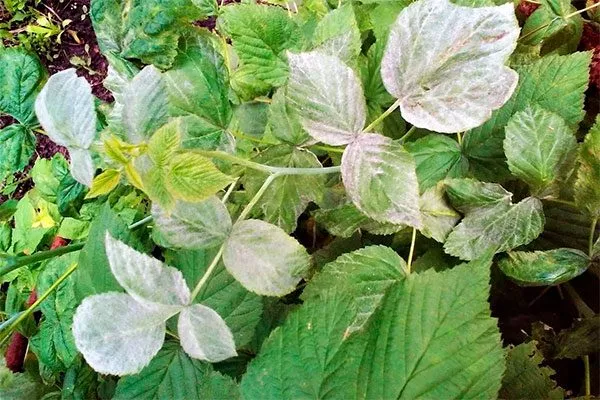
- Powdery mildew, This disease, which turns leaves and fruits white, occurs when air humidity is high. Effective treatments include the fungicides Skor, Fundazol, and Topaz.

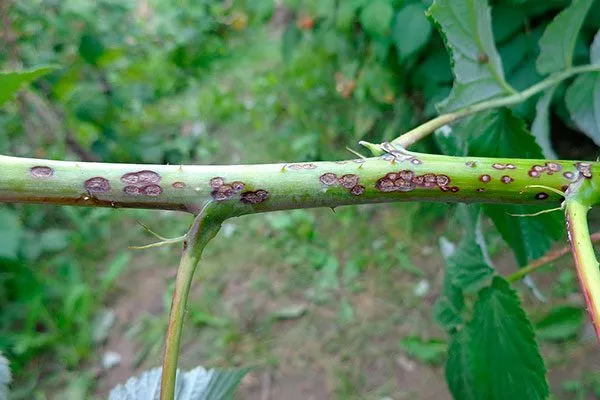
- Anthracnose It appears as brown spots with a reddish tint. As a preventative measure, it is recommended to spray the plants with a 1% solution of Bordeaux mixture.
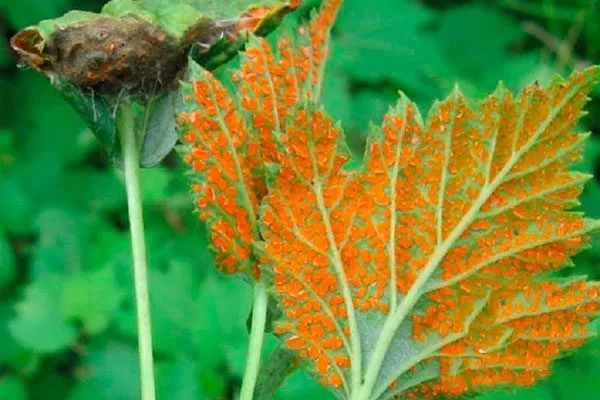
- Rust. High humidity and excess water can cause large, rust-colored spots to appear on plant leaves. To prevent this, spray with Bordeaux mixture. However, if the infestation is severe, treatment is ineffective.
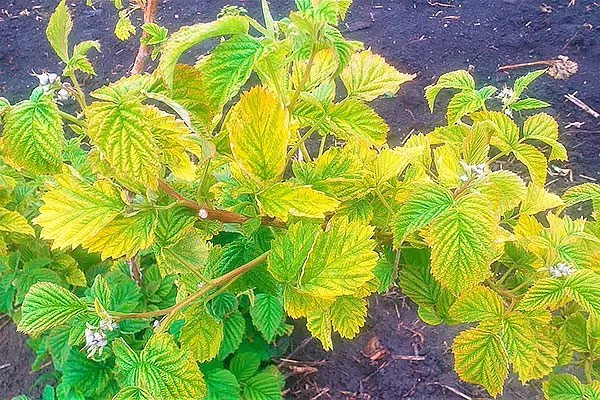
- Chlorosis – If your raspberry leaves start to turn yellow, treat them with specialized products such as Antracol, Energy, and Previkur in the spring to protect them. Before the buds open, you can use a 3% solution of Nitrafen as a preventative measure.
In case of pest infestation such as aphids, raspberry beetles and thrips, treat plants with insecticides:
- Aktar;
- Detoilem;
- Provado;
- Envidor.
Reproduction
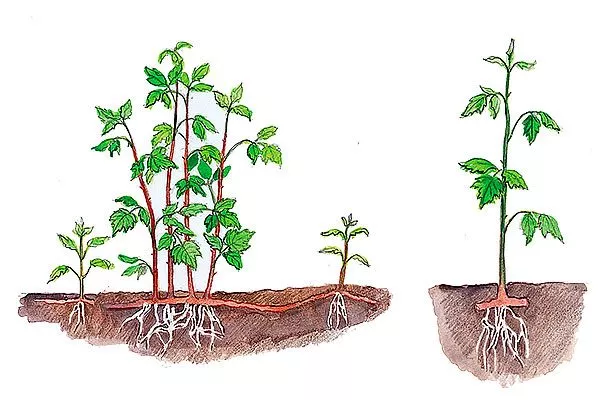
Each season, the Maroseyka raspberry produces numerous new shoots. Separate these from the mother plant when they reach 18-20 cm in height, usually in midsummer. This allows the shoots to establish a foothold in the soil before the onset of winter frosts. When separating from the mother plant, it's important to preserve the surrounding soil to minimize damage to the root system.
Pros and cons of the species
The Maroseyka raspberry is chosen for its many advantages, making it easy and enjoyable to grow. Among its positive qualities are:
Gardeners' reviews
The Maroseyka variety is an excellent choice for gardeners, but it is commercially cultivated exclusively in central Russia. These plants have a strong structure, dense branching, and a developed shallow root system, requiring regular watering and fertilizing.