
Seedlings can now be grown indoors with proper care. Plant development and growth depend on daylight hours. These hours are extended with special lamps that help evenly heat the plant, creating the right atmosphere.
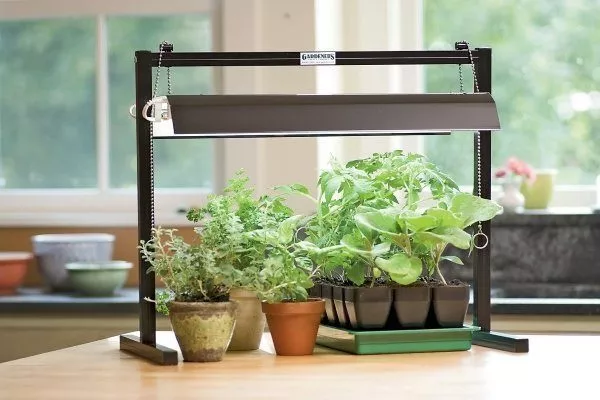
Features of seedling lighting
Sunlight influences important chemical processes. In plants, it mediates photosynthesis, converting carbon dioxide into water and oxygen. Without sunlight, or if it's not exposed to sunlight for long enough, green plants won't receive the nutrients they need to survive.
As a result, development stalls, leading to pale leaves. The stems become elongated, becoming brittle, and the leaves stop developing. Therefore, providing adequate light for seedlings is an essential part of their growth.
Types of lamps
There are many lamps on the market for illuminating areas, shelves, or windowsills where plants are grown. Many gardeners prefer grow lights or phytolamps. Infrared, sodium, fluorescent, or LED lamps are popular for seedlings.
Unlike conventional incandescent bulbs, these fixtures don't emit much heat and don't damage plant stems. Energy-saving bulbs are a good choice, as they don't emit much light and minimize costs.
LED
These devices consume minimal electricity while producing high-intensity artificial light. The red and blue spectrums of light ensure rapid plant growth.
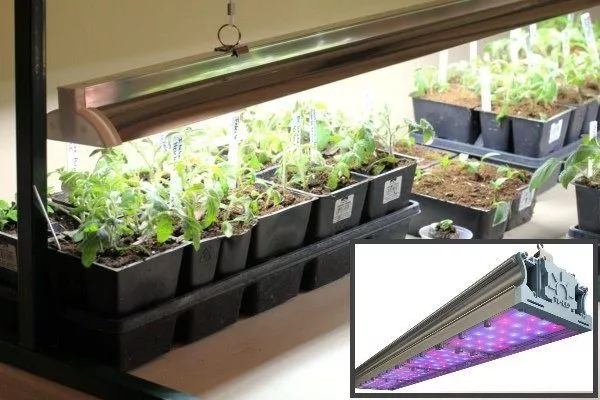
LED lamp for seedlings (two types - daylight and phyto-mode)
It is believed that to imitate natural sunlight, a lamp should have a color temperature of 5000-6000 degrees Kelvin.
Advantages of LED devices:
- They heat up minimally. This allows you to install lamps above plants without worrying about burning the leaves.
- High efficiency. Compared to standard seedling lamps, these devices consume a minimal amount of electricity.
- Changing the spectra. Plant growth and nutrition are stimulated and synthesis is improved by changing the spectra by replacing the diode in the device.
- Durability and high efficiency. If heat dissipation is provided, the lamps can function normally for 50,000 hours.
- Possibility of installing LEDs of different spectra and power. This helps to obtain lighting, due to which seedlings develop quickly and fully, regardless of the time of year.
Comparative characteristics of lamps for seedlings
| Lamp type | Service life (hours) | Energy consumption (W/m²) | Optimal height (cm) |
|---|---|---|---|
| LED | 50,000 | 25-50 | 20-30 |
| Fluorescent | 10,000 | 50-80 | 15-20 |
| Sodium | 24,000 | 70-100 | 50-70 |
| Induction | 60,000 | 40-60 | 30-40 |
The only drawback of LED lamps is their high price. However, if you have the time and desire, you can make such a lighting fixture yourself. When deciding to create your own lamp, consider the level of natural light in the room, the type of plants, the expected intensity of use, and other factors.
Fluorescent
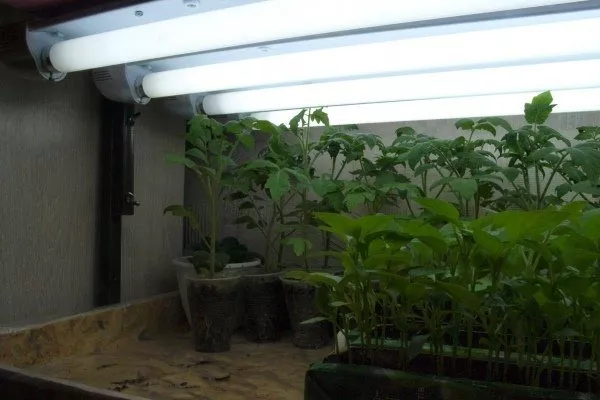
A distinctive feature of these lamps is their tubular shape. This type is popular for providing primary lighting. Fluorescent lamps are used for supplemental lighting of plants to accelerate their growth. The lamps emit diffused, uniform light, distributing it over the entire surface. They emit ultraviolet light, which does not cause any harm to plants.
The fixtures are installed 15 cm above the seedlings, providing safe illumination. Additional benefits:
- provides the full spectrum of colors necessary for the full growth and normal development of plants;
- is a cost-effective device that consumes a minimum amount of electricity;
- generates minimal heat during radiation.
Sodium
Sodium-vapor lamps are considered to be just as effective for seedlings as other lighting fixtures. These lamps are designed for window mounting—their placement is safe for plants and won't damage leaves.
The device has the following features:
- ergonomic and practical design;
- minimal energy consumption;
- high power;
- production of a spectrum of rays necessary for the full growth of plants;
- at a fairly low price;
- high radiation power;
- availability of service and repair;
- creating a warm climate in small and large rooms.
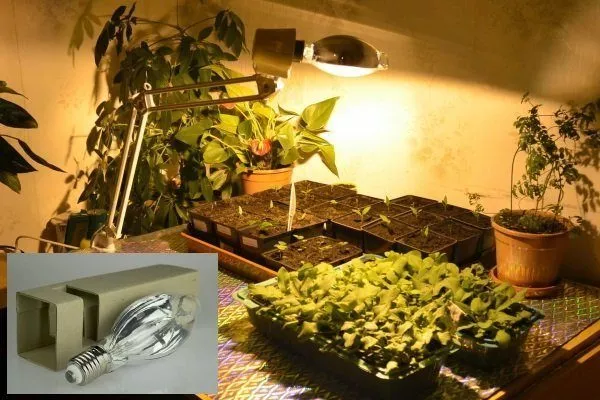
When purchasing sodium lamps, it's essential to carefully study their technical specifications. The main criterion to consider is the lamp's power—it shouldn't exceed 100 watts, otherwise the seedlings will burn. If the windowsills are up to 1.5 meters wide, a normal level of artificial lighting can be achieved using only one lamp.
Halogen
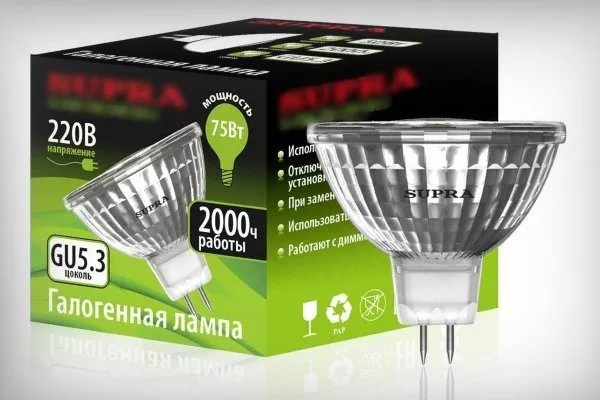
Halogen lamps are not considered the best option for illuminating seedlings. Although they are brighter than incandescent bulbs and generate less heat, their efficiency declines over time.
Energy saving
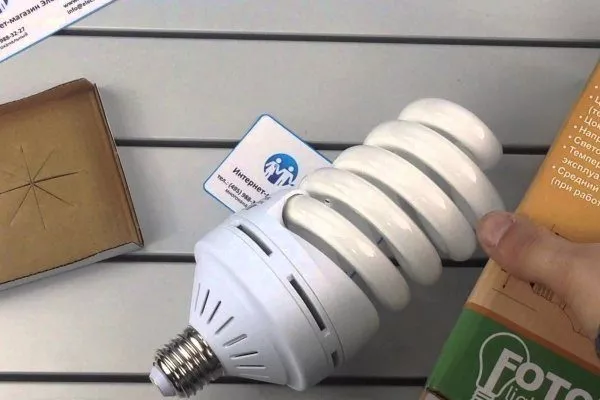
The advantage of energy-saving lamps is that gardeners can choose the desired spectrum: warm, daylight, or cool. The first spectrum is used during the flowering phase, the second is used throughout the entire growth cycle, and the cool spectrum is required for additional illumination of seedlings during the growing season and germination.
When placing LED lamps as backlighting, the following points are important:
- If there are signs of burns on the leaves, the lighting fixture is raised higher, otherwise the seedlings will die;
- If the leaves are pale and the stems are elongated, the device is lowered, since such signs indicate that it is located too far away;
- Avoid installing the lamp on the side, as this can result in seedlings with crooked stems. Therefore, place the lamp above the plant.
Induction lamps
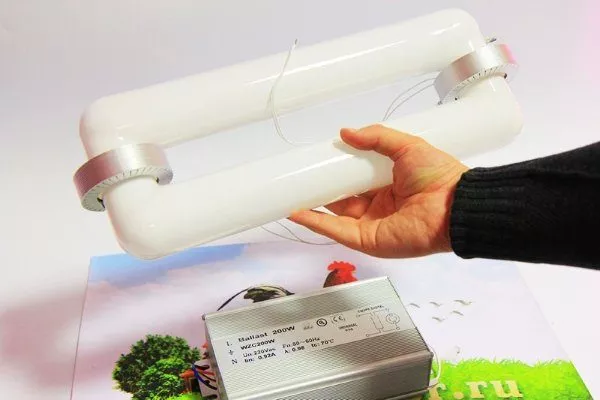
A unique technology for supplemental lighting of seedlings has recently emerged: induction (gas ionization using electromagnetic radiation). It is also known as a bispectral lamp. The light source is plasma generated by magnetic induction. These devices have become sophisticated and popular due to their ability to emit the most sought-after colors of the spectrum—blue and red.
In addition, induction lamps can heat up to 70 degrees Celsius, providing plants with adequate warmth. The choice of lighting technology for seedlings is crucial for the rapid growth and development of young plants. Induction promotes rapid development, especially during short days in winter.
Induction phytolamp for plants
Phytolamps They emit light that closely resembles sunlight—this is important for extending daylight hours. These fixtures promote normal seedling development at any time of year. The phytolight emitted by the phytolamps accelerates nutrition and growth, supporting plant development and health.
Is it possible to illuminate seedlings with incandescent lamps?
Some people think that hanging a few standard incandescent bulbs over seedlings is enough to provide the required amount of heat and light. However, these simple bulbs lack the necessary spectrum to provide adequate illumination for plants.
Incandescent bulbs consume a significant amount of electricity, converting only 5% of the light; the rest is converted into heat. This means that plants receive additional heat rather than light, which can lead to leaf dehydration or scorching. Therefore, using incandescent bulbs for supplemental lighting of seedlings is ineffective.
What effect do different spectra have on seedlings?
Sunlight consists of rays of different wavelengths. Each type has a unique effect on seedlings. Grow lights are essential for artificially extending daylight hours for plants. Each color of the seedling light affects the plants, promoting their development:
- Red and orange spectrum. These colors play a significant role in chemical processes, enabling photosynthesis. Red light also stimulates seed germination. Under the influence of this spectrum, the seedling begins to straighten and grow upward.
- Blue-violet spectrum. Blue light is essential for accelerating the developmental period. The rays inhibit the growth of the stem itself, preventing it from elongating. At the same time, blue light helps initiate the process of cell division, making the stem thicker. Another effect of blue light on growing seedlings is phototropism, whereby plant cell growth is inhibited when exposed to blue light, causing the shoot to bend toward it.
- Green and yellow spectrum. They play virtually no role in plant development. They are reflected off plants and not absorbed by foliage.
Optimal spectra for different growth phases
| Development phase | Recommended spectrum | Share of lighting (%) |
|---|---|---|
| Seed germination | Red (660 nm) | 70 |
| Seedling growth | Blue (445 nm) | 40 |
| Leaf formation | Red + blue | 50+30 |
| Hardening | Full spectrum | 100 |
Making your own seedling lamp
By making your own device, you can not only influence the development and growth of seedlings but also save on lighting costs. It's preferable to make phytolamps at home, as they require readily available and inexpensive materials. Maintenance of such equipment is both time- and cost-effective.
Step-by-step instructions:
- Drawing up a diagram. Designed with all technical parameters in mind. Each LED should overlap each other to ensure uniform illumination of the area.
- Preparation of all materialsTo make the lamp, you'll need a lampshade from an old lamp, 20 white and blue LEDs, 30 red LEDs, and 10 daylight-simulating LEDs, as well as an LED drive.
- Equipment assemblyThe diodes are attached to the aluminum plate using a hot-melt gun. A circuit breaker is installed and the device is connected to the power supply.
LED light assembly plan
- Power calculation: 30-50 W per 1 m² of area
- Diode selection: 20% blue (445 nm), 80% red (660 nm)
- Mounting on an aluminum profile (radiator)
- Connecting a driver with a 20% power reserve
- Testing the system before installation over seedlings
They also make their own LED fixture. This equipment provides efficient lighting for seedlings. All the necessary materials are prepared in advance: a capacitor, resistors, an old energy-saving lamp, red, white, and blue LEDs, a piece of single-sided fiberglass, and a set of radio components.
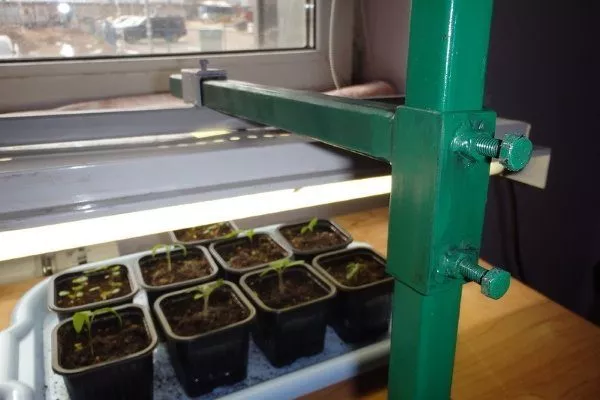
Assembly instructions for the device:
- Make a diagram. A 30mm diameter circle is cut out of PCB or foil, and traces are drawn on it using nail polish. A copper solvent is prepared and a lamp is placed in it to clean the traces. Small holes are drilled in the board, and all components are soldered.
- Assemble the lamp. Disassemble the old light fixture, removing all the internal components, leaving only the wires coming from the base. Solder the circuit you made to these wires.
Seedlings can be illuminated with a variety of devices that extend daylight hours and accelerate plant growth. Gardeners can not only purchase ready-made lighting fixtures but also make their own at a minimal cost.