
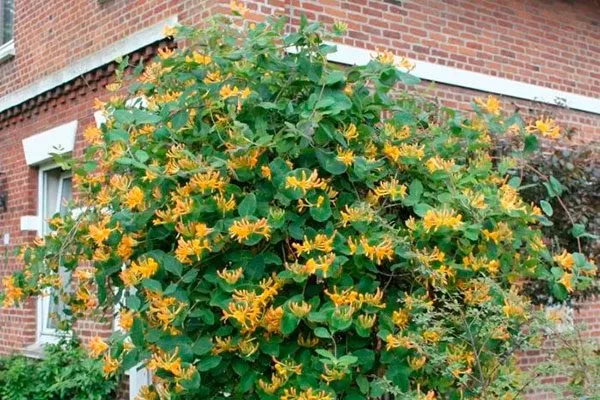
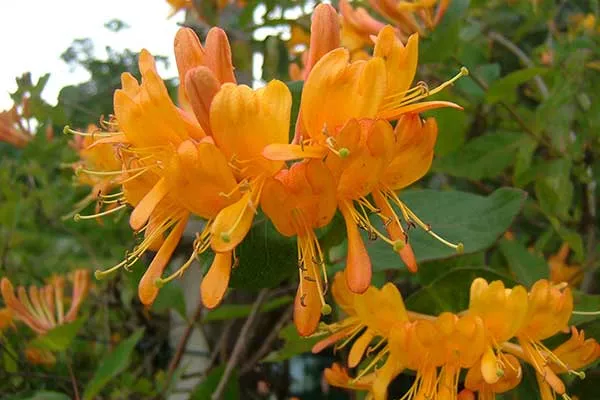
The Telman honeysuckle belongs to a group of ornamental shrubs cultivated to enhance gardens. This variety is moderately heat-loving, so it's best planted in partial shade. However, even in sunny areas, it will delight with abundant blooms. It's considered a tall, vine-like perennial with unusual creamy yellow buds.
Breeding history
Thälmann's honeysuckle, bred in the early 20th century, was first presented at a breeding exhibition in Budapest. Its official commercial distribution began in 1926 in Holland. Since then, this variety has gained worldwide fame and become popular in our country.
Description of the variety
The Hungarian cultivar also has another name, Tellmanniana. It is distinguished by its rapid growth and poisonous berries. Therefore, the fruits are not used in cooking or freshly picked. Despite this, folk healers recommend the green part of the bush for use in decoctions.
- ✓ Soil pH levels should be strictly between 6.0-7.5 for optimal growth.
- ✓ The distance between plants should be at least 200 cm to ensure sufficient air circulation.
Appearance of the plant
The plant is quite tall for a honeysuckle, with vines growing up to 500-600 cm, but its spreading habit makes it appear rather small. The bush is approximately 100-150 cm in diameter. Other characteristic features:
- foliage – average;
- thickening with branches – strong;
- bush type – semi-spreading;
- crown shape – depends on the direction of stem growth and the method of formation;
- leaves - classic green shade and simple type on top, the bottom of the plate can acquire a bluish tint;
- peculiarity - the top two leaves on the branch are fused, the surface is shiny, and the edges are slightly wavy;
- length of the leaf blade – about 7-10 cm;
- foliage shape – ovoid;
- flowers – are located numerously in one inflorescence;
- color of petals – orange-gold;
- aroma – high intensity, which attracts pollinating insects, and especially bees.
Berries and their taste qualities
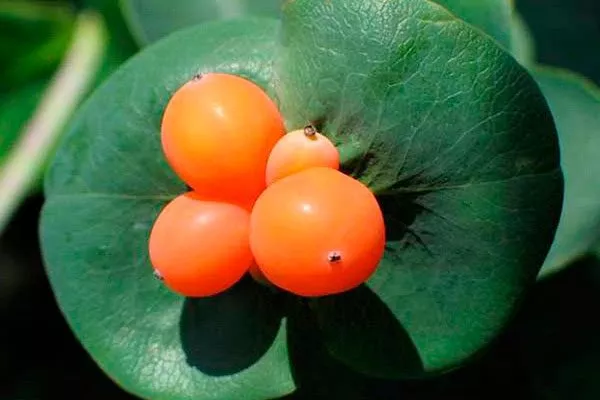
The inedible fruits are round in shape and bright yellow-orange in color, so from a distance the bush looks golden.
Features of application
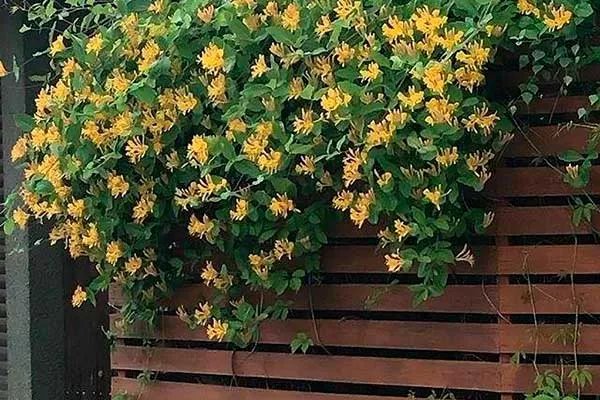
Telman's honeysuckle is an ornamental variety whose berries are poisonous and not suitable for consumption. This plant is often used for landscaping gardens, creating hedges, or decorating gazebos.
Productivity and fruiting
The bush doesn't produce very many berries—a single plant yields about 1.2-1.5 kg. This is a huge advantage, as you won't have to pick a large number of them from under the tree.
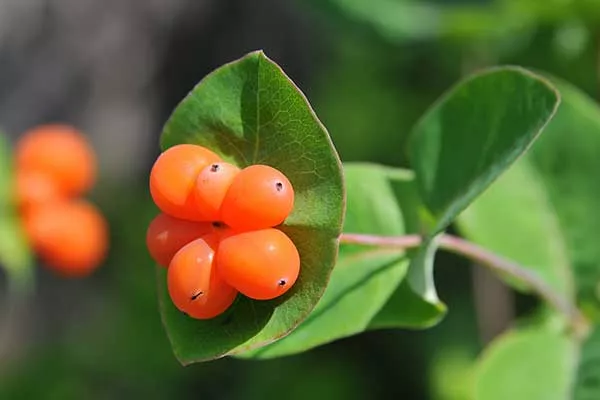
Fruiting begins in the third year after planting, and the variety has a long growing season – the bush will delight with its beautiful appearance right up until the frost.
Ripening period
This variety blooms for 3-4 weeks, beginning in early June. The tubular, orange-gold flowers are clustered in clusters of 10 and emit a pleasant aroma that attracts bees and other insects. The berries ripen in early to mid-August and remain on the vines until late autumn.
Self-fertility and the need for pollinators
The crop is pollinated by nocturnal moths and does not require additional plants for pollination.
Soil requirements
Telman honeysuckle has high soil requirements. It should be fertile, well-drained, and moderately moist. Loamy soil is ideal.
It is also important to ensure sufficient nutrients by adding compost, ash and a little sand to the planting hole to improve the soil structure.
There is another option for one planting hole:
- Superphosphate – 45-50 g;
- charcoal – 150-200 g;
- compost or humus – 4-6 kg.
The plant prefers sunny locations or light partial shade. Check the light levels, as insufficient light can negatively impact the plant's decorative qualities.
Resistance to diseases and pests
Telman honeysuckle is highly resistant to diseases and pests, although in wet weather it can be susceptible to fungal diseases.
Resistance to cold and drought
The variety tolerates drought well, but has average frost resistance. In regions with harsh winters (temperatures below -30°C), shoots may freeze.
What regions is it best suited for and what are its climate requirements?
This variety grows best in southern Russia; in central regions, winter protection is required. It is not recommended for growing in northern regions. A humid climate is considered optimal, as a lack of moisture negatively impacts flowering and overall plant development.
The main advantages and disadvantages of the variety
Telman's honeysuckle has many positive aspects, among which the following stand out:
The only drawback users note is its excessive lighting requirements. Failure to take this into account will significantly reduce its decorative qualities.
What is the difference from other varieties and hybrids?
Telman's honeysuckle is suitable for a variety of landscaping applications and retains its decorative qualities until late autumn, which distinguishes it from other varieties.
Agricultural technology
This ornamental honeysuckle variety is sensitive to moisture and soil fertility, and thrives in full sun. However, there are other cultivation considerations:
- Choosing a plot in the garden. When choosing a location for honeysuckle, it's important to ensure it has support for the climbing plant. The ideal location is one where the upper part of the plant receives ample sunlight, while the lower part remains in shade, which helps retain soil moisture.
- Hole parameters. The planting hole is dug twice as deep as the root system of the seedling, with an average depth of about 45-55 cm.
- Preparing for landing. The purchased plant must be acclimatized by taking the pot with the seedling outside for several hours a day for about one week.
- Deadlines. The best time for planting is mid-autumn or early spring, provided temperatures are moderate. In the former case, wait until the air temperature stabilizes at 12-15 degrees Celsius. In the latter case, it's important to plant at least one month before the expected frost.
- The landing process. Includes the following stages:
- Carefully remove the seedling from the pot to avoid damaging the roots. To do this, first moisten the soil and let it soak in completely.
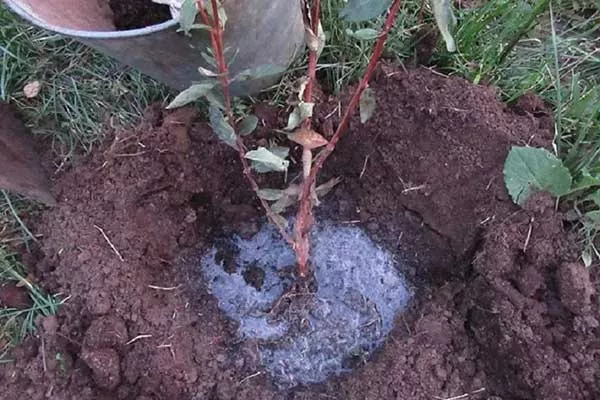
- Place it in the hole at the same depth it was in the pot. Don't remove the root ball—this will help the plant adapt to its new environment.
- Fill with prepared substrate, compact the soil and water generously.

- The nuances of caring for honeysuckle. In early spring, it's recommended to apply fertilizer with equal amounts of nitrogen, potassium, and phosphorus. In July, honeysuckle should be fertilized again, which helps prolong the flowering period. Formative pruning is performed, removing all excess branches before the growing season begins.
Be sure to remove all shoots that have frozen over the winter or dried out over the summer, as well as those that are growing in the wrong direction or are affected by diseases or pests. This is called sanitary pruning. It is performed twice a year—in the spring and in the fall, respectively.
Pest and disease control
This ornamental variety rarely suffers from diseases caused by pathogenic microorganisms. However, prolonged wet weather can cause powdery mildew, which appears as a light gray coating on the leaves.
To combat this disease, use an iodine solution: add half a bottle of pharmacy iodine to 5 liters of water and spray, repeating the procedure every week. Fungicides can also be used.
Honeysuckle is sometimes attacked by aphids. These small insects form colonies on the plants. In such cases, the use of insecticides is recommended to control the pests.
Preparing for winter
To protect the bushes from winter cold, they are covered. But first, the vines are removed from their supports and then wrapped in non-woven material, carefully bending them to the ground.
- Stop applying nitrogen fertilizers one month before the first frost.
- Before the onset of persistent frost, water the plants generously to create a moisture-recharging irrigation.
- Insulate the root system with a layer of mulch at least 10 cm thick.
Reproduction
Honeysuckle propagation is easy in the summer. In mid-July, press some branches into the soil and cover with soil, then moisten and mulch the area. After a few months, roots will form on the pressed branches, after which they can be separated from the mother plant and transplanted to a new location.
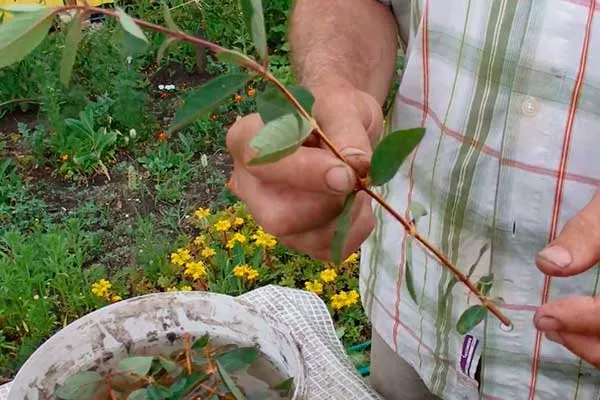
Honeysuckle can also be propagated by cuttings. To do this, cut small shoots about 20 cm long and place them in water until roots appear, then transplant them to a prepared, fertilized area.
How and when to collect?
In the case of Telman's honeysuckle, harvesting the fruit from the bush is not recommended due to its toxicity. The main thing is to ensure that children do not eat the fruit.
What difficulties might arise when growing?
The main challenges arise in cold regions, where winter frosts can damage buds and vines. In such cases, pruning most of the plant may be necessary next year.
Reviews
Telman's honeysuckle is an excellent choice for decorating a garden plot. It's easy to care for, and the bushes retain their decorative beauty for a long time if you follow basic watering and fertilizing guidelines. Just remember the berries are toxic and keep children away from the bushes.