
Yugana is a large-fruited edible honeysuckle variety characterized by early ripening. Domestic gardeners have come to love it for its undemanding growing conditions, frost and disease resistance, high yield, and excellent flavor, which can be enjoyed as early as the second half of May.
Breeding history
Yugana is a new variety of fruit crop. It was developed in 2010. Its development is thanks to the staff of the Bakcharsky Federal State Unitary Enterprise (N.V. Savinkova, A.P. Pavlovskaya, and A.V. Gagarkin). The variety was obtained by crossing Kamchatka honeysuckle and Turchaninov honeysuckle. It was included in the Russian Federation State Register in 2018.
Description of the variety
An experienced gardener will have no trouble identifying Yugana bushes by their appearance and the fruits they produce in late spring.
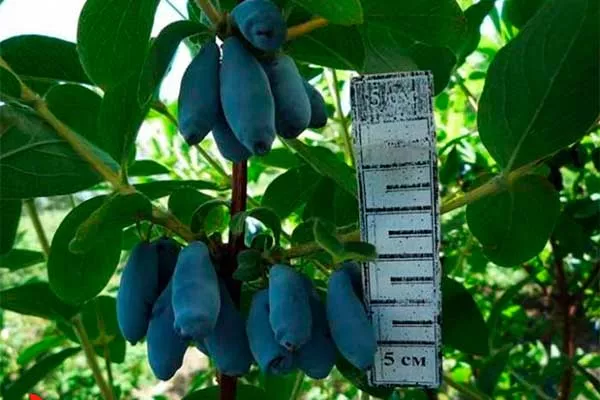
Appearance of the plant
The bushes of this variety of honeysuckle have the following distinctive features:
- dimensions (height/width) — 150 cm/190 cm;
- vigorous growth;
- medium spreading crown, dense and characterized by an elongated-rounded shape;
- shoots: straight, covered with bristles, green (young) and brown-brown (last year’s branches);
- Foliage: medium-sized, elliptical with a pointed tip, dark green, without a glossy sheen (down is visible on young leaves), leathery, flat, falls off in winter;
- Flowers: large in size, pale yellow in color, bell-shaped and arranged in pairs, their aroma is weak.
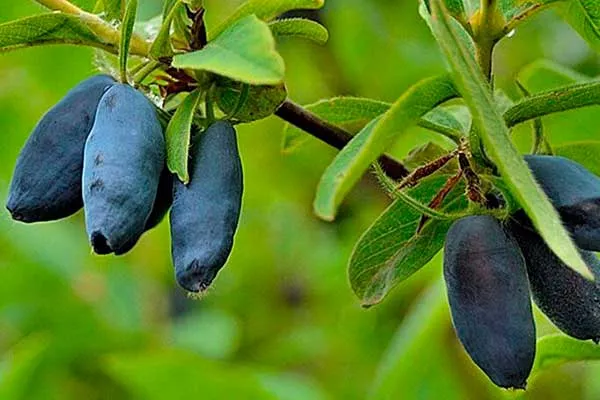
Yugana bushes are characterized by vigorous growth. Annual stem suckers ensure their longevity.
Berries and their taste qualities
This variety is considered large-fruited. Its berries typically grow up to 4 cm in length. Their weight ranges from 1.4 g to 1.8 g. The description of Yugana fruits includes the following characteristics:
- form: elongated, resembles a jug, thickened at the top;
- skin: dark purple (almost black) with a waxy coating, thin but strong (does not crack when ripe, does not tear when harvested from the branches);
- pulp: dense texture, medium juicy, pinkish-red color.
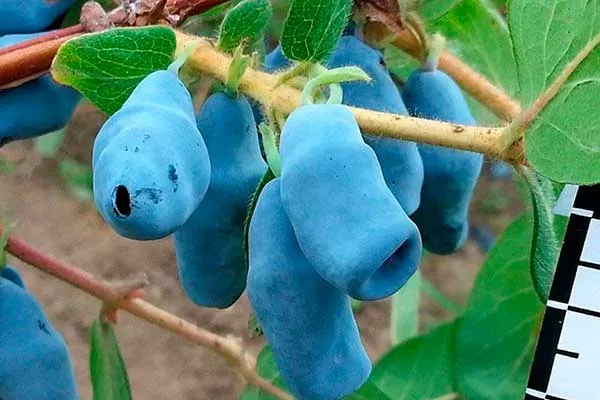
The excellent taste of the fruits of this honeysuckle is provided by their chemical composition, which contains the following substances:
- natural sugars (fructose, sucrose) - 8.9%;
- valuable organic acids (malic, oxalic, succinic) - 2.8%.
This variety is renowned for the medicinal properties of its berries. These properties are attributed to the high content of the following beneficial substances in the pulp:
- vitamins (C, B2, B6, B12, A, P);
- micro- and macroelements (iron, calcium, phosphorus, magnesium, boron, sodium).
Eating Yugana berries has positive health effects:
- helps strengthen the nervous system;
- has a beneficial effect on blood vessels and the heart;
- prevents kidney disease;
- helps strengthen the immune system and fight seasonal infections.
The fruit of this variety has a strong skin that ensures excellent shelf life. They don't burst or dent during transportation.
Features of using this variety
The edible honeysuckle Yugana harvest is versatile in its uses. Homemakers use these berries in the following ways:
- they are added fresh to desserts and summer fruit salads;
- they make jam, preserves, and compote from them;
- make a tincture;
- grind into puree;
- canned;
- frozen (the taste of defrosted fruits does not deteriorate, and their sugar content does not decrease).
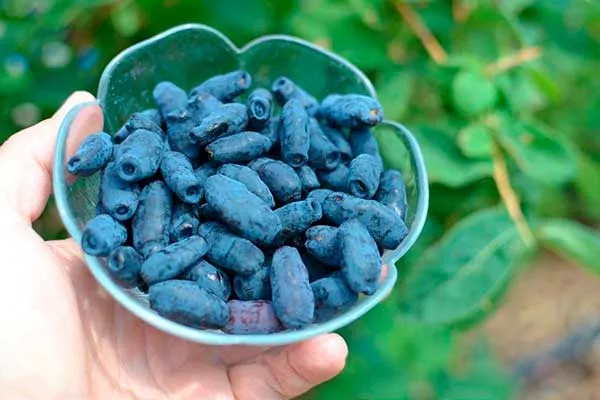
Technical specifications
This variety of berry crop has many excellent characteristics, which make it popular among domestic gardeners.
Productivity and fruiting
Yugana honeysuckle seedlings begin bearing fruit in the second or third year after planting. These plants are very productive. A gardener can harvest the following amount from a single bush:
- from 3.5 kg - from young plants;
- up to 6 kg of berries - from adult bushes.
The yield of this variety, when grown industrially, is 15,000 kg per 1 hectare of planting.
Ripening period
This variety begins flowering in mid-April. Numerous light yellow flowers, rich in nectar, appear on the plants.
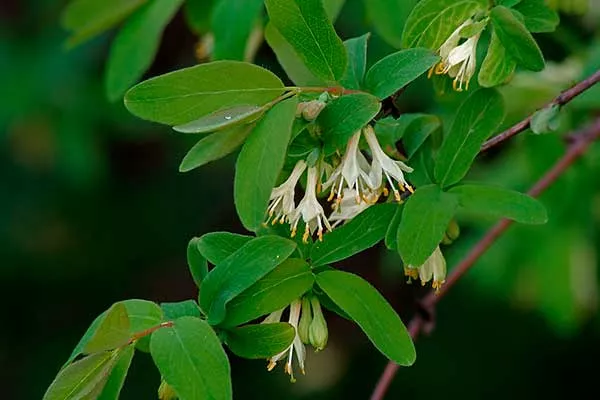
Flowering continues into May. Yugana bushes begin bearing fruit early. As early as May 15th, gardeners can enjoy the first berries of this honeysuckle variety. The fruit ripens abundantly in the first half of July.
Gardeners harvest in two stages:
- First, the berries are removed from the upper branches of the bush;
- The second harvest is carried out when the fruit ovary on the lower branches ripens (there it lags behind in ripening).
Self-fertility and the need for pollinators
Yugana is not self-fertile. Without pollinators in the garden, its bushes will not produce fruit. To ensure abundant fruiting, plant these edible honeysuckle varieties nearby:
- The Giant's Daughter;
- Strezhevchanka;
- Bakcharsky Giant;
- Delight.
Soil requirements
This berry crop isn't considered demanding regarding soil composition. However, it produces the most abundant and high-quality harvest when grown in garden soil with the following characteristics:
- moderately moistened;
- well drained;
- light (sandy or sandy loam);
- sour;
- with a humus content of at least 3.5%.
- ✓ Soil pH should be between 5.5-6.5 for optimal nutrient absorption.
- ✓ Humus content of at least 3.5% to provide the plant with the necessary microelements.
Resistance to diseases and pests
This variety is renowned for its robust immunity. Its bushes rarely suffer from diseases or pest attacks. Adherence to proper berry cultivation practices will ensure its health and abundant fruit production.
Resistance to cold and drought
Yugana is a winter-hardy honeysuckle variety. These plants easily survive the winter in northern regions:
- they are not afraid of severe frosts (up to -50°C);
- do not require winter cover;
- their frost resistance zone is 3.
This honeysuckle variety does not respond well to prolonged periods of summer heat. Its heat tolerance is average, but it is highly drought-tolerant.
Which regions is it best suited for?
The variety grows and bears fruit well in garden plots located in the central part of the Russian Federation and in the northern regions of the country.
It's also grown in southern Russia, but the yield is reduced due to prolonged summer heat and the late arrival of autumn cold. The heat also affects the flavor of the berries.
The main advantages and disadvantages of the variety
Domestic gardeners have come to love Yugana for its undeniable advantages:
The variety also has some minor drawbacks:
What is the difference from other varieties and hybrids?
Yugana stands out from other edible honeysuckle varieties in many ways. The table lists the key characteristics of popular early varieties and hybrids of this berry crop:
| Name | Fruit weight, g | The taste of berries | Yield rate, kg per 1 plant |
| Yugana | 1.4-1.8 | dessert, sweet and sour | 3.5 |
| Altair | 0.9 | sweet and sour | 1.7-2 |
| Vasyuganskaya | 0.7 | sweetish-sour | 2.5 |
| Gerda | 0.8-1.4 | sweet and sour | 2.3 |
| Blue Spindle | 0.9-1.5 | sweet and sour, with a slight bitterness | 3 |
| Cinderella | 0.9 | sweet and sour | 1.9 |
| In memory of Kuminov | 1.3 | dessert, sweet | 2.7 |
Agricultural technology
The optimal time to plant this berry variety is from late August to early September. Spring planting is not recommended, as the buds on the seedlings begin to open with the first warm weather as early as April. A seedling with a closed root system can be transplanted into the garden in early May.
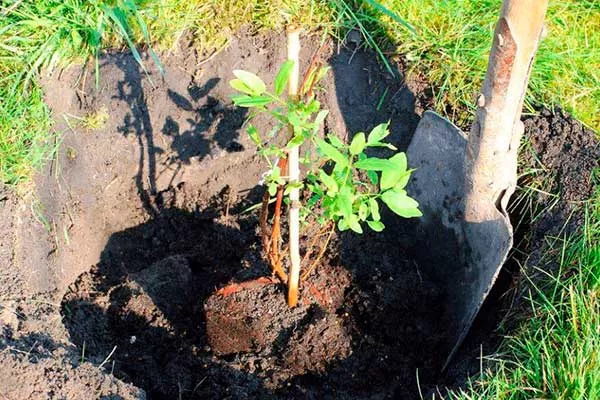
Successful cultivation of this variety depends on the correct site selection. It must meet the following requirements:
- be sunny;
- protected from wind and drafts;
- without groundwater close to the soil surface (up to 150 cm).
When planting Yugana honeysuckle in groups, follow these rules:
- distance between bushes - 200 cm;
- between rows - 250-300 cm.
Caring for a honeysuckle planting consists of the following activities:
- WateringWater the bushes generously. Do this after the soil has dried to a depth of 15-20 cm. Mulch the soil after each watering with peat, hay, or fallen leaves to retain moisture and slow weed growth. During the rainy summer season, watering is not necessary.
- Top dressingFertilize honeysuckle 2-3 times during the growing season. Use organic fertilizers and mineral fertilizers containing phosphorus and potassium. Fertilize the plantings again in mid-autumn to prepare the bushes for the long winter.
- TrimmingPerform the rejuvenation procedure in spring or fall. Bushes require it starting at six years of age. Prune off broken and dry shoots. Remove old skeletal branches every year. It's also advisable to remove the lower tier of branches.
Pest and disease control
The Yugana variety is relatively disease-resistant. However, violating agricultural practices can lead to viral and fungal infections in this honeysuckle variety:
- ramulariasis;
- cercospora;
- powdery mildew.
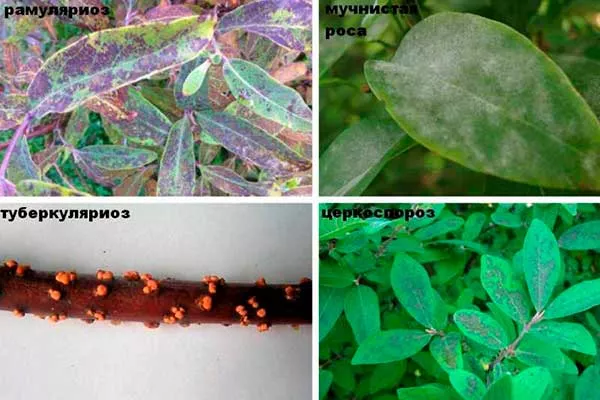
Prevent and treat diseases by spraying the planting with Bordeaux mixture, Fundazol, and Fitosporin. Biological preparations (Fitoverm and Agrovertin) are also suitable.
Among the pests that attack honeysuckle, you can see the following insects:
- scale insect;
- aphids;
- leaf beetle caterpillars.
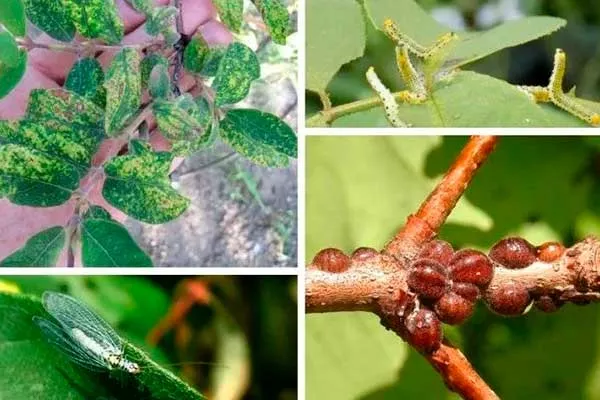
To prevent bushes from being damaged by these parasites, use Actellic in the spring (before buds open).
Preparing for winter
Mature plants of this variety overwinter without additional cover. Young seedlings grown in the northern regions of the country should be insulated with agrofibre to protect them from severe frosts.
Reproduction
Experienced gardeners propagate Yugana bushes as follows:
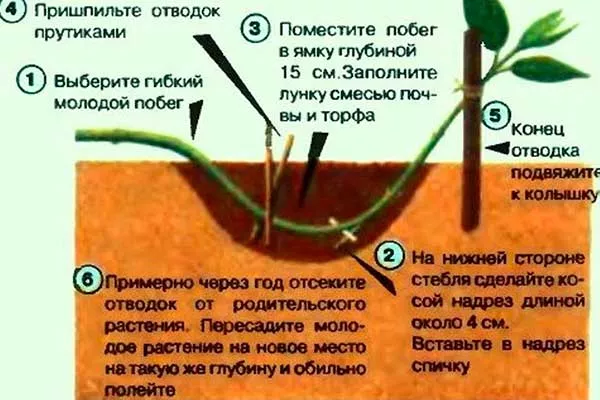
- Using layeringThe lower branch is bent down to the ground, and the central part of the shoot is pushed into the soil. After a few days, the layering will take root. The following season, it is separated from the main plant.

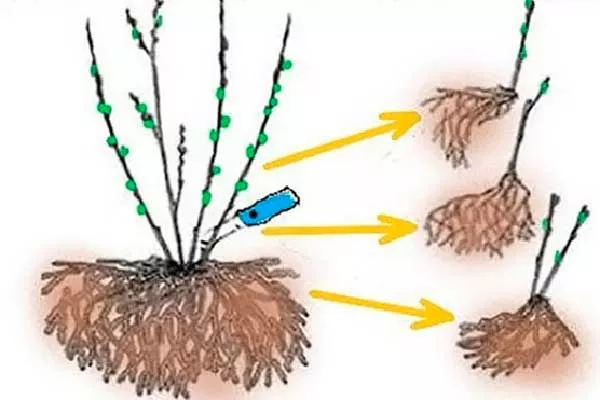
- By divisionThe overgrown bush is dug up and its root system is divided into parts.
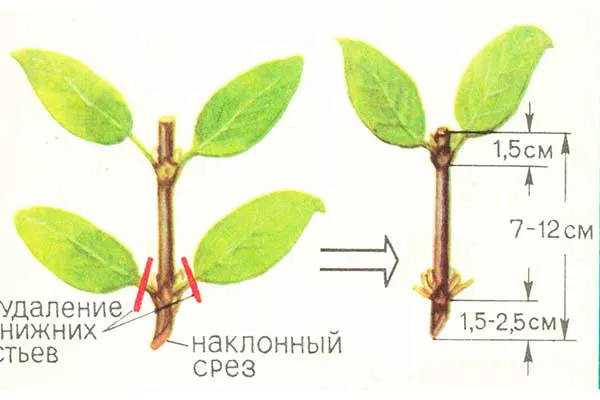
- By cuttingsIn early spring, young shoots are cut from the bush. They are soaked in water with a growth stimulant added for 24 hours. They are then planted in soil and covered with plastic. Once rooted, the covering is removed.
How and when to collect?
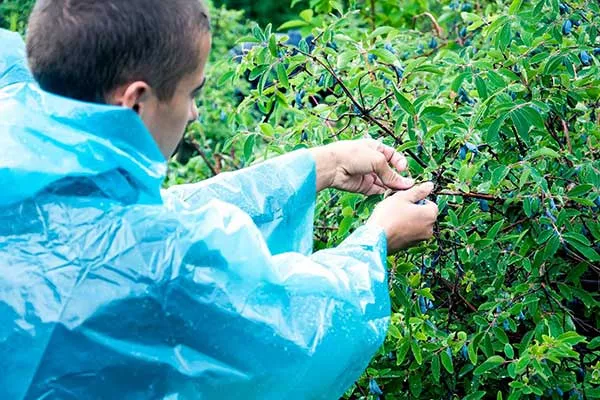
Gardeners harvest Yugana grapes in June in two stages. This approach is due to the uneven ripening of this variety's berries. Harvesting occurs in the morning during dry weather. The fruits are picked by hand.
What difficulties might arise when growing?
This garden variety is weather-resistant and low-maintenance. Prolonged rainfall, prolonged periods of heat and drought, and poor agricultural practices are the most common causes of difficulties when growing Yugana.
Complications may include:
- Formation of a whitish coating on the green parts of the bushThis is a sign of powdery mildew. The disease is caused by excessive rainfall. Fungicides such as Fitosporin M help combat it. Apply biological treatments when the berries are ripening.
- Decrease in the quality and quantity of berriesThis occurs when honeysuckle is grown in sandy, infertile soil. In this case, either replanting the bush or enriching the soil with nutrients is necessary.
- The appearance of holes in the leaves, a decrease in yieldThe complication arises due to a pest infestation. Insecticides (such as Actellic) can help combat them.
- Deformation of sheet platesThis is a symptom of a micro- and macronutrient deficiency. Feeding with a complex fertilizer will solve the problem.
Reviews
Yugana is a new honeysuckle variety that has already become a favorite among Russian gardeners. It's the best choice for those who want a bountiful harvest of delicious and healthy berries as early as possible.