
Climbing honeysuckle is a beautiful addition to any garden, often used as a hedge. This ornamental plant is found in the forest belts of Northern and Central Europe, but is also common in African jungles. This deciduous shrub bears beautiful flowers, a favorite pastime for many gardeners. Before planting honeysuckle, familiarize yourself with the characteristics of this ornamental plant.
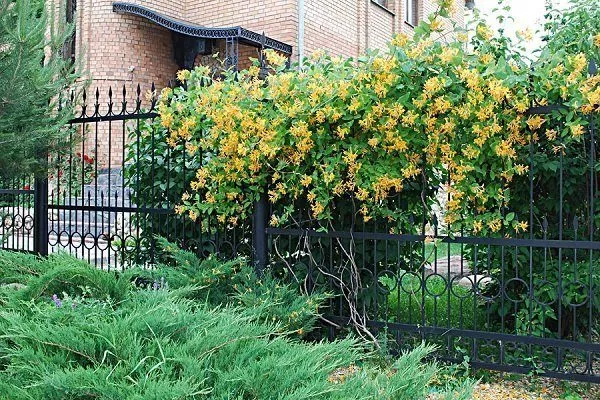
Climbing ornamental honeysuckle
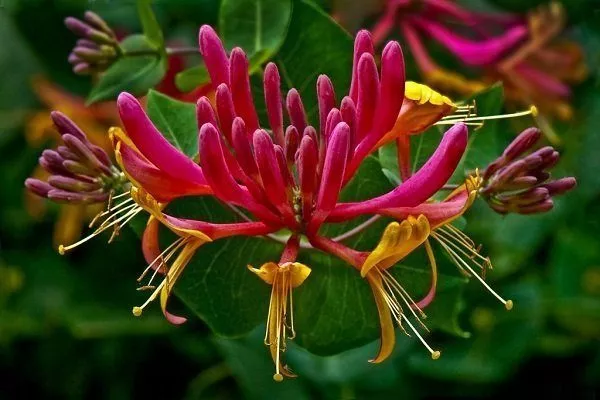
Climbing honeysuckle has beautiful flowers
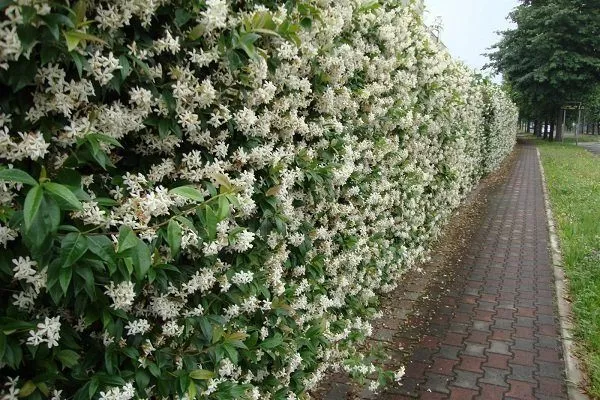
This type of honeysuckle makes a living hedge.
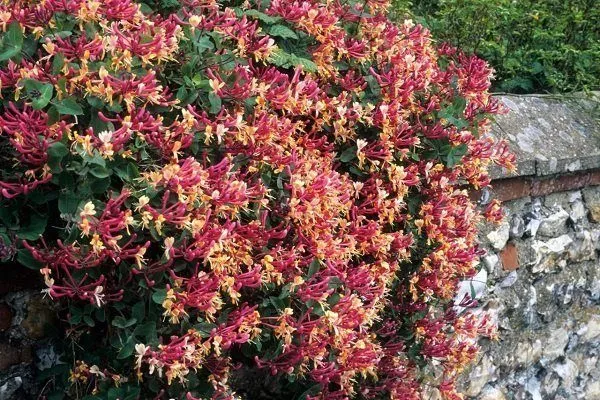
Ornamental honeysuckle does not bear fruit
Advantages and disadvantages of decorative climbing honeysuckle
In northern regions, the root system of climbing honeysuckle freezes, the bushes become deformed, and the plant fails to bear fruit. Therefore, it is best not to grow it in Siberia. There are several significant advantages to choosing climbing honeysuckle:
- ease of care;
- drought resistance;
- rapid growth rates;
- strong immunity;
- long flowering period;
- growth in low light conditions;
- ease of reproduction;
- resistance to harmful insects;
- average life expectancy is 50 years.
In addition to its intolerance to extreme cold, this ornamental plant has other disadvantages that are important to be aware of before planting:
- the need to form a bush;
- pruning and gartering honeysuckle;
- cleaning the plant for the winter;
- poor growth in shade;
- poor growth when transplanted from place to place;
- risk of damage by harmful insects.
Features of cultivation
Honeysuckle requires vertical support (trellises, stakes, canopies, etc.) to grow. The plant climbs upward and reaches its maximum size. Without support, honeysuckle remains on the ground: first it withers, then rots. With proper training, this flexible shrub becomes a highlight of any landscape design.
Climbing honeysuckle can be used to enclose a fence, a summerhouse, a gazebo, or to create a living canopy or hedge. For rapid growth, the plant requires regular watering, tying up its branches, and removing side shoots. Otherwise, the bush grows haphazardly and quickly loses its decorative appearance.
The plant thrives in sun and warmth, but also grows tall in shade. In the latter case, the flowers are not bright, and the fruits are small. The best location for growing climbing honeysuckle is a south-facing exposure. Planting is best done in the fall or early spring.
- ✓ Provide the plant with access to direct sunlight for at least 6 hours a day for maximum flowering.
- ✓ Maintain soil pH in the range of 6.5-7.5, using lime to adjust acidity.
Purpose and characteristics of ornamental honeysuckle
This deciduous shrub reaches 6 m in height. The leaves are up to 10 cm long, and their shape (lanceolate or oval) depends on the honeysuckle variety. The flowers are voluminous, raspberry or pink, and have a lingering fragrance. The red fruits, while attractive, are highly poisonous, inedible, and have no medicinal properties.
The honeysuckle bush begins blooming in spring—from May, June, to late August. During this period, it emits a lingering, pleasant aroma. After the season ends, the plant sheds up to 1,000 flowers, and the scent becomes less intense.
German honeysuckle attracts with its diverse colors—buds range from white to purple. Ripe fruits are exceptionally dark red.
How to breed correctly?
It's best to buy climbing honeysuckle as seedlings, which are sold in containers already fertilized. Choose neutral soil for planting (optimal pH is 6.5-7.5). If the soil is acidic, treat it with slaked lime.
Plant the plant on a south-facing surface, as it does not tolerate cold, dampness, or drafts well. To accelerate growth, use a fertilizer consisting of 2 buckets of compost, 1 kg of wood ash, and 50 g of superphosphate.
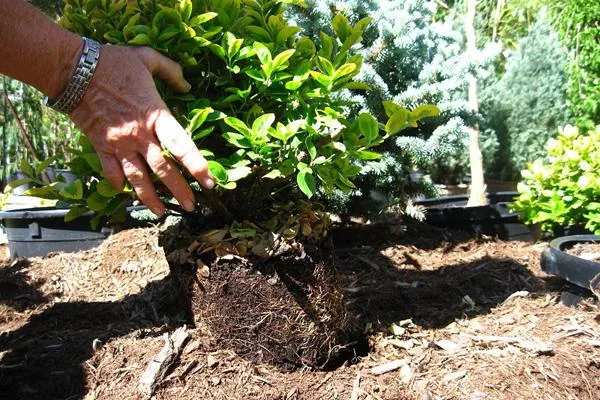
If the shrub is over 3 meters tall, trim back any long shoots and immediately treat the cuts with garden pitch. By following these simple guidelines, you can create a magnificent hedge of fresh flowers, provide shade for a gazebo, or create a cozy atmosphere in your garden.
Landing
The best time to plant ornamental honeysuckle is early spring or fall, when the plant is still dormant. The soil must be rich in nutrients, otherwise the bush's growth will slow. Basic rules for planting ornamental honeysuckle:
- A few days before planting, loosen the soil and remove weeds.
- Prepare holes measuring 50x50 cm 2 days in advance.
- Ensure a distance of 2-3 m between seedlings.
- Place a layer of expanded clay, gravel or sand on the bottom for drainage.
- Add mineral fertilizer and water the soil thoroughly.
- Make a mound in the hole, place the seedlings on it, and spread out the roots.
- Install a vertical support nearby to avoid damaging the root later.
- Fill the hole with soil and put a layer of mulch on top.
Reproduction
If you want to create a hedge, you have two options: buy ready-made seedlings or propagate a mature plant. Seeds are the most difficult method and not always effective. Propagation by cuttings is a lengthy process, while layering is easy and accessible if you have a mature plant on your property.
Layering
The optimal time for taking cuttings is from April to May. When choosing this propagation method, prepare 2-3 healthy and strong shoots, otherwise the plant will not take root.
Sequence of actions:
- Cut off the tops of strong shoots.
- Treat the shoots with a growth stimulator.
- Dig a hole next to the adult plant.
- Bend the shoot, lower it into the hole and bury it.
- Use brackets or supports for fixation.
- Water the plant generously.
- As soon as the root system takes hold and the shoot gets stronger, cut it off from the mother bush.
- After 1 month of regular watering, transplant the young seedling to a permanent location.
Cuttings
In this case, select fresh shoots with 3-4 buds and cut them all the way to the trunk. Propagation by cuttings is carried out in the following sequence:
- Treat the cut site of the shoot with a growth stimulator (Kornevin).
- Place the cuttings in water and do not remove them for 2 weeks.
- When the first roots appear, transplant into open ground in a permanent location.
- To enhance growth, pre-fertilize the hole with a nitrogen-rich compound or peat.
- Water generously after planting.
Transplant young honeysuckle shoots into open ground from August to October. At other times, the root system may fail to take hold, and the landscape design will be unsuccessful.
For information on how to propagate honeysuckle cuttings, watch the following video:
Seeds
To propagate climbing honeysuckle, use seeds from a two-year-old plant; sow them in the spring. Follow these steps:
- Remove the seeds from the ripe fruit, wash and dry naturally.
- Before planting, treat the seeds and soil with a pale pink solution of potassium permanganate as a disinfectant.
- Plant at a depth of 2-3 cm, sprinkle with soil, water generously and place in a warm, bright place.
- When sprouts appear, plant them in different containers and wait until the seedlings become stronger.
Care and cultivation
Climbing honeysuckle is easy to care for and quickly blooms in the second year, provided the following guidelines are followed:
- Watering. The root system is nourished with water, but not overwatered. To maintain the richness of the color, the leaves are misted.
- Loosening, weeding. Plants in their first year of life need to be hilled. This process is best combined with weeding and loosening to provide the soil with oxygen.
- Formation of a bush. In spring and autumn, diseased, damaged and old shoots are cut off.
- Mulching. After planting, a layer of mulch (peat, humus, sawdust, straw) is applied to the soil.
A plant can grow in one location for up to 10 years without needing to be repotted. If the ornamental shrub isn't growing or hasn't flowered for more than three years, it's recommended to find a new location. Repotting is best done in the fall to avoid disrupting the growing season in the spring.
Watering
After planting outdoors, water the young plant thoroughly and leave it alone for a week. Once the root system has established itself, increase the frequency of watering to twice a week.
Honeysuckle tolerates drought for a while, but such experiments are not beneficial for the plant and affect fruiting. During extreme heat, in addition to regular watering, mist the green leaves with water, otherwise they will turn yellow.
Trimming
To create a hedge, prepare a wooden or metal support for the young plant. This can be a homemade trellis or a rope net. First, the ornamental shrub grows upward. Once it reaches the desired length, its tops are cut off and treated with garden pitch.
After pruning, lateral shoots encourage growth, twining around the support. Timely pruning shapes the bush and helps create a beautiful landscape design for a garden plot or any summer cottage.
Prune in early spring, before the shoots have developed buds. If you delay this process, the ornamental shrub will become stressed and may not bloom again this year (it needs time to recover).
Prune shoots gradually—no more than a third at a time, otherwise such drastic measures will disrupt the honeysuckle's growth and flowering. Carry out a thorough pruning in the fall, after the flowers have fallen.
To learn how to create a living wall from honeysuckle, watch the following video:
Diseases and pests
Honeysuckle has a strong immune system, but harmful insects can still destroy the plants. Particularly dangerous are:
- Spider mite. It sucks the juice from the leaves. The plant turns yellow and wilts, and the leaves curl up into tubes.
- Powdery mildew. A white coating appears on the stem and leaves.
- Plant aphid. The insect attacks stems and leaves, covering them with white moss.
When such symptoms occur, plants are treated with fungicides. To avoid disease, it's best to conduct preventative treatments promptly.
You can read more about honeysuckle diseases and pests in next article.
Disease prevention
To maintain healthy shoots and strengthen the root system, follow these preventative measures:
- Remove weeds in a timely manner.
- Do not transplant the plant from place to place.
- Use fertilizers, mineral and organic fertilizers.
- Avoid dampness and do not keep honeysuckle in the shade.
- Mulch the soil.
- Install the vertical support at the same time as planting the seedlings.
- React promptly when symptoms of illness appear.
Gardeners' reviews of German honeysuckle
Climbing honeysuckle is an ornamental shrub that has become a fresh solution for landscape design. Moreover, the plant has a pleasant scent and delights with its lush buds during the growing season.