
Volkhov honeysuckle is renowned for its delicious fruits and remarkable resistance to low temperatures. Let's explore this variety's characteristics, its pros and cons, and the specifics of growing and caring for it.
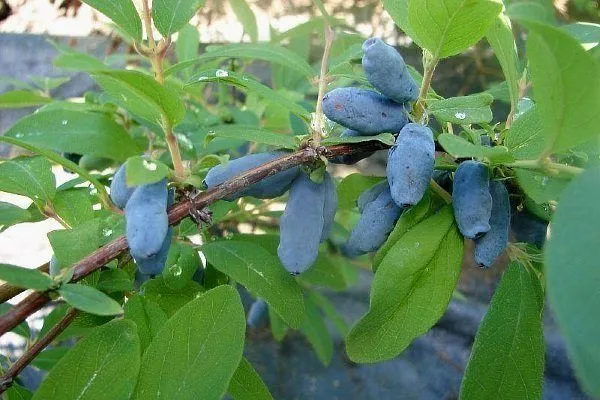
Honeysuckle variety 'Volkhova'
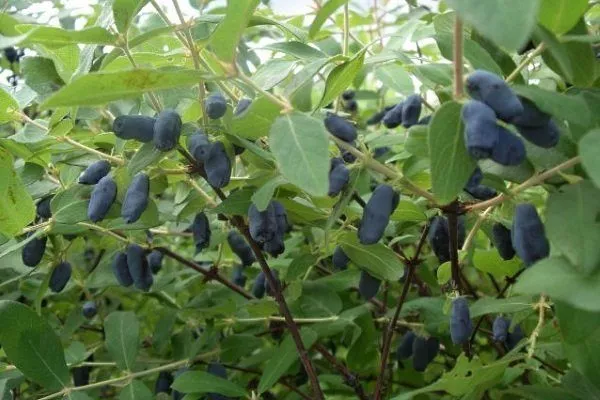
The berries of the Volkhov honeysuckle fall less rapidly, which allows for harvesting in large batches at once.
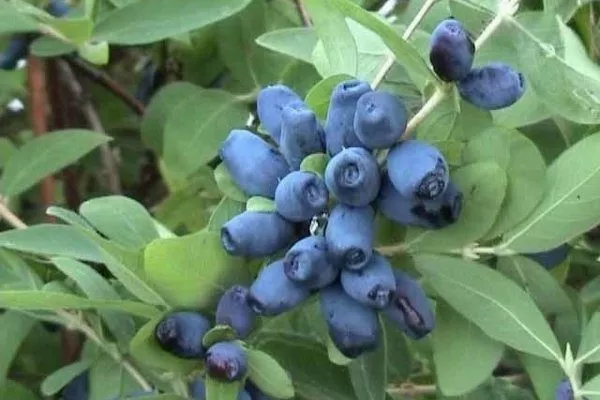
The taste of the fruits of the honeysuckle "Volkhova" is dessert-like, with a rather strong aroma
History of selection
The variety was developed by Leningrad agricultural specialists from the Pavlovskaya plant. Volkhova was added to the Register of Breeders' Achievements of the Russian Federation in 1999. The variety takes its name from the Volkhov River, which is located in the St. Petersburg (Leningrad) region.
Description of the Volkhov variety
This honeysuckle is not much different in appearance from other varieties of the plant. It grows primarily in northwestern Russia, but can also be grown in warmer, southern regions.
| Name | Frost resistance | Productivity | Taste |
|---|---|---|---|
| Volkhova | High | 2-3.5 kg per bush | Sweet and sour |
| Amphora | Average | 1.5-2 kg per bush | Sweet |
| Pavlovskaya | High | 2-2.5 kg per bush | Sweet with a strawberry flavor |
| Azure | Average | 1.8-2.2 kg per bush | Sweet |
Bushes
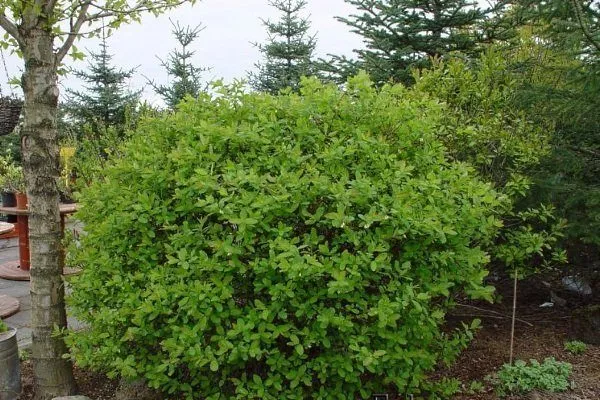
The Volkhova variety has a fairly dense, oval-shaped crown. The dark green, flat leaves grow to the same shape and become quite wide. The main branches are thin, but numerous. The plant can reach a height of 1.5-2 meters. The plant typically lives for 20-25 years.
Berries
The plant's fruits are bluish-gray in color. They are elongated (approximately 2 cm long) with a pointed tip. Each berry weighs approximately 1 g and is covered with a thin yet dense skin.
The Volkhova honeysuckle fruit has a sweet, slightly tart flavor. The berries themselves are very aromatic, with a distinct strawberry flavor when eaten. Fruits with these characteristics are considered dessert fruits. The Volkhova variety received a high tasting score of 4.7 points.
Technical specifications
Volkhov's honeysuckle is a mid-early variety, with berries ripening around the middle of the first month of summer. However, in cooler regions, ripening may be delayed by 1-1.5 weeks. The berries barely fall off, allowing for a yield of approximately 2-3.5 kg per bush.
This variety cannot pollinate itself. To do this, it must be planted next to Amphora, Pavlovskaya, or Azure honeysuckle. Bumblebees also participate in this process, but bees do not pollinate this plant.
This variety has excellent tolerance to low temperatures. It can easily withstand temperatures as low as -40 degrees Celsius, without requiring special cover. This honeysuckle is also suitable for large-scale commercial planting, as it can be harvested using machinery (such as a combine harvester).
Pros and cons of honeysuckle
The Volkhova variety, like any other fruit plant, has its advantages:
- slight shedding of berries;
- high frost resistance down to -40 degrees;
- ease of care;
- the ability to grow in large quantities;
- good transportability;
- long shelf life;
- pleasant, dessert-like taste.
The disadvantages of Volkhov's honeysuckle are as follows:
- need for pollination;
- small size of berries;
- fruiting 3-4 years after planting - if propagation was done by cuttings, then the berries can be collected the following year, but the harvest will be small.
Where is the best place to plant honeysuckle?
To ensure that honeysuckle produces a good harvest, the location must be:
- protected from drafts;
- well-lit by the sun;
- with moist, but not excessively damp, soil.
- ✓ Soil pH should be between 6.0-6.5 for optimal growth.
- ✓ The distance to the nearest buildings or other plants should be at least 1.5 m to ensure good air circulation.
Avoid planting in marshy areas or in soil with low groundwater levels. A good option is to plant near a hedge or fence, which will provide shelter from drafts and strong winds.
Preparing the plant for planting
The best time to plant honeysuckle is early fall. Both three- and six-year-old seedlings can be transplanted (in this case, trim them back to 50 cm before planting).
Prepare the soil for planting crop seedlings:
- water the soil generously;
- Add potassium salt (70 g), humus and superphosphate (15 g) to the bottom of the planting hole - if the seedling is already 6 years old, then these proportions need to be doubled.
If the planting soil is too heavy, add sawdust, peat, or coarse sand to make it lighter and more permeable. If waterlogging frequently occurs in the soil, provide drainage in the planting hole.
The landing process
Volkhov honeysuckle should be planted according to the following algorithm:
- Place planting holes at a distance of 2-2.5 m from each other;
- If necessary, make good drainage at the bottom of the holes;
- pour fertilizer into the hole - a couple of buckets of compost, 1 kg of ash, 50 g of superphosphate;
- Carefully straighten the roots of the seedling when planting;
- cover them with earth;
- water the planted seedlings well;
- Cover the area around the plant's trunk with mulch (read more about mulching the soil here)here).
How to care for the variety?
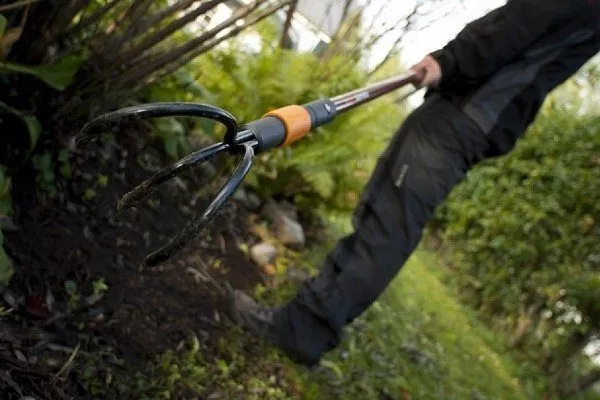
To get a good harvest from honeysuckle, it requires proper care. This fruiting plant is quite easy to grow, but will thrive if it's watered regularly, fertilized, and pruned correctly. Since the roots are close to the soil surface, carefully remove weeds and loosen the soil.
Watering the soil
Water your honeysuckle moderately as moisture evaporates from the soil, and more generously during hot periods and when fruit is setting. Make sure there are no puddles of water near the bush. Otherwise, the roots may rot, and the variety will die. The soil should be moist but not soggy.
Top dressing
Add honeysuckle fertilizer several times a year:
- In the spring months, after the snow melts, add nitrogen supplements;
- after the leaves appear, “pamper” the plant with organic fertilizers;
- during the blooming of flowers and formation of fruits, water the bushes with ash;
- In autumn – use supplements with phosphorus and potassium.
- In early spring, apply 50 g of urea to each bush to stimulate growth.
- After harvesting, feed the plant with 40 g of superphosphate and 30 g of potassium salt to prepare for winter.
We recommend reading the article about How to care for honeysuckle in autumn.
Trimming
Prune the plant's crown in the fall. During this process, remove all wilted and dead branches. Also thin out the foliage inside the bush to prevent the crown from becoming too dense. Avoid pruning the ends of branches, as this is where most of the fruit-bearing buds are located.
Avoid pruning honeysuckle during its first two years, otherwise the bush will become diseased. After that, prune every two to three years. Avoid pruning more frequently, as this may reduce the plant's yield.
To rejuvenate honeysuckle, prune the oldest stems over several years to allow for new shoots to emerge. However, avoid cutting too many branches at once, as this can negatively impact the plant, its yield, and its development.
Shelter for the winter
Although Volkhov honeysuckle is very frost-hardy, this applies to mature plants. Young seedlings require winter protection for 2-3 years. Insulate the base of the honeysuckle after consistent cold temperatures reach +3 to -3 degrees Celsius.
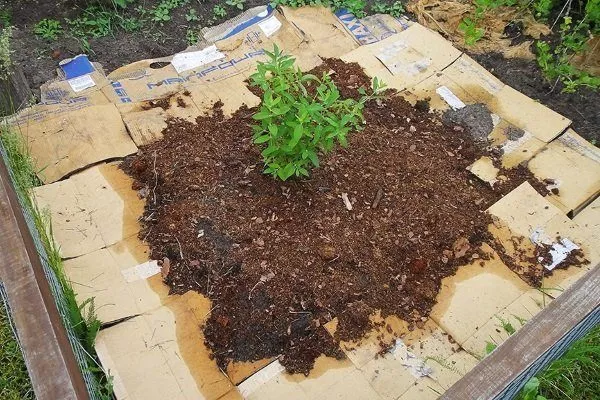
The covering layer should be 10-15 cm thick (this can be humus, fallen leaves, evergreen branches, or even cardboard). If there was a significant amount of snow in the winter, sprinkle it on the ground around the plant. Mature honeysuckle does not need to be covered.
Diseases and pests
Volkhov honeysuckle has good resistance to pests and common diseases. However, the plant can still become infected. Most commonly, it is attacked by the honeysuckle borer or aphids. This can occur due to improper cultivation practices or contamination from other crops.
You can fight pests in this way:
- When honeysuckle borer appears, cut off the diseased branches as low as possible and burn them;
- To prevent pests, spray the plant with insecticides once a year after harvesting the berries.
Reviews of Volkhov honeysuckle
Volkhov's honeysuckle is a plant distinguished by its delicious, strawberry-flavored berries and easy care. Furthermore, it's very frost-hardy, so it's not afraid of low temperatures. Plant honeysuckle in your garden and enjoy its delicious fruits.