
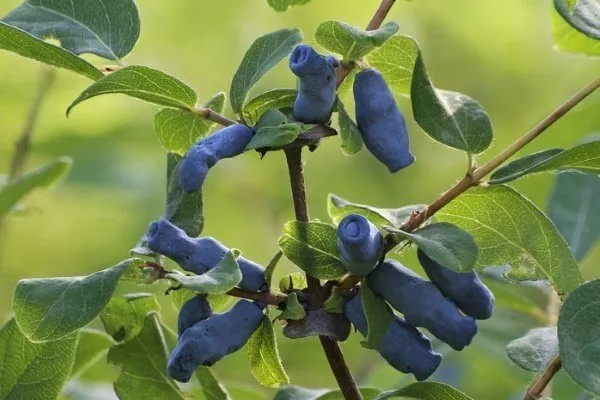
Honeysuckle is one of the few fruit bushes that can withstand both the vagaries of northern weather and the harsh Siberian winters. However, it's crucial to provide the plant with proper care in the fall, including repotting, pruning, watering, fertilizing, and other maintenance. Read on for more details.
Transfer
Some gardeners transplant honeysuckle bushes in the spring, but this procedure is best done in the fall, as honeysuckle is an early-growing shrub. As early as late June, the plant enters a dormant period, which lasts until early March. Gardeners have observed that dormant buds do not open during this period. Therefore, transplanting can be done from August until October.
- ✓ The site must be protected from strong winds, especially from the north side.
- ✓ The soil should be well drained, without stagnant water.
- ✓ Honeysuckle prefers sunny places, but can also grow in partial shade.
The transplant itself is carried out according to the following instructions:
- Select a new transfer location in advance.
- Dig a hole several times larger than the original one and add compost.
- Don't move the shrub to a new location; drag it along the ground. To protect the plant from possible damage, you can load it with burlap and carefully drag it to the new location. It's crucial to leave a ball of soil on the roots.
- Plant the bush, deepening it to a depth of approximately 5-6 m. At this point, the transplant will be successfully completed.
When replanting a bush, you need to act extremely carefully so as not to damage the honeysuckle's sensitive root system.
Trimming
Like most shrubs, honeysuckle is a good bushy plant: the plant quickly forms new shoots and suckers. Shoots form on older branches, and new shoots emerge from basal buds. These shoots also appear in the root system.
To prevent the bush from branching out unevenly, regularly prune old and damaged branches. This also serves a number of other purposes:
- strengthens the bush before winter and gives it a beautiful shape;
- improves plant yield and rejuvenates it;
- stimulates abundant flowering in the following season;
- allows you to preserve the quality characteristics of berries, the taste of which can suffer from a lack of sunlight and poor ventilation.
You need to trim the bushes very carefully, since edible honeysuckle varieties grow slowly and will take a long time to regain their lost shape.
When is the best time to carry out such an important gardening manipulation, which bushes and how to prune, should be considered separately.
When is it better to prune – in autumn or spring?
Honeysuckle quickly awakens from its winter dormancy, so pruning it in the spring is quite dangerous. Furthermore, delaying this procedure can damage the fruiting buds.
The best time to prune a shrub is November, when nighttime temperatures drop below 0°C and the shrub sheds its leaves. It's highly undesirable to prune before this time, as hasty pruning before frost can cause buds to develop, which will freeze when the weather gets colder.
Which bushes should be pruned?
Shrubs are pruned for the first time at 5-6 years of age. In the fall, when the bushes have lost their leaves, remove old, dry, damaged, and short branches, as well as the ends of shoots with poor growth. Fruit grows on year-old shoots, so they should be left alone.
Unlike other shrubs, edible honeysuckle varieties don't require annual pruning. If done correctly, the next treatment should be no sooner than every 2-3 years. Once the plant reaches 8 years of age, it should be earthed up and rejuvenated by cutting off all old branches and any remaining young shoots on the lower portions of the main branches.
Of course, young bushes older than 2-3 years shouldn't be subjected to extensive pruning, but some gardeners recommend removing excess shoots that grow in the center of the bush. This allows sunlight to penetrate the bush and improves air circulation.
How to prune?
When the plant reaches five years of age, it is fully pruned according to the following instructions:
- Remove dried or damaged shoots from the crown. If only parts of them are damaged, then those should be cut off. Of course, there's no need to prune the entire branch if only the tip is damaged.
- Remove the top of the skeletal branch and any inward-facing branches to prevent darkening of the bush and reduction in berry size. The cut should be made in the middle of the branch, not near its base.
- Cut off branches that are bending downwards excessively to provide the plant with adequate ventilation.
- Prune branches that lack branching and shoots with irregular shapes, such as excessively gnarled or curved ones. After pruning, the bush should have an average of 8-15 shoots remaining. In any case, to ensure the bush survives the winter and produces fruit well in the future, at least 5 healthy shoots should be left.
A gardener will show you exactly how to prune honeysuckle in the following video:
Experienced gardeners do not recommend pruning young branches, since this is where most buds form.
The plant rejuvenation procedure must be carried out with the utmost care, as the branches are easily broken and damaged.
The nuances of processing young and old honeysuckle
Pruning requirements depend on the plant's age. Unlike many berry bushes, honeysuckle doesn't require pruning after planting, as this will slow its growth and significantly impact the fruiting phase. Until the plant is five years old, only three types of branches should be removed:
- growing inward;
- dried up;
- broken.
With this gentle pruning, branches will not become intertwined, and more sunlight and moisture will reach the center of the bush. This will create all the conditions necessary for the plant's normal development.
As for old, neglected bushes, rejuvenating them requires removing all old branches or completely cutting the plant back to the stump, using pruning shears to trim off all shoots taller than 40 cm. Such gardening procedures are best performed after leaf fall or, at the very least, in early spring before the plant awakens.
After rejuvenating pruning, experienced gardeners recommend tying up the bushes. To do this, drive wooden or metal stakes into the ground around the perimeter, then tie them with rope just above the cut line. This support will prevent the plant from falling apart and will prevent shoot breakage.
Watering and soil cultivation
Honeysuckle is a moisture-loving plant, so it requires regular watering even after harvest. Of course, in the fall, the frequency and amount of watering should be reduced. The recommended watering rate is 1.5 buckets per plant, but in a dry fall, the amount can be increased to 2-2.5 buckets. The soil should be moistened as it dries out.
- ✓ Watering should be moderate, avoid over-watering.
- ✓ During dry periods, increase the frequency of watering.
- ✓ Use mulch to retain moisture.
When watering, avoid loosening or digging the soil, as honeysuckle's shallow root system can be damaged by such manipulation. However, the layer of sawdust or compost mulch should be replaced periodically, as it retains moisture well and prevents weed growth.
Top dressing
Properly fertilizing the soil with essential nutrients will promote healthy plant growth, abundant flowering, and fruiting. The first time the plant should be fertilized is when it's two years old.
First of all, honeysuckle needs organic matter. It will make the soil more fertile and stimulate the development of soil bacteria essential for berry bushes. So, once every three years, the following should be added to the soil:
- rotted compost;
- humus;
- manure;
- chicken droppings.
This is sufficient to nourish the shrub. Potassium-phosphorus fertilizers are also excellent for the plant. In the fall, gardeners should apply 100 g of ash, no more than 20 g of potassium salts, and at least 30 g of double superphosphate per square meter of plot. For a comprehensive effect in the spring, before the buds open, honeysuckle can be fed with ammonium nitrate (15 g per square meter) or treated with a urea solution.
A gardener shares his experience of fertilizing honeysuckle in the video below:
Gardeners should avoid overdoing nitrogen-containing fertilizers, as they encourage excessive honeysuckle growth. This ultimately leads to bud break during frosts, resulting in the death of the plant.
Protection from pests and diseases
Honeysuckle is rarely attacked by pests or diseases, but preventative measures should not be neglected. For example, every few years after leaf fall, spray each bush with a urea solution (700 g of granules per bucket of water).
Despite such treatment, the bush is sometimes attacked by pests. For example, bullfinches may feast on the plant's buds, and small rodents (mice and hares) may eat its bark. The dire consequences of such attacks will only become apparent in the spring, when the condition of the affected bushes can be fully assessed. To prevent such pest attacks, protect honeysuckle from rodents and birds by covering the planting with netting.
In the fall, it is also extremely important to thoroughly clear the entire area and the trunks of shrubs of last year's foliage, which can become a favorable environment for the development of bacteria and the activity of harmful insects.
Time and method of autumn grafting
In the fall, honeysuckle grafting is done after the leaves have fallen, allowing the scion time to take root but not to begin growing or producing new buds. This procedure follows simple instructions:
- Using a sharp tool, trim the scion and rootstock. Make the cut at an angle.
- Tightly connect the scion and rootstock, securing the joint with tape.
- Cover the top with film and a sheet of paper.
- Wrap the last layer with twine.
Vaccinations can be checked in 3 weeks.
Covering honeysuckle for the winter
Do honeysuckle bushes need to be covered before winter? This depends on which of two varieties the plant grows in the area belongs to:
- Frost-resistant (winter-hardy)These plant varieties can withstand even severe frosts, so they don't require winter protection. Flower buds can withstand temperatures as low as -40°C, while growth buds can withstand temperatures as low as -50°C. To protect the plant over the winter, tie the branches together and bend them toward the ground. This will prevent them from breaking under a heavy layer of snow.
- DecorativeNot as hardy as frost-resistant varieties, they require protection. This is especially true for climbing vines. In the fall, bend the branches of the shrub to the ground and then cover them with spruce branches or sawdust. Alternatively, the plant can be covered with rolled covering material.
Snow cover will provide additional protection for the shrubs from the cold.
After the first winter, the berry season begins with honeysuckle—a plant of creeping, erect, or climbing shrubs from the honeysuckle family. Of course, to get a good harvest of berries with a distinctive, slightly bitter taste, it is necessary to properly treat the bushes in the fall according to the rules described above, as only this will allow the plant to survive even the harshest winter.