
Tatarian honeysuckle is one of the top ten most popular garden and park plants. This shrub successfully combines ornamental qualities with hardiness and undemanding qualities. This honeysuckle variety is ideal for creating hedges. Let's learn how to plant and grow this beautiful shrub in your garden.
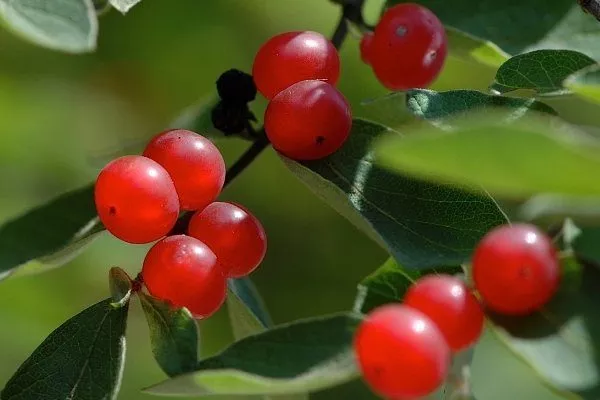
After the Tatar honeysuckle blooms, the bright flowers are replaced by equally beautiful and bright berries
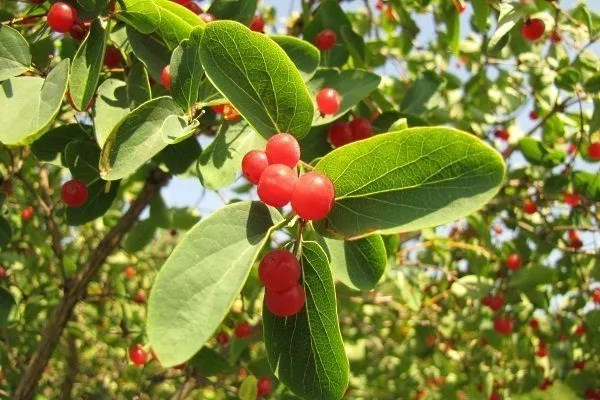
The berries of the "Tatar" honeysuckle are not edible, moreover, they are poisonous
The origin of Tatar honeysuckle
Honeysuckle began to be grown in parks and gardens in the 18th century. In Europe, it was planted as an ornamental. Its natural habitat is European Russia, Siberia, and the Altai Mountains. Therefore, the plant easily tolerates the harshest climatic conditions.
This ornamental and undemanding plant quickly conquered Europe, Japan, and America. Today, Tatarian honeysuckle is an active participant in modern landscape design.
Edible or not?
Of the two hundred species of honeysuckle, only a few are edible. Tatar honeysuckle is not one of them. Its berries are inedible; in fact, they are poisonous. They contain hydrocyanic acid. The only use for this plant's fruit is in the preparation of traditional medicine.
Eating a handful of honeysuckle berries won't cause food poisoning. To get an upset stomach, you'd have to eat at least 400 g of berries.
Description
Brief botanical description of Tatarian honeysuckle:
- Bushes. A tree-like shrub. In the wild, it can reach 4 m in height, with a crown width of 2.2 m. When grown in garden plots, the bush is more compact, reaching a height of up to 3 m and a width of 1-1.5 m.
- Leaves. Small, dark green, ovoid-oblong, 3-6 cm long, they don't require much ultraviolet light. They are borne on short petioles, often clasping the shoots.
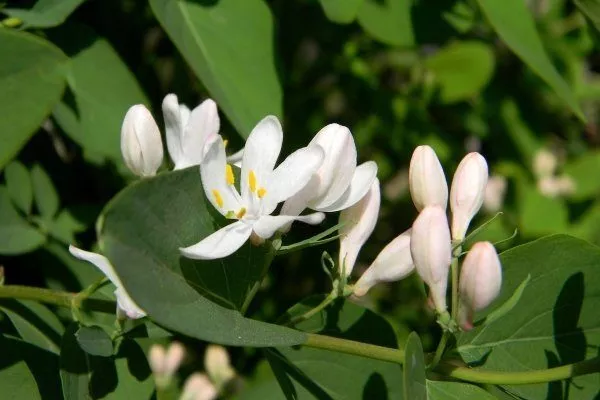
- Flowers. Small, two-lipped bell-shaped flowers. The colors vary by variety, from light pink to deep red. The flower is 1.8 cm long. The upper part of the lips is divided into lobes. The flowers have a wonderful fragrance. Blooming lasts for several weeks. The first bloom occurs in the third year after planting.
- Fruit. Spherical, small, usually deep red, less commonly yellow or orange. Ripening from July to September.
- Escapes. They are hollow inside. Young shoots have light brown, slightly yellowish bark. Over time, the bark turns gray and peels longitudinally.
In the wild, honeysuckle often grows in dense, multi-kilometer thickets. It thrives primarily on hills, in river valleys, and on the edges of forests. This plant has adapted to growing in shade and often forms an understory in deciduous forests.
Tatar honeysuckle is a deciduous plant. In late autumn, the bushes become bare, losing some of their beauty.
Honeysuckle varieties
All varieties of Tatar honeysuckle are inedible. They are used for landscape design. The varieties differ in the color of their berries and flowers. Using the diverse color variations, designers create interesting landscape compositions from different varieties.
Today, there are 12 varieties of Tatar honeysuckle, differing in leaf color and shape, fruit, crown shape, and other morphological characteristics. All varieties are vigorous and drought-resistant, with high resistance to diseases and pests.
| Name | Bush height (m) | Flower color | Fruit color |
|---|---|---|---|
| Rosea | 4 | pink | orange |
| Hack Red | 2.5 | purple | dark purple |
| Elegance | 3 | red with pink stripes | red |
| Zabelii | 3.5 | burgundy | light red |
| Arnold Red | 3 | red | red |
| Morrow (L. morrowii) | 1.5 | white | dark red |
| Grandiflora | 2 | white | red |
Rosea
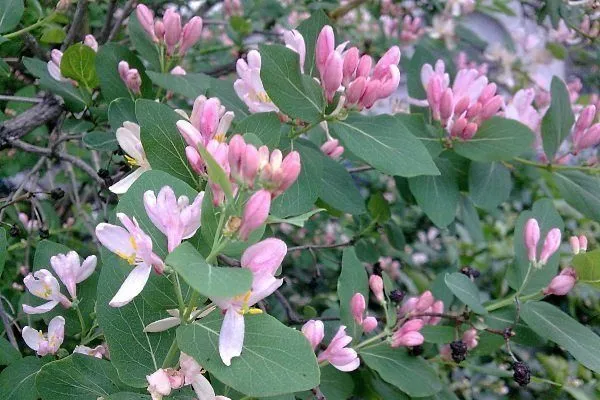
The bushes are tall, reaching up to 4 m in height. The crown is pyramidal, growing vigorously, reaching a width of 2 m. The flowers are large, pink, up to 2 cm in diameter. Pink buds appear in May, transforming into bright pink bell-shaped flowers by June. Blooming lasts about three weeks. The berries are orange and inedible.
Hack Red
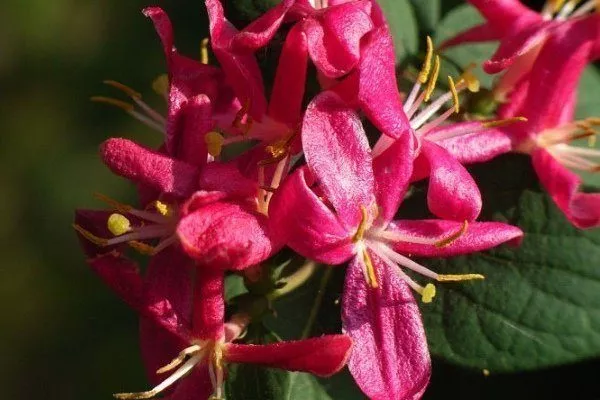
A bush with a spreading crown. The flowers are deep purple. It is distinguished by its abundant blooms – the bushes are covered in a dense layer of flowers, as if draped in a colorful blanket. The berries are dark purple and inedible.
Elegance
This variety is distinguished by its unique petal coloring—deep red with pink stripes. The plant has a refined appearance, with dark, small leaves.
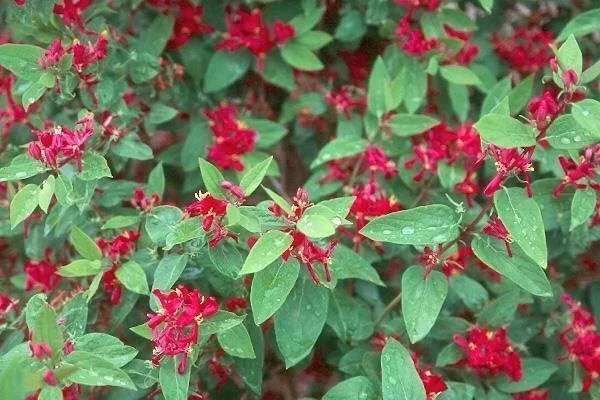
Zabelii
It's highly decorative. Its flowers are burgundy, and its fruits are light red. The bush stands out from other plants and looks beautiful in plant arrangements.
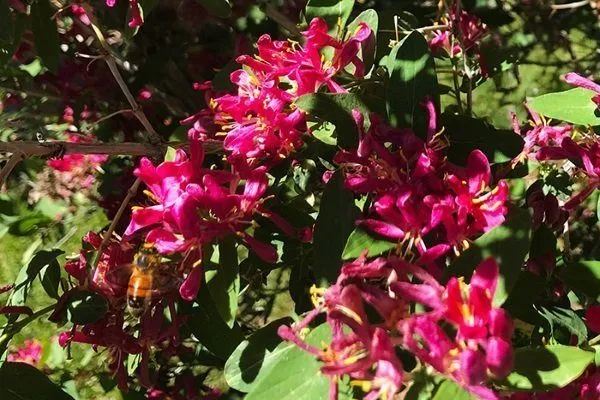
Arnold Red
This variety is easily identified by its oval-lanceolate leaves and paired red fruits. It is highly resistant to gas and smoke, making it ideal for growing in urban areas.
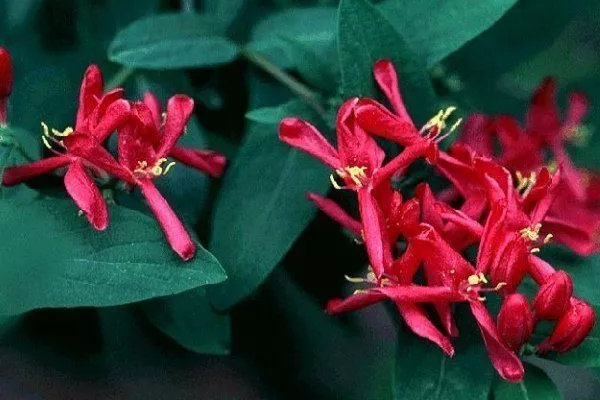
Morrow (L. morrowii)
This variety has a dense crown and a height of 1.5 meters. The leaves are dark green and pointed. White flowers with thin petals bloom in late May. The fruits are paired and dark red.
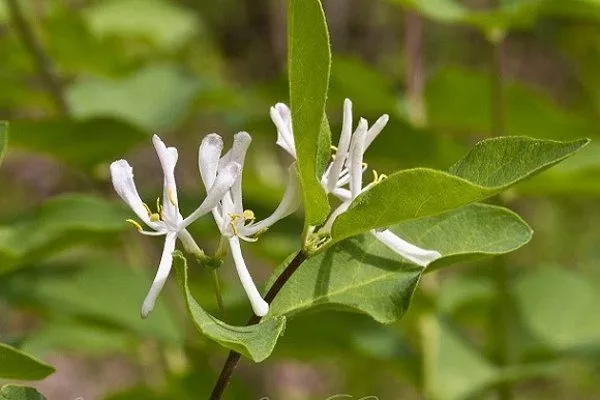
Grandiflora
This honeysuckle has large white flowers. It's an easy-to-grow plant, tolerating any environment. It tolerates air pollution well and is an excellent honey plant.
Is pollination necessary?
Honeysuckle is an ornamental shrub, so yield isn't important. However, the berries provide additional decorative value. The vibrant fruits lend the bushes a special beauty throughout the summer and fall.
To produce fruit, flowers require cross-pollination. This requires planting two or three varieties simultaneously.
Honeysuckle flowers are a source of pollen, attracting insects. By collecting nectar, honey plants efficiently pollinate the flowers. Having an apiary nearby guarantees the formation of numerous fruit ovaries.
Important aspects of cultivation
Before planting honeysuckle, it is important to determine the purpose for which the plant is being planted:
- to create a hedge;
- for decorating facades or gazebos;
- as a separate installation;
- as part of multi-level compositions.
The Tatar honeysuckle variety is selected depending on the intended use of the planting. The flower/fruit color is also considered—it should harmonize with neighboring plants. Flowers and fruits appear in the third year of planting.
How to choose seedlings?
60% of your success depends on the quality of your seedlings. Buy them from specialized retailers, where consultants will provide you with all the necessary information—about the characteristics of the plant you're buying, as well as the origin of the planting material.
How to choose a healthy seedling for planting in open ground:
- Age – 2-3 years.
- There should be 3-4 shoots 30-40 cm long.
- A healthy tree has well-developed roots, flexible branches, green buds, and smooth, undamaged bark. If the roots show signs of rot or damage, the seedling is unsuitable.
When buying honeysuckle seedlings, be sure to buy 2-4 different varieties at once – so that the flowers are pollinated well.
Honeysuckle bark can peel—this is a common occurrence for this plant. Because of this characteristic, the shrub was popularly nicknamed "shameless."
Planting dates
Tatar honeysuckle is usually planted in the fall; they take root particularly well in late September. It should be cool outside, but the temperature shouldn't drop below 10°C.
Seedlings with closed roots are planted throughout the growing season. The transshipment method allows for stress-free transplantation to a permanent location.
How to choose a location and soil?
The plant can grow in any soil and under any conditions—in the shade, in polluted atmospheres, and in arid areas. It can withstand temperatures as low as -34°C. However, to ensure good development and a beautiful appearance, abundant flowering, and fruiting, it is recommended to provide honeysuckle with at least minimally favorable conditions.
What honeysuckle likes:
- Good lighting. Temporary shade is acceptable. The less light, the smaller the flowers and the less blooming.
- The ideal soil is loose, moist, fertile, with normal acidity and drainage. Salinity is acceptable.
- ✓ Soil pH should be between 7.5–8.5 for optimal growth.
- ✓ The depth of groundwater should not exceed 1 meter.
Honeysuckle dislikes waterlogged, heavy, damp, or poor soils. The acceptable groundwater depth is 1 m. The recommended soil pH is 7.5–8.5.
Step-by-step planting of a bush
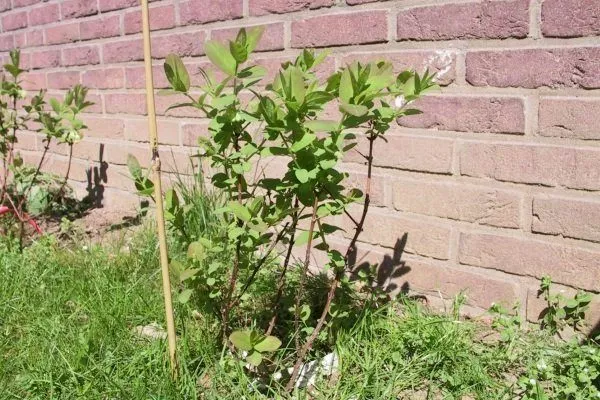
Prepare a hole 3-5 days before planting. Its volume should be 1.5-2 times larger than the root ball. Typically, holes are dug to the same depth and width—40 cm. Space adjacent seedlings 1.5-2 m apart for low-growing varieties and 2.5-3 m apart for tall varieties.
- 3-5 days before planting, prepare a hole 1.5-2 times larger than the root ball.
- Place a 10-15 cm thick drainage layer of broken brick or expanded clay at the bottom of the hole.
- Fill the hole with nutritious soil mixture and let it settle for 24 hours.
The procedure for planting honeysuckle seedlings:
- Place a drainage layer at the bottom of the hole—broken brick, crushed stone, or expanded clay will do. The layer should be 10-15 cm thick.
- A nutritious soil mixture is added on top. Its composition for one plant is:
- fertile soil – 3 parts;
- humus, peat or compost – 1 part;
- river sand – 1 part;
- ash – 1 kg;
- superphosphate – 50 g.
- Let the hole stand for a day to allow the soil to become saturated with oxygen.
- Water the soil mixture in the hole with a solution of potassium permanganate to disinfect and improve the development of the rhizome.
- Transfer the root ball to a plastic sheet. Before placing the seedling in the hole, inspect the roots for rot. If all is well, place the seedling in the prepared hole.
- Cover the seedling's roots with fertile soil. The tillering node should be level with the soil surface.
- Sprinkle the tree trunk area with ash. If desired, you can spray the crown with a potassium permanganate solution.
- Sprinkle the tree trunk area with peat, humus, sawdust, pine needles, and hay. However, pebbles or brick chips are not recommended.
Caring for Tatarian honeysuckle
Caring for Tatar honeysuckle does not require much effort from gardeners.
Watering
Mature bushes don't require much watering; they're only given a little moisture during prolonged droughts. However, seedlings should be watered regularly at first:
- First month – every day.
- From the second month - approximately once a week or as needed.
- From the second year of life – 2-3 times per season.
The bush needs 10 liters of water. Each time the soil is moistened, it is mulched. Pre-winter soil mulching protects roots from frost and retains moisture in spring.
Top dressing
If the soil is well-fertilized and moist, it doesn't need fertilizer for a long time. A young plant will thrive on the fertilizer applied at planting for two to three years. Subsequently, mature plants are fed in the spring with nitrogen-containing fertilizers (before bud break) and complex fertilizers (before flowering). In the fall, it's enough to scatter wood ash under the soil—200 grams per square meter.
Read the article about How to care for honeysuckle in autumnWhether it's blue honeysuckle or regular honeysuckle, there's no difference in care.
Trimming
Principles of pruning Tatar honeysuckle:
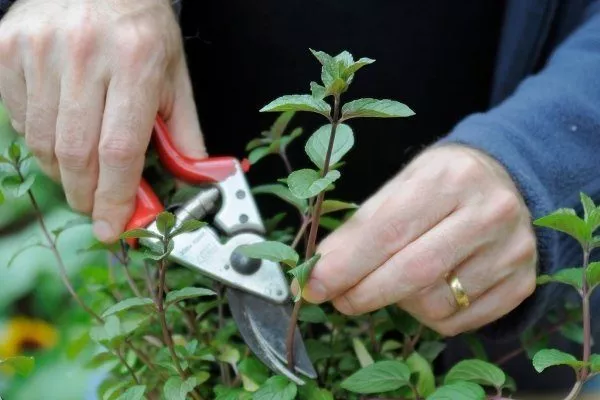
- In early spring, before the buds open, perform sanitary pruning. Remove all frozen, broken, and soil-dwelling branches. Annual sanitary pruning is performed on honeysuckle plants that are six years old or older.
- In the fall, honeysuckle is pruned after the leaves have fallen. However, it's not recommended to reshape the bush in the fall—you can cut off flower buds that will bloom the following year. Late pruning results in the loss of inflorescences, and the plant doesn't have time to strengthen, making it susceptible to frost damage.
- Formative pruning is carried out throughout the season. Bushes tolerate formative pruning well, maintaining their shape for quite a long time.
- Old bushes are rejuvenated by pruning away dying and weak shoots. This procedure is performed every 2-3 years.
Protection from diseases and pests
In unfavorable weather—damp and warm—honeysuckle can be susceptible to fungal diseases. Powdery mildew is especially dangerous.
Recently, honeysuckle has been attacked by various pests, although this had not been observed before. This may be due to environmental degradation. The most dangerous diseases for Tatar honeysuckle are listed in the table.
Measures to combat diseases and pests of honeysuckle:
| Diseases/pests | Symptoms of damage | How to fight? |
| Powdery mildew | A white coating and dark brown spots appear on the leaves and branches. The tips of the shoots dry out, and the plant, weakened, freezes in the winter. | Damaged shoots are removed by pruning and burning. Bushes are sprayed several times per season with various preparations, applied in rotation. Honeysuckle is sprayed with Topaz, Ordan, and other powdery mildew control products. |
| Cercospora leaf spot | A fungal disease that causes spots on leaves. Initially, the spots are dark green, later becoming grayish with a burgundy border. | Foliage control. Spraying with Bordeaux mixture, copper sulfate and soap solution, and Fundazol. |
| Honeysuckle-apical, honeysuckle-cereal and other types of aphids | Drying and curling of leaves and shoot tips. | Spray the bush with Actellic before bud break. Repeatedly treat the bushes with Aktara throughout the season. |
Wintering
The domesticated plant has fully retained the winter hardiness of its wild ancestor. It can withstand even the harshest winters. The flowers and leaves of this shrub can withstand temperatures as low as -8°C without harm.
The shrub doesn't require insulation. Only young plants, during the first two years of life, are recommended to be covered with spruce branches.
Reproduction
Honeysuckle propagates easily and can be propagated by virtually any known method—cuttings, layering, or seeds. Once the bushes have grown, honeysuckle can be propagated by division.
Cuttings
The procedure for propagation by cuttings:
- One-year-old shoots are cut in summer, and woody shoots in autumn. Cuttings taken in autumn are dug in for the winter.
- The current year's shoots are suitable for propagation. They are cut into 10 cm long shoots.
- The cuttings are placed in a nutritious sand-peat substrate. Before planting, the cuttings are treated with a root growth stimulant. The cuttings are placed in the container with the substrate at a 45-degree angle.
- The box is covered with thick film – it becomes a mini-greenhouse.
- When the cuttings produce their first leaves, the boxes are covered with spruce branches – this is how they overwinter until spring.
- In spring, the cuttings are planted in a permanent location when the temperature reaches above zero.
Layers
For layering, honeysuckle bushes aged 3-4 years are used. Layers are formed by planting the lower shoots tightly against the soil. If the plant has no root formation points, they are induced artificially.
The procedure for propagation by layering:
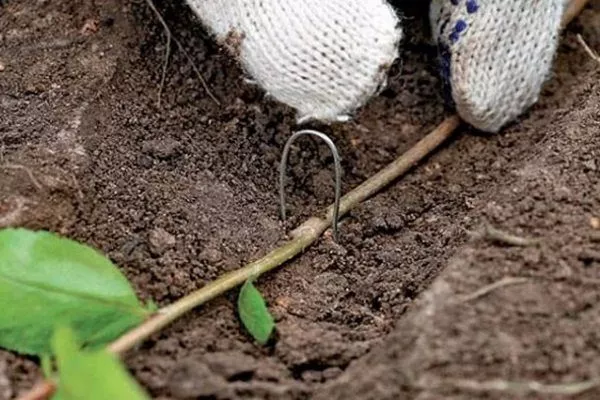
- Select a healthy, strong branch. Bend it so that the buds touch the soil.
- Secure the shoot with a pin and sprinkle soil on top.
- When additional shoots appear, growing vertically, it becomes clear that rooting has been successful.
- The following spring, the seedling is separated from the mother bush and planted in a permanent location.
The survival rate of the cuttings is 100%, since during the development of the root system the seedlings continue to receive nutrition from the mother bush.
Seeds
Propagation by seed is too labor-intensive, so it's not popular among gardeners. If you use your own seeds instead of specially purchased ones, you may end up with a wild plant that has lost its parental characteristics.
Methods of propagating Tatar honeysuckle by seeds:
- Fruit ripening period. By winter, the seeds have time to germinate and form a crown of 3-4 leaves. The seedlings are covered for the winter. In the spring, they continue growing.
- Late in autumn – in October-November. The seeds germinate in the spring.
- Sow early in the spring – in March-April. Plant in substrate. Transplant into small containers after two leaves appear.
Tatar honeysuckle in landscape design
The main purpose of Tatar honeysuckle is to beautify the landscape. Its tall, dense shrubs are used for hedges:
- high – the bushes are not pruned;
- average – cut to a height of just over 1 m;
- low – height up to 70 cm.
Bushes are also planted individually or tied to trellises, forming various arrangements. Tatar honeysuckle varieties, distinguished by their particularly flexible branches, are suitable for such purposes.
Medium-sized Tatar honeysuckle bushes blend perfectly with rock gardens. Tall bushes decorate and shade arbors, arches, and gables.
Reviews
Tatar honeysuckle is not yet very popular among the general public. Its best uses in gardens are hedges and front gardens. This hardy and beautiful plant is indispensable for landscape design, creating low-maintenance yet aesthetically pleasing compositions.