
The Strezhevchanka honeysuckle is an edible variety characterized by vigorous growth and early ripening. It boasts good hardiness and disease/pest resistance, medium-sized berries, and excellent flavor.
Origin of the variety
This variety is relatively new, having been developed in 2012. Experimental trials were conducted over the course of five years, and as a result, in 2017, the variety was added to the State Register of our country.
The originators are considered to be two scientists-breeders – Nadezhda Viktorovna Savinkova and Andrey Vasilyevich Gagarkin, who are employees of the Bakcharsky Federal State Unitary Enterprise (Tomsk Region).
Varietal characteristics
Thanks to the characteristics provided by the originators, gardeners can initially assess the risk of growing a specific honeycomb in their region. This data is also necessary for an overall assessment of the plant species.
Description of appearance, taste qualities
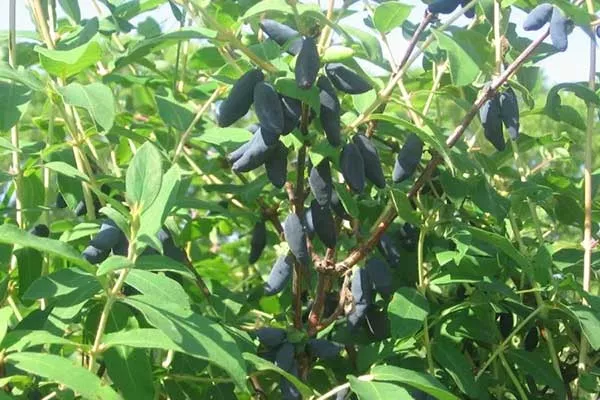
The shrub is considered tall, as its shoots reach a height of 180-200 cm. Its diameter is also massive – around 150 cm. Other characteristics:
- Bush. It has a sparse structure with straight, semi-spreading shoots. The branches are upright from the base almost to the top, but curve at the very top, creating a very unique appearance (and a reason why landscape designers love this variety).
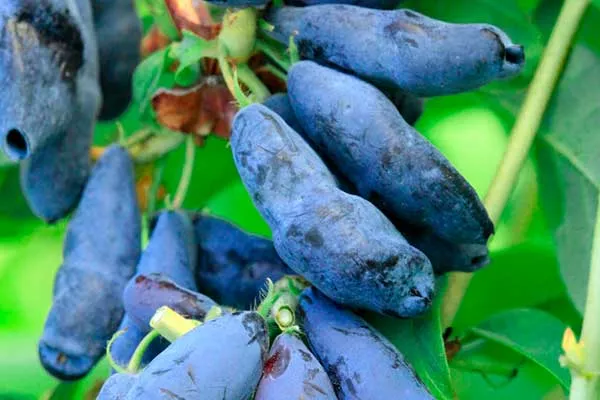
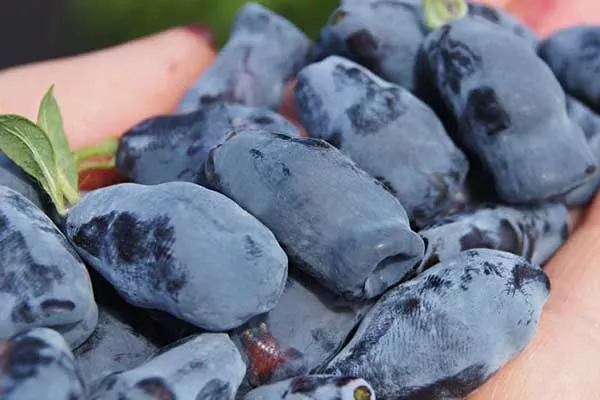
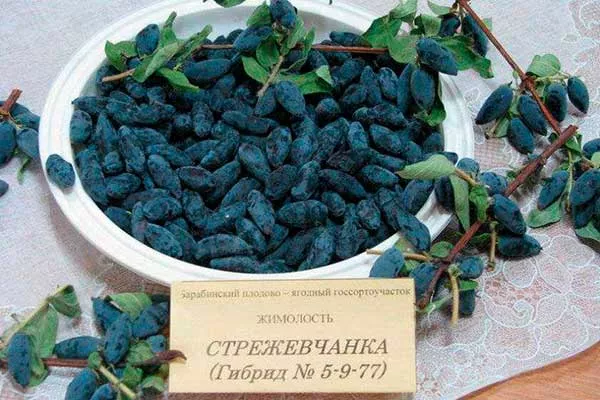
The leaves are dark green, with a matte surface and light pubescence. The bark is unpubescent, brown with a brownish tint. The buds are not very long, bending toward the branch in the axils. The leaf blade is wedge-shaped at the base, but the overall shape is oval. - Berries. They are medium-large in size, with each fruit weighing between 1.8 and 3 grams, but averaging 2.5 grams. The shape of the fruit varies from oval-elongated to spindle-shaped. The skin is thick and smooth, with a slight waxy coating.
The berries are blue, turning almost black when overripe, and the flesh is exceptionally juicy and tender. The flavor is sweet and sour, but with a predominance of sugar, hence the high tasting score of 4.9.
Features of application
The Strezhevchanka honeysuckle is a versatile species that can serve as both an ornamental and a fruit-producing plant. Its fruits are tasty and nutritious, and are used both fresh and for processing. However, keep in mind that the berries become soft when biologically ripe, making them unsuitable for long-distance transportation. Therefore, harvest them when they are technically ripe.
Productivity and fruiting
Honeysuckle begins blooming in May, and the process of setting fruit takes about 15-20 days. Harvesting, as claimed by the authors, begins in the fourth or fifth year after planting. This abundant yield is maintained for the next five years (after which, the bush needs careful rejuvenation to ensure regeneration).
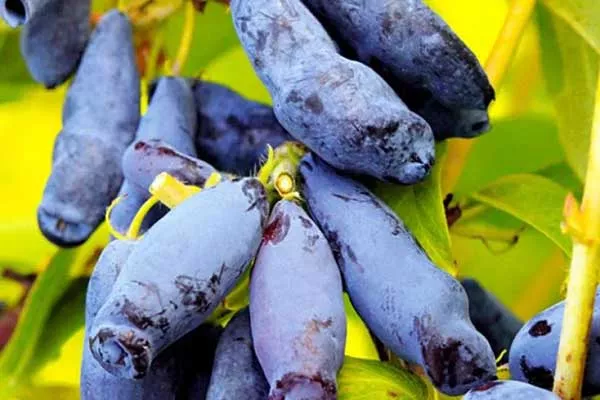
Fruiting begins in the fourth year, producing up to 2.5-4.5 kg of berries per bush each year, depending on growing conditions.
Ripening period
Fruit formation is completed by mid-June.
How is it pollinated?
To increase yield, plant a couple of varieties of honeysuckle near Strezhevchanka. Effective donors for this variety include Vostorg, Yugana, Bakcharsky Velikan, Doch Velikan, and Silginka. Adding one of these varieties to every five to six bushes will result in a higher yield.
Resistance to diseases and pests
Strezhevchanka is highly resistant to fungal, bacterial, and viral diseases and is rarely affected by aphids. Periodic use of insecticides and fungicides is recommended for prevention.
Resistance to cold and drought
This variety can withstand temperatures down to -40°C (-40°F) and spring frosts down to -8°C (-8°F). It tolerates drought well, but is susceptible to stress from prolonged high temperatures.
Suitable regions
Recommended for the West Siberian region, including the Altai Territory, Novosibirsk, Tomsk, Omsk regions and the Altai Republic.
Soil requirements
Well-lit, sunny locations protected from northern drafts are preferred. Honeysuckle grows well in a variety of soil types with an acceptable pH level of 4.5 to 7.5.
Advantages and disadvantages of the variety
This variety immediately became a favorite among gardeners, as it boasts numerous positive qualities. Among these, the following are particularly noted:
There are only two disadvantages: the need for pollinators and the softening of the berries as they ripen.
Difference from other varieties and hybrids
The Strezhevchanka honeysuckle variety is distinguished by its short ripening period: about a month passes from the beginning of flowering to the first harvest. This variety also boasts increased frost resistance. However, it is demanding of pollination quality and has low self-fertility.
The landing process
Strezhevchanka is an early-ripening honeysuckle variety that begins to bloom with the first warm days. The optimal time for planting is autumn, a month before the onset of frost. The exact timing varies by region: in northern and central Russia, this is September, while in the south, it can be planted until October or early November.
Selecting and preparing a landing site:
- When choosing a planting site, consider the preferences of wild honeysuckle varieties, which thrive in sunny areas near forests and bodies of water. Forest clearings, forest edges, riverbanks, lakeshores, streams, and damp ravines are ideal.
- You need to dig a hole measuring 40x40 cm and 50-55 cm deep, having first arranged drainage and prepared fertile soil with the addition of compost, ash and superphosphate.
- It is better to carry out pre-planting work 1-2 weeks before planting the plant.

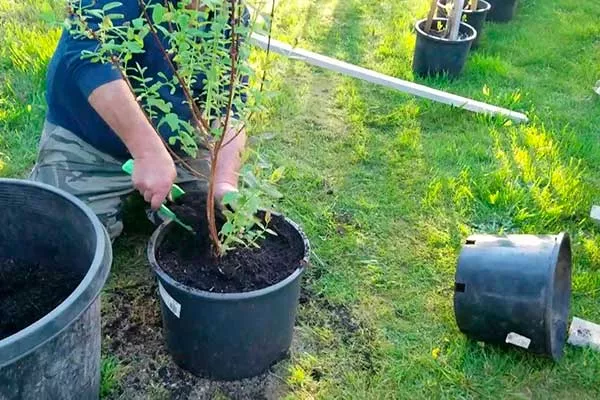
Bare-root seedlings should be planted so that the root collar remains at soil level. Potted plants should be planted so that the soil level in the pot remains level with the ground. After planting, thoroughly water and mulch the plants.
Features of cultivation
Caring for honeysuckle bushes includes the following aspects:
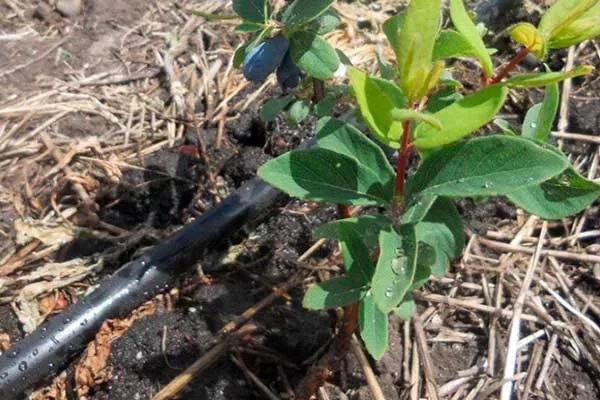
- Watering. The bush requires regular watering, especially during the period of active flowering (but maximum 4 times), after harvesting and in autumn.
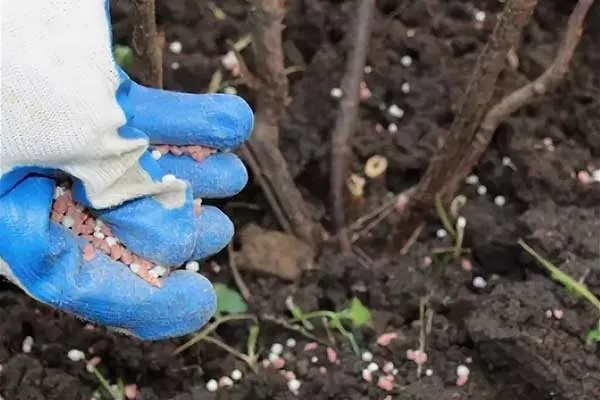
- Fertilizing. Starting two to three years after planting, the bushes need to be fertilized. Urea is recommended before budding, and a manure solution should be applied after harvest. In the fall, honeysuckle also requires fertilization with superphosphate and potassium salt to prepare for the coming season.
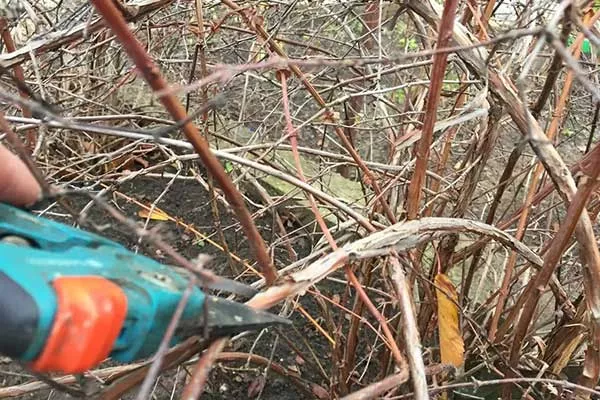
- Crown formation. It's best to do this using standard pruning, which will simplify maintenance and harvesting. Pruning should be done in late autumn, starting in the sixth year of life. Young plants should be pruned only for sanitary purposes, removing dead, diseased, and damaged branches.
Old bushes can be cut back radically, leaving only the base of the trunk, which will facilitate subsequent rejuvenation of the plant.
Pest and disease control
Strezhevchanka has good immunity, but preventative measures against diseases and pests are necessary. Fungal disease prevention includes the use of modern fungicides, sulfur, and urea.
Alkaline solutions, ash, washing soda, and laundry soap are used as pest control measures. In the event of a massive pest infestation, industrial insecticides should be used.
Preparing for winter
Honeysuckle doesn't require any special winter preparation. In the fall, simply water the bushes generously, prune and fertilize, and renew the mulch. This variety can withstand temperatures down to -40 degrees Celsius without additional cover.
- Water thoroughly 2 weeks before the onset of frost to ensure moisture recharge.
- Renew the mulch layer to 10 cm to protect the root system from frost.
Difficulties in growing
The main difficulties associated with growing Strezhevchanka include root rot due to high groundwater levels, as well as low self-pollination and self-fertility.
To prevent root rot, it is recommended to create a dense drainage layer when planting. Self-pollination issues can be resolved by planting one or two bushes of other varieties that bloom at the same time.
Reproduction methods
The variety can be propagated by the following methods:
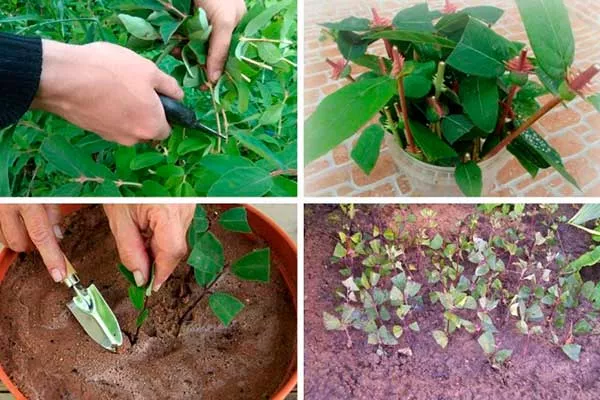
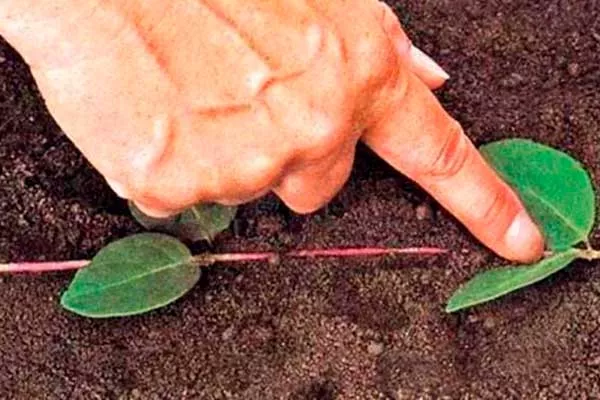
- Cuttings. Select strong shoots 2-3 years old, 14-17 cm long, with several viable buds. Leave a few leaves at the top, trim them in half, and place them in fertile soil under a plastic bottle. After a couple of weeks, the roots will develop, and the cutting can be planted outdoors.
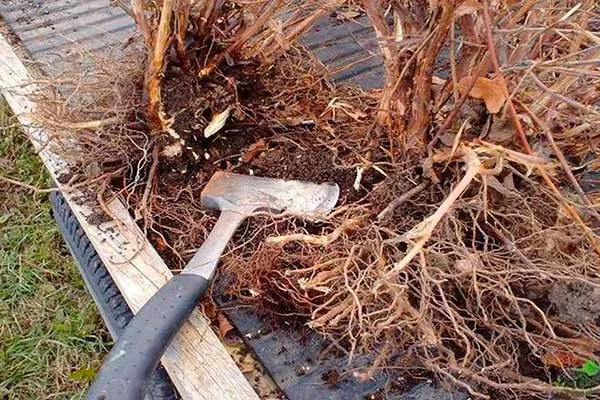
- Dividing the bush. This procedure is carried out in March or October, part of the bush with roots is separated and replanted.
- Layers. The lower branches are bent to the ground, secured, and buried. The upper parts are supported vertically with stakes and treated with a rooting stimulant. After new shoots grow, they are carefully separated from the parent branch, along with a portion of the root, and replanted.
Harvest timing
Harvesting begins as the berries ripen, within a week, to prevent them from falling and being damaged by birds. The berries should be dark blue in color, waxy in appearance, and have a sweet and sour flavor. They should be firm and easy to squeeze.
Before collecting, it is recommended to spread plastic film or cloth under the bush to gently shake the branches.
Reviews
This variety is distinguished by its impeccable yield and frost resistance and is well suited to the conditions of the West Siberian region, although it is not suitable for mechanical harvesting and long-distance transportation due to the softening of the fruits during ripening.