
The distinctive feature of the Slastena honeysuckle is the exceptional sweetness of its fruit, which has no bitter aftertaste at all. It is characterized by high yields, low maintenance, and other positive qualities, but is self-sterile, so pollinators must be planted nearby. Another name for it is the Sweet Tooth.
Origin
We owe the development of this variety to the scientists and breeders from the Kamchatka Research Institute: N. N. Vinokurova, N. N. Stepanova, E. N. Petrushka, and T. A. Solovyova. The history of the breeding process includes the following stages:
- date of receipt of seedling – 2004;
- test period – 9 years;
- time of filing an application for official registration – 2013;
- inclusion in the State Register of the Russian Federation – 2014.
Characteristics and description
To decide whether to plant Slastena seedlings, carefully examine not only the plant's appearance and taste, but also the technical aspects of the crop, which determine its yield, harvest time, and much more.
Appearance of the plant
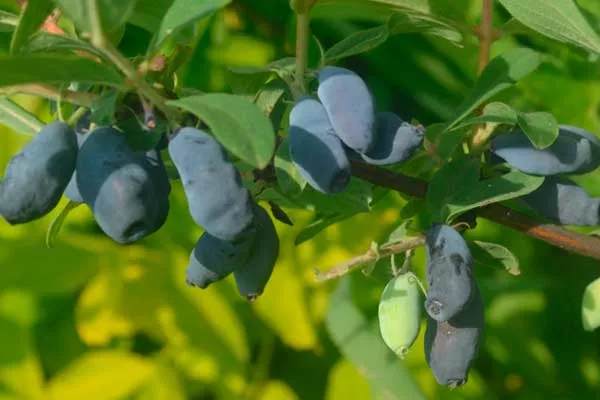
The plant is of a low-growing and compact type and is distinguished by the following external characteristics:
- plant height – reaches a maximum of 100 cm;
- crown – rounded, thickened;
- shoots – strong and thickened, erect with matte, pubescent and raspberry-brown bark;
- leaves - bright green, slightly pubescent, oval and small;
- Features of the leaf blade – The tip is pointed and the leaf itself is concave.
Berries and their taste qualities
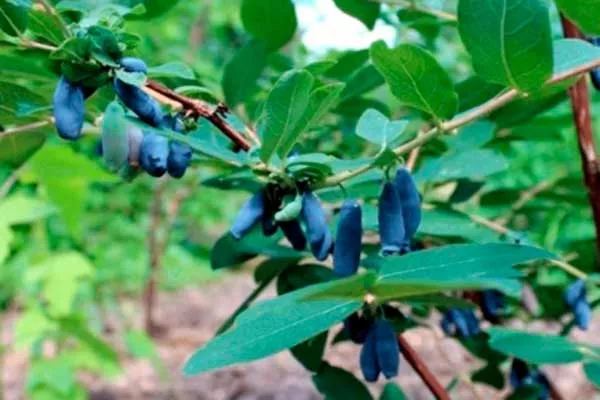
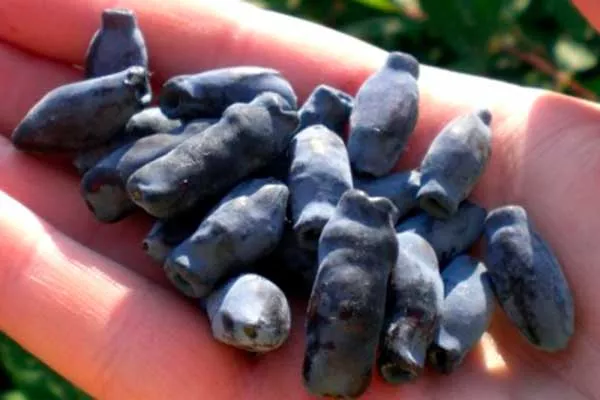
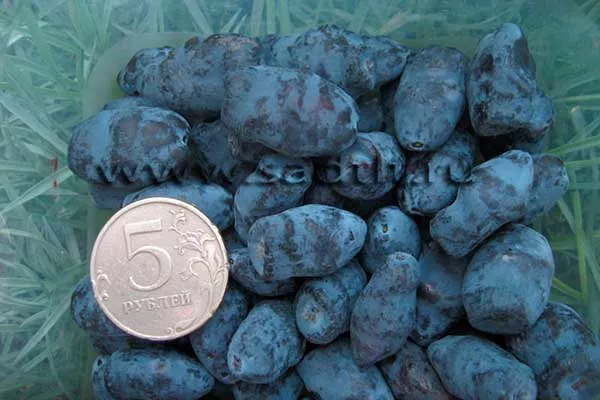
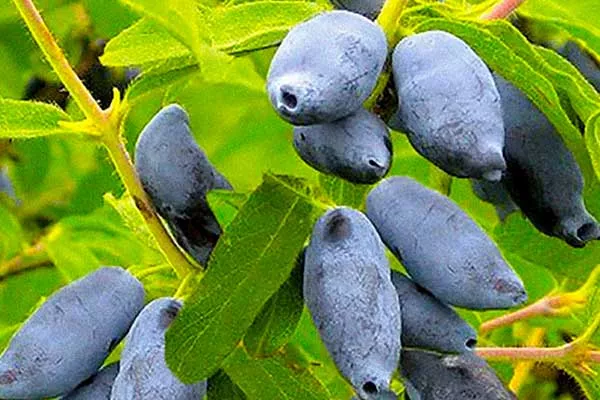
The variety's fruits are quite large—a minimum of 1.3-1.5 grams per berry, but with very good care they can be even larger. Other characteristics:
- form - oval;
- surface – bumpy;
- shade – blue-violet;
- peel – thickened, with a waxy coating on the surface;
- pulp – compacted;
- aroma – increased intensity;
- taste - sweet and sour.
The fruits contain approximately 12-14% sugars and only 1.6-1.8% acids. Based on the diagnostic assessment, the variety earned 5 points.
Features of using this variety
Honeysuckle is a edible variety, suitable for fresh consumption, as well as for use in cooking, making jams, preserves, and compotes. The berries are also added to baked goods.
Productivity and fruiting
The Sladkoezhka honeysuckle is long-lived, bearing fruit for 40-50 years while maintaining high yields throughout. Fruiting begins one or two years after planting, and a single bush can produce up to 3.8-4 kg of berries.
Ripening period
In warmer regions, the fruits begin to ripen early, and in colder climates – later, from about June 1 to 25, depending on the weather.
Pollination and pollinators
Honeysuckle requires the presence of other honeysuckle varieties to produce fruit and ovaries. Amphora is considered the ideal choice, although Nymph and Violet varieties also contribute to high yields.
- ✓ The distance between honeysuckle bushes of different varieties should be at least 1.5 m for effective cross-pollination.
- ✓ The flowering time of pollinators should coincide with the flowering of the Slastena variety to ensure high yields.
Resistance to cold and drought
The variety tolerates frosts down to -40-45 degrees and is able to withstand short-term droughts, although it prefers abundant watering, as it is a moisture-loving crop.
Location and soil requirements
For planting honeysuckle, choose a sunny location with light afternoon shade. The plant thrives in neutral or slightly acidic soils of various types, including chernozem, loamy soils, and sod-podzolic soils. It's important that the groundwater level does not rise above 150 cm.
What regions is it best suited for and what are its climate requirements?
The variety is suitable for cultivation in any region of Russia due to its versatility and resistance to various climatic conditions.
The main advantages and disadvantages of the variety
Honeysuckle Slastena quickly gained popularity among gardeners due to its many positive qualities:
- High taste qualities: The fruits are distinguished by their sweetness and pleasant aroma, and contain almost no sourness or bitterness.
- Compact dimensions: The bush is easy to form, since its height and width do not exceed 100 cm.
- Frost resistance: Honeysuckle can withstand frosts down to -45 degrees, and its flowers - down to -8 degrees.
- High yield: With proper care, one bush can produce up to 4 kg of fruit.
- Unpretentiousness: The plant can be planted in various climatic conditions without any special restrictions.
Disadvantages include increased humidity requirements and modest fruit size. However, these drawbacks don't deter gardeners who continue to actively cultivate this variety.
What is the difference from other varieties and hybrids?
The main difference of the Sladkoezhka variety is that it requires pollinators, but at the same time it is a good pollinator for other varieties.
Reproduction
The most effective propagation method is cuttings from green or woody shoots. For this purpose, cuttings are prepared during the period of green fruit formation, containing two pairs of leaves and one internode.
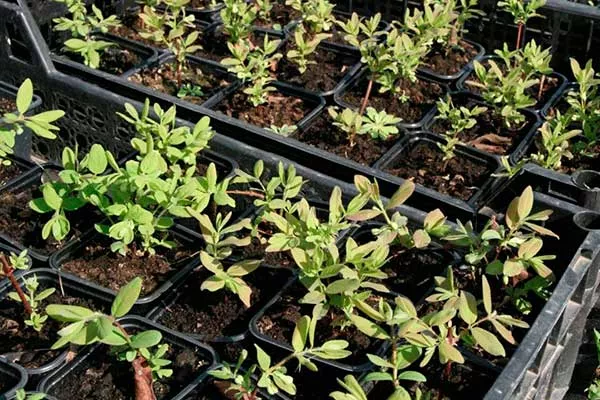
After cutting, wrap the cuttings in burlap and place them in a container with damp sand, maintaining a moisture level of approximately 85%. In the spring, plant the cuttings using the same principles as for two-year-old plants.
Care and cultivation
It's recommended to plant young plants in September. However, if the plant has a closed root system, planting can be done between April and May. When choosing seedlings for planting, it's advisable to contact specialized nurseries that offer healthy plants. Good planting material should meet the following criteria:
- plant age is two years;
- the presence of three stems approximately 40-45 cm high, but not exceeding 150 cm;
- the presence of straight, whole branches with healthy green buds;
- the presence of a well-developed root system without signs of damage.
The planting hole should be prepared three days before planting, making it 40-45 cm deep. Add a nutrient mixture consisting of 8-10 kg of rotted manure, 200 g of superphosphate, 30-35 g of potassium sulfate, and 250-350 g of charcoal. The distance between seedlings should be 150 cm, and between rows, 300 cm. Sand is recommended for clay soil.
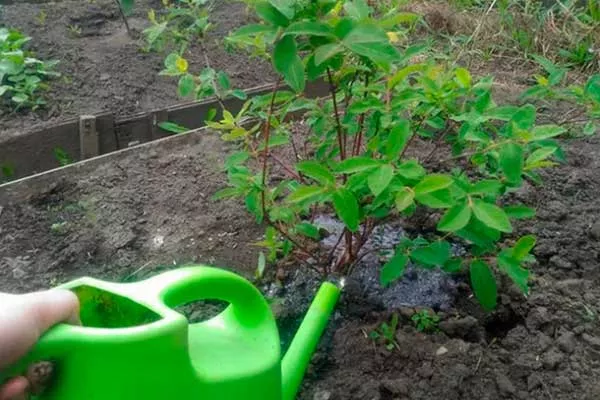
Further care:
- Honeysuckle is a moisture-loving plant that requires regular watering from late April to early October. Instructions:
- During dry periods, it is recommended to moisten every other day;
- On hot days, watering should be carried out in the morning and evening, for 5-7 minutes, to protect the leaves from drying out;
- It is important to remove weeds and mulch the soil around the plant with hay or grass;
- In the first years after planting, it is recommended to water the bushes with an infusion of rotted grass.
- Starting from the third year, plants need additional nutrition. Recommendations:
- In spring, during the snow melting period, add a solution of urea (1 tbsp. per 10 liters of water).
- At the end of April, water the plants with a humus solution.
- During the summer, water the plant monthly with ash solution (200 g per 10 l of water), which helps prevent diseases and repel pests.
- In September, add superphosphate and potassium salt (15-20 g per plant).
Features of pruning
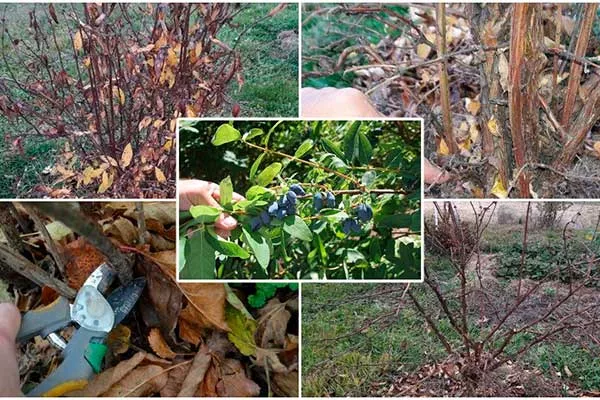
Until plants reach 4-5 years of age, only sanitary pruning is recommended. In the spring, dead branches are cut out, and in the fall, dead and diseased parts are removed. After 5 years, crown shaping begins if the tree is growing irregularly, but often the tree grows neatly on its own, requiring only maintenance pruning.
Preparing for winter
Before the onset of cold weather, remove weak, dry, and crooked branches from the bush. Water the plants with warm water to replenish moisture (approximately 20-30 liters per bush) and mulch the area around the trunks with spruce branches or insulating material. To protect against rodents, cover the bushes with netting, agrofibre, or nylon.
Pest and disease control
Pests such as aphids, mites, and others can appear in the garden, affecting the condition of the leaves, causing them to curl and become damaged. To combat these pests, use products such as Aktara, Confidor, Actellic, and Inta-Vir, applying them strictly according to the instructions.
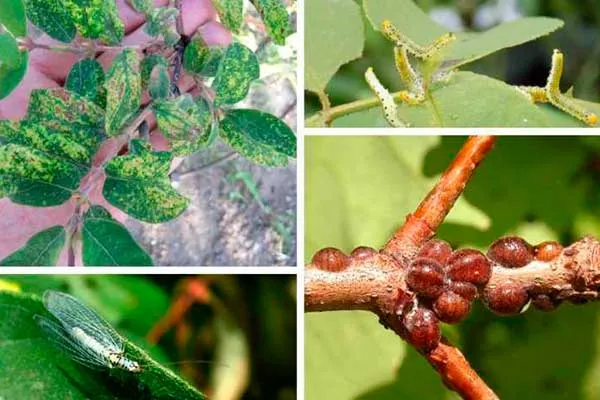
High humidity can lead to fungal diseases. Fundazol, Topaz, colloidal sulfur, and other products are effective in treating them.
It's important to avoid chemical treatments during the berry setting and ripening period. During this period, soap or ash solutions can be used, applied late in the evening every two weeks.
How and when to collect?
Timely berry harvesting prevents the loss of most of the crop. Any delay can result in the fruit being eaten by birds or simply spoiling when it falls to the ground. Honeysuckle should be picked as the berries ripen—ripe berries soften and acquire their characteristic color. They should be picked carefully to avoid damaging any remaining fruit.
Storage is organized in the refrigerator in vegetable containers, but not longer than 3 days.
What difficulties might arise when growing?
Growing this plant usually doesn't present any significant difficulties. Adhering to basic agricultural principles is sufficient to ensure the growth and fruiting of the bushes.
Reviews of the honeysuckle variety Slastena
The Slastena honeysuckle variety is easy to grow, but requires regular care. It's important to follow planting guidelines, water regularly, fertilize, weed, and loosen the soil. This helps ensure a good harvest and prevents pests and fungi.