
Honeysuckle "Blue Bird" is a winter-hardy plant with many positive characteristics. It produces delicious and healthy berries and is reliable, making it a practical choice for gardeners. It boasts high yields and disease resistance, but requires careful care to achieve optimal results.
Origin
The crop was developed at the M.A. Lisavenko Siberian Research Institute of Horticulture. Although the exact history of its origin remains unknown, breeders speculate that it was crossed with wild seedlings, likely Kamchatka honeysuckle.
Appearance, taste
The bush, with upright shoots, is vigorous and spreading. It reaches 1.2-1.4 m in height, sometimes reaching 2 m. This should be taken into account when planting in small areas.
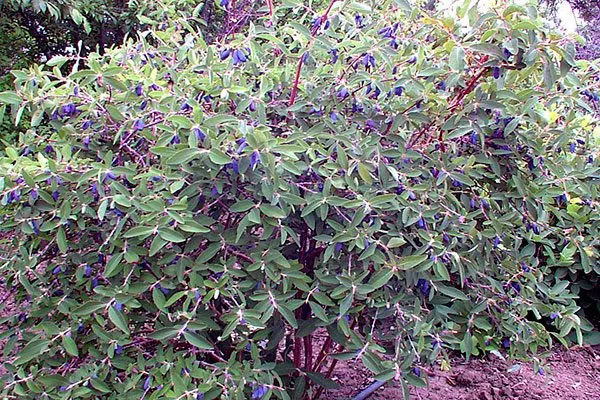
Distinctive features of the plant:
- The branches are thin, young shoots have light green pubescence, and last year's are covered with reddish bark with a brick tint.
- The crown is thickened, dense and spreading, and has a spherical or elliptical configuration.
- The crown diameter of an adult honeysuckle is usually from 1.7 to 1.8 m.
- The branches are covered with oblong-elliptical leaves, light green in color. The foliage has a smooth and shiny surface.
- Flowering begins very early, immediately after the last frost. The yellowish flowers are bell-shaped and appear in small clusters.
Features of application
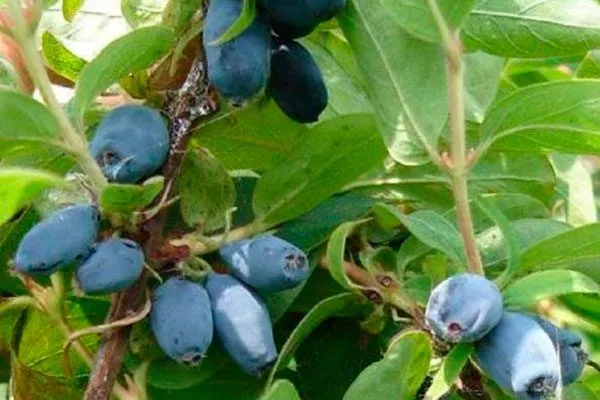
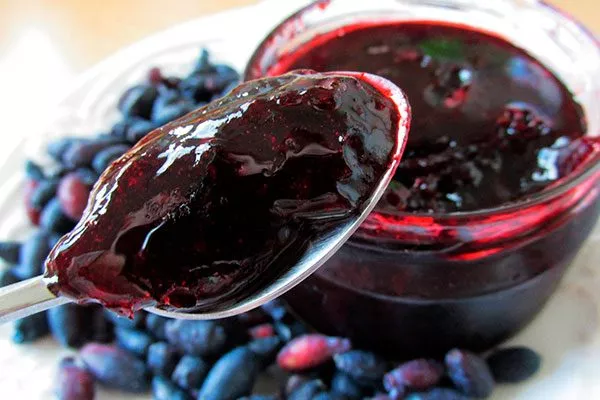
The berries have versatile culinary qualities. They are widely used both fresh and for processing. They are used to make preserves, jellies, marshmallows, marmalades, jams, and compotes.
Pollinators
| Name | Disease resistance | Ripening period | Berry size |
|---|---|---|---|
| Moraine | High | Early | Large |
| Blue Spindle | Average | Average | Average |
| Titmouse | High | Early | Small |
| Start | Average | Late | Large |
| Kamchadalka | High | Early | Average |
| Malvina | Average | Average | Large |
| In memory of Kuminov | High | Late | Small |
| Cinderella | Average | Early | Average |
It is a self-sterile species, so pollinators are essential for successful cultivation. Without them, a good harvest will not be achieved. For pollination, it is recommended to use neighboring varieties bred in Kamchatka.
Experienced gardeners recommend the following varieties for planting:
- Moraine;
- Blue Spindle;
- Titmouse;
- Start;
- Kamchadalka;
- Malvina;
- In memory of Kuminov;
- Cinderella.
Ripening period, yield
It is distinguished by its early ripening harvest – it can be harvested as early as early June. The average yield is 1 to 1.5 kg per plant. With proper care and favorable climate conditions, bushes aged 6 to 8 years can produce up to 2.5-3 kg of berries.
Resistance to cold and drought
The bushes can withstand temperatures down to -40 to -45°C without the need for additional shelter. They react negatively to sudden seasonal temperature fluctuations, such as winter thaws.
This plant species does not tolerate prolonged drought well and is susceptible to root rot in waterlogged soil. The optimal soil moisture level for this crop is 50-60%.
What regions is it suitable for?
Recommended for cultivation in the Northwestern region due to its frost resistance and ability to quickly adapt to various climatic conditions. Thanks to its adaptive properties, Bluebird is successfully cultivated in all regions.
Features of fruiting
It reaches maturity in late spring or early summer, with mid-June being the latest ripening period. The plant begins bearing fruit 3-4 years after planting and continues to do so for up to 25 years.
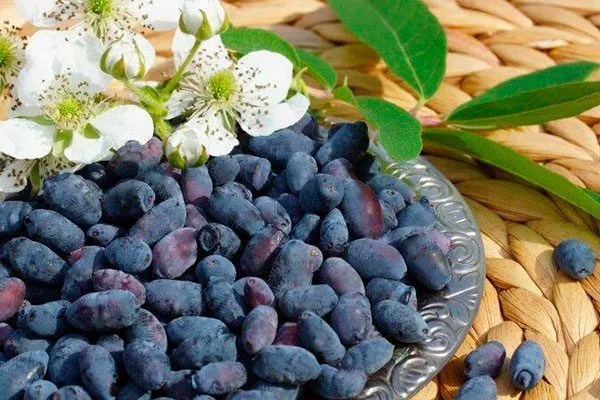
This variety is prized for the opportunity to enjoy fresh berries even before other crops begin to bear fruit. The harvest is ready to be picked on the bush before wild strawberries reach maturity. Don't wait until the berries are overripe—they can quickly fall from the bush, but even fallen specimens keep well.
To prevent partial loss of the harvest, gardeners recommend laying a piece of cloth under the bush to prevent the fruit from touching the ground. If unripe berries begin to fall, pay attention to watering, as the plant may be lacking moisture.
Advantages and disadvantages of the variety
Before planting a crop, it's important to study its positive and negative qualities. The Blue Bird honeysuckle variety has become quite popular and sought after due to its numerous advantages:
Among the disadvantages of the crop, gardeners note sensitivity to temperature fluctuations, relatively low yields, the need for pollinator varieties, and the demand for soil moisture levels.
Landing
Honeysuckle is known for its long and consistent fruiting, so for successful cultivation, special attention must be paid to the selection of seedlings and the planting process. Follow these recommendations:
- Selection of seedlings. To ensure good growth and high fruit yield, purchase two-year-old seedlings. They take root easily and quickly begin fruiting. Purchase planting material from specialized nurseries or reputable suppliers.
When purchasing, pay attention to the height of the seedling (from 25 cm to 60 cm), its age (no older than 3 years) and the condition of the root system (it is better if it is developed and closed). - Planting dates. The optimal time to plant honeysuckle is 1-1.5 months after fruiting has finished. Plant in mid- to late fall to allow the bush time to establish itself and gain strength before winter.
In southern regions, planting can be delayed until September. Avoid planting seedlings during flowering, as this may result in flower drop and growth problems. - Selection of location and soil. Choose well-lit areas with full sun exposure. Plants don't like strong winds or waterlogged soil, so choose locations that are sheltered from the wind and provide good drainage.
Loose, fertile soils are preferred, but the crop can grow in a variety of soil types. Before planting, conduct a soil analysis and make any necessary amendments.
- ✓ Check that the supplier has a quality certificate.
- ✓ Make sure that the root system of the seedling does not show any signs of rot or damage.
When planting, consider the plant's height, so leave at least 1.5 meters between bushes. This is due to the specific planting requirements of self-fertile plants. To ensure pollination, plant honeysuckle in groups around pollinator varieties.
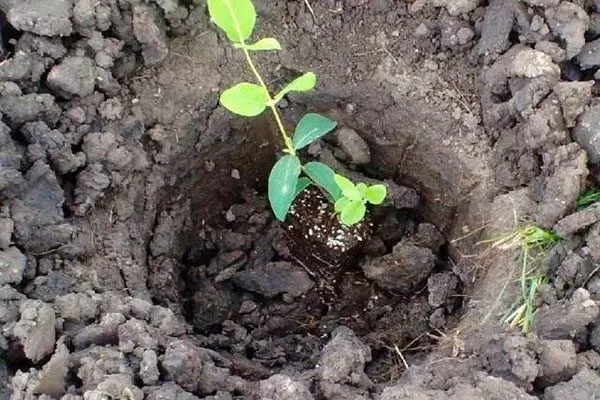
Step-by-step algorithm:
- 20 days before planting, prepare holes measuring 40x40 cm in the selected area.
- Place a pollinator plant in the center of each hole and arrange Bluebird bushes around it.
- Half fill each hole with nutrient soil, mixing half the excavated soil, 20 kg of compost and 1.5 kg of wood ash.
- Form mounds of soil mixture about 10 cm high in the center of the holes. Cover them with plastic or tarpaulin.
- After 20 days, remove the cover and pour 5 liters of water into each hole.
- After the moisture has been absorbed, make a depression in the center of the mound and place the roots of the seedling in it, distributing them evenly.
- Fill the voids with soil so that the root collar is at ground level.
- Compact the soil and water the tree trunk circle, using 7-10 liters of water for each plant.
Mulch the tree trunk area with compost. Maintain a minimum distance of 1.5 m between plants.
Care instructions
Caring for honeysuckle bushes doesn't require a significant investment of time. Key aspects of care include:
- Watering. Provide the plant with regular watering. Each plant will require approximately 10 liters of water. Repeat this process 4-5 times during the growing season. Water the plants in the evening or morning, using settled water.
In autumn, water the plant using 30-40 litres of water per plant. - Top dressing. Apply the first fertilizer three years after planting the seedling. When warm weather arrives in spring, apply nitrogen fertilizer while loosening the soil. Add organic matter every three years. Honeysuckle responds favorably to humus.
14 days after flowering begins, feed the bushes with a complex mineral fertilizer, and before the onset of winter, use phosphorus-potassium preparations. - Trimming. Due to its vigorous growth, this plant requires regular pruning. The first stage of bush formation should be carried out four years after planting.
Basic pruning principles include having at least 18 branches to form a framework, regularly thinning the bush to prevent shading, and timing pruning in early spring when the temperature is 0°C.
Leave shoots no shorter than 30-35 cm, not reaching the growing point. When the bush reaches 15 years of age, perform rejuvenation pruning, removing old branches.
- ✓ Water plants early in the morning or late in the evening to minimize water evaporation.
- ✓ Use water at a temperature of at least +15°C to avoid stress on plants.
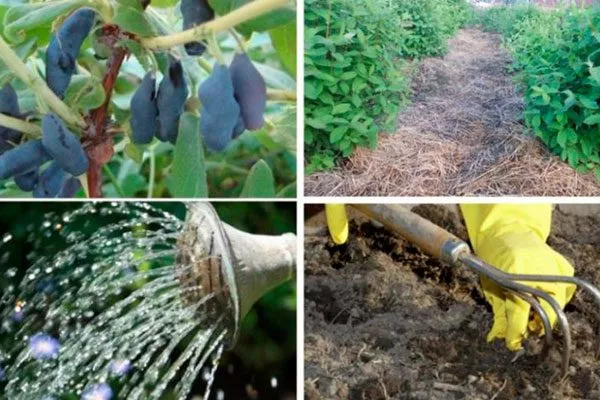
Protection from diseases and pests
Despite the crop's high resistance to disease and pest attacks, they may face some challenges. Let's take a closer look:
- Powdery mildew. Symptoms include leaf curvature and the appearance of a whitish coating. Remove infected plant parts and then treat them with Fitosporin.
- Spider mite. Yellowing and leaf drop may occur, and a thin white web may appear on the plants. Remove affected areas and loosen the soil to a depth of 5 cm. Dust the plants and soil with tobacco dust, then treat with Fitoverm.
- Aphid. A sticky coating appears on the shoots, and the leaves curl and become deformed. To combat this pest, follow the same steps as for spider mites.
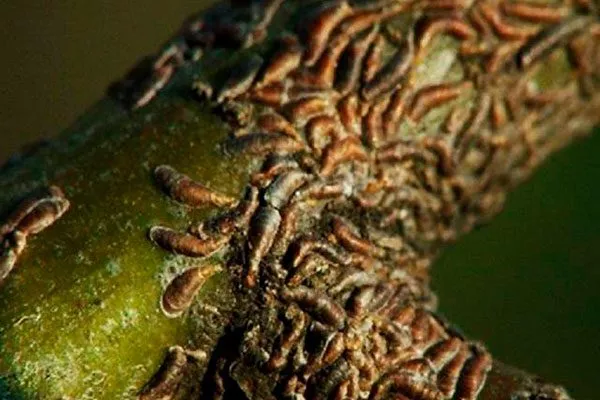
Preparing for winter
After watering, loosen the soil around the tree trunk and then mulch with a mixture of compost and peat moss in equal proportions. The mulch layer should be 10 cm thick.
Reproduction
To increase the number of bushes, gardeners use various methods. The following propagation methods are popular:
- Green cuttings. After the bushes have flowered, cut 12 cm long cuttings from young plants. Each cutting should have 3 buds.
Soak the cuttings for 24 hours in a growth stimulant solution, such as Kornevin or Heteroauxin, then plant them in soil and cover with plastic bottles or plastic wrap. Water and ventilate regularly. - Lignified cuttings. In late September or early October, after the leaves have fallen, take cuttings from current-year shoots with 2-5 internodes. Wrap the cuttings in burlap or paper, bury them 10 cm deep, and cover with leaves.
In spring, plant in the ground at a 45 degree angle so that 1 internode remains above the surface. - By dividing the bush. Dig up 3-5 year old bushes before the buds swell or after the leaves fall, divide with pruning shears and plant each part in a permanent location.
Choose the most appropriate propagation method to obtain more seedlings that retain varietal characteristics.
Harvesting
When the berries begin to darken, spread plastic or fabric under the bushes to preserve any fallen fruit. After about 15 days, shake the plants to collect any remaining fruit on the branches.
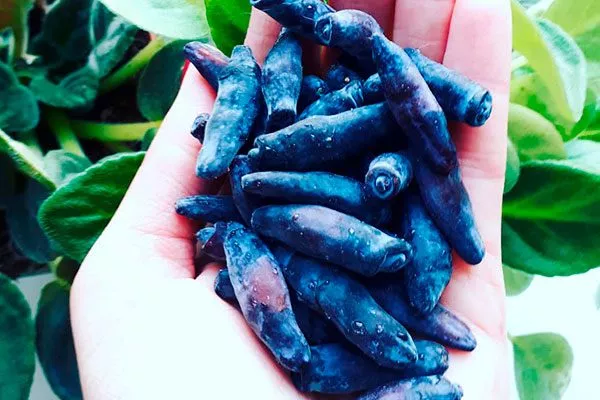
Sort the berries, removing any damaged ones. Place whole berries without signs of disease or damage in shallow containers lined with paper and store in the refrigerator for up to 3 days.
Reviews
Honeysuckle "Sinyaya Ptitsa" is a popular variety for both beginner and experienced gardeners. It is characterized by high winter hardiness, good yields, and excellent flavor. Regular care ensures consistent and long-lasting fruiting.