
Many consider the Blue Cliff honeysuckle new, but in fact, it has been around for over 35 years. This is because it only became widespread across the country some time ago. Its characteristics include large berries, tolerance to variable and harsh climates, and a medium-spreading bush, making gardening easier.
Origin
The development of this variety began in 1987 at the Bakcharsky Nursery and Seed Farm. The nursery is located in the village of Bakchar in the Tomsk Region. Two scientists, A. V. Gagarkin and N. V. Savinkova, worked on the selection. The Kamchatka honeysuckle, abbreviated 2-64-32, was used as the basis, and an unknown wild honeysuckle served as pollen.
It's worth noting that these weren't just wild bushes, but select wild plants in a collectible form. For this reason, the Blue Cliff's second parent remains unknown.
Description of the bush and berries
This variety is a standard shrub, characterized by its upright crown. Other plant characteristics:
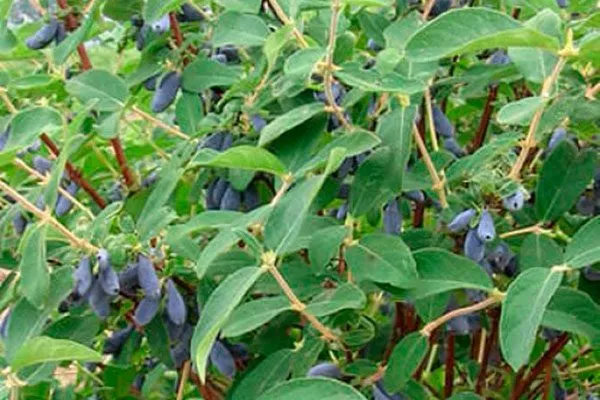
- Bush. The crown is oval-rounded, with moderately dense shoots and sparse foliage, making the berries easy to see. This creates an attractive appearance and simplifies harvesting. The bush reaches 100-130 cm in height, with slightly elongated foliage.
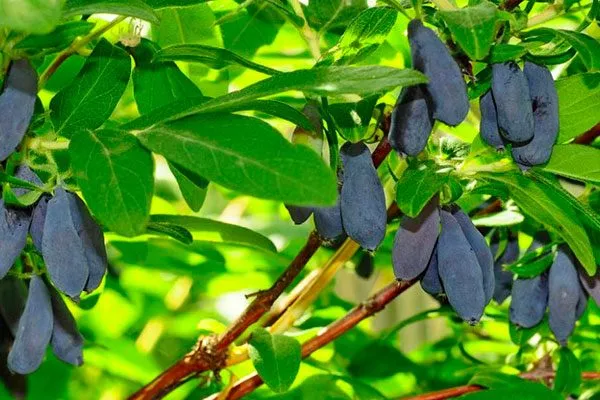
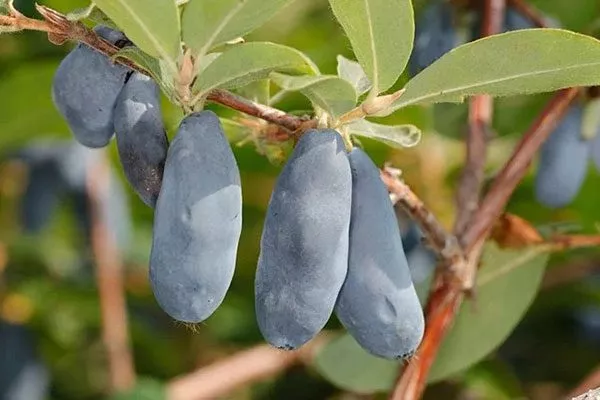
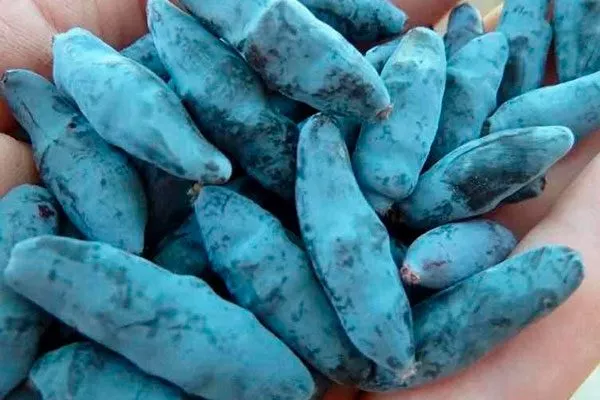
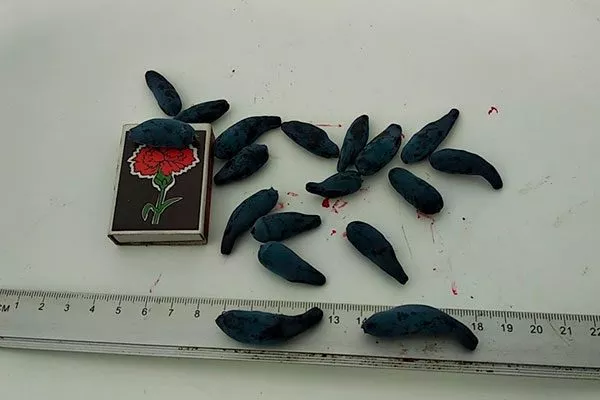
- Berries. They are quite large, weighing between 1.8 and 2.6 grams. They are oval in shape but slightly elongated, with a moderately thick skin and few seeds. The skin is slightly bumpy and has a thick waxy coating. The color is dark purple, and the flesh is firm but juicy.
- Taste and aroma. Honeysuckle has a medium-intensity aroma, but a distinct flavor. Sweetness is predominant (sugar content is nearly 10%), and acidity is moderately noticeable (acidity is around 3%). The tasting score is 4.9, which is high.
Characteristics
Blue Cliff has gained popularity not only among berry consumers but also among gardeners. This variety possesses excellent characteristics, properties, and qualities.
Features of application
This variety is distinguished by its versatility: its berries are ideal for both fresh consumption and various culinary preparations. Jams and compotes have a pleasant aroma and vibrant color. The fruits of this variety store well when pureed with sugar and are suitable for freezing.
Pollination and pollinators
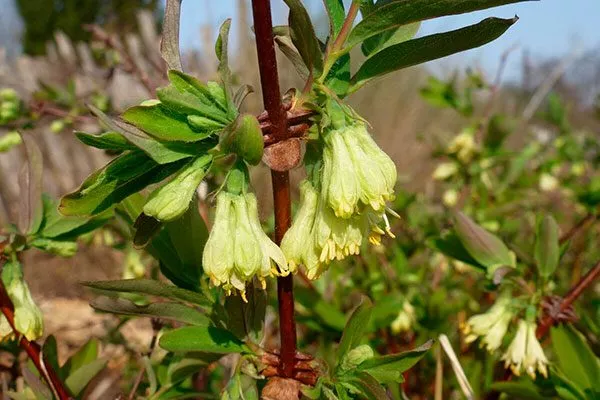
Blue Cliff honeysuckle cannot self-pollinate and requires a donor plant. Plants are usually sold in groups, including varieties such as Fianit, Berel, and Morena, which promote abundant harvests and bloom at the same time as Blue Cliff.
Productivity and fruiting
Characterized by simultaneous ripening of berries, approximately 88-90% of which are equal in size and weight. The average yield per bush is 3.5 to 4.5 kg and is achieved within 7-8 years from planting. During the first fruiting, which occurs in the third year, fewer berries are produced.
Ripening period
Berry harvesting begins in early July, with mass ripening occurring mid-July. The exact timing may vary depending on weather conditions and climate zone. In cool, cloudy summers, the harvest is usually later, as is the case in northern regions.
Resistance to diseases and pests
For a long time, the prevailing belief was that honeysuckle, regardless of variety, was unaffected by pests. However, gardeners' experience has shown that the plant requires constant protection to prevent pests and diseases.
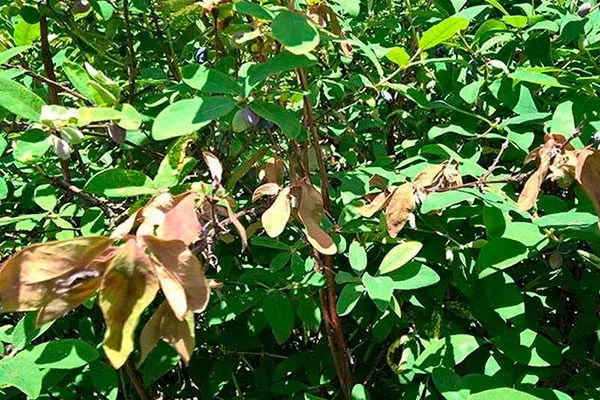
The Blue Cliff variety often falls victim to the following diseases:
- Ramulariasis – light spots with a brown border of fungal origin;
- cercospora leaf spot – dark red or brownish areas on green foliage caused by fungal infections;
- tuberculosis – bright orange, yellowish or milky lesions on the bark of the shrub;
- powdery mildew – powdery white coating on leaves;
- Arabidopsis mosaic virus – the presence of a pale coating on the leaf blades, creating a contrasting pattern.
Common pests of the variety include:
- aphids – small green insects;
- gooseberry moth caterpillars – white with a variegated pattern, with yellow and black dots;
- various types of scale insects – brown, round-shaped insects;
- honeysuckle fingerwing – butterflies are gray, whitish or pinkish with fluffy wings;
- rose leaf roller – green caterpillars, velvety to the touch.
Resistance to cold and drought
Blue Cliff is highly frost-resistant, surviving winter temperatures down to -50°C (-52°F). Honeysuckle flowers can withstand temperatures as low as -8°C (-8°F) without affecting their yield. However, this variety has moderate drought tolerance and requires ample watering during the active growth and fruiting phases.
Climate sensitivity
This variety prefers a temperate climate and may not perform well in hot and dry conditions. The plant thrives and produces fruit better in regions with cold winters, making it ideal for growing in the Far East, Siberia, and the Urals.
The variety exhibits resistance to unpredictable weather conditions, including winter thaws and spring cold snaps.
Advantages and disadvantages of the variety
The variety's main advantage is its tasty, large fruits with fleshy pulp. But this characteristic is important for consumers.
Agricultural technology
This variety grows well in both sandy and loamy soils, but is not considered picky about soil composition. The only exception is marshy areas, which are not suitable for planting.
- ✓ Soil pH should be between 5.5-6.5 for optimal growth.
- ✓ The soil must have good drainage to avoid water stagnation.
Growing features specific to Blue Cliff:
- Choose a site that is partially shaded by buildings or nearby tall trees, as direct sunlight can cause the berries to shrink. There are no other strict requirements for planting.
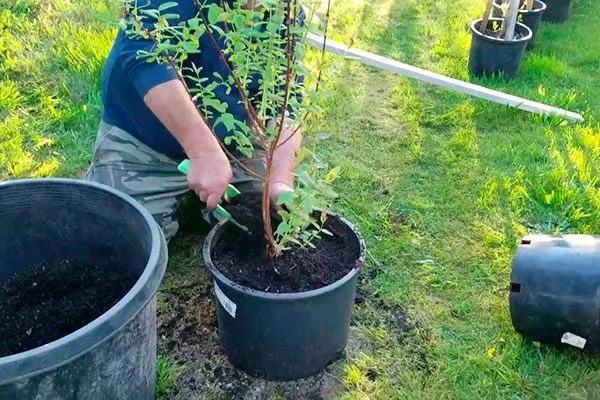
- Planting is recommended in September. The planting hole should be approximately 40-45 cm deep and wide. If planting multiple plants, leave 200 cm between each hole. Place a drainage layer at the bottom of the hole and fill it with a fertile soil mixture containing organic matter (compost, humus, or rotted manure), superphosphate, and charcoal. After planting, water the plant and mulch with peat.
- Honeysuckle requires regular watering. In May and during fruiting, the bushes should be watered every couple of days, at a rate of approximately 9-12 liters of water per bush.
- It's best to fertilize plants with nitrogen fertilizers in early spring, and water them with an ash solution before flowering. Organic fertilizers are applied in early summer, and potassium and phosphates are added in the fall.
- During the growing season, it is recommended to trim dry and deformed branches, as well as regularly weed and loosen the tree trunk circle.
- Before winter, mulch and treat the area for disease prevention. Breathable material can be used to protect against birds.
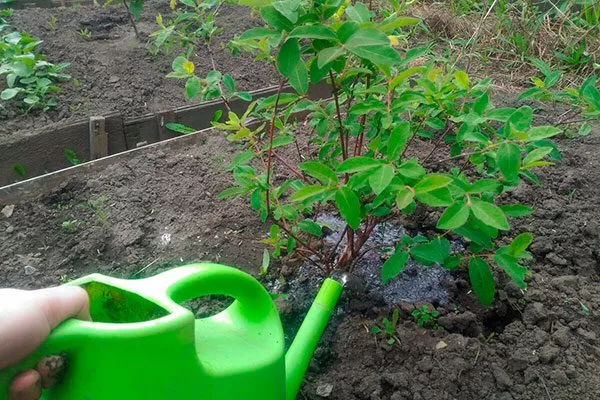
Pest and disease control
To prevent pest infestations and infections, especially if agricultural practices are at risk, carry out preventative treatments. The key is to do this in the fall, not in the spring, as is common practice, because the plant can absorb all toxic compounds and then transfer them to the berries.
Preparing for winter
Mature, healthy plants don't require any special preparation for the cold season. However, young shrubs that have recently been planted are recommended to be protected over the winter using covering materials such as spruce branches, burlap, agrofibre, spunbond, or straw.
Using snow as a natural cover will help protect shoots from frostbite during strong winter winds or the possibility of icing during warm thaws.
Reproduction
Propagation via basal suckers is not suitable for this variety, as they are underdeveloped. The optimal method for propagating this honeysuckle is by cuttings. Cuttings from green shoots should be taken in late June, and from woody shoots in early winter. They should be stored in a basement until spring, covered with leaves or straw. The lower part of the cut should be wrapped in a damp cloth.
- ✓ Green cuttings should be 10-15 cm long and have 2-3 pairs of leaves.
- ✓ Woody cuttings should be the thickness of a pencil and 20-25 cm long.
Difficulties in growing
The following problems may arise during the process of growing honeysuckle:
- The seedlings are not taking root well – Perhaps the reason is poor quality planting material.
- Lack of ovaries – The reason may be a lack of pollinating plants.
- Low yield – Bad weather reduces the activity of pollinating insects.
- Small berries – The reason may be inadequate watering or too much sunlight.
The importance of pruning is often underestimated, but its systematic implementation is extremely important to ensure good fruiting.
Harvesting
The harvest lasts about a month, but the berries remain on the branches until the very last day of harvest, not falling off, even when overripe. They separate easily from the stem, and the separation is dry—no juice leaks out.
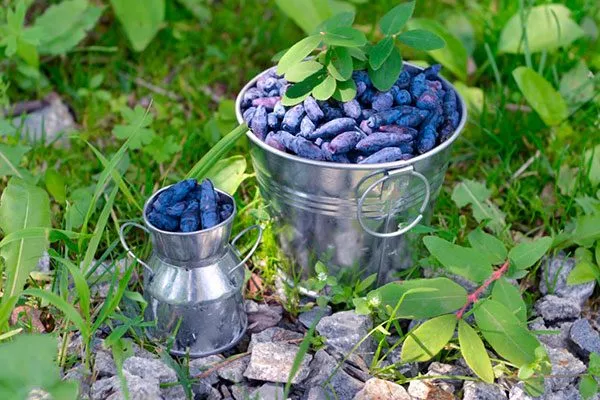
The harvest can be done by hand or, for industrial-scale production, using combine harvesters. Harvesting begins when most of the berries have reached a uniform size, are easily separated from the stem, and have a pleasant, sweet flavor.
Reviews
Honeysuckle Blue Cliff is a proven and reliable variety, suitable for cultivation in temperate and cold climates. The bushes are easy to care for, but it's important to thin the branches annually; otherwise, the crown will become overly dense, negatively impacting the yield and flavor of the fruit.