
The Sindishen red honeysuckle is a product of Japanese selection, and it has a key distinguishing feature: its ability to grow in both acidic and completely alkaline soils. It is characterized by high yields and frost resistance, and tolerates drought well. It ripens so early that the first fruits can be enjoyed as early as May. Consequently, it is suitable for southern regions.
Is red honeysuckle edible or not?
It's generally accepted that red-fruited honeysuckle should not be consumed due to the toxic substances they contain. However, the Sindishen variety contradicts this belief—the berries are edible and delicious. Poisonous specimens grow in Siberian forests and European gardens.
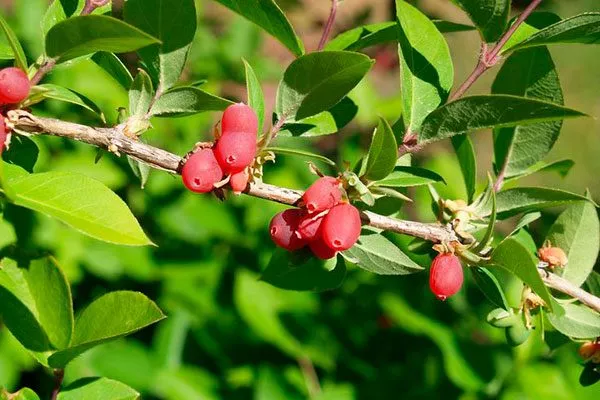
In general, red honeysuckle is a perennial shrub that can be found in the wild in the Far East, as well as in the northern regions of Korea, Japan, and China.
Description of the variety
The bushes are medium-sized and spreading. They are often used by landscape designers due to their high level of ornamental value. Characteristic features:
- foliage – strong;
- foliage color – classic green;
- length of shoots – 200-250 cm;
- branches – elastic and flexible.
Characteristics of fruits
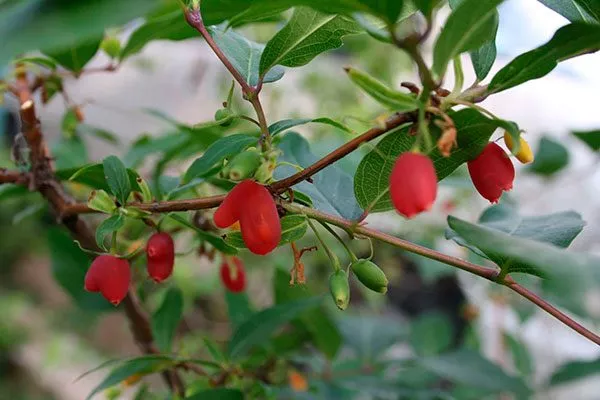
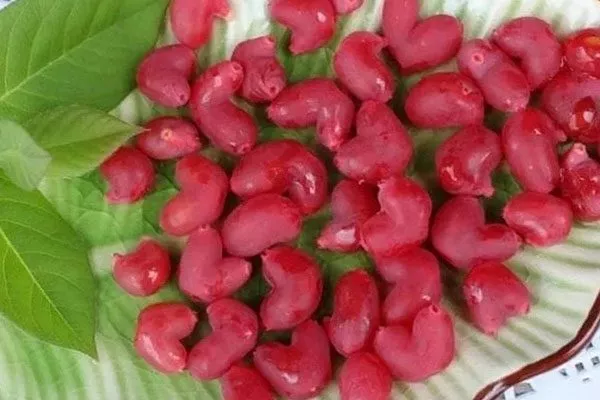
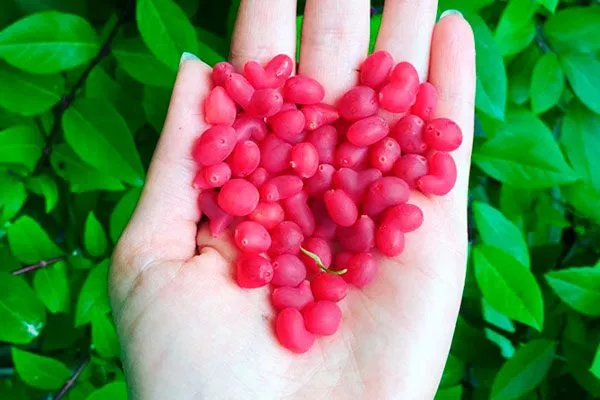
The red fruits are not particularly large – they are quite small (weighing only 1 g or slightly more). They are about 15 mm long. This cultivated plant species produces scarlet, heart-shaped, double berries (two adjacent berries grow together, creating a heart shape). It has a pleasant sweet taste and a subtle bitterness.
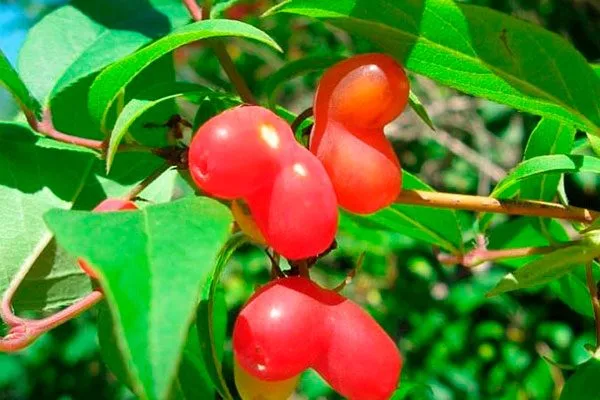
The flesh, like the peel, is light red, and the seeds inside are small. The fruits are used to make jam, preserves, and compotes. They also make delicious alcoholic liqueurs.
Growing and care
The Sindichen honeysuckle is distinguished by its drought tolerance and ability to produce crops in a variety of soil types, from highly acidic to neutral. Bushes of this variety are winter-hardy, allowing them to withstand cold periods without loss.
Planting and care features:
- Landing. It is recommended to plant honeysuckle in open ground or in special containers for berry crops, leaving a distance of 100-150 cm between bushes.
- Moisturizing. To achieve increased yields, it is necessary to ensure regular watering, which maintains the required level of soil moisture, especially during the ripening period.
- Application of nutrients. It is important to fertilize with organic and mineral fertilizers to saturate the plants with the necessary elements according to the standard scheme for honeysuckle.
- Trimming. After harvesting, pruning should be done to maintain a compact shape and stimulate further plant growth. This is usually done after fruiting has completed to protect new buds. Sanitary pruning is performed in the spring.
What is the difference between blue and red honeysuckle varieties?
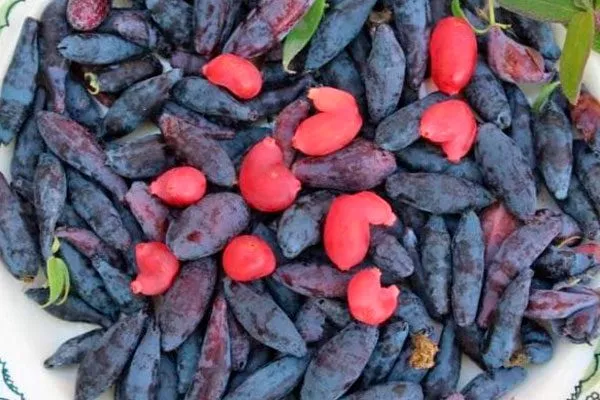
The differences between red and blue edible honeysuckle extend beyond the fruit's color. These berries contain anthocyanins, powerful antioxidants that reduce inflammation and cholesterol, and strengthen blood vessels. While the chemical composition of both varieties is similar, red berries are richer in vitamins C, E, and B vitamins.
Other features:
- Red honeysuckle bears fruit better in cold northern and eastern regions due to its high frost resistance.
- The berries of this variety do not fall off or rot, retaining their taste for a long time.
- Unlike blue ones, red fruits have a sweet, refreshing taste with a hint of bitterness, and their seeds are small, similar to grains of sand.
- Red honeysuckle is cultivated both for harvesting and for decorative landscaping of garden plots.
- The number of seeds in blue honeysuckles is very small, while blue ones have more seeds, but they are so tiny that you can’t feel them.
| Parameter | Red honeysuckle | Blue honeysuckle |
|---|---|---|
| Vitamin C (mg/100g) | 45-50 | 30-35 |
| Vitamin E (mg/100g) | 0.8-1.0 | 0.5-0.7 |
| B vitamins (mg/100g) | 0.2-0.3 | 0.1-0.2 |
Reviews
The Sindichen honeysuckle is edible and easy to grow, with unusually shaped fruits. The pulp contains a small number of small seeds, which do not affect the taste. Red honeysuckle is grown as a fruit and berry shrub for harvesting and is also used for vertical gardening in gardens.