
Sibiryachka is an edible honeysuckle variety characterized by high yields and resistance to various adverse conditions. Let's learn how to create optimal conditions for the growth, development, and fruiting of this shrub.
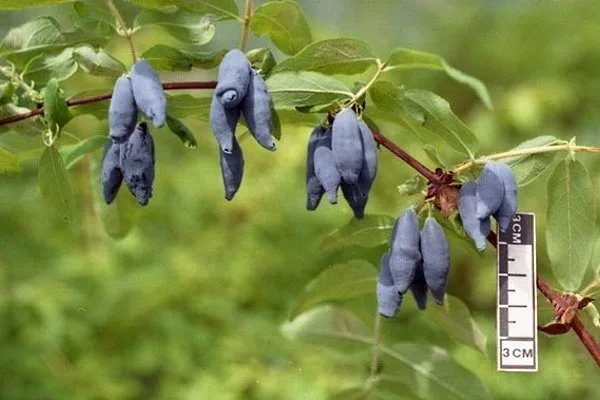
Honeysuckle variety "Sibiryachka"
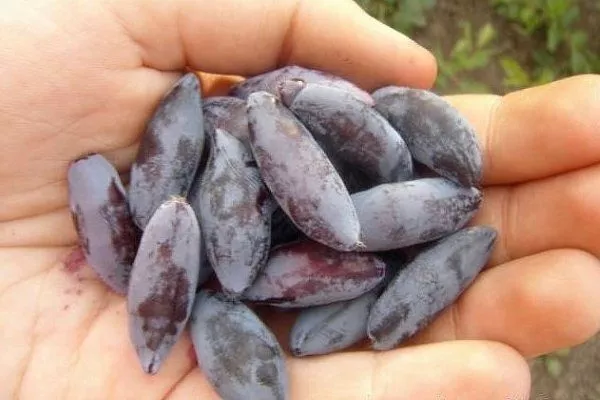
The berries of the Sibiryachka variety are among the most delicious and sweet among edible honeysuckles
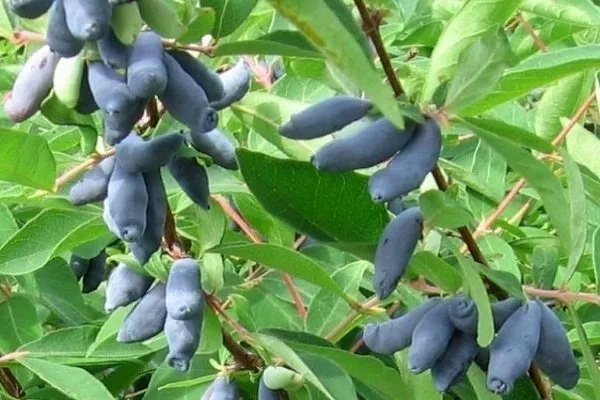
The fruits of the honeysuckle "Sibiryachka" are firmly attached to the branches, so they can be torn off with damage
History of the variety
The Siberian honeysuckle was bred in the northernmost nursery in Western Siberia – the Bakcharsky support point (Tomsk region), now better known as the Bakcharskoye Federal State Unitary Enterprise.
In 1972, through selective breeding of Kamchatka and Turchaninov honeysuckle varieties, nursery specialists developed a berry variety that can be grown in any climate zone of the Russian Federation. The Siberian honeysuckle was included in the State Register of Russia in 2000.
Main characteristics
The Sibiryachka variety is easy to maintain and tolerates significant temperature fluctuations during the flowering period without adverse effects. The bushes can be used as decorative elements in landscaping areas around homes and parks.
| Characteristics/parameters | Description/Meaning |
| Ripening time | Early, ripens in early to mid-June. |
| Productivity and fruiting | Fruiting is annual, beginning in the 2nd or 3rd year after planting. In the first years, yields are approximately 0.5 kg per bush, and at 8-13 years old, 3.2-3.7 kg. The maximum yield at 14-15 years is 4.5 kg (15 t/ha). |
| Frost/drought resistance | High frost resistance, withstands winter temperatures down to -50º C, flowers are not afraid of spring frosts down to minus 4-7º C. The variety is drought-resistant. |
| Regionalism | All regions of Russia. |
| Resistance to diseases and pests | Rarely affected by pests and almost never susceptible to diseases. Fungal infections are possible with overwatering. |
| Taste | The pulp of the berry is tender and juicy, sweet, aromatic, pleasant to the taste (tasting score – 5 points). |
Pollinators
| Name | Yield (kg per bush) | Frost resistance | Taste (tasting assessment) |
|---|---|---|---|
| Siberian | 3.2-3.7 | High (up to -50°C) | 5 |
| Tomsk resident | 2.5-3.0 | High (up to -45°C) | 4.5 |
| In memory of Gidzyuk | 3.0-3.5 | High (up to -50°C) | 4.8 |
| Narymskaya | 2.8-3.3 | High (up to -47°C) | 4.7 |
Although the honeysuckle flowers are bisexual, it is self-sterile and requires cross-pollination. Good pollinators for Sibiryachka include all simultaneously blooming varieties and hybrids of Altai, Kamchatka, and Turchaninov honeysuckle. The best of these are considered to be Tomichka, Pamyati Gidzyuk, and Narymskaya.
The more different honeysuckle varieties grown in one plot, the more bountiful the harvest. Planting several plants of the same variety will result in a meager harvest, even if there was abundant flowering.
Description of the Siberian honeysuckle
The variety is characterized by the following botanical characteristics:
- Bush. A low-spreading, medium-sized tree, 1.4-1.7 m tall. The crown is medium-density, hemispherical, 2.5-3 m in diameter. The leaves are medium-sized and oval. The flat, light green leaf blade has a bluntly pointed tip and a heart-shaped or rounded base. The petiole is thin and short.
The shoots are curved and slightly pubescent. The bark of young branches is green, but as the bush matures, it acquires a reddish-brown color. - Inflorescences Honeysuckle is reduced and two-flowered. The flowers are medium-sized and pale yellow.
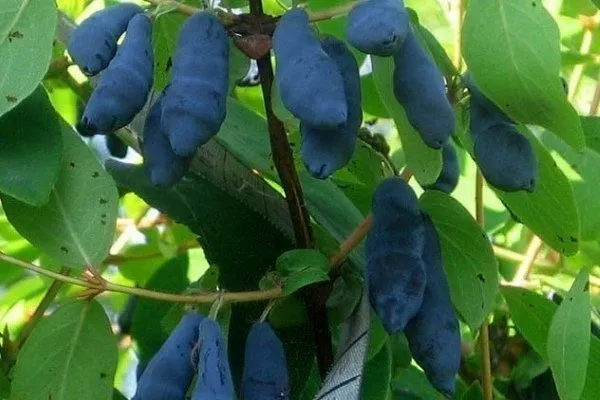
- Fruit large, dark purple with a blue coating, elongated-drop-shaped, spindle-shaped, slightly curved, 2.5-4.0 cm long, weighing 1.0-1.5 g. The peduncle is of medium length.
Fruit attachment is high, and detachment is dry. Sibiryachka is a non-shattering variety. Minor berry shedding may occur due to insufficient moisture during ripening.
The video below provides an overview of the honeysuckle 'Sibiryachka':
Pros and cons
Advantages of Siberian honeysuckle:
- stable annual fruiting;
- high yield;
- resistance to severe frosts (up to -50º C) and spring frosts;
- large-fruited;
- high taste qualities, sweeter fruits than other varieties of honeysuckle;
- early ripening;
- resistance to diseases and pests, practically not affected by them;
- easily tolerates drought;
- the optimal option for the climate of the central and northern regions.
Disadvantages of the variety:
- high probability of re-blooming in warm climates;
- The rather thin skin of the fruit eliminates the possibility of long-term transportation, during which the ripe berries would become crushed;
- The curved shoots make harvesting a little difficult.
Placement on the site
With the right selection of seedlings and planting site, honeysuckle will successfully develop and bear fruit in one place for 15-30 years.
Selection of planting material
A high-quality 2-3-year-old seedling should have 2-4 firm and flexible shoots approximately 40 cm tall. The Sibiryachka variety has curved shoots. A healthy seedling's root system is branched and has numerous small, light-colored roots.
When purchasing planting material, carefully inspect it. The seedling should not have excessively elongated shoots or dry or long roots. Check for buds on the shoots; if they are absent, the bush is unsuitable for planting.
If the bark is peeling off the shoots, don't worry. This is a natural feature of both seedlings and mature honeysuckle bushes. There's no need to remove the peeling bark from the branches.
Selecting a suitable location and conditions
Honeysuckle grows and bears fruit well in sunny, wind-protected locations. Low-lying areas flooded by meltwater, with stagnant water and cold air accumulations are not suitable for planting. Shade and partial shade are also unsuitable, as the fruit will be small in such conditions.
The plant is undemanding regarding soil, but does not grow well in light sandy or heavy clay soils. Honeysuckle prefers fertile, moisture-retentive loam with a neutral pH.
- ✓ The optimal soil pH for Sibiryachka honeysuckle should be within 6.0-6.5.
- ✓ The soil should be well-drained to avoid waterlogging, which can lead to fungal diseases.
Step-by-step planting instructions
Honeysuckle is planted in the fall, in late September or early October, and as early as possible in the spring, before flowering. Two- to three-year-old seedlings are planted, spaced at least 1.5 meters apart.
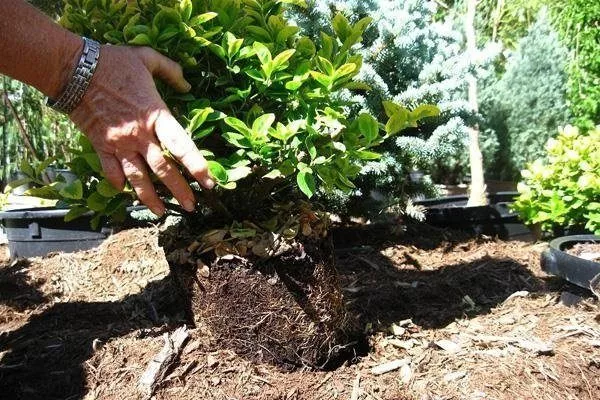
- Test your soil for pH and nutrient content 2-3 weeks before planting.
- Add organic fertilizers (compost or humus) at a rate of 10 kg per 1 m² to improve the soil structure.
- If necessary, adjust the soil pH by adding lime to increase it or sulfur to decrease it.
Planting honeysuckle step by step:
- Dig holes measuring 60x60x50 cm.
- Add up to 10 kg of organic matter (compost, manure, humus), 40-50 g of potassium salt and superphosphate, and 0.5 l of ash to each. Mix the fertilizer thoroughly with the soil.
- Trim long roots to 30 cm.
- Dip them in a soil slurry. To do this, first dig a hole between the rows, fill it with water, and add soil. Then mix until it reaches the consistency of sour cream.
- Place the seedling in the hole on a pre-formed mound, spread the roots evenly, and cover with soil. The root collar should be at ground level or slightly lower, no more than 3 cm.
- Compact the soil around the bush and water generously.
- Mulch with a layer of 1-2 cm using humus, peat or loose soil.
Growing honeysuckle
The Siberian plant quickly takes root in its designated place, and all the plant needs in the future is proper care.
Caring for a young plant
Honeysuckle grows slowly for the first one or two years. This time is used to develop a well-developed root system. Care for young plants consists of promptly removing weeds, watering as the soil dries, and loosening the soil to a depth of no more than 5-8 cm.
We recommend reading the article about How to care for honeysuckle in autumn.
Caring for an adult plant
Subsequent care for the Siberian honeysuckle is the same, but additional measures such as fertilizing and pruning are added.
Top dressing.It is recommended to do this 3-4 years after planting, when the bush produces at least 0.5 kg of berries. Organic fertilizers are added. mulchingEarly in the spring or late in the fall (once every 1-2 years), scatter 0.5-1 bucket of peat-humus mixture or compost with the addition of 0.5-1 liter of wood ash under each bush.
Read the article aboutWhen and how to fertilize honeysuckle in each season of the year.
Fertilizing with mineral fertilizers is combined with good watering and is carried out according to the following scheme:
| Top dressing | Compound | Target |
| The first (during the period of mass budding) | 25 g of ammonium nitrate per 1 sq. m | increased shoot growth |
| Second (after flowering) | 10 g of ammonium nitrate + potassium salt and double superphosphate - 15 g per sq. m | maturation of shoots, their preparation for wintering |
| Third (in autumn, with planting into the soil to a depth of 5-8 cm) | potassium salt – 15 g, double superphosphate – 15 g | growth and development of the root system, increasing the frost resistance of the bush |
Watering. Honeysuckle doesn't tolerate overwatering, but prefers moderate watering, especially during hot weather. Three buckets of water are poured under a mature plant, evenly distributed around the trunk.
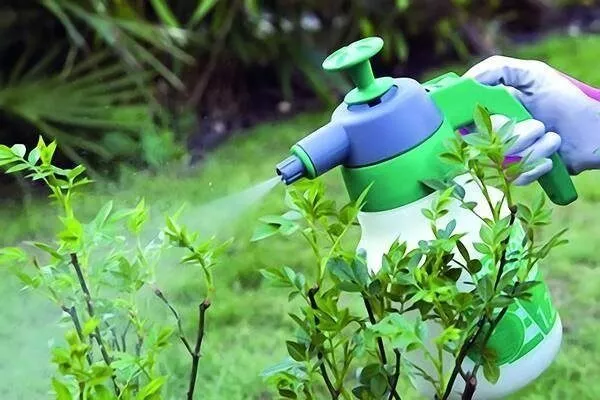
Soil moisture is especially important during flowering and the onset of mass berry ripening. Without irrigation during this period, the plant loses up to 50% of its yield.
Trimming
Honeysuckle tends to develop a dense crown; it is pruned according to the following rules:
- For the first 6-10 years, the plant requires only sanitary pruning. Remove broken, frozen, dried, and weak branches, as well as those growing downward or inward.
- After several years of fruiting, thin out overcrowded bushes by cutting out some of the old skeletal branches (over 8-10 years old) at the base. If a 7-8 cm stump is left, replacement shoots will emerge from it the following year. This pruning is performed every 2-3 years.
For a mature fruiting bush, the ideal number is no more than 15 skeletal branches of varying ages. The strongest shoots are retained, and the rest are removed.
- Around 20-25 years of age, honeysuckle fruiting ceases. Rejuvenating pruning of old bushes is practiced. In the fall, all skeletal branches are cut back, leaving stumps 15-20 cm high, from which young, strong shoots will grow the following spring. After a year, the plant recovers, and the fruiting period is extended for another 5-10 years.
Wintering
Due to its high frost resistance, Sibiryachka does not require bending its branches or covering it with snow during periods of severe cold.
Methods of reproduction
Honeysuckle is propagated in several ways:
- By layering. Young (one-year-old) branches of the plant are used, bent toward the ground. Early in the spring, the shoots are bent down, pinned, and covered with fertile soil, then watered. By autumn, the cuttings will have rooted. The plants are separated and replanted.
- Seeds. This is a rather labor-intensive and lengthy process with an unpredictable result, since seed propagation does not guarantee that the plant's varietal qualities will be preserved.
- By dividing the bush. In autumn or early spring, 3-5 year old bushes are dug up and divided according to the number of skeletal branches that have their own rhizome, after which they are replanted.
- Green cuttings. The best time is mid-June to early July. Choose strong shoots from the current year, including old wood (cut with a heel). Soak them in a rooting stimulant solution, then plant them in a loose, moist soil mixture (compost, peat, sand). Cover with plastic wrap and then with spunbond for shade.
Problems in growing
Honeysuckle isn't susceptible to disease, but in rare cases, it can be affected by powdery mildew during cold, damp summers. Treat the plant for this fungal disease with an appropriate fungicide, such as Fitosporin.
In addition, there's a chance that honeysuckle will bloom again during a warm, prolonged autumn (late October - early November). The plant may bloom a second time if a brief drop in temperature below 0ºC is followed by a prolonged warm spell.
A second wave of flowering can be triggered by a winter thaw, which is common in the European part of Russia. Under such conditions, the apical buds open, and the honeysuckle begins to bloom. A subsequent cold snap causes the buds to die, significantly reducing the yield.
It's recommended to remove buds immediately upon detection. To reduce damage, trim off all damaged branches of affected honeysuckle bushes in early spring, which encourages new growth. To boost growth, feed them twice (10-12 days apart) with nitrogen fertilizer during flowering.
Harvesting
The simultaneous, uniform ripening of the fruits allows for the entire harvest to be collected at one time. Harvesting is by hand only, as the fruits are held quite firmly to the branches.
Storage and processing of fruits
Siberian honeysuckle berries are delicate and thin-skinned, so they are not suitable for long-term storage. The harvested fruits are usually eaten fresh or used for preserves: compotes, jams, juices, marmalades, and other processed products.
Reviews of the Sibiryachka honeysuckle variety
The Siberian daisy will grow and bear fruit in any region, but it's important to keep in mind that its natural conditions are frosty winters and short summers. In warmer climates, the Siberian daisy may bloom again in the fall.