
Honeysuckle "Heart of the Giant" is a relatively new hybrid variety. It is intended for cultivation in cool climates. It was developed by Lydia Stewart (Delafield) at the Arkansas Center. It is also known as Lonicera Emphyllocalyx, and the prefix "F3" indicates a new generation.
Characteristics of fruits and shrubs
Japanese honeysuckles from the F2 series were used to create the hybrid, which is why "Giant's Heart" is included in the Blue Treasure group. The tree is quite attractive, making it popular among landscape designers for decorating gardens.
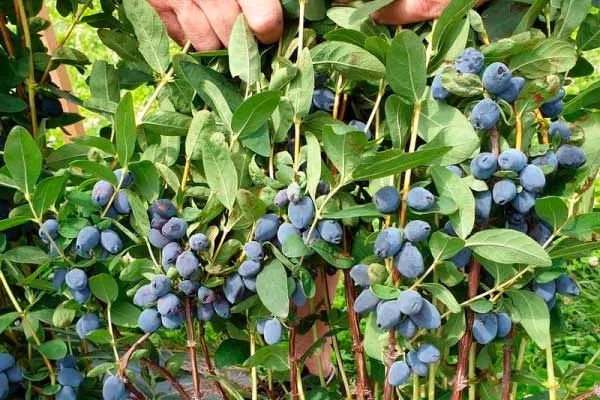
Key features of appearance and characteristics:
- Bush. This is a vigorous variety, reaching a height of 120-150 cm. The crown is semi-spreading, so its diameter is equal to its height. The shoots are strong and branching, and the crown is spherical in shape.
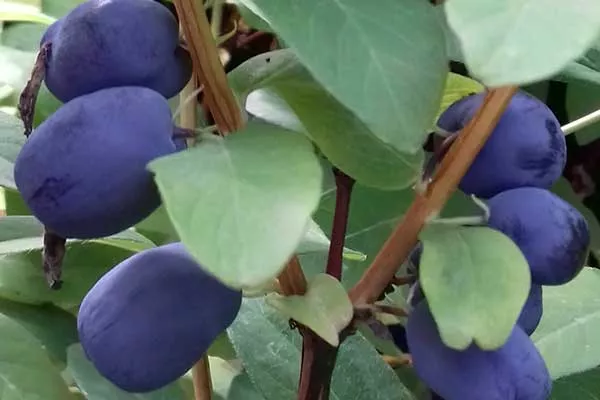
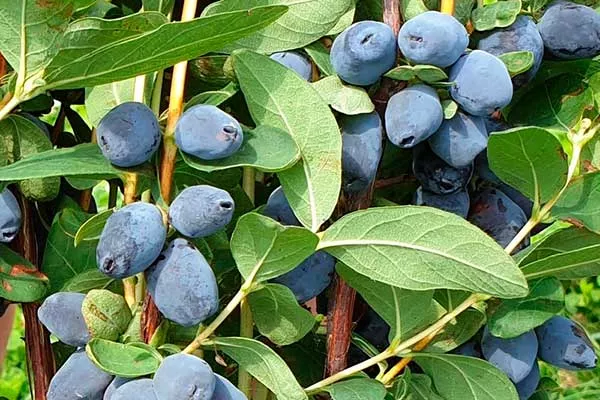
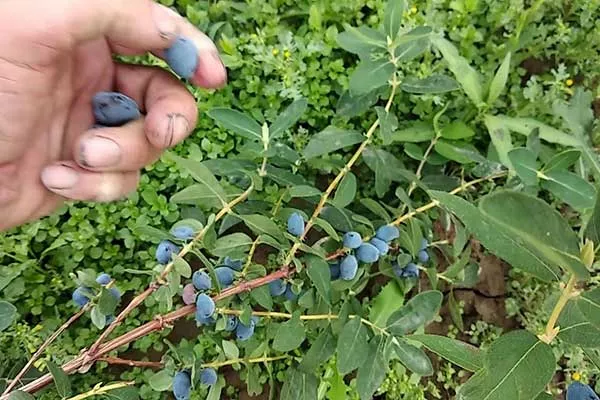
The leaves are green, oval, and have a pointed tip. - Fruit. Large in size, they grow up to 3 cm in length, so their weight varies from 2.5 to 3 cm, but there are giant specimens weighing 4-4.2 g. The berries are flattened and ovoid, but many gardeners say they resemble a heart in appearance. The flesh is firm and compact, which is unusual for honeysuckle. The Brix index is 15.
The primary color is blue, but the firm skin has a waxy, light blue coating. The shell is also blue, and the scar becomes dry after ripeness. - Taste and aroma. The aroma is medium-intensity, but the flavor is quite rich and sweet. A slight but pleasant tartness is also noticeable. Tasting score: 4.5.
Experts say the flavor is reminiscent of blueberries and raspberries, making this variety versatile. Besides fresh consumption, the fruits are used to make jams, compotes, and baked goods. They also make particularly delicious alcoholic beverages.
Early fruiting and ripening time
Ripening is mid-late – budding begins in March or April, or even May, depending on the growing region, and harvesting can begin as early as June or July. The first fruiting occurs in the second year after planting in the south, and in the third year after planting in northern regions.
Resistance to cold and drought
The variety is highly frost-resistant—the bush won't suffer in winter temperatures as low as -35 to -40 degrees Celsius. The flowers can withstand temperatures as low as -5 to -7 degrees Celsius. Honeysuckle tolerates dry summers well, but watering is necessary to maximize the yield.
Productivity
This variety is characterized by high yields, which increase over time. At maturity, a single bush can yield approximately 3.5-4.5 kg, and even more under favorable conditions. In industrial cultivation, up to 12 tons can be harvested from one hectare.
To achieve consistently high yields, the Giant's Heart requires pollinators, as the hybrid is completely self-sterile. Bees and other insects serve as pollinators.
- ✓ Make sure that the pollinator plants you choose bloom during the same period as Giant's Heart.
- ✓ Check pollinator compatibility with honeysuckle, avoiding species that may compete for resources.
Experts recommend planting donor plants nearby – Boreal Beast, Boreal Beauty, Blue Treasure, Strawberry Sensation, Bunny Blue, Boreal Blizzard, etc. The main thing is that the flowering times coincide.
Growing and care
For good growth and development in cold climates, the shrub needs at least half a day of direct sunlight. In hotter climates, a spot in partial shade is best.
Other growing features:
- Fertile and well-drained soil with a pH level of 5.5 to 7 is suitable.
- When planting, leave a distance of at least 130-150 cm between bushes.
- It is recommended to plant cuttings in autumn.
- Honeysuckle thrives near fruit trees and other berry crops, such as raspberries, gooseberries, and currants. Avoid placing the plant in direct shade from trees.
- To prepare the planting hole, prepare a mixture of 7-9 kg of compost, 120-130 g of superphosphate, 250-300 g of charcoal, and 35-45 g of potassium sulfate, mixing it with the topsoil. Fill the planting hole with the resulting substrate, compacting it.
Landing involves the following steps:
- In the hole, form a small mound from the prepared substrate.
- Place the seedling in the center of the hole, carefully spreading the roots over the surface of the mound.
- Cover the roots with soil, making sure that the root collar is 5 cm deep.
- Compact the soil around the plant and make a low rim with a diameter of about 25-35 cm.
- Pour 12-15 liters of water into the tree trunk circle.
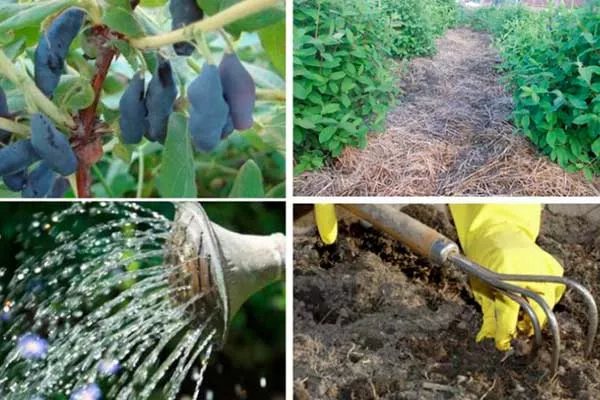
- Mulch the surface of the tree trunk area with peat, dry grass or humus.
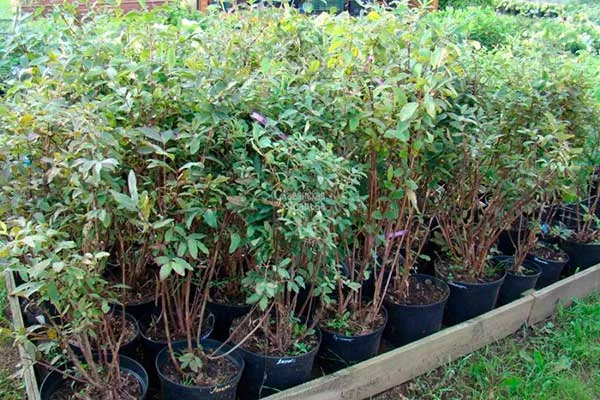
Caring for the crop is simple:
- Watering. Honeysuckle berries will only be juicy with adequate light and abundant moisture, especially during the fruit formation period. If the soil is loamy, watering once a week is sufficient, but avoid getting water on the leaves and flowers to avoid burning.
- Trimming. Honeysuckle requires both sanitary and formative pruning. Sanitary pruning involves removing broken, dried, and unproductive branches. Formative pruning aims to thin the crown to improve ventilation and light exposure, facilitating harvesting. This procedure is typically performed in the fall and spring.
- Top dressing. For honeysuckle, it's important to regularly apply fertilizers, consisting of both mineral and organic components. Organic fertilizers are preferred. Here are the guidelines:
- The first feeding should be done immediately after the snow melts. Chicken manure, horse manure, or soluble mineral fertilizers such as Agricola are recommended.
- The second feeding is done after flowering. To do this, take 100-120 g of pressed yeast (or 20 g of dry yeast), 100-120 g of granulated sugar, and 3-3.5 liters of water. Let the mixture steep for 10 days, then dilute it with water at a ratio of 1:10, using approximately 1.5-2 liters per plant.
- In the spring, you can apply compost and ash: approximately 10 kg of compost and one cup of ash per average bush. Before applying, thoroughly loosen the soil. If the fertilizer is liquid, water only the loosened soil; if the soil is hard, digging a trench around the bush is recommended to ensure even distribution.
- After applying fertilizer, the soil is watered well to avoid burning the roots.
- Wintering. For winter protection, you can use spruce or pine branches. It's important to choose materials with good air permeability and not overdo the covering, especially if winters are light on snow.
- ✓ Check the condition of the mulch before winter and renew it if necessary.
- ✓ Make sure the covering material is breathable to prevent damping off.
Harvesting
The fruits can be picked from the bush for up to two weeks. Try to pick the berries with the stem attached, which ensures longer storage.
Reviews of the variety
Honeysuckle "Heart of the Giant" is a new hybrid with a mid-late ripening period. It is suitable for both private gardens and commercial cultivation. But most importantly, the berries can remain whole when used for jam, a rarity for honeysuckle fruits, which typically lack firm flesh and skin.