
Thanks to its rich harvest of sweet berries, Roxana honeysuckle will become a true gem in your garden. Its high frost resistance, low maintenance, and decorative qualities make it an excellent choice for both experienced and novice gardeners. Proper care is key.
Origin and entry into the State Register
It was developed by Russian scientists I.K. Gidzyuk and A.T. Tkacheva at the M.A. Lisavenko Research Institute of Strawberries and the Bakcharskoye Federal State Unitary Enterprise, which are engaged in the development of frost-resistant crops.
This variety appeared in 1987 and was included in the State Register in 2002.
Description of appearance, taste qualities
The plant is medium-sized, reaching a height of approximately 1.2 m and a diameter of up to 1 m. The bushes have a rounded or slightly compressed shape with a moderately dense crown.
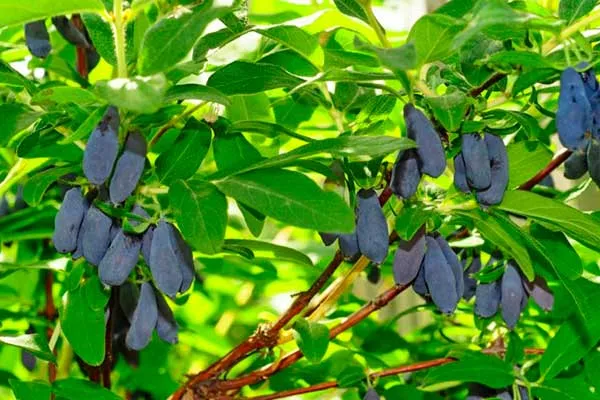
Distinguishing characteristics:
- Escapes – thick, erect, dark green in color.
- Leaves - large, with moderate pubescence, rich dark green hue.
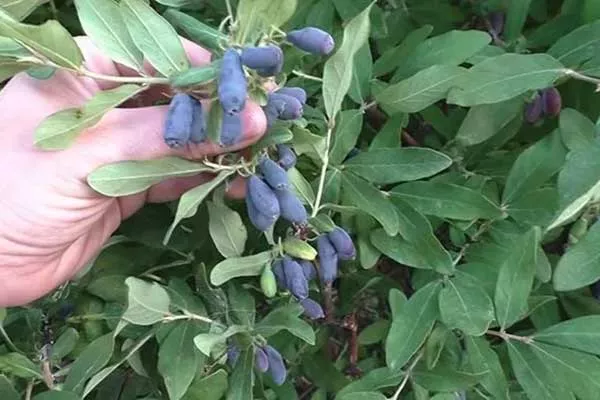
- Berries - Large, irregularly shaped, and elongated or elongated-elliptical, the fruits average 1.3-1.8 g in weight. The dense but thin, dark purple skin is covered with a waxy coating, and when fully ripe, the fruits become almost black.
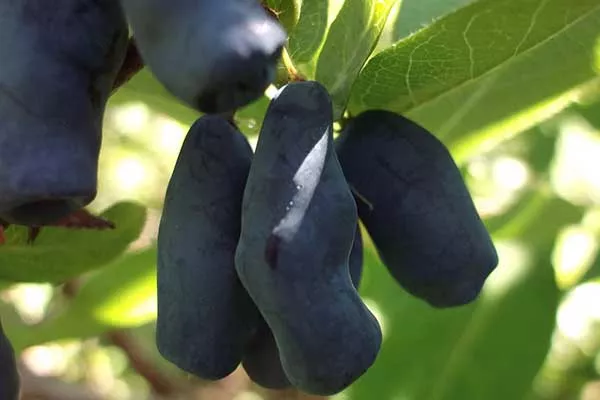
Roxana honeysuckle is considered the most delicious of its relatives. It has a pleasant dessert-like sweet and sour flavor with a strawberry aftertaste and a vibrant berry aroma. The flesh is slightly dense and fibrous, earning a tasting score of 4.5. It contains many beneficial microelements essential for the body.
Characteristics
Honeysuckle thrives in conditions where most berry crops fail. In the northern regions of the country, where summers are short and winters are very harsh, cultivation is particularly challenging. Thanks to the efforts of domestic breeders, Roxana thrives in any climate.
Features of application
The fruits are eaten fresh, dried, cured, and frozen. They are used to make jams, preserves, and marmalades.
Self-fertility and the need for pollinators
This is a self-sterile variety, so to encourage fruit set, grow pollinator varieties with similar flowering times nearby.
Ripening period, yield and fruiting
This is a late-ripening variety, ripening by mid-July or by the end of June when grown in southern regions.
The bushes begin bearing fruit three years after planting, yielding up to 3.5 kg per bush. With proper agricultural practices, fruiting can last for at least 15 years.
Resistance to diseases and pests
The plant has a strong immune system, but if improperly cared for, the bushes can be affected by diseases such as cercospora leaf spot, mosaic, rust, powdery mildew, spotting, and tuberculosis. Pests include spider mites, aphids, and scale insects.
Resistance to cold and drought
Roxana successfully withstands frosts and continues to bear fruit even at temperatures down to -40°C. Insufficient moisture reduces yield and fruit quality, while overwatering and waterlogging can cause root rot.
Regionality, climate requirements
The variety is zoned for cultivation in the Northern, Northwestern, Central, Volga-Vyatka, Central Black Earth, North Caucasian, Middle Volga, Lower Volga, Ural, West Siberian, East Siberian and Far Eastern regions.
Transportation of the harvest, shelf life of berries
The main drawback of honeysuckle is uneven ripening and heavy fruit drop during harvest. Gardeners note that this requires harvesting in several stages. To simplify this task, lay fabric or plastic under the bushes to quickly and easily collect the fallen berries.
Difference from other varieties and hybrids
Roxana honeysuckle differs from other varieties in its flavor, shape, yield, and berry weight. See the table for more details.
| Variety | Weight | Taste | Form | Yield, c/ha |
| Roxana | 1.3-1.8 g | Sweet and sour | Oblong-elongated | 33 |
| Persistent | 0.81 g | Sweet and sour with a hint of bitterness | Oval-tuberous | 41.7 |
| Provincial | 1.9 g | Sweet | Elongated oval | 67 |
| Selena | 1 g | Sweet and sour with a slight bitterness | Elliptical | 67.9 |
Agricultural technology
To successfully grow honeysuckle, it's important to select the right seedlings, choose a suitable planting site, and ensure proper care. Follow the recommendations of experienced gardeners.
Choosing a location in the garden
Choose a well-lit area on the south side, located approximately 3 m from buildings or fruit trees, which will protect from cold gusty winds.
An abundance of sunlight promotes faster ripening of the crop and has a positive effect on the taste of the berries, increasing their sugar content.
How to choose seedlings?
When choosing planting material, it's important to pay attention to its external qualities. What should a plant look like?
- Age - over 3 years old.
- Ground part – at least 3 strong shoots with many green buds.
- Root system – well developed.
- Escapes – free from mechanical damage. Their length should be 25-30 cm.
- ✓ The presence of living buds on the shoots, which indicates the viability of the seedling.
- ✓ No signs of fungal diseases on the root system.
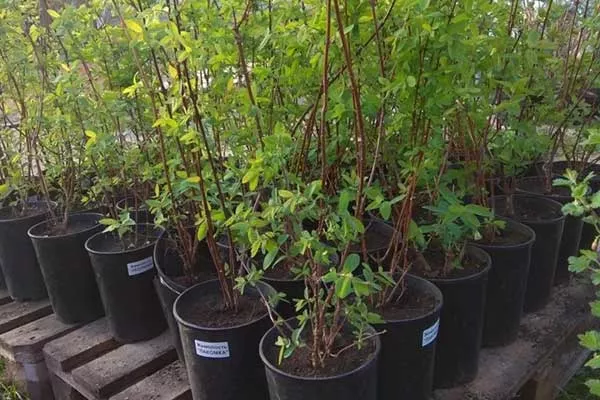
Slight peeling of the bark is considered normal. When purchasing seedlings, choose specimens 50 cm tall with developed roots 30-35 cm long, and free of disease and pest damage.
Preparing for landing
To disinfect, spray the seedlings with a colloidal sulfur solution (30 g per 10 liters of water), then rinse with running water after 3-5 hours. Soak the roots in a growth stimulant solution (Kornevin, Heteroauxin) for at least 6 hours to promote faster growth and rooting.
Prepare the area a month before planting: add 10 kg of humus per 1 square meter of soil and dig the soil thoroughly.
Soil requirements
Roxana grows and develops well in light, loose, and fertile soil with neutral to moderate pH and good air and moisture permeability. Loams and black soil are ideal.
Timing, scheme and rules of planting
Plant the seedling in spring (April) or fall (September). Step-by-step algorithm:
- On the selected area, make rows, leaving a distance of 2 m between them.
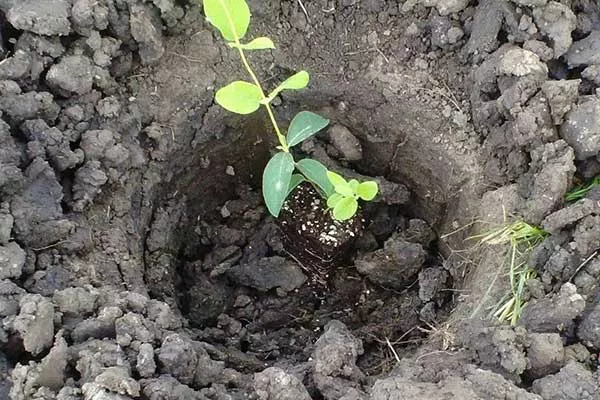
- Dig planting holes measuring 50x70 cm.
- Place a drainage layer of broken brick, pebbles, expanded clay or wood shavings at the bottom of each hole.
- Sprinkle 10 kg of peat and 200 g of wood ash on top.
- Place the seedling in the center of the hole, spread out the roots, then sprinkle with soil and compact it to avoid the formation of voids.
- Moisten the plantings and mulch the soil with peat.
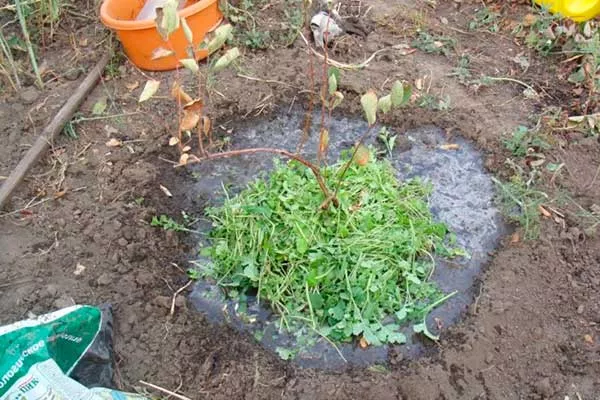
The distance between bushes should be 3 m.
Features of cultivation
Proper crop care ensures healthy plants and promotes high yields. Regular adherence to agricultural practices helps prevent diseases and improve fruit quality.
Watering and fertilizing
Water the bush as the soil dries out – every 5-10 days, depending on weather conditions: a young plant requires 30 liters of water, and an adult – at least 50 liters.
Fertilize the Roxana honeysuckle no earlier than the second year after planting, and carry out the procedure three times a year: in April, add 3-4 kg of humus under the roots; in the summer, before harvesting, water the bush with a 3-liter potassium solution; and in early autumn, use a superphosphate solution.
Trimming
This is an important aspect of plant care. Perform the first pruning when the plant is 2-3 years old. After this, pruning is unnecessary, unless the bush becomes too dense: remove a few branches growing from the ground, as well as dried and diseased areas.
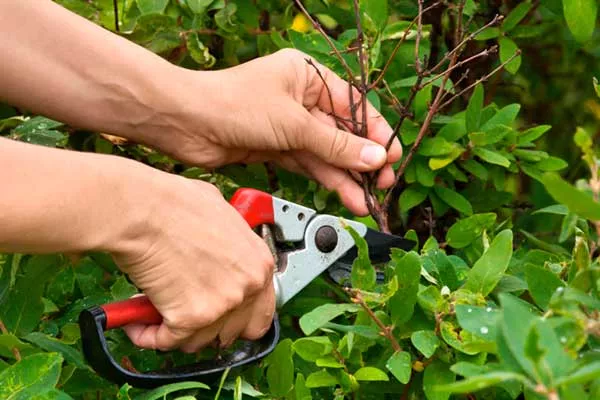
If the bush is very dense, remove inner branches to improve sunlight access. Avoid pruning young shoots, as these are where most of the berries form.
In spring, trim off frost-damaged branches, and after fruiting has finished, carry out decorative shaping of the bush.
Weeds
During the summer, it's important to remove weeds from the honeysuckle root zone and loosen the soil to improve air flow to the roots. Since the roots are located close to the surface, loosening should be done carefully and not too deeply.
After weeding and loosening the soil, it's recommended to mulch the soil around the bush using a mixture of dry grass or straw. This will help reduce moisture evaporation and inhibit weed growth.
Wintering
Since this is a frost-hardy shrub, it doesn't require any special winter preparation. However, in regions with temperatures below -40°C, mulch the soil around the bush to protect the roots.
Some gardeners, concerned about the plant's safety, cover it with plastic film. In this case, ventilate it regularly for several hours a day to prevent moisture accumulation and rot.
Pest and disease control
Despite its strong immune system, honeysuckle can be susceptible to various problems, mostly due to improper care. It's important to address these issues promptly:
| Disease/pest | Description | Treatment |
| Cercospora leaf spot | Grey-green spots appear on the leaves, which turn brown with a dark border. | Spraying with Bordeaux mixture. |
| Mosaic | Unusual milky patterns appear on the leaf blades. | Treatment of the area with Oxyhom solution. |
| Rust | The appearance of orange or red spots of irregular shape on the bushes. | Application of Karbofos. |
| Powdery mildew | The leaves turn yellow and fall off, the shoots dry out and turn brown or black. | Use of fungicidal preparations: Skor, HOM, Topaz. |
| Spotting | Various spots appear on the leaves, which can lead to them falling off. | Fungicides suitable for the specific spot are effective. |
| Tuberculosis | Leaves may become covered with brown spots, which leads to their drying out. | Spraying with fungicidal preparations. |
| Spider mites | The leaves turn yellow and fall off, and cobwebs appear on the branches. | Treatment with Fitoverm or Kemifos. |
| Aphid | A sticky coating appears on the shoots, the leaves curl and change color. | Use of Kinmix or Inta-Vir solution. |
| Scale insects | The leaves turn yellow, become deformed and fall off. | Using a solution of Actellic, Confidor, Rogor. |
Carry out these treatments 2-3 times, 15-20 days apart. To prevent pest attacks in the spring, apply hot water (80…90°C) to the roots of the shrubs to kill the larvae.
Difficulties
Often, the plant produces small, sour berries, or even very few fruits at all. This may indicate that the bushes are not receiving enough sunlight.
Yellowing, deformation and curling of leaves indicate a possible pest attack.
Stopped growth, cessation of fruiting, damage and death of bushes are signs indicating root system rot.
Reproduction
You can increase the number of seedlings in your garden at home. There are several propagation methods:
- Seeds:
-
- Mash the ripe berries on a paper towel, then roll them into a roll.
- The seeds remain viable for several years at room temperature.
- Planting should be carried out in June: place the planting material in moist soil to a depth of 1 mm and cover with film.
- In three weeks the first seedlings will grow, which you can transfer to the garden in the fall.
- Once the leaves emerge, transplant the seedlings into a garden bed, ensuring regular watering, loosening the soil, and removing weeds. You'll reap your first harvest in 3-4 years.
- Cuttings:
-
- Prepare cuttings before the buds appear, choosing young, strong branches with a diameter of 8 mm and a length of 15-18 cm.
- Plant the cuttings in the soil to a depth of 10 cm, leaving at least two buds on the surface.
- To accelerate root growth, cover the seedling with plastic wrap. Moisten it moderately several times a day. Full rooting occurs within a month.
- Layers:
-
- At the beginning of summer, loosen the soil around the bush and raise it slightly.
- Press the young stems to the ground and secure them, then cover with a layer of soil about 5 cm thick.
- Water the cuttings regularly until next spring. Then separate them from the mother plant and transplant them to their permanent location. It will take several years for the cuttings to fully develop.
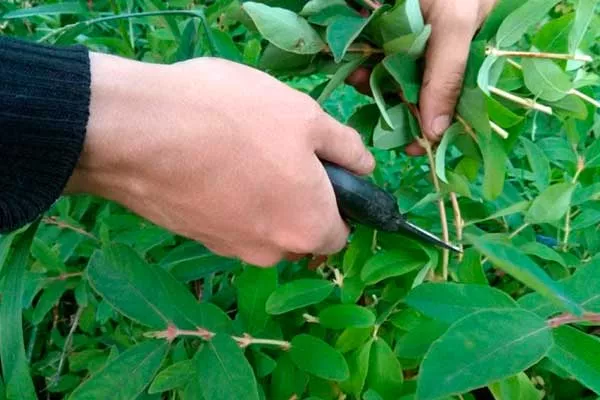
Choose the most convenient propagation method for you. Many gardeners prefer cuttings, as it allows them to preserve all the varietal characteristics of the shrub.
How to properly harvest and store crops?
Begin harvesting berries in mid-July, or in southern regions, in late June. Harvest them in stages, depending on their ripeness, as they are prone to shedding.
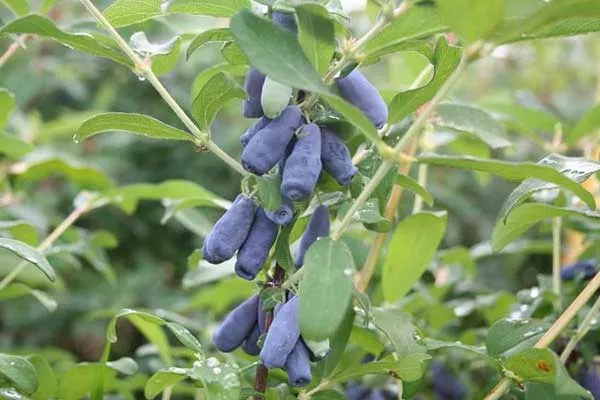
Choose a dark, dry, and cool place where the fruit will stay fresh for 3-4 months. Freezing honeysuckle will preserve its flavor and appearance for up to 7 months.
Positive and negative qualities
The Roxana variety boasts decorative qualities, making it a popular choice for gardens. Before planting, it's important to consider its advantages and disadvantages.
Some gardeners note the following disadvantages: poor drought tolerance, self-sterility, poor shedding of ripe berries, and susceptibility to cercospora and rust.
Gardeners' reviews
Roxana honeysuckle is an excellent choice for those who value high-quality berries and good productivity. It is frost-resistant and tolerates short dry periods. Plants are rarely susceptible to disease and pest attacks. With proper care, you can reap bountiful harvests year after year.