
Pushkinskaya Honeysuckle is a Russian-bred variety with large, sweet-and-tart berries. It's easy to grow, requires little care, and can be used as a decorative plant. This ornamental honeysuckle can serve not only as a source of vitamin-rich fruits but also as a hedge.
Description of the variety
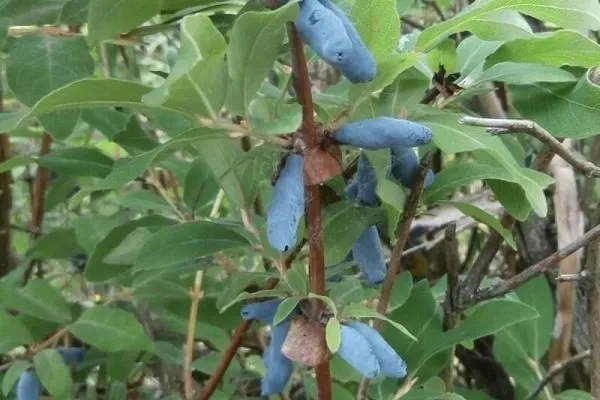
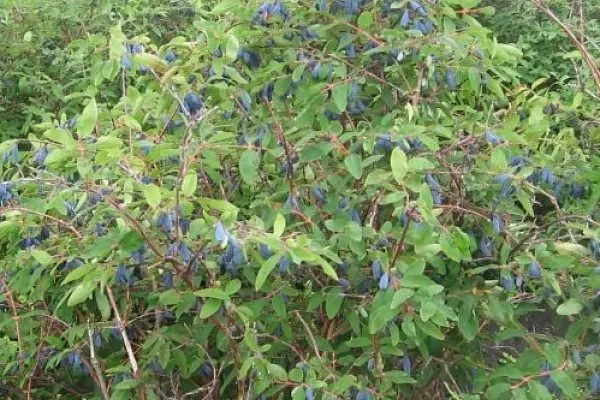
The Pushkinskaya honeysuckle bushes are medium-sized and spreading, with a flattened, rounded, moderately dense crown. The shoots are thick, straight, light green, and pubescent. The leaves are large, green, and elongated-oval.
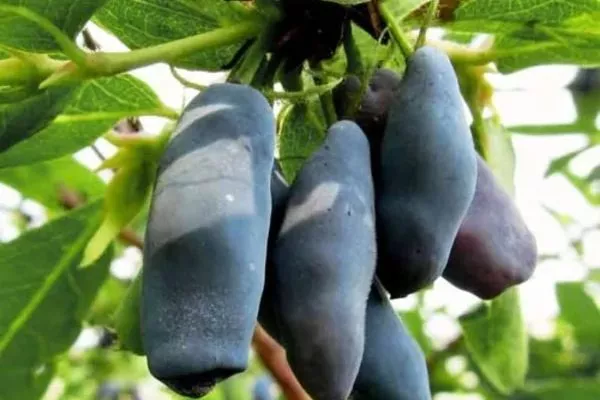
The Pushkinskaya honeysuckle produces large fruits with excellent marketability. Brief description of the fruits:
- Coloring: bluish-blue.
- Form: cylindrical, with a ridge at the top.
- Length: from 1.8 to 2.7 cm.
- Skin: smooth, with a bluish tint.
- Pulp: tender.
- Average weight: 1.04 g.
The history of the Pushkinskaya variety
The Pushkinskaya honeysuckle variety was bred at the N.I. Vavilov All-Russian Institute of Plant Genetic Resources in 2001. Authors: M.N. Plekhanova and A.V. Kondrikova. The variety was added to the State Register of the Russian Federation in 2002.
You can find out about the best varieties of berry crops Here.
The taste of fruits and their purpose
The Pushkinskaya honeysuckle fruit has a pleasant sweet and sour taste and a rich aroma. The average rating from tasters is 4.4 points on a 5-point scale.
Fruit composition:
- Sugar — 8.6%.
- Acids – 2.2%.
- Vitamin C — 64 mg/%.
- P-active substances — (from 500 to 2500 mg/100 g).
The fruits also contain a lot of carotene (provitamin A), thiamine (B1), riboflavin (B2), folic acid (B9), macro- and microelements.
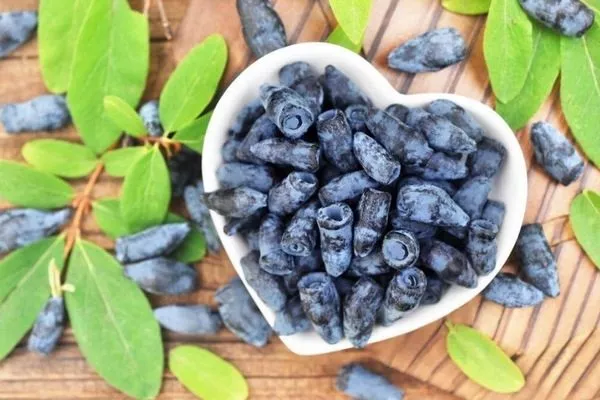
The Pushkinskaya honeysuckle fruit is versatile: it can be eaten fresh or processed into preserves and jams. The berries make excellent compotes and juices. They can also be frozen and dried.
Main characteristics
The Pushkinskaya honeysuckle has excellent agronomic characteristics, which allow it to be successfully grown in a wide range of climatic conditions.
Specifications:
- Ripening timeThe Pushkinskaya honeysuckle is an early variety. The berries ripen in late May or early June.
- Winter hardinessThe bushes are tall, withstand temperatures down to -40°C and below, and are resistant to spring frosts.
- Self-fertilityThis variety is partially self-fertile. For good yields, it is recommended to plant other honeysuckle varieties nearby.
- PrecocityThe plant produces its first harvest 3-4 years after planting.
- ProductivityOn average, 53 centners are harvested from 1 hectare. From one bush – 1.6–3.5 kg.
- Drought resistance. The variety does not tolerate drought well, but prolonged over-watering is also harmful to it.
- Disease resistance. The variety has high immunity and is practically not susceptible to fungal and bacterial infections.
Pollinators
To pollinate Pushkinskaya honeysuckle, select varieties that match its flowering time. Suitable options include: "Blue Bird," "Novinka," "Slastena," and "Fianit."
It is advisable to plant at least 4-5 honeysuckle bushes, but if there is little space on the site, you can limit yourself to two bushes.
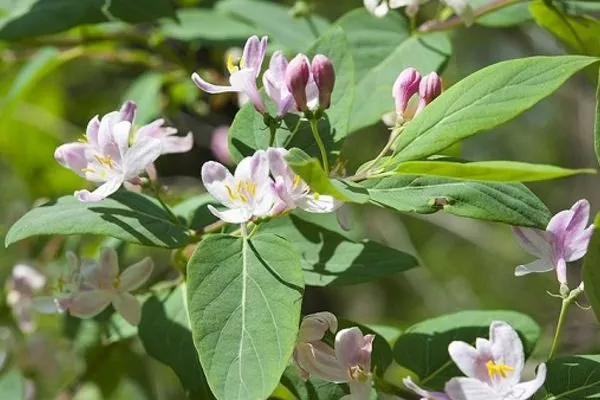
Pollinators are planted 2 meters away from Pushkinskaya honeysuckle. To ensure good pollination, it is recommended to plant the bushes in compact groups rather than in rows—this will attract bees and other pollinating insects more readily.
Pros and cons
The Pushkinskaya variety is very popular among gardeners and summer residents for good reason. This honeysuckle has many advantages, making it an excellent addition to any garden. But before planting this shrub in your garden, it's a good idea to familiarize yourself not only with its advantages but also with its disadvantages.
Landing
To ensure that honeysuckle grows quickly and well, is healthy and bears fruit generously, it is important to plant it correctly.
Decisive factors may also include the quality of the seedling, site characteristics, soil fertility, etc.
Site selection and preparation
Pushkinskaya honeysuckle thrives in sunny locations away from strong winds. It can also grow in light shade, but the more light it receives, the higher the yield and the tastier the berries.
Features of site preparation:
- Planting honeysuckle in low-lying areas is not recommended. High groundwater levels can also damage it, as they can cause root rot. It's best to plant honeysuckle in flat, elevated areas.
- The planting site is prepared in the fall by digging and fertilizing it. Other components are also added to improve the soil quality, such as loosening it and adjusting (increasing or decreasing) its acidity.
- Honeysuckle prefers slightly acidic or neutral soils with a pH of 5.5–6.5 that are permeable to water and air. Sand should be added to dense and clayey soils, while dolomite flour or another lime-based fertilizer (200–300 g per square meter) should be added to acidic soils.
Selecting and preparing a seedling
It is better to buy Pushkinskaya honeysuckle seedlings from nurseries or reliable sellers engaged in the cultivation of fruit and berry crops.
Signs of a good seedling:
- The seedlings are 2-3 years old. They already have well-developed roots, but they are still able to quickly establish themselves in a new location.
- Height: 30-40 cm. The seedling should have 2-3 branches. The branches should be flexible, free of defects and signs of disease.
- The root system is well developed, without dry and rotten shoots.
- There should be at least 2-3 buds on the branches.
Before planting, inspect the seedlings, removing any damaged roots and shoots. If the root system is too long, trim it to 30 cm. Exposed roots are soaked in water for 2-3 hours before planting. It's a good idea to add a growth stimulant, such as Kornevin, to the water.
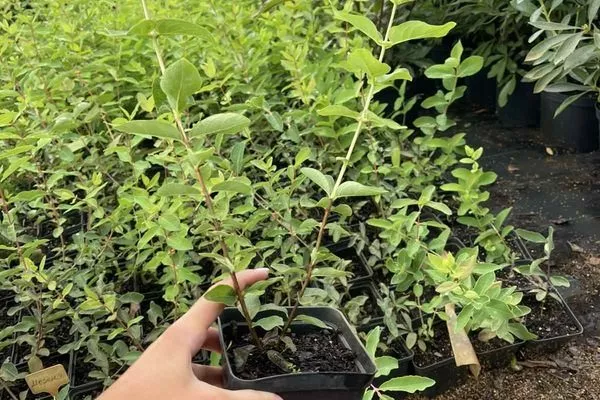
Container-grown seedlings only need to be watered before planting to make them easier to remove from their containers. These seedlings are planted using the transshipment method. They experience virtually no stress during planting and quickly establish themselves. They can be planted even in summer.
Planting dates
Bare-root honeysuckle is planted in early spring, when the soil warms to 8–10°C, or in late fall. The plant should be dormant at the time of planting.
Approximate planting times for different regions:
- In the southWhere autumn is warm and long, honeysuckle can be planted from mid-October to mid-November.
- In the middle In Russia, planting is carried out from mid-September to the first ten days of October.
- In the north, where winters are particularly harsh and prolonged, planting is completed before early October. Even better, postpone planting until spring.
Preparing the planting hole
Begin preparing the planting holes 1-2 weeks before planting. This allows the soil to settle and the fertilizer to dissolve. If you plant the seedling on the same day you dig the hole, its root collar will become too deep after a while.
Features of preparing a planting hole:
- Recommended hole dimensions: 40×40×40 cm. The hole should be large enough to accommodate the roots of the seedlings without them bending upward or to the sides.
- If several seedlings are planted at once, an interval of 1.5 m is maintained between adjacent holes.
- A 15 cm thick drainage layer is poured onto the bottom of the pit.
- The holes are filled with nutritious soil. Each hole requires 20 liters of compost, 1 kg of wood ash, and 50 g of superphosphate. For sandy soils, add more compost—30 liters. You can also add 30-50 g of potassium fertilizer.
Using fresh manure to fill the holes is not recommended, as it can burn the roots. After preparing the hole, let it sit.
Landing at a permanent location
It is recommended to plant on a cloudy and windless day, in the morning or evening.
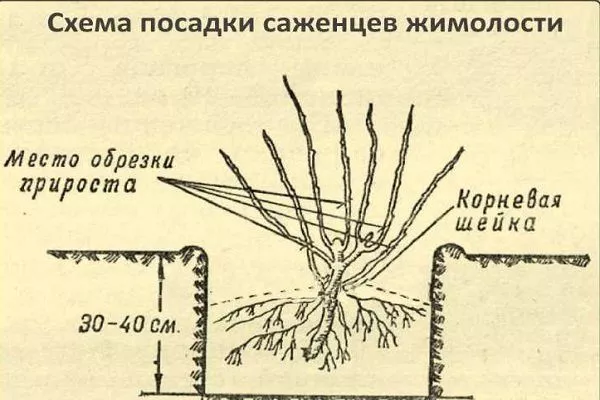
Features of planting Pushkinskaya honeysuckle:
- The seedling is placed in a planting hole so that its roots lie without bending on the slopes of the hill formed from the soil mixture.
- The free space and roots of the seedling are covered with fertile soil, holding it with one hand.
- After planting, the root collar should be 3-4 cm below the soil level.
- The soil is compacted and a circle is formed around the trunk for watering. Each bush requires 10 liters of water, not cold and settled.
- Once the water has been absorbed, the trunk area is mulched with humus or peat. The mulch thickness is 2 cm.
Care
The Pushkinskaya honeysuckle is easy to grow and can thrive in a wide range of conditions. However, to ensure a good harvest of berries in addition to its decorative qualities, it requires careful care—watering, pruning, fertilizing, and preventative spraying.
Watering
Pushkinskaya honeysuckle requires regular and generous watering. A lack of moisture negatively impacts the harvest and causes disease. Critical periods for watering include spring—after the snow melts and during flowering—and the fruit-ripening period of June and July.
The bushes also need to be watered after harvesting to ensure buds are formed for next year.
The frequency of watering depends on the age of the bushes, the type of soil and weather conditions:
- Young honeysuckle is watered more often than mature ones.
- On sandy soils, bushes need to be watered more often than on clay soils, since water drains faster.
- During hot and dry weather, watering should be increased by about twice as often. In normal weather, honeysuckle should be watered once every 10-14 days; in hot and dry weather, water once or twice a week.
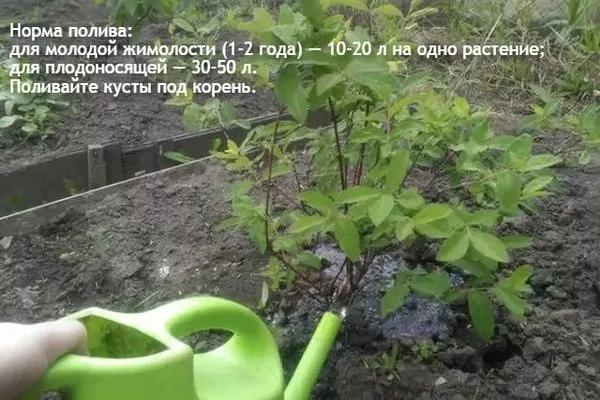
The recommended watering rate for young honeysuckle (1-2 years old) is 10-20 liters per plant, while for fruiting plants, 30-50 liters. It's recommended to water the bushes at the roots, applying water slowly to ensure it's well-absorbed into the soil.
Honeysuckle can be watered using a sprinkler; this wets the leaves and removes dust. This procedure is not recommended in cool weather to avoid fungal diseases. Drip irrigation is convenient for watering honeysuckle, especially when planted in rows.
Loosening
Loosening the soil around honeysuckle bushes is not necessary. This plant's root system is located close to the surface—in the top 10 cm. Loosening the soil with a hoe can damage the roots. However, loosening the soil is an important procedure for the plants, as it ensures oxygenation of the root system.
Loosening should be sparse and shallow. Loosening should be done to a depth of 1-1.5 cm after watering. Weeding should be done along with loosening. To reduce the need for loosening and watering, the soil is mulched with humus, peat, grass clippings, or other organic materials.
Fertilizing
Fertilizing is done alternately with organic and mineral fertilizers. Application begins in the third year after planting. The composition of the fertilizer depends on the stage of vegetation.
Approximate timing of fertilizing:
- In spring, nitrogen fertilizers are applied to increase green mass.
- During the flowering and ovary formation period, fertilizers with a predominance of phosphorus are applied.
- After harvesting, when the honeysuckle is setting buds for the next season, fertilizers containing potassium and phosphorus are applied.
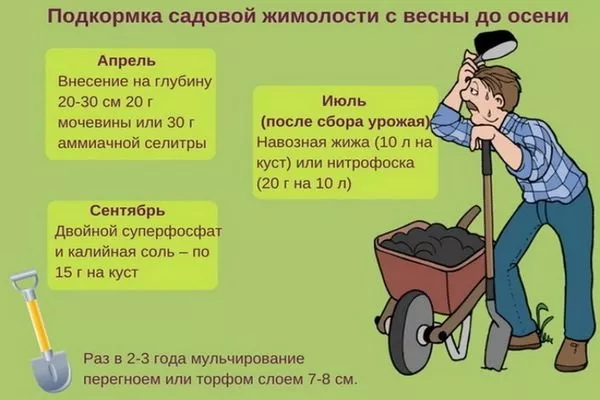
Fertilizers must be applied at specific times and in precise dosages. Overfeeding is much more harmful to plants than a nutrient deficiency.
Types and rates of fertilizers:
- Nitrogen fertilizers. Urea (carbamide) – 20-30 g per 10 liters of water, ammonium nitrate – 15-20 g per 10 liters of water. Use 4-5 liters of solution per bush. Or 20-30 g of granules per 1 square meter.
- Phosphorus fertilizersSuperphosphate - 50 g per 10 l of water, or 30 g of double superphosphate.
- Complex mineral fertilizersThe dosage for each composition is different; on average, 30–40 g of granules are added per 1 square meter.
- Well-rotted compost. Add 10 liters under each bush, lightly burying it in the soil.
- Wood ashIt is scattered around the tree trunks and worked into the soil. Apply 200-300 g of dry ash per bush. Alternatively, 3-4 liters of solution is prepared by diluting 200 g of ash in 10 liters of hot water and letting it steep for 24 hours.
Trimming
Honeysuckle is pruned in spring and fall to remove all dry, diseased, and damaged shoots, as well as those that are crowding the bush. After pruning, the plant crowns should be well ventilated and exposed to light.
Features of spring pruning:
- This is done before the sap begins to flow, usually in late March or early April. It's important for temperatures to be above freezing and for the threat of severe frost to pass.
- Young honeysuckle plants require little or no pruning during the first 2-3 years. Basic sanitation measures are sufficient, including removing any damaged, dry, broken, or frozen shoots.
- Bush shaping begins at 3-4 years of age. Several strong shoots growing in different directions are left, and any weak shoots or those growing inward are pruned at the base.
- Mature bushes are pruned to rejuvenate every two years. Sometimes this pruning is more radical, with the entire bush being cut back, leaving just 30-50 cm of shoots.
Pruning is performed with a sharp, disinfected tool. Cuts are made at an angle, targeting the outer bud, leaving no stubs. You can find more details on how to properly perform the procedure here. Here.
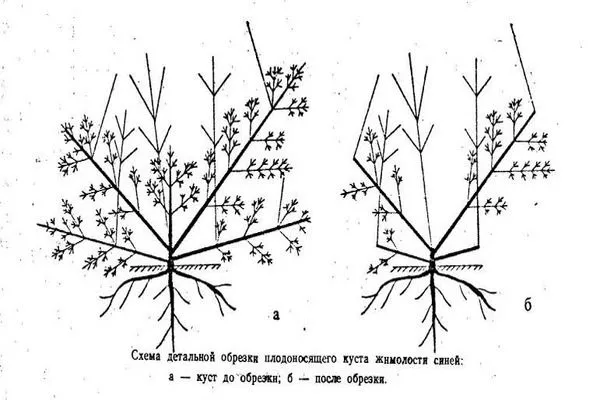
Features of autumn pruning:
- It is carried out after the first night frosts begin. During this period, the plants lose their leaves and vegetation slows down.
- For bushes over seven years old, remove lower branches if the crown is dense. Also remove branches that don't bear berries. Leave at least five strong skeletal branches.
Fighting diseases
Pushkinskaya honeysuckle, like other varieties of this plant, can be susceptible to various diseases under unfavorable growing conditions. In particular, the bushes are susceptible to powdery mildew, which can be controlled with fungicides such as Skor, Topaz, Horus, or similar products.
Among the diseases that can affect the Pushkinskaya variety is white spot, which can be controlled with a 1% copper sulfate solution. Honeysuckle can also be affected by sooty mold, which causes blackening of the leaves. To combat this disease, it is important to promptly collect and destroy blackened and affected foliage.
Pest control
Among pests, the most dangerous is the honeysuckle aphid, which can be controlled with a soap solution, garlic infusion, or wood ash. For severe infestations, insecticides (Aktara, Actellic) and biological products such as Fitoverm are used.
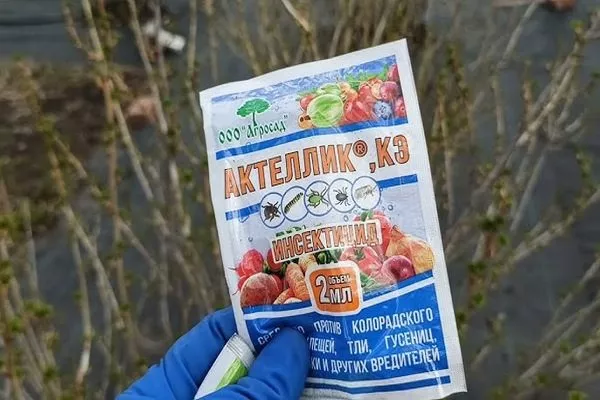
Honeysuckle can also be attacked by the honeysuckle mite, which can be controlled with special acaricidal preparations, such as Omite, Tedion, etc. Another enemy, the honeysuckle wing beetle, can be controlled with Inta-Vir, an infusion of tomato or potato tops.
Application in landscape design
Pushkinskaya honeysuckle can be used in various landscape design elements. It makes a good choice for dense hedges, group arrangements, and is also suitable for vertical gardening.
Features of using honeysuckle in landscape design:
- To form a dense green wall, bushes are planted at intervals of 0.5-1 m. The average annual growth is 3050 cm, allowing for the wall to be formed quickly.
- Honeysuckle hedges not only enclose a plot, but also serve as its decoration, maintaining their decorative appearance from spring until late autumn.
- Pushkinskaya honeysuckle pairs beautifully with various ornamental plants, such as physocarpus, dogwood, and myricaria. It's important to ensure that honeysuckle bushes aren't shaded by taller plants.
- Honeysuckle can be used to decorate alleys and paths, planting it along paths and flower beds. It is also suitable for decorating arches and pergolas, and can be tied to trellises to create green screens and partitions in a garden.
Harvesting and storage
Pushkinskaya honeysuckle is harvested from late June to early July. The ripening time of the berries depends on climate conditions. For example, in central Russia, harvesting occurs between June 10th and 20th, while in colder regions, it begins in late June.
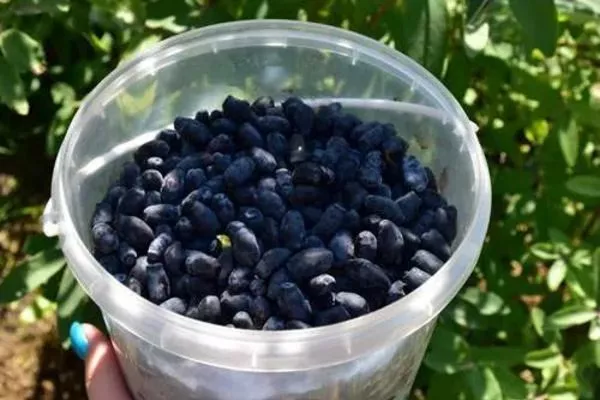
Ripe berries turn blue and soft, without green veins. They are easily removed from the branch. The berries are picked by hand, being careful not to crush them. It is recommended to pick them in several stages: first, the largest and ripest berries are picked, then the smaller ones, when they are completely ripe.
The berries have a poor shelf life—up to 3-4 days in the refrigerator or one day at room temperature. The skin is thin and delicate, easily damaged, and the pulp is rich in juice. Berries should be transported in cloth-lined containers, with a berry layer of up to 10 cm.
Reviews
The Pushkinskaya honeysuckle is a truly versatile variety that will solve your landscaping needs while providing you with delicious and healthy berries. This variety can be planted in summer cottages, garden plots, public gardens, and parks.