
Honeysuckle 'Pavlovskaya' is a classic example of honeysuckle in its appearance, but it also possesses numerous unique characteristics essential for successful cultivation. The variety also has another name, 'Viola,' given its unusual purple hue.
Characteristics and description
The term Pavlovskaya means nothing more than the name of the nursery where the breeding work was carried out.
Who developed the variety and when?
A team of scientists led by Maria Plekhanova worked on the breeding project. Specifically, Z. A. Koroleva and F. K. Teterev from the Pavlovskaya Experimental Station (VNIIR). The year the seedlings were submitted for testing was 1987. The variety was officially entered into the state register of our country in 2000.
Appearance of the plant
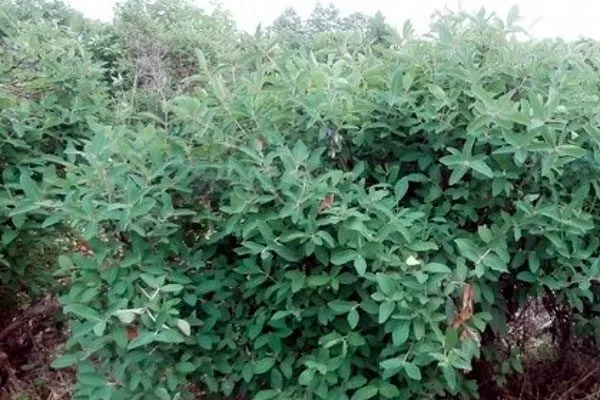
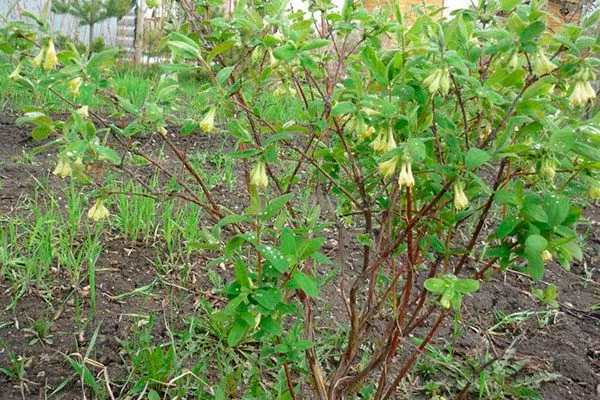
This variety is medium-sized, yet maintains a compact and neat appearance thanks to its spherical crown. Other characteristic features of the plant include:
- average height – 150 cm, maximum – 200-220 cm;
- crown diameter – 250-300 cm;
- shoots – powerful, thickened, erect and pubescent;
- color of stems – light green;
- leaves - oval-elongated, large in size, with rounding both at the base and at the end;
- leaf blade shade – initially light green, later green with yellowish tint;
- veins on the leaves – are clearly visible on the reverse side and have a bluish tint;
- flowers – They are distinguished by their irregular and paired shape (like a funnel), yellow or pink tone.
Berries and their taste qualities
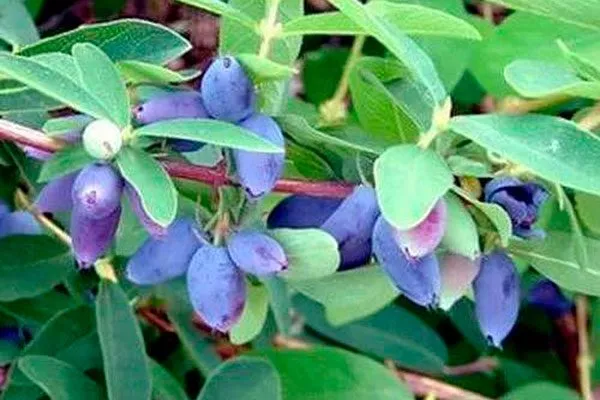
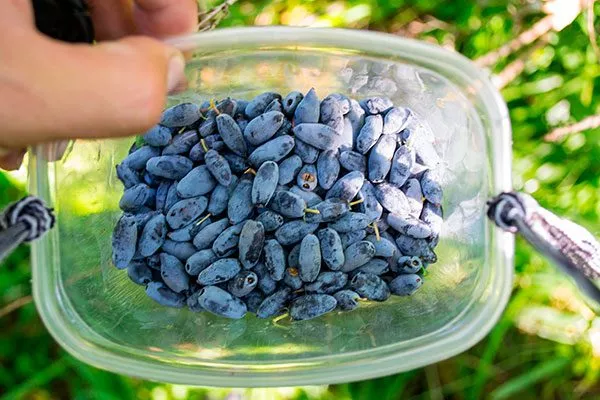
Pavlovskaya is the proud owner of large fruits, weighing up to 1-1.2 g. The berries can also be distinguished by other specific characteristics:
- form - oval-elongated;
- shade – dark blue with purple notes;
- density – average;
- surface – with a slight waxy coating, but quite smooth;
- pulp – fibrous type.
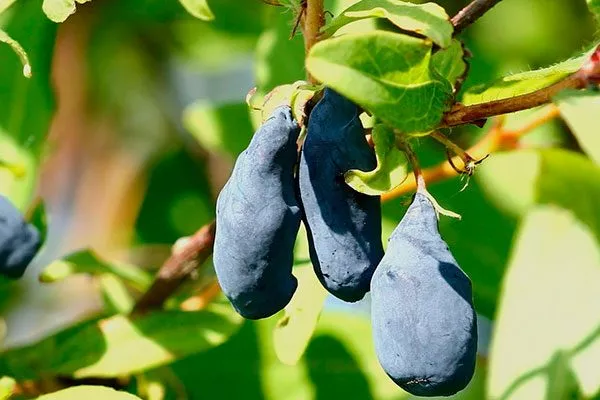
The aroma and flavor deserve special attention—the fruits smell of honeysuckle, but the intensity is weak. However, the flavor is pronounced, scoring 4.6 on a five-point scale. The base is sweet, harmoniously complemented by a slight acidity. The aftertaste is characterized by a slight bitterness.
Ripening period and yield
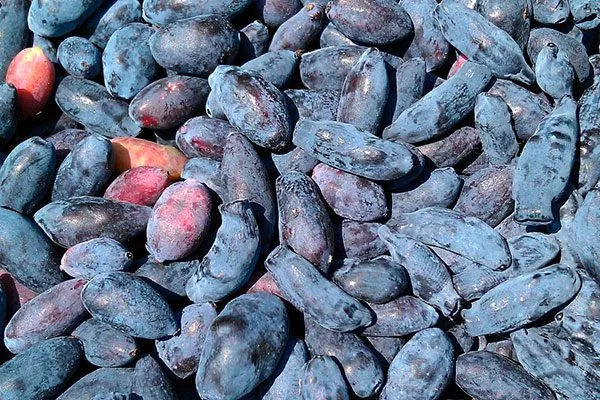
Viola is a mid-season variety. Flowering begins in early May, while the harvest begins after June 20th. Viola boasts high yields—2.3 centners of berries can be harvested per hectare. It also boasts impeccable commercial qualities and the ability to withstand long-distance transportation without loss of quality.
Pollinator varieties
To ensure good fruiting, Pavlovskaya honeysuckle requires nearby pollinators, as it is self-sterile. It is recommended to plant donor varieties such as Tomichka, Sinyaya Ptitsa, Vasyuganskaya, and Goluboy Vereten, but preferably within 10 meters of Viola.
Moisture and drought resistance, frost resistance
This honeysuckle has good moisture tolerance and drought tolerance. It is frost-hardy and can withstand temperatures down to -30 degrees Celsius, often requiring no winter cover, making it suitable for growing in northern regions. The flowers are resistant to spring frosts, not freezing during sudden cold snaps.
In regions with particularly harsh winters, it is recommended to protect honeysuckle bushes by wrapping them in non-woven materials. Honeysuckle prefers sunny areas and tolerates heat well. However, prolonged drought during the ripening period can cause the berries to become very bitter, so regular watering with settled or rainwater is essential.
Growing regions
The plant is successfully cultivated in temperate climates, particularly in northwestern Russia, and is suitable for growing in temperate latitudes. Pavlovskaya is also well known in Europe, Belarus, and Ukraine. It is recommended for cultivation in most regions, with the exception of extreme northern zones, deserts, and areas with excessive humidity.
The chemical composition and flavor of honeysuckle berries can vary depending on the climate of the growing area. For example, berries grown in temperate climates typically contain more sugar, acids, and vitamin C than berries grown in more extreme conditions, such as the Altai or Primorye regions.
Resistance to diseases and pests
High resistance to diseases and pests is one of the key advantages of the Pavlovskaya variety. Under adverse weather conditions or when the plant's immune system is weakened, the risk of infestation and attack by insect pests increases.
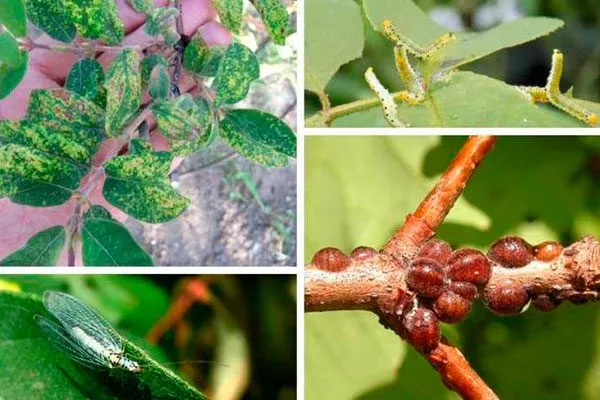
In cool, damp summers, this variety is often affected by powdery mildew. To combat this disease, spray the above-ground parts and the surrounding soil with fungicides such as Topaz, Skor, or Horus.
Sometimes bushes can become victims of pests:
- Aphid. It actively feeds on the sap of young shoots and forms colonies at the tips of branches. For prevention, you can treat them with bitter infusions of wormwood, garlic, or pepper, or spray the plants with insecticides, such as Iskra (also used during an infestation).
- Red spider mite. When it appears, a web-like texture is visible on the underside of the leaves, and the leaf blades become covered with small yellowish-brown spots. In such cases, spray the bushes with a solution of laundry soap or use insecticides such as Actofit, Envidor, or Coragen.
Scope of application
Honeysuckle berries are valued for their nutritional qualities and are widely used in cooking:
- can be consumed fresh;
- they are used to make juices, jams, compotes and pie fillings;
- They are used as a basis for producing grape wine;
- Berries are easy to freeze for long-term storage.
Viola is also used in folk medicine. Fresh berries are used to prepare alcohol tinctures for the treatment of:
- hypertension;
- ulcerative diseases of the stomach and duodenum;
- diseases of the kidneys and genitourinary system.
Advantages and disadvantages of the variety
Growing technology
Shrubs should be planted in well-drained soil at least 1 meter from the groundwater table to avoid waterlogging, which can lead to root rot and plant death.
- ✓ Soil pH should be between 5.5-7.0 for optimal growth.
- ✓ The soil should be rich in organic matter and well aerated.
Optimal conditions
To ensure the shrub develops and grows vigorously, it needs to be planted in a sunny location. The plant should receive sufficient natural light throughout the day. It is recommended to choose a slightly elevated site to avoid the problem of excessive waterlogging associated with high groundwater levels.
Planting times and rules
The optimal time for planting depends on the condition of the seedling’s root system:
- With open CS It is recommended to plant in early April or in September.
- Seedlings with closed KS (usually sold in containers) can be planted throughout the warm season. However, keep in mind that this should not be done during extremely hot days.
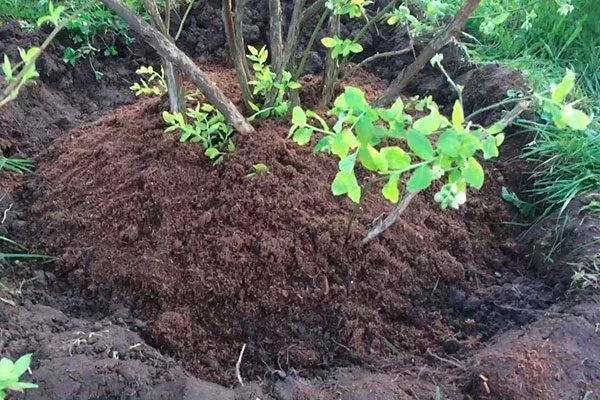
Step-by-step planting instructions:
- Dig a planting hole that is 5-7 cm larger than the root system of the seedling.
- Place a drainage layer of expanded clay, broken bricks or thick branches at the bottom of the hole.
- Add organic fertilizer to the hole: well-rotted manure, compost, or ash (4-6 kg is enough for one seedling). This will prevent the need for fertilizing for the next three years. Using fresh manure is not recommended, as it can burn the roots.
- Water the hole generously with water (15-20 l).
- Place the seedling in the hole, carefully spread the roots, cover with soil, and compact the soil around the trunk. The root collar should be placed no deeper than 2.5-3 cm.
- Water the planted plant thoroughly again.
Further care
Pavlovskaya honeysuckle prefers moist soil but does not tolerate overwatering, which can promote fungal diseases and mold. Therefore, regularly loosen the soil to a depth of 3.5-4.5 cm or use mulch to retain moisture and reduce the frequency of watering.
Please note the important points when growing this variety:
- To avoid problems related to water quality (for example, its hardness, which is unacceptable for Viola), it is recommended to use settled liquid that has been in a wide container for about 5-6 hours, or use melted or rainwater.
- Pavlovskaya honeysuckle doesn't require frequent fertilizing, but fertilizer increases yield. Therefore, use the standard honeysuckle fertilization regimen.
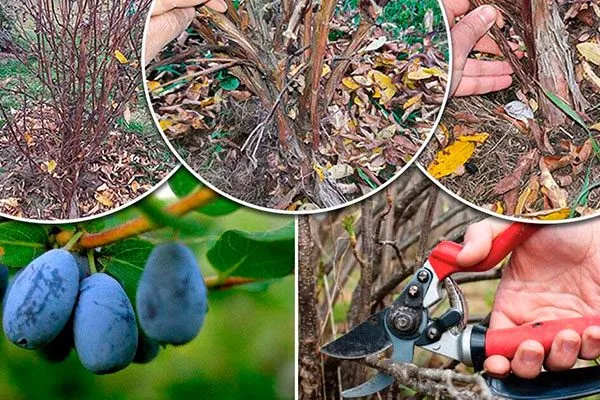
- Pruning is important during the first eight years of a bush's life and involves removing damaged and dried branches. After the eighth year, regular pruning can be reduced to periodic crown thinning and removal of old, woody shoots for gentle rejuvenation.
- When a honeysuckle bush reaches 20 years of age, a radical rejuvenating pruning is performed: the main skeletal branches are removed. Within a year of this procedure, Pavlovskaya can resume fruiting for the next 7-10 years.
To maintain optimal soil moisture levels in the root zone and control weeds, it is advisable to periodically loosen and mulch the soil around the bushes using dry grass or tree bark.
- ✓ Resistance to spring frosts down to -7°C without damage to flowers.
- ✓ Self-pollination ability to a limited extent, but pollinators are required for maximum yield.
Wintering
In mild southern climates, the frost-hardy Pavlovskaya honeysuckle does not require winter protection. In regions with harsher winters, this should be done using standard methods. To prevent damage by rodents and birds, the bush's shoots are carefully tied with wire and then wrapped in fine-mesh netting and insulating material.
Reproduction
The Pavlovskaya variety is propagated by several methods:
- Cuttings: In the spring, before the buds swell, cuttings are taken from an adult plant and placed in nutritious soil or wet sand for rooting.
- Seeds: The ripe berries are thoroughly crushed and spread on a paper towel, then sown at a depth of 4-5 mm in fertile soil. After germination and the formation of three leaves, the young plant is planted outdoors.
- Layers: The side branch is bent to the ground, secured, and covered with soil. This shoot will take root within a season, after which it is separated and transplanted to a new location.
Gardeners' reviews
Thanks to its unique characteristics, the Pavlovskaya honeysuckle variety has gained many fans among gardeners. It is highly prized for its sweet fruits and abundant harvests, especially with the right pollinators. Easy to grow and maintain, it is ideal for cultivation in central Russia.