
The Nymph variety is recognized as the best edible honeysuckle to date. It boasts excellent technical characteristics and superb fruit flavor. Let's learn how to plant and grow this new variety in your garden.
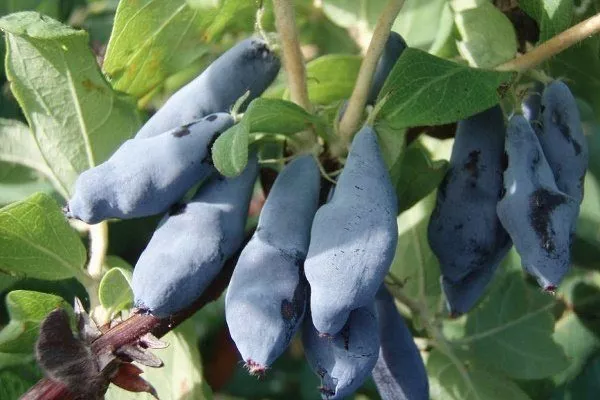
Honeysuckle variety 'Nymph'
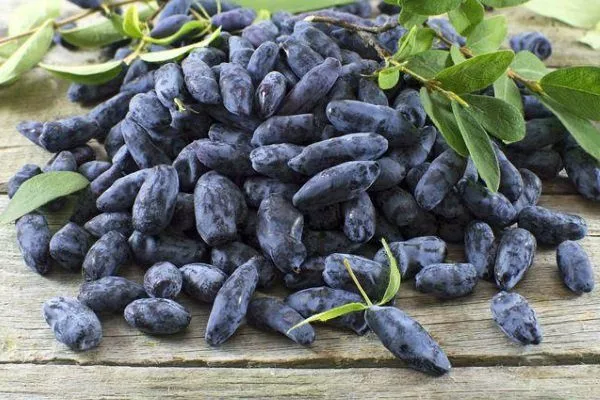
The slight bitterness of the honeysuckle berries "Nymph" does not spoil the taste at all
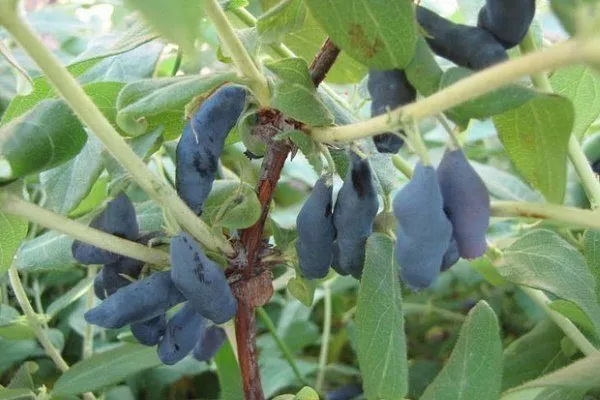
The Nymph variety is an unpretentious plant that remains productive for many years.
History of the discovery of the variety
This variety was obtained by open pollination of the Leningradsky Velikan honeysuckle. It was developed at the Vavilov Pavlovsk Experimental Station in 1992. It was added to the State Register in 1998. Nymph can be grown in all regions of Russia.
Description of the Nymph bush and berries
Brief botanical description of honeysuckle Nymph:
- Bushes. Tall, gently spreading. Branches are thick and straight. One-year-old shoots are light green and covered with hairs.
- Leaves. Large, elongated-oval, dark green with slight pubescence. Bush height: up to 2.5 m.
- Flowers. Large, bell-shaped, pale colored.
- Fruit. Weight: 0.8-1.1 g. Shape: elongated spindle-shaped, surface: bumpy. Skin: moderately thick. Color: bluish-blue. Taste: sweet, with a piquant bitterness. The flesh has a pleasant aroma. This variety received a high tasting score of 4.7 out of 5.
Main characteristics
Nymph is a new variety from Pavlovo, possessing all the best characteristics of honeysuckle. Let's take a closer look at Nymph's qualities and discover why gardeners value it.
Regionalism
Nymph is suitable for regions with harsh winters and short, cool summers. It is not suitable for areas with high summer temperatures. It is suitable for cultivation in temperate climates.
When does it ripen?
Fruit ripening time depends on the growing region. In temperate climates, the fruit ripens in June. The variety is considered mid-early. However, in practice, ripening can take up to a month.
Productivity and fruiting
The yield is moderate, with up to 2 kg of fruit harvested per bush. The average yield is 1.3 kg per bush. In commercial cultivation, 35-38 centners of berries are obtained per hectare. Fruiting begins in the 3rd-4th year after planting. The plant bears fruit for 20-25 years. With timely rejuvenation, the plants can remain productive for up to 40 years.
The need for pollination
Nymph is a self-sterile variety. To ensure a harvest, plant other honeysuckle varieties nearby. Honeysuckle varieties that bloom at the same time as Nymph are suitable—for example, 'Amphora,' 'Izbrannitsa,' or 'Pavlovskaya.'
Advantages and disadvantages
Advantages of the Nymph variety:
- Delicious fruits. The dessert-like flavor is the main advantage of the Nymph honeysuckle.
- High frost resistance. The plant can survive in the most extreme conditions. It does not require winter shelter.
- Stable yield. Bears fruit annually and abundantly.
- No replanting required. Fruit characteristics are retained throughout the growing season.
- High disease resistance. No need for chemical treatments—the fruits are organic. The crop is virtually disease-free and virtually immune to aphids.
Flaws:
- Some fruits fall off after ripening. This variety's tendency to fall off is considered average.
- Self-sterility. Requires planting pollinator varieties.
- Excessive crown density means that it must be thinned regularly, otherwise the yield will decrease.
Watch the video to learn about the advantages and disadvantages of honeysuckle 'Nymph':
Landing features
Honeysuckle is renowned for its resilience and undemanding nature, but the gardener's goal is to get the most out of each crop. The plant's vigor and productivity largely depend on proper planting.
Choosing a location
The only requirement for honeysuckle growth and fruiting is good light. It requires a well-lit and sunny location. Insufficient light negatively impacts the flavor and quantity of the berries.
Other aspects of growth pose no problem for honeysuckle—it tolerates cold winds and grows in virtually any soil. However, this plant thrives best in loamy soils.
- ✓ The optimal soil pH for honeysuckle should be between 6.0 and 6.5. For more acidic soils, add lime or dolomite flour.
- ✓ Groundwater should be no closer than 1.5 meters to the soil surface to prevent root rot.
Unacceptable conditions for honeysuckle:
- acidic soils – here the bush is slowly dying;
- lowlands with a high groundwater level – high humidity causes root rot.
Landing dates
Honeysuckle is very frost-hardy and poses no threat when planted in the fall—the seedlings survive the winter without issue, bursting into vigorous growth in the spring. In the fall, planting occurs between August and late October. The exact timing depends on the onset of frost in the region. This should be about a month to a month and a half away.
Spring planting is done early—in the first half of March, provided the snow has melted. In spring, seedlings are transplanted—the seedling is moved with a lump of soil into a prepared hole.
Selection of seedlings
Tips for choosing planting material:
- Buy seedlings at garden centers and nurseries – here you can buy varietal honeysuckle.
- Choose varieties that are zoned for your area – then you won’t have problems growing the crop.
- Give preference to seedlings in containers—those with closed roots. They take root more easily and quickly.
- Please pay attention to the external characteristics of the seedlings:
- branches must be flexible;
- roots - developed, without defects and rot.
Peeling bark is normal for honeysuckle. If the bark on a seedling is peeling and all other signs are positive, the seedling is healthy.
Landing rules
Start preparing the site a couple of weeks before planting:
- Dig the soil. Remove weed roots as you dig.
- Dig a cubic-shaped hole. The sides of the cube are 40 cm.
- Fill the hole with a solid material—pebbles, crushed rock, or other hard material. This will serve as a drainage layer.
- Add a nutrient-rich soil mixture over the drainage layer. Prepare it from the fertile soil layer mixed with humus (20 l), superphosphate (60 g), and ash (500 g). You can replace the ash with an equal amount of chalk.
After 2-3 weeks, the soil will settle and you can begin planting. Here's how to plant honeysuckle:
- An hour before planting in the ground, place the roots of the seedlings in a Kornevin solution.
- Spreading the roots, place the seedling in the hole. If the roots are in a container, place them with the root ball.
- Cover the roots with soil. Shake the plant periodically while you cover the roots with soil. This will eliminate any air pockets between the roots. Firmly tamp the soil down and form a hole.
- Pour 10 liters of water under the root.
- Once the water has been absorbed, sprinkle the soil around the trunk with hay, peat, humus or other mulch.
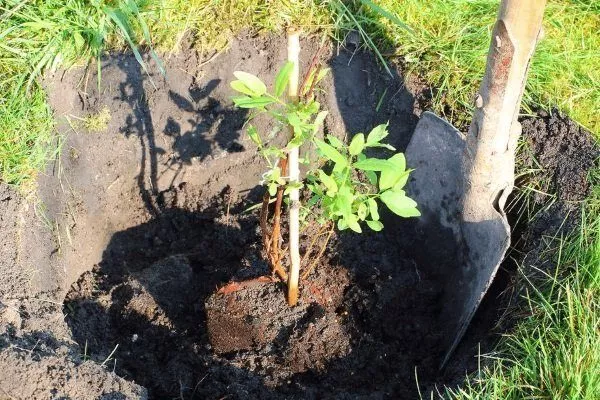
Features of planting honeysuckle:
- The root collar of honeysuckle, unlike other fruit crops, is buried in the soil to a depth of 5 cm.
- It is not recommended to prune edible honeysuckle immediately after planting, as pruning delays fruiting.
- The distance between adjacent bushes is 1.5-2.5 m.
Nymph Care Methods
Honeysuckle is easy to care for. Because it's a low-maintenance plant, it requires minimal time and effort.
You can get information on caring for honeysuckle in the autumn here.
Watering and loosening
At first, seedlings are watered weekly—1-2 buckets per bush. Then, the plant is watered about five times per season. Honeysuckle thrives in moisture, but does not tolerate excess water. Mature bushes are watered only during prolonged droughts. They especially need moisture during flowering and fruiting.
A lack of water negatively affects the taste of the fruit – they begin to taste bitter.
After rain and watering, the soil is loosened. The plant's roots are located close to the surface. The soil is loosened to a depth of up to 8 cm. Mulch reduces the need for watering and loosening, preventing weed growth.
Top dressing
Honeysuckle isn't fertilized for the first two years. Then, every three years, mineral fertilizers are added.
Timing of fertilizing:
| Period of contribution | Fertilizers per 1 sq. m |
| Early spring | Ammonium nitrate – 15 g, or urea solution – 1 tbsp per 10 liters of water. |
| Bloom | Add a solution of wood ash - 1 kg per 10 l. |
| Autumn | Add 100 g of wood ash and 5 kg of compost. It's also helpful to add 2 tablespoons of superphosphate. |
Trimming
Sanitary pruning is performed in spring or fall. In the fall, excess shoots that thicken the crown are removed, while dry and damaged branches are removed in the spring. Pruning begins as the crown thickens, 3-4 years after planting. Pruning allows sunlight to reach the shoots, and the plant produces more fruit.
Wintering
The nymph tolerates extreme temperatures well. To help the plant survive the harsh winter as safely as possible, before winter, add a mixture of compost (5 kg), ash (100 g), and superphosphate (40 g) to each trunk circle.
If the plant is weakened and the frosts are severe, the tops of the honeysuckle branches may freeze.
Preventive measures
To protect the plant from diseases, preventative spraying with Bordeaux mixture is done before and after flowering. If the shrub is attacked by aphids, mites, or other pests, insecticides are used. However, these should not be used during fruit ripening, otherwise the toxins will accumulate in the fruit.
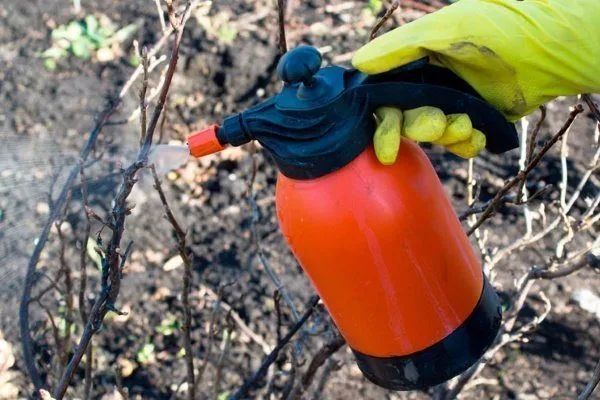
Common honeysuckle diseases and their treatment:
| Disease | Symptoms | Prevention | Treatment |
| Sooty mold | A dark coating appears on the leaves. If the infestation is severe, the plant weakens. | Remove fallen leaves. | Two treatments with 1% Bordeaux mixture before flowering. Interval between treatments is one week. Alternatively, treat with 1% Fundazol or Tsineboy (8 g per 10 L). |
| Powdery mildew | The leaves have a white coating and are drying out. The plant's winter hardiness is declining. | Avoid dense plantings and waterlogged soil. | Spraying with Topsin-M 1%, Fundazol 0.2%. |
| Tuberculosis | Red-brown seals containing fungal spores appear on the shoots. | Prune regularly. Destroy damaged shoots. | At the beginning of the growing season, spray with 1% Bordeaux mixture. |
Reproduction options
Propagating the plant by cuttings and division saves money on planting material. Seed propagation is less popular due to the long wait for results.
Seeds
Honeysuckle produces small seeds that can be used for propagation. Disadvantages of this method:
- A plant grown from seeds bears fruit in 5-6 years.
- Varietal qualities, including the taste of the fruit, may be lost.
Propagation by seeds is suitable for honeysuckle planted for ornamental purposes.
Reproduction order:
- At the beginning of spring, deepen the seeds into the substrate by 1 mm.
- Cover the crops with glass or film.
- After three weeks, when the shoots appear and two true leaves grow, transplant the seedlings into individual containers.
- In autumn, plant the shoots in open ground.
Dividing the bush
This method is suitable for those with mature honeysuckle bushes. Ideally, they should be 5-7 years old. Very old bushes are not suitable for propagation. Woody bushes are dug up and divided into sections using a hacksaw or axe. Each planted bush should have two skeletal branches with a good root system. The roots should be 20-30 cm long.
Cuttings
This is the simplest method of honeysuckle propagation. Cuttings are taken in the fall.
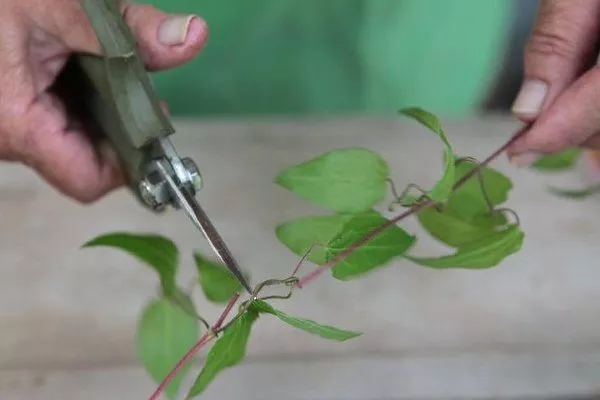
Instructions for propagation by cuttings:
- Cut cuttings from one-year-old plants. Each cutting is 15 cm long.
- Store the cuttings in a cool, dark place until spring.
- At the end of March, move the cuttings to the greenhouse. Bury them, leaving one bud exposed.
- When the cuttings take root – in about a month – transplant them to a permanent location.
Honeysuckle can also be propagated by green cuttings. This method is used in early summer. The shoots are cut into 12-cm-long sections, planted in containers with a nutrient mixture, covered with plastic, and watered and ventilated regularly. Within a month, the cuttings will root. They are transplanted to their permanent location the following fall.
Harvesting
A two-year-old seedling produces its first fruits a year after planting. In temperate climates, honeysuckle ripens by early June—earlier than raspberries or strawberries.
Nymph's fruits ripen unevenly, and the entire harvest will be ready later, by mid-June. The berries can be stored in the freezer and dried, used in cooking, or prepared for winter.
Problems you may encounter
Problems that may arise when growing the Nymph variety:
- The main problem when growing Nymph honeysuckle is infestation by aphids and other insects. Spraying with insecticides and biological products, such as Fitoverm, Iskra-bio, and others, can help solve this problem.
- During rainy summers, as well as with overhead watering, the crop can be affected by powdery mildew. The solution is spraying with fungicides. If the disease strikes after fruit formation, folk remedies are used.
- Honeysuckle Nymph does not tolerate hot, dry summers well. If drought occurs, the problem is solved by abundant watering and mulching.
Reviews of honeysuckle Nymph
If you're looking for honeysuckle that offers not only decorative qualities but also delicious, bitter-free fruit, choose 'Nymph.' This variety, like the plant as a whole, is unpretentious, hardy, and easy to propagate—even a novice can handle its cultivation.