
Honeysuckle Morena is perfect for cold climates. Gardeners in northern regions enjoy planting it for its sweet berries, which are rarely found in other varieties and species. The plant requires little care and is resistant to insects and diseases. However, to ensure a good harvest, it's important to know a few growing tips.
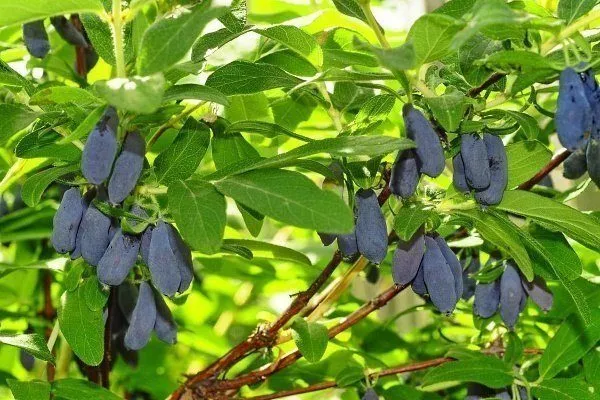
Honeysuckle variety 'Morena'
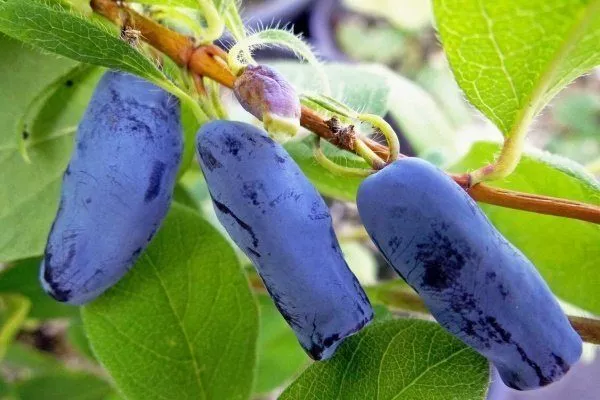
The fruits of the honeysuckle "Morena" are very large, at least 3 cm in length, with a dessert taste without bitterness
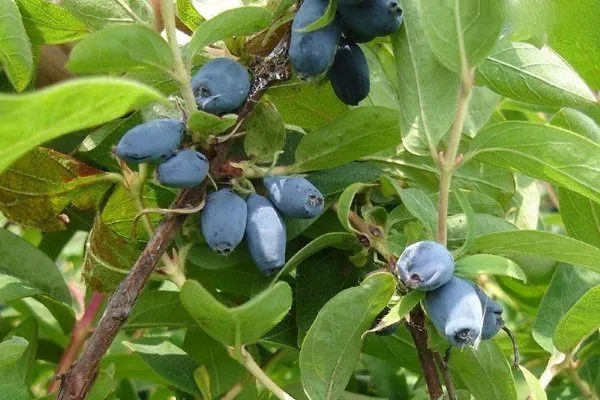
The berries of the honeysuckle "Morena" hang on the bush for a long time without falling off.
Origin of the variety
The honeysuckle variety Morena was developed at the Vavilov Research Center in St. Petersburg. Since 1995, the plant has been included in the State Register. Since the variety was developed from a Kamchatka variety, Morena can be grown anywhere, including in northern regions.
Description of honeysuckle
Morena honeysuckle is an edible berry that grows on bushes.
Main characteristics of the variety:
| Bush height, cm | Frost resistance, °C | Ripening time | Yield, c/ha | Fruiting period, years | Tasting score, points |
| 165-170 | 35-40 | mid-early | 50-55 | 20-25 | 4.5 |
Description of the plant:
- Bushes. They are quite large in size, reaching 170 cm in height and width. The crown is oval and dense. The branches are sinuous, thin, flexible, and gray-green in color.
- Leaves. They have wide blades, slightly curved in the middle. The leaves are bright green.
- Berries. Large, oblong, pitcher-shaped, blue, and covered in a thick waxy coating, they appear blue. Each berry weighs 1-2 grams, reaches 1.5 centimeters in diameter, and is up to 3 cm long. The taste is sweet and sour, with no bitterness. The flesh is tender and delicately flavored.
Ripening time
In terms of ripening time, Morena Honeysuckle is considered a mid-early variety. The bush will bear its first fruits in mid-June in northern regions or early in the month in warmer climates.
The ripening of fruits depends not so much on spring frosts, flowers can withstand frost down to -6-7 °C, but on the lack of sunlight.
Productivity and fruiting
Morena bushes are considered ornamental. Their yield is considered modest: a single bush yields 1.5 to 2.5 kg of ripe berries. Ripe fruits can be stored on the branches for a long time without losing their marketable appearance.
Planted bushes begin to bear fruit within two years. The berries ripen every year.
The video below provides an overview of the honeysuckle 'Morena':
The need for pollinators
| Name | Pollinator type | Flowering time | Compatibility with Morena |
|---|---|---|---|
| Kamchatka Moraine | self-sterile | matches | high |
| Viola | self-sterile | matches | high |
| Amphora | self-sterile | matches | high |
| Blue Spindle | self-sterile | matches | high |
| Blue Bird | self-sterile | matches | high |
| Malvina | self-sterile | matches | high |
| Nymph | self-sterile | matches | high |
The variety is self-sterile. This means that for successful pollination, pollinator crops must be planted nearby, such as:
- Kamchatka moraine;
- Viola;
- Amphora;
- Blue Spindle;
- Blue Bird;
- Malvina;
- Nymph.
The main requirement for pollinating crops is the coincidence of flowering times.
There can be 2 planting schemes:
- In groups. When several pollinator plants are planted upwind of several Morena honeysuckle plants.
- Alternation. Pollinator plants are planted between Morena bushes, alternating them.
Advantages and disadvantages
The advantages of Morena honeysuckle include:
- versatility;
- the possibility of widespread growth throughout the territory of the Russian Federation;
- easy to care for;
- frost resistance;
- early ripening;
- ease of harvesting;
- low fruit shedding;
- stable and weather-independent yield indicator;
- excellent taste;
- increased content of nutrients;
- high decorative value of the plant;
- resistance to pests and diseases.
But there are also disadvantages, such as:
- low yields;
- fruits are not large in size;
- inability to pollinate.
How to plant Morena correctly?
To ensure that honeysuckle takes root well in its new location, follow the recommendations below.
Honeysuckle Morena tolerates transplantation well at any age.
Selecting planting material
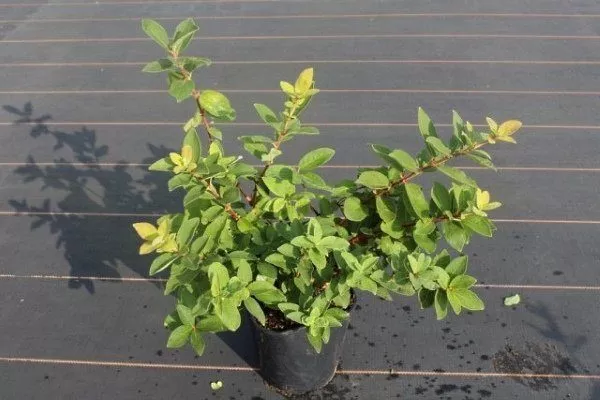
When selecting seedlings, check them according to the following plant health assessment criteria:
- the shoots must be elastic;
- branches may be curved;
- the internodes should be equal;
- peeling bark is considered normal;
- the root system should not show any signs of damage;
- shoots should not be shortened.
If you're purchasing potted seedlings, check their root system. To do this, ask the seller to remove the plant from the pot:
- the roots should moderately entwine the root ball;
- there should be no signs of mold or rot;
- The plant should emit a fresh and pleasant scent.
Choosing a location
When choosing a place where the bushes will grow, pay attention to:
- Territory. Choose a sunny side; in the shade, honeysuckle will also bear fruit, but the yield will be reduced.
Plant the plant on a flat surface, avoiding hollows and depressions where water will stagnate. - Priming. Although honeysuckle isn't fussy about soil composition, it's best to plant it in loose, slightly acidic soil. If this isn't possible, be prepared for reduced yields on sandy soils. Acidic soils will need to be deacidified. To do this, add dolomite flour or ground limestone to the planting hole.
- ✓ Soil pH should be between 6.0-6.5 for optimal nutrient absorption.
- ✓ The soil must have good drainage capacity to avoid water stagnation at the roots.
Bedding
The best time for planting is considered to be the last week of September. Morena is planted in the fall. This way, by the time spring arrives, it will have time to root and bud in time.
Step-by-step description of planting:
- Divide the area into rows at a distance of 2-3 m from each other.
- In the rows, mark a place for each bush at a distance of 1.5-2 m between them.
- Dig a planting hole with a diameter of 40-45 cm for each bush.
- Pour water into the hole and wait until it is absorbed into the soil.
- Pour about 10 liters of compost or manure into the hole; you can add superphosphate and potassium sulfate according to the instructions.
- Mix the fertilizer with the soil, forming a small mound of it inside the hole.
- Place the honeysuckle seedling in the hole and spread its root system over the surface of the mound.
- Carefully sprinkle with soil, deepen the root collar by 3-5 cm.
- Compact the soil into the hole without using excessive force.
- Water the planted seedling with 10 liters of water.
- Sprinkle dry soil on top.
- Mulch planting site, this helps to retain liquid within the soil.
Do not shorten branches before planting - this will negatively affect survival.
Care
Even the most inexperienced gardener can manage Morena honeysuckle. To ensure a harvest, all you need to do is ensure watering, prune, and fertilize regularly.
Plant care will vary depending on its age.
Young plant
Basic components of care:
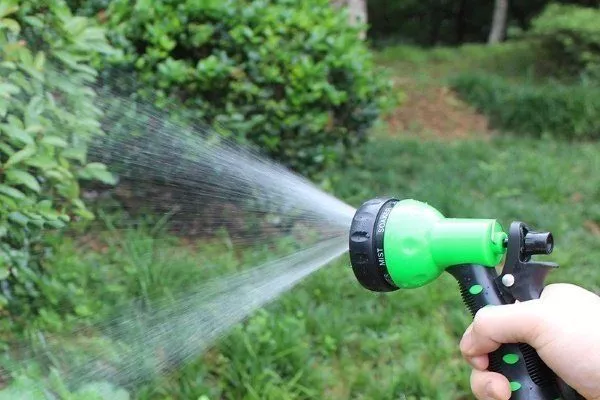
- Watering. Keep the soil moist after planting. Don't allow the planting area to dry out, as this can lead to disease.
- Loosening and weeding. After watering, loosen the soil to provide oxygen to the roots.
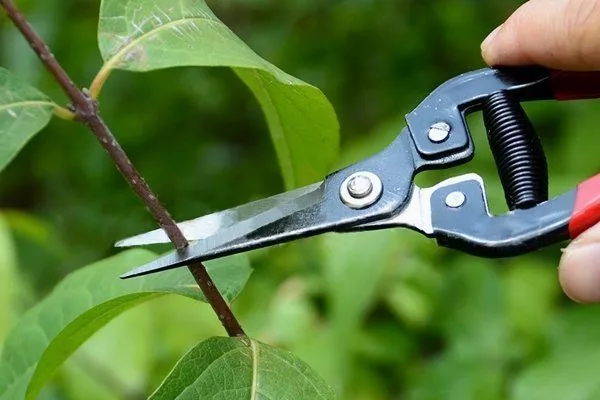
During loosening and as needed, remove weeds, taking them out along with the root system. - Trimming. Honeysuckle isn't a fast-growing, branchy shrub, but it begins to grow immediately after the snow melts. Therefore, avoid pruning it for the first four years, as shortening the previous year's shoots will cut off the developing ovary, significantly reducing the yield.
- Top dressing. If phosphorus and potassium fertilizers were added during planting, then the honeysuckle does not need autumn and summer fertilizing for the next 2 years.
In spring, apply a solution of ammonium nitrate or urea under each bush. Water while the snow is still on the ground.
Mature plant
Caring for an adult plant includes the following activities:
- Watering. Produce during periods of drought.
- Loosening and weeding. Can be done together with watering and as needed.
- Top dressing. This is necessary on a regular basis starting at age 3. It consists of 4 fertilizer applications:
- At the beginning of the growing season. As soon as the snow melts, or even before that, scatter nitrogen fertilizer in the root zone to ensure good development of shoots, flowers and leaves.
- After harvesting. Apply nitrogen, phosphorus, and potassium fertilizer to replace the nutrients lost during fruit formation and ripening.
- Before wintering (late summer-early autumn)Apply phosphorus and potassium fertilizers to establish next year's harvest. You can use a mixture of 1-2 cups of ash and a few tablespoons of superphosphate.
- Once every 3 years or every year on poor soils. During the flowering period, add another fertilizer. Add a bucket of humus or compost under each bush. You can also use slurry made by diluting bird droppings with water at a ratio of 1:7. Let the solution sit for 2 days. Before watering, dilute with water 1:10.
- Trimming. It is carried out depending on the age of the plant.
- In the period from 5 to 15 years of growth. Prune only dry, broken, diseased and inward-growing branches.
- In the period from 15 to 20 years of growth. Every year, cut out some of the oldest branches and replace them with new ones.
- After 20 years of growth. This period can be identified by a decrease in yield. Remove all branches, leaving stumps 15-20 cm high. This method helps the plant quickly rejuvenate and bear fruit for another 5-10 years.
- Preparing for winter. Honeysuckle Morena does not require any special preparation for winter or additional shelter.
- At the beginning of the growing season, apply nitrogen fertilizers at a rate of 30 g per bush.
- After harvesting, apply a complex fertilizer NPK 10:10:10.
- In the fall, apply phosphorus-potassium fertilizers to prepare for winter.
We recommend reading the article about How to care for honeysuckle in autumn.
Diseases
In years of damp and cold summers, Morena honeysuckle can be affected by fungal diseases such as:
- Powdery mildew. Whitish spots appear on plants. Over time, droplets of liquid appear on them. A wide range of products are used: Zato, Rayok, Tilt, Topsin, Fundazim, Bayleton, Quadris, Skor, Topaz, Thiovit Jet, and Fundazol.
- Plant rust. Pustules of varying shapes, each colored like rust, form on the leaves. When they break, a powder of the same color is released. Treatment is with Abiga-Peak, Kumulus, Poliram, Strobi, and other sulfur-containing products.
Treatment is carried out only after the appearance of ovaries or after harvesting.
Since the diseases are rare, no preventive measures are taken to prevent them.
Pests
Old plants are quite resistant to pest attacks, but young shoots can be affected by:
- Aphids. The symptoms are manifested by curled, dry leaves that eventually fall off. The bush turns brown, and the insects are visible to the naked eye. If the pest is detected, treat the plant with Actellic or Confidor.
- Leaf roller butterfly. Its caterpillars, which suck the plant's sap, pose a danger. Curled leaves covered in webbing appear on the bush. Over time, the plant turns yellow and dries up. Dimilin and Fitoverm are effective in controlling this pest.
- Willow scale insect. A very rare, but still occurring, infection of plants under the bark. Comma-shaped bumps appear on the surface of branches. Fitoverm can help combat this.
- Spider mite. Initially, the pest infests the underside of the leaf, causing small white spots to appear on the upper surface. Over time, it migrates to the upper surface of the leaf, and the plant becomes covered in a web. You can control the pest with a solution of laundry soap. If the infestation is extensive, it's best to treat the bush with insecticides such as Vertimek, Fitoverm, or Actofit.
Treatment is carried out only if parasites are visually detected. The plant is sprayed 2-3 times at intervals of 10-14 days.
During the ripening period of the crop, only folk remedies or biological preparations are used.
Methods of reproduction
The best methods for propagating honeysuckle are:
- Dividing bushes. The soil is dug up in the area where young shoots have formed. From the peripheral portion of the root system, young roots are separated, along with shoots from the central root, creating a young bush.
- By layering. The branch is covered with soil, leaving only the tip exposed. After the root system has formed at the base of the branch, it is carefully separated from the main bush.
Propagation from seeds and cuttings does not produce positive results, as germinated seeds do not retain varietal characteristics, and cuttings do not take root well.
Collection, storage and processing
The harvest is collected in 2-3 stages every other day, depending on the ripening of the berries.
Fresh fruits are very healthy to eat without any additional processing – Morena contains many useful substances: pectin, tannins, organic substances and acids, magnesium, iron, copper and many other substances.
Since it can't be stored for long—only 2-3 days in the refrigerator—it's processed:
- Grind with sugar. Can be stored in the refrigerator all winter.
- They are preparing fruit drink. Can be stored in a cool place for several months.
- They are making jam. The delicacy has a bright taste.
- They dry it. Afterwards, you can add the berries to tea or compote.
- They freeze. Morena does not flow or change shape after defrosting.
Gardeners' reviews of Morena honeysuckle
The Morena honeysuckle variety is an early-blooming variety that tolerates winter well and was bred specifically for northern climates. The plant doesn't require any special growing conditions and is resistant to diseases and pests. Furthermore, this attractive, ornamental bush will be a true highlight in any garden.