
Lebedushka is one of the very first edible honeysuckle varieties bred by breeders. Despite its low yield, this variety is popular among gardeners. Let's find out why Lebedushka is so prized, how to plant it, and how to grow it in your garden.
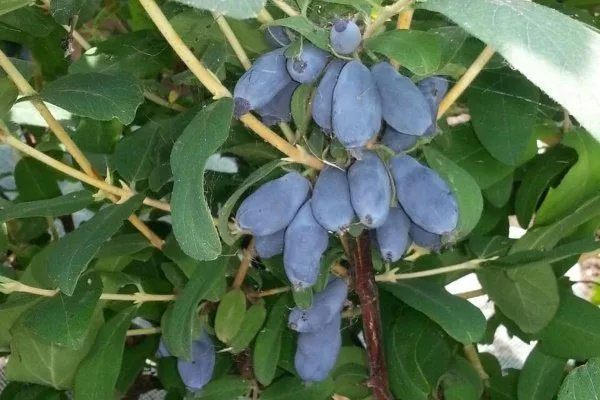
honeysuckle variety "Swan"
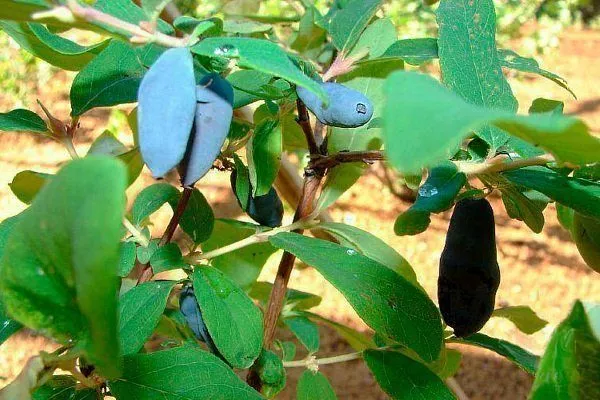
Honeysuckle berries "Lebedushka" are aromatic and refreshing, with a pleasant sweet taste
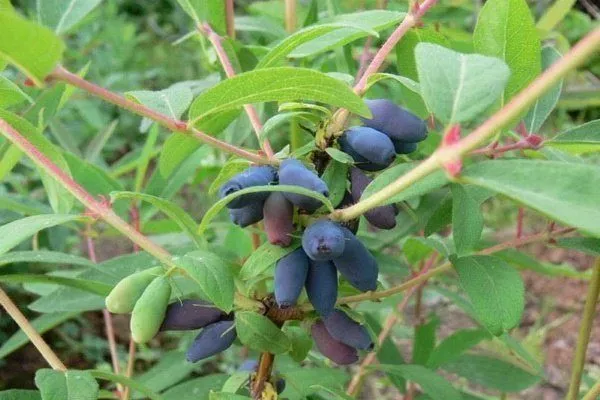
The fruits of the honeysuckle "Swan" have a dense skin, thanks to which they can be stored and transported without loss
Briefly about the origin of the variety
The cultivar's creators are breeders from the Vavilov Institute of Genetic Resources (St. Petersburg). "Lebedushka" belongs to the Kamchatka honeysuckle line. It was developed using the Pavlovskaya honeysuckle and seedlings of form No. 21-1. The cultivar was added to the State Register in 1999.
Botanical characteristics of the honeysuckle Lebedushka
The Lebedushka variety is the bearer of all the main botanical characteristics characteristic of honeysuckle.
Appearance of the bush
The Lebedushka bushes are medium-sized, moderately spreading, and loose. Growth is slow for the first 2-3 years, then accelerates. The maximum height of the bush is 2 m. The crown is rounded, the branches are straight and strong. The leaves are pointed, slightly convex, and rich green. The flowers are small and appear in early May.
Fruit
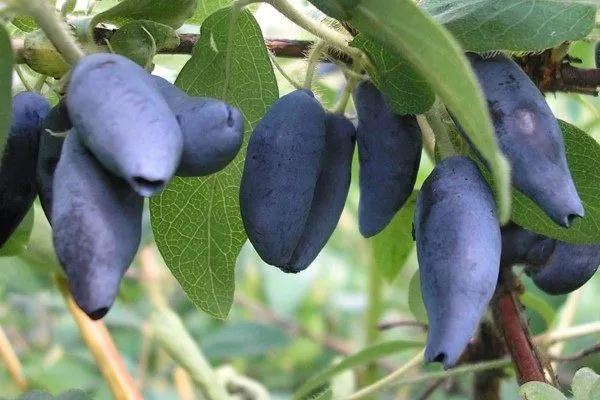
The fruits are firm, with thick, bumpy skin. They are elongated, cylindrical, and barrel-shaped. Length: 2.7 cm. Weight: 1.2-1.6 g. Color: blue. The flesh is firm and cartilaginous. The taste is sweet and sour, with a mild, pleasant aroma. The fruits are tasty, but not sweet enough due to their high ascorbic acid content.
Main characteristics
- Ripening periods. Ripening begins in June. Honeysuckle fruits ripen earlier than strawberries.
- Regionality. The variety is zoned for most regions of the country. Lebedushka grows equally well in the south and north.
- Productivity. One bush produces 2-2.5 kg of fruit.
- Winter hardiness. The plant can withstand extreme frosts and requires no shelter, even in northern regions.
- Transportability and storage. Thanks to their dense flesh, the fruits transport well. They don't have a long shelf life, like most honeysuckle varieties—2-3 days. They should be consumed or processed within this time.
- Purpose. The fruits are versatile – they are eaten fresh, preserved, frozen, used in compotes and juices, used as a filling for baked goods, and used to make homemade wine. The fruits and leaves are used in folk medicine.
- Resistance to pests and diseases. It has a high immunity. It is practically unaffected by pests; the only insect that can cause serious problems for the swan is aphids.
- Pollination. This variety is almost never self-pollinated. The best pollinators are Kamchadalka, Morena, Sinyaya Ptitsa, and Goluboe Vereteno.
- Decorativeness. Landscape designers recommend Lebedushka for decorating gardens and creating hedges.
Beneficial properties
Honeysuckle fruits are rich in nutrients and are helpful for vitamin deficiencies. Honeysuckle contains:
- Potassium – strengthens the heart muscle.
- Pectins – contribute to the normal functioning of the gastrointestinal tract.
- Vitamins A, B, C – beneficial for immunity, vision, and well-being.
- Zinc – strengthens nails and hair.
- Silicon – strengthens bones.
- Iodine – normalizes the functioning of the thyroid gland.
Honeysuckle fruits do not cause allergies, and they do not lose their beneficial properties when frozen or dried.
Pros and cons of the Lebedushka
The advantages of the Lebedushki variety include:
- Excellent dessert taste of fruits.
- Good transportability.
- Spectacular appearance of bushes.
- Suitable for creating hedges.
- High yield.
This variety has no serious drawbacks, but the following nuances are worth paying attention to:
- The berries are a bit sour. Those who enjoy fresh honeysuckle may find the berries a bit too sweet.
- Difficult to separate from the stem. Lebedushka's fruits are difficult to separate from the stem. This characteristic is both a plus and a minus for the variety. On the one hand, harvesting is difficult, but on the other, the fruits can remain on the branches for a long time—they don't fall off like many other varieties.
Comfortable growing conditions
The swan honeysuckle, like any other honeysuckle, is unpretentious and hardy. But if you want a lush, flowering shrub with abundant fruit, create comfortable growing conditions.
Time
Planting can be done at any time—spring or fall. Spring planting occurs before bud break, in March. Melting snow is the signal to plant honeysuckle. Fall planting occurs in August or early September. Planting times depend on regional climate conditions.
Plot
Landing site requirements:
- The plot must be well-lit. In shaded conditions, the berries ripen without sufficient sweetness, and the yield decreases.
- Honeysuckle will not be harmed by protection from the north side - in the form of fences or plantings.
- The area should be free of standing water. If there is a risk of flooding, drainage should be installed. Stagnant water hinders honeysuckle development and can even lead to its death.
- Bushes are planted at intervals of 1 meter or more, with 2 meters between rows. Honeysuckle thrives in open spaces, and dense plantings negatively impact yield.
Soil
The 'Swan' requires slightly acidic or neutral soil. It grows well in the following soils:
- moderately or slightly podzolized;
- loamy;
- sandy loam.
The ideal soil for honeysuckle is light, fertile, breathable, with a pH of 6-6.5.
Planting a seedling
The procedure for planting a mature seedling is the same as for other honeysuckle varieties. Holes measuring 40 x 40 cm are prepared two weeks before planting. Pebbles, crushed rock, or other hard material are added to the hole to form a drainage layer. The soil mixture is then added on top.
- ✓ Check the root system for rot and mechanical damage.
- ✓ Make sure the seedling has at least 3 healthy shoots.
The fertile soil layer extracted during digging of the hole is mixed with:
- compost - 2 buckets;
- ash – 1 l;
- superphosphate – 50-60 g.
The prepared soil mixture is poured into the hole. The hole is covered with some material—film, slate, etc.
The distance between adjacent holes is 1.5-2 m, between rows – 2-2.5 m. It is easiest to plant seedlings with closed roots – they are removed from the containers and transferred into the planting hole along with a lump of soil.
Once the soil has settled, begin planting. Here's the honeysuckle planting procedure:
- An hour before planting, soak the roots in Kornevin—this rooting stimulant promotes rooting. Immediately before placing the roots in the hole, dip them in a clay slurry.
- Form a mound from the soil mixture poured into the hole. Place the seedling's roots on top of it, gently spreading them out. Position the seedling so that its root collar is 5-6 cm deep.
- Fill the hole with soil - the remaining fertile layer obtained when digging the hole.
- Water the seedling generously. No need to prune it—you'll only need to do that next year.
Propagation by cuttings
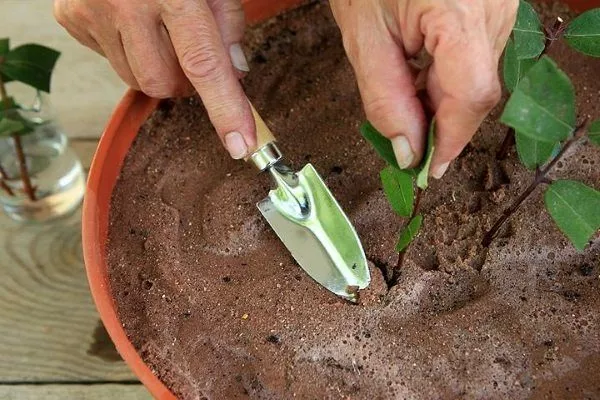
Honeysuckle is easily propagated by any of the existing methods. You can purchase ready-made seedlings, or you can propagate the bushes using layering or cuttings. If the bush is mature, dig it up, cut it into pieces, and plant them in the holes. It's important that each piece has well-developed roots. But the easiest way to propagate honeysuckle is by cuttings. Let's find out how.
Selecting a cutting
Honeysuckle can be propagated using green or woody cuttings. The former are harvested in June, after the harvest, while woody cuttings are taken before the buds open or in the fall. Honeysuckle can also be propagated using composite shoots, which contain a portion of a one-year-old branch. These composite shoots are harvested in late May.
Rules for preparing different types of cuttings:
- Woody. Select healthy shoots. Use one-year-old growth. Each shoot should have 2-5 internodes. Store until spring, wrapping the roots and burying them in sawdust or sand.
- Combined. They are harvested after flowering. They are taken from the current year's growth. They are cut so that the "heel" of the previous year's shoot remains. The cuttings are always soaked in Kornevin.
- Green ones. The current year's growth is suitable—the strongest ones are chosen. Branches that bend easily and don't break are not suitable. Branches that snap with a crunch are needed.
The cutting is taken from the central part of the shoot. The cutting is 7-12 cm long. There are four internodes. Each node has a bud and a leaf. The bottom cut is made at a 45-degree angle. The second cut is straight, made above the top bud, leaving 1.5 cm. The leaf is torn off at the bottom node.
Planting a cutting
To plant cuttings, you first need to germinate them—in water or in a growing medium. You can germinate the roots immediately after cutting them. Here are some germinating methods:
- In the water. The cutting is placed in water with the cut end down. Water is added periodically. When the roots reach 2 cm, the cuttings are transplanted into the substrate.
- In the substrate. It is purchased or prepared from peat and sand (1:2). A layer of sand is sprinkled on top of the mixture, 2-3 cm thick. The lower cut is treated with Kornevin. The cutting is buried in the substrate. The "heel" of the cutting should be 2-4 cm deep in the sand. The soil is compacted around the shoot and moistened.
To stimulate root growth in cuttings, create a greenhouse. If you have only one cutting, you can use a plastic bottle or container. For multiple cuttings, create a greenhouse by inserting plastic or metal arches into the soil and stretching wire across them.
- ✓ Maintain the substrate temperature within 20-25°C.
- ✓ Provide high air humidity (80-85%) during the first weeks of rooting.
The soil in the greenhouse is moistened daily. Condensation is removed from the walls of the greenhouse. If there is none, the humidity inside the greenhouse must be increased. In a greenhouse, cuttings root within 2-3 weeks. The film is not removed immediately, but gradually, starting over several hours.
Care
Honeysuckle is unpretentious and adapts to harsh climates. It doesn't require any special care. Care is simplified if mulch the soil near the bushes.
Read our article about How to care for honeysuckle in autumn.
Watering
Water honeysuckle moderately – 1-2 times a week, and also as needed. The recommended watering rate for a young plant is 10 liters. The best time to water is morning or evening. Mulch is used to retain moisture.
Drought negatively affects the taste of berries, making them taste dull and bitter. To increase the sugar content of the fruit, honeysuckle is fed with ash.
Trimming
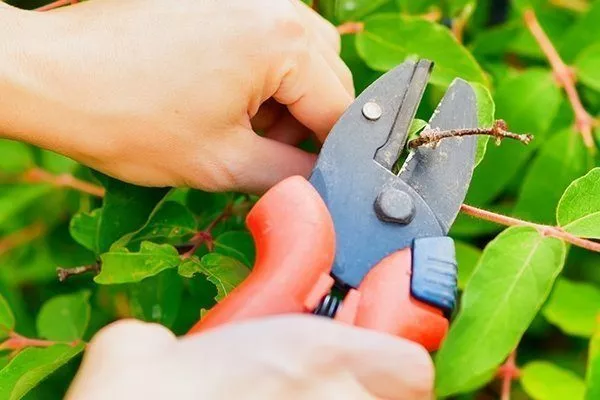
Proper pruning improves the appearance of honeysuckle, increases its yield, and increases the size of its berries. Here are some tips for pruning honeysuckle:
- In young seedlings, branches are shortened to improve branching.
- Pruning is carried out in spring before the buds open, and in autumn before frost.
- The first pruning is carried out 4-5 years after planting in open ground.
- The tops of the shoots are not pruned—this is where the fruit sets. Only young honeysuckle shoots bear fruit.
- During sanitary pruning, diseased, dead, and damaged branches are removed. They are cut close to the ground, leaving no stumps. When pruning healthy branches, stumps 30-50 cm high are left.
- Branches with fruits growing close to the ground are removed.
- Among the young shoots, the erect ones are left, the crooked and weakened ones are cut off.
- For 8-10 year old bushes, several shoots are cut off every year for rejuvenation.
Pest and disease control
The main pest of the "Lebedushka" (swan) is aphids. Appearing in early May, they attack the bush during its mass flowering period. Using chemicals during this period will kill the insects that pollinate the plant. Therefore, aphid control begins after the berries are picked. Any insecticide—Aktara, Biotlin, or Iskra—can be used, but only before budding and after harvest.
Folk remedies are often used against aphids. A solution of ash and laundry soap is prepared and sprayed on the bushes.
It is impossible to get rid of aphids forever; you will have to fight them constantly.
To prevent fungal diseases, honeysuckle should be sprayed with Fundazol or copper sulfate (100 g per 10 liters) before flowering. It is also recommended to treat plants with Bordeaux mixture in early spring to prevent canker and other diseases.
Tricks to increase yields
How to increase crop yield:
- To increase the yield of edible honeysuckle, gardeners resort to a simple trick: attracting honey-producing insects to flowering shrubs. During flowering, honeysuckle branches are sprayed with a sugar or honey solution. Add 2 tablespoons of either to 10 liters of water.
- To prevent birds from eating part of the harvest, ripening fruits are covered with netting. Various repellents are hung on the bushes.
Reviews from gardeners about the Lebedushka variety
Lebedushka is one of the best edible honeysuckle varieties. This low-maintenance plant can be the crowning glory of your garden, as well as a source of delicious and nutritious fruits.