
Honeysuckle Lakomka is a resilient plant with high yields and good winter hardiness. This variety is attractive to gardeners due to its numerous positive characteristics. Proper care is essential for achieving the best results, as this affects the plant's immunity, flavor, and berry size.
Origin
It was developed from a seedling obtained after pollination of Turchaninov's honeysuckle. The selection was carried out by agronomist V. A. Fefelov from the Nizhny Novgorod Agricultural Academy. The variety was officially approved for agricultural use in 1998.
Characteristics, description of appearance, taste qualities
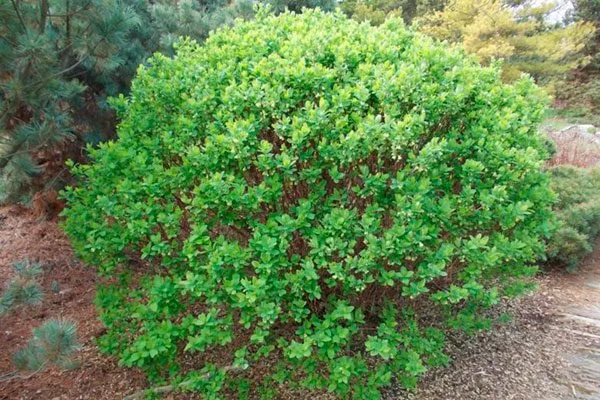
The bushes are medium-sized, with shoots reaching up to 1.5 m in height. The plants have a compact form with a dense oval crown and thin, straight shoots with an anthocyanin hue. Other characteristics of honeysuckle:
- The leaves are medium-sized, almost flat, elongated in shape and light green in color.
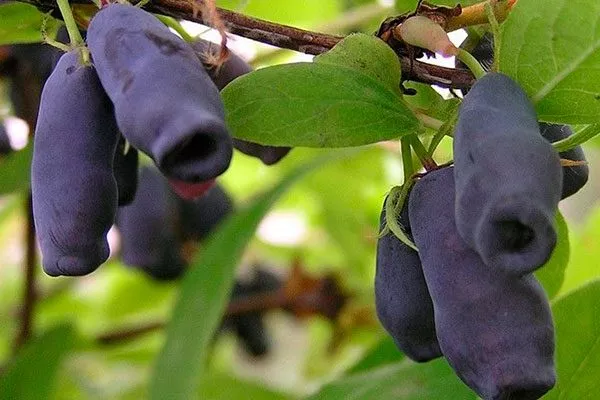
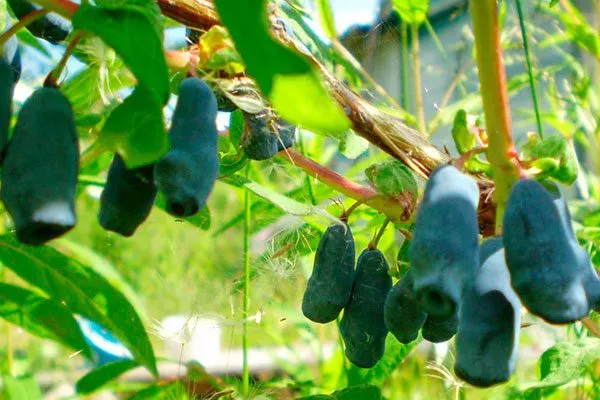
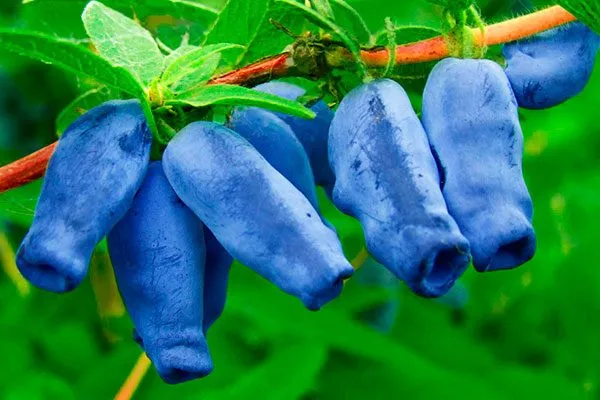
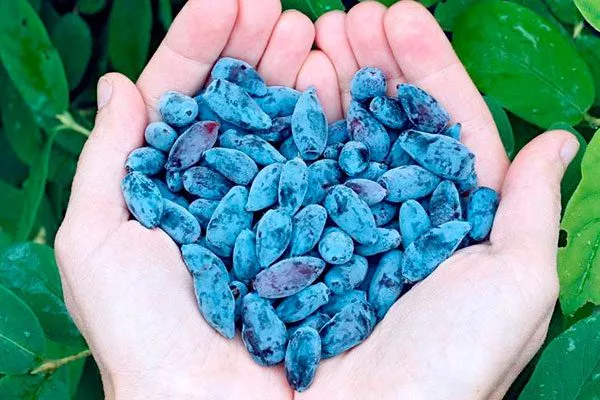
- The berries are elongated-oval in shape with a flat top, their length ranges from 2 to 2.8 cm, and their weight ranges from 0.8 to 1.3 g.
- The fruits are covered with a dense, smooth, dark blue skin, sometimes with a bluish waxy coating.
Features of using this variety
The berries are widely used fresh and frozen. They are suitable for making preserves, jellies, marmalades, juices, medicinal infusions, and liqueurs.
The bushes are characterized by their decorative appearance. Because of this, gardeners plant them to decorate their plots and create hedges.
Ripening period, yield and fruiting
This is an early-ripening variety. Ripening begins in mid-June and continues until the end of July. Bushes begin bearing fruit 3-4 years after planting, with the peak fruiting period occurring between 6 and 20 years of age. The average yield of this variety is approximately 0.8 kg per square meter.
Pollinators
This is a self-pollinating variety and requires additional pollinators to produce fruit. Plant two to three different varieties in the same area near Lakomka, all blooming at the same time, to ensure successful pollination and a good harvest. Otherwise, fruiting may not occur.
Resistance to cold and drought
It easily tolerates extreme temperatures down to -50°C and is not susceptible to the harmful effects of recurrent spring frosts. Drought, however, can negatively impact berry yield and quality.
Regionalism
The Lakomka variety is widespread in the Volga-Vyatka region and is successfully grown in central Russia and the northwestern regions. It is recommended for planting in the Moscow region, the Non-Black Earth Zone, Belarus, the Baltic states, and northern Ukraine.
The main advantages and disadvantages of the variety
In addition to the attractive sweet and sour dessert flavor and the beneficial properties of the berries, the crop has other positive qualities. Among them, the following are noted:
The variety also has its drawbacks. Gardeners note berry drop, uneven ripening, and the need for pollinators for successful fruiting.
What is the difference from other varieties and hybrids?
Honeysuckle Lakomka differs from other varieties in its shape, fruit weight, and yield. Below are the varieties for comparison:
- Amazon. The berries are pitcher-shaped and weigh up to 1.1 g. They have a sweet and sour taste. The yield is 1.3-1.5 kg per bush.
- Baikalovskaya. The fruits are oblong, weighing approximately 1 g. They have a sweet taste. Yields are 1.7-1.9 kg per bush.
- Berel. The berries are conical in shape and weigh up to 0.45 g. They have a sweet and sour taste with a hint of bitterness. The yield is 3-4 kg per bush.
Planting and caring for honeysuckle of the Lakomka variety
The crop prefers bright locations and does not tolerate drafts. Insufficient light can lead to reduced berry size and overall yield. The variety is undemanding regarding soil composition and grows successfully even in poor, heavy soils, although light loams and sandy soils are preferred.
- ✓ The soil pH level should be between 6.0-6.5 for optimal honeysuckle growth.
- ✓ Check the soil for heavy metals and salts before planting, as honeysuckle is sensitive to high concentrations of them.
The groundwater level in the area should not rise closer than 1.5 meters. The plant does not thrive in acidic soils, so liming the soil before planting is necessary. Plant seedlings in the fall, from September to October, giving them three weeks to establish roots before the onset of consistent frost.
Planting recommendations:
- Dig up the area, place the bushes at a distance of 1 m from each other and 3 m from tall specimens.
- The planting hole should be 40 x 40 cm wide and deep. Fill it with a nutrient mixture consisting of topsoil, humus, and peat in a 2:1:1 ratio, and add superphosphate and potassium sulfate.
- Choose two-year-old honeysuckle seedlings with a well-developed root system.
- Make a slight elevation of the planting hole.
- Inspect the roots and remove damaged parts.
- Place the seedling in the center of the hole and spread out the roots.
- Cover with soil, smoothing the surface.
- Water the plant generously.
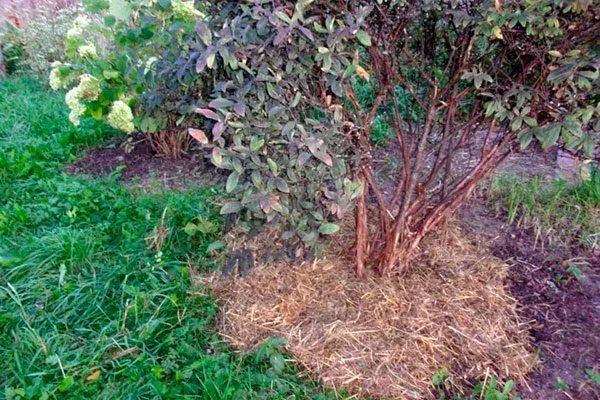
The next day, mulch the root zone with peat, straw, or humus to retain moisture. The plant requires regular watering during the growing and fruiting seasons, and after harvest to promote new growth.
Preparing for winter
In the fall, stop watering the bushes so they stop growing vigorously and enter a dormant state. During this period, prune them, burning the cut parts. Clear the area of fallen leaves, weeds, and other plant debris, then dig over it. Treat the bushes for pests and diseases.
Propagation of edible honeysuckle variety Lakomka
There are several ways to increase the number of seedlings at home. Gardeners propagate the Lakomka honeysuckle using the following methods:
- By layering. Select a lower, one-year-old shoot in early spring or late fall, bend it to the ground, secure it, cover it with soil, and water it regularly. After six months, the shoot will develop its own root system, after which it can be separated from the mother plant and planted in its permanent location.
- Dividing the bush. This is the simplest method. In the fall, cut the bush into several pieces, ensuring each piece has developed shoots and roots. Plant the resulting pieces in the ground and care for them as you would a mature bush.
- Cuttings. In early March, take cuttings 0.4-0.5 cm thick and 7-12 cm long, with 2-3 pairs of leaves and at least one internode. Plant them in a peat-sand mixture, burying them 1-2 cm deep, cover with plastic wrap, and keep at a temperature of 20 to 25°C. Rooting occurs within 10 days.
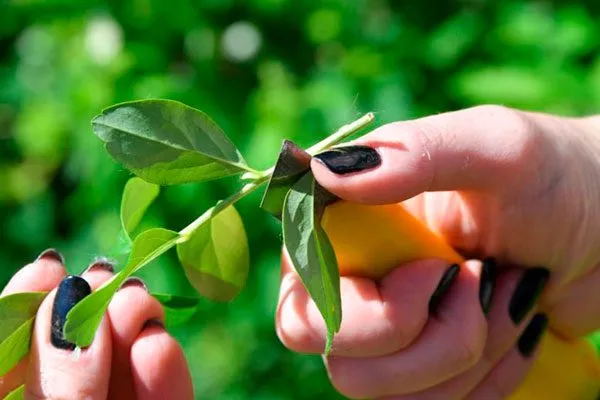
Choose the most suitable method of honeysuckle propagation to preserve varietal characteristics.
Diseases and pests
It has high resistance to diseases and pests, but failure to follow basic plant care requirements can weaken its immunity and lead to problems. The bush is susceptible to the following pests:
- Aphid. They suck the sap from young shoots and leaves, slowing growth and reducing yields. Aphids form numerous colonies and reproduce rapidly.
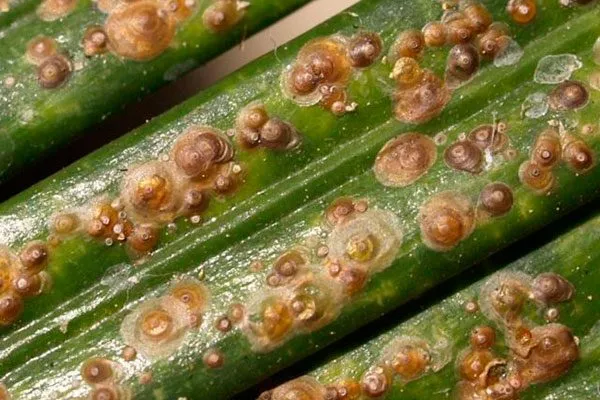
- Scale insect. The tiny insect clings to the bark and sucks the sap from the branches. If control measures are not taken promptly, the plant may die.
To control pests, use the following insecticides: Inta-Vir, Actellik, Fufanon.
Harvesting
The berries ripen unevenly from mid-June to late July, requiring a multi-stage harvest. They are picked by hand or with a combine, after spreading a synthetic cloth under the bushes to allow the berries to fall. Store the harvested fruit in the refrigerator for three days.
What difficulties might arise when growing?
Growing honeysuckle can cause some problems. Here are some solutions:
Make sure the bushes receive enough moisture and grow in well-lit areas.
Reviews of the honeysuckle variety Lakomka
Honeysuckle "Lakomka" is an excellent choice for gardeners due to its high yield and winter hardiness. This variety has many positive characteristics that make it an attractive garden plant. To achieve good results, it requires proper and consistent care.