
Kamchadalka honeysuckle is one of the best varieties created by breeders. This low-growing shrub is easy to care for, disease-resistant, and insect-resistant. It can be planted for fresh fruit and as a decorative addition to your garden.
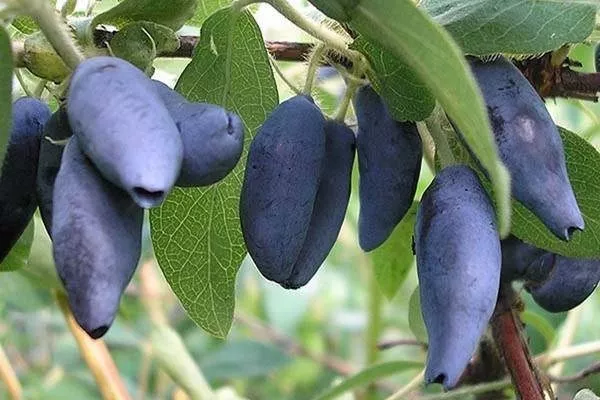
honeysuckle variety "Kamchadalka"
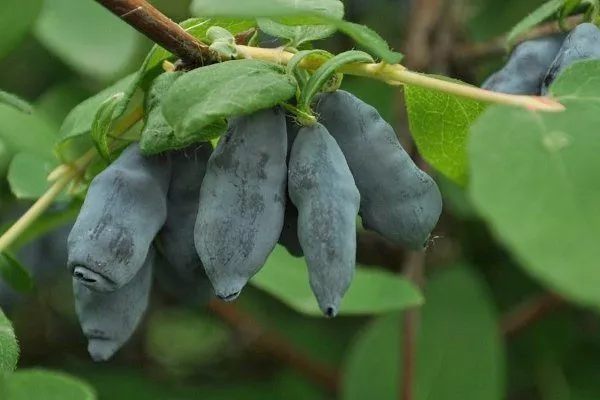
The Kamchadalka variety is highly decorative both during flowering and during the fruiting period.
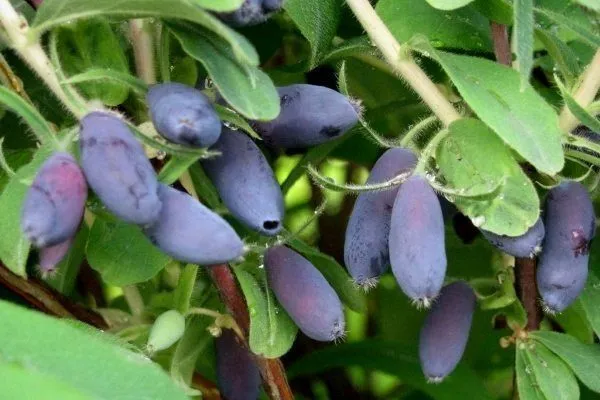
The Kamchadalka honeysuckle is valued by gardeners for its complete lack of shedding
Breeding history
Creating a new variety or even a new crop is not easy; it's an extremely long and arduous, yet quite fascinating process. Kamchadalka is the result of the work of A.T. Tkacheva and I.K. Gidzyuk. Scientists began developing this honeysuckle variety several decades ago. 1984 was the year gardeners submitted the variety for testing and verification; nine years later, the crop became known throughout the Russian Federation.
The birthplace is a support site in Bakcharsky, with the support of a Siberian scientific institute. Kamchadalka was created using Kamchatka honeysuckle.
Description and characteristics of the Kamchadalka honeysuckle variety
The bush is small, 1.5 m tall, with a dense crown of foliage. The berries of this variety contain a wealth of nutrients, particularly vitamins C and B1. Due to their composition, the plant's fruits are used as a general tonic.
Traditional medicine practitioners grow this variety on their plots to later make various tinctures and remedies from the fruits.
In recent years, this particular variety has won the hearts of many gardeners. Kamchadalka is prized for its medicinal properties and ease of care.
Some facts about the honeysuckle variety:
- The plant blooms in spring, the berries are tasty and juicy.
- The harvest does not fall off; after full ripening, it can remain on the bush for some time.
- It's important to constantly monitor the plant's pollination; sometimes even nearby varieties of the plant fail to help the Kamchadalka bear fruit. If natural pollination fails, artificial pollination will have to be used.
- The berries are difficult to pick, often with the stalk, but they are stored for a long time and do not spoil.
- Kamchadalka honeysuckle is an excellent crop for making delicious and juicy jam.
- It bears fruit once a year.
- If the plant's primary purpose is to decorate the garden, there's no need to plant pollinators near the honeysuckle. In this case, Kamchadalka doesn't require regular care; the only important thing is to prune it regularly.
- Kamchadalka was used as a parent of a new variety of the Sodruzhestvo crop.
Bush
The branches are large and straight. The shoots are large, not long, and light green. The buds are large. The foliage is small, elongated, and dull green. The inflorescences consist of two small yellow flowers.
Berries
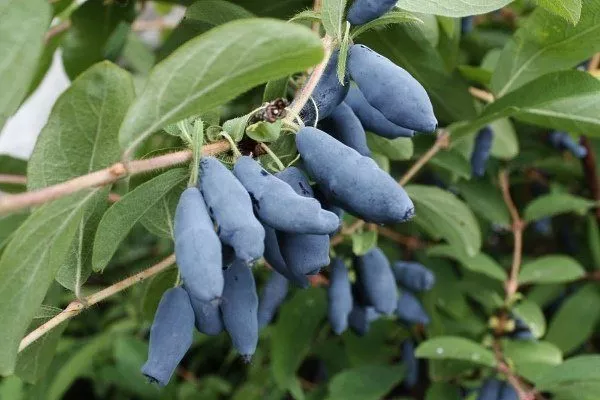
The honeysuckle berries of this variety are blue or bright blue, reaching 2.6 cm in size. They are elongated ovals with a pointed tip. Each berry weighs 1 g. The surface is smooth and firm, the skin is thin and waxy. The flesh is tender and juicy. The flavor is sweet and sour with a hint of bitterness. The berries have an unrivaled aroma, characteristic only of honeysuckle.
The taste qualities of Kamchadalka were assessed by the State Service and received a rating of 3.8 to 4.6 points depending on the region where the honeysuckle grew.
Productivity
Kamchadalka fruits fully ripen in the second half of June. The yield per plant is approximately 1.3-1.9 kg. Some specimens can produce up to 3 kg of fruit, depending on the climate and how well the bush is cared for.
The fruits have a very long shelf life. The berries of this variety are versatile and can be eaten fresh or used for preserves. Jams and compotes are especially popular. The berries can also be frozen without losing their nutritional and medicinal properties.
Pollinators
| Name | Yield (kg per bush) | Berry size (cm) | Taste |
|---|---|---|---|
| Parabelskaya | 1.5 | 2.5 | Sweet and sour |
| In memory of Gidzyuk | 1.8 | 2.7 | Sweet with a hint of bitterness |
| Blue Spindle | 2.0 | 2.8 | Sweet and sour |
| Cinderella | 1.7 | 2.6 | Sweet |
| Tomsk resident | 1.9 | 2.7 | Sweet and sour with a hint of bitterness |
The main drawback of Kamchadalka honeysuckle is that it is self-sterile, requiring pollination to produce fruit. The following varieties are considered the best for this process:
- Parabelskaya.
- In memory of Gidzyuk.
- Blue spindle.
- Cinderella.
- Tomsk resident.
Ripening conditions
Kamchadalka is a frost- and drought-resistant shrub, but it will not thrive in conditions of frequent temperature fluctuations. This variety prefers to bear fruit in a moderate climate. It should be planted in a sunny location.
As for the growing region, breeders recommend planting Kamchadalka in the Kemerovo, Omsk, and Novosibirsk regions. The harvest will not be affected even by temperatures as low as -40 degrees Celsius. During flowering, temperatures can drop to -8 degrees Celsius.
Growing the shrub is very easy, as the plant has strong immunity to various diseases.
Advantages and disadvantages of the variety
Some gardeners believe this variety has more disadvantages than advantages. Is this true? Let's consider the pros and cons of this variety.
Advantages of Kamchadalka honeysuckle:
- excellent frost resistance, the plant can be grown in any region;
- a huge amount of nutrients is contained in the fruits of the bush;
- Honeysuckle can be grown for ornamental purposes;
- Kamchadalka is easy to care for.
Disadvantages of honeysuckle:
- self-sterile, for pollination it is necessary to plant other varieties next to the bush;
- average harvest;
- the fruits are small, the weight of one berry is small;
- Transportation is poor, because the berries have thin skins, making them almost impossible to transport.
Secrets of growing
Planting and growing Kamchadalka honeysuckle is no more difficult than raspberries, but the plant's characteristics must be taken into account.
Planting dates
The plant can be planted in early spring or mid-autumn. However, honeysuckle tends to bud too quickly and vigorously.
The best time to plant the bush is autumn, during which time the honeysuckle is in a dormant period.
In the south, the plant is planted in late September or early October, but gardeners must choose the time to plant Kamchadalka themselves. The seedling should be planted 3-4 weeks before the first frosts and strong winds.
Selecting a location and soil
Kamchadalka tolerates temperature fluctuations poorly. The bushes should be planted in a sunny area, preferably protected from drafts. You can use a fence or surround the bush with other plants.
A raised area with dry soil is not suitable for growing a seedling. The shrub will not bear fruit and will regularly grow additional shoots and leaves. Lowlands are ideal for full plant growth, but the water table should not be higher than a meter above the soil surface.
- ✓ Soil pH levels should be strictly between 5.5-6.5 for optimal growth.
- ✓ The depth of groundwater should not exceed 1 meter from the surface.
Honeysuckle of this variety loves nutritious black soil and does not grow well on sandstones.
The normal soil pH is between 5.5 and 6.5. If the soil is too acidic, add 200 g of chalk or lime per square meter a month before planting.
Planting a bush: a step-by-step guide
Planting of honeysuckle plants is carried out in the following order:
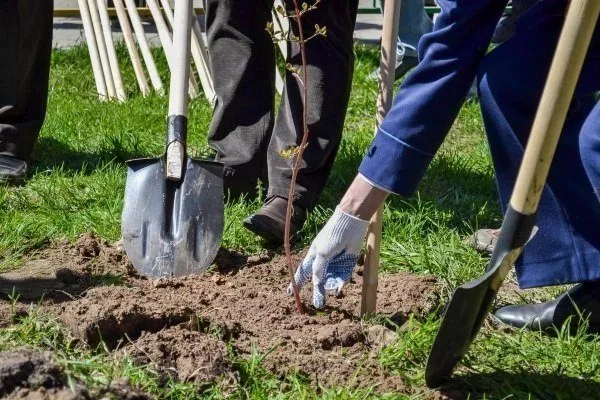
- Dig a hole 5 days before planting. A single plant won't produce fruit, so plant at least three seedlings (pollinating varieties) in the area.
- Make a 2 m gap between the holes. The depth of one hole is 45 cm.
- Cover the bottom of the holes with stone drainage.
- Fill part of the hole with equal parts black soil and compost. Also add 1 kg of wood ash. For mineral fertilizer, use 50 g of superphosphate.
- If the soil is sandy, dig larger holes. Each hole should hold a mixture of two buckets of black soil and three buckets of compost. When digging the soil for planting honeysuckle, add 5 kg of clay.
- Water the filled hole.
- Make a mound of soil at the bottom of the hole. Carefully place the seedling on it, spread the roots, and cover with soil. Do not bury the root collar. After planting, water the plants.
- After the soil has settled a bit, add more soil, water, and cover the root zone with mulch. Learn more about mulching. Here.
Don't prune the Kamchadalka sapling immediately, as this can slow down the plant's growth and development. Only damaged branches can be removed.
Care Features
A good harvest is guaranteed only with proper and regular care of the bush.
Watering
During the first year, the seedling is watered regularly as the soil dries out. The shrub should quickly and easily establish itself in the soil. Mature honeysuckle should be watered once a week, except during dry periods.

Watering of Kamchadalka is carried out only after sunset.
Top dressing
The plant requires sufficient organic matter for full development and fruiting. In spring, the shrub is fed with one bucket of compost. In autumn, wood ash is especially important.
Nitrogen-containing fertilizers are used only in the spring because they trigger a vigorous plant response. The shrub begins to rapidly grow foliage. In the summer, nitrogen is harmful because the Kamchadalka will expend all its energy on foliage, and the berries will grow small and tasteless. Nitrogen-containing fertilizers should also not be applied in the fall, as during this period the plant should be preparing for dormancy, not experiencing vigorous growth.
We recommend reading our article about How to care for honeysuckle in autumn.
Immediately after the spring snowmelt, water the Kamchadalka with one bucket of warm water with one tablespoon of urea dissolved in it. Before flowering, use nutritious fertilizers such as Rastvorin or Aquirin. Apply and dilute them strictly according to the instructions.
Trimming
Pruning is prohibited in the first year after planting. The first pruning should only be done on mature plants; it's best to begin this procedure in their sixth year. Bushes are pruned in late autumn after the foliage has completely shed.
First, remove all root suckers. Strong shoots with numerous flower buds are left on the honeysuckle. Only thin, weak, and diseased branches should be pruned. A second pruning procedure may be necessary in the summer if diseased branches with dark foliage and dried flowers have formed.
Reproduction
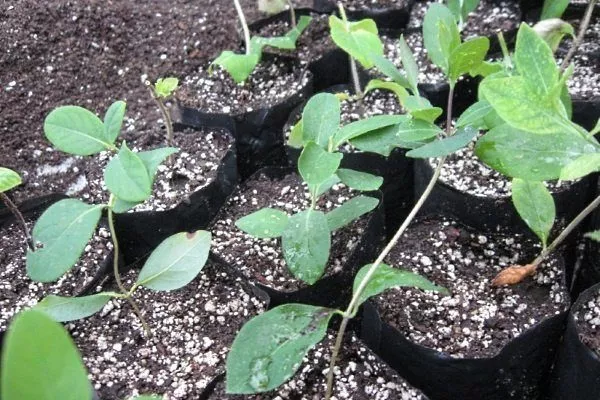
Any honeysuckle variety can be propagated from cuttings. It's best to purchase the plant from a reputable store; market sellers may substitute a branch for another honeysuckle variety. Preference should be given to plants in their second year. They can be identified by their appearance: the crown should be 35 cm high and have three branches.
- ✓ Flexibility of branches is a key sign of health of a young plant.
- ✓ The presence of living buds and well-developed roots is essential for successful adaptation.
A young plant has flexible branches. Pay special attention to the plant's shoots; they shouldn't be dry. The bark may peel, but this isn't a cause for concern.
A characteristic feature of any honeysuckle variety is the specific peeling of the bark of the bush.
The branches should have living buds; a healthy plant always has well-developed roots. If there are already mature shrubs in the garden, the plant can propagate itself by layering.
To do this, the gardener needs to cover part of the branch with damp soil and make a small cut in the bark. When the cutting begins to root, it is cut from the mother bush and the new seedling is planted. Remember to maintain a distance of 1.5-2 meters between plants.
Protection from diseases and pests
Kamchadalka honeysuckle is resistant to many diseases. The main threats are aphids and honeysuckle flies. Tobacco infusions are effective against aphids as a preventative measure. Insects can be controlled by thorough spraying with specialized agents. Honeysuckle is not susceptible to fungal infections, but dark spots on the leaves can indicate their presence.
It is better to use any chemicals before the period of berry formation and harvesting.
Birds pose a particular threat. Honeysuckle berries are blue and attract birds as food. The only way to protect the crop is with special netting.
Reviews of Kamchadalka honeysuckle
The berries are large and very tasty. The yield is also quite good, with about 1.8 kg per plant. Perhaps this is because I planted three pollinator varieties next to the Kamchadalka honeysuckle.
The Kamchadalka honeysuckle is an excellent variety for growing in the garden or at home. It will produce a bountiful harvest only if the proper growing and care guidelines are followed. Gardeners in southern regions may want to consider a different variety, as this Siberian beauty may not live up to its owner's expectations in an unfamiliar region.