
Honeysuckle Izyuminka is a frost-resistant and hardy variety bred in Russia. It is productive and easy to grow, suitable for growing in any region, including those with unstable climates and short, cool summers.
Description of the plant
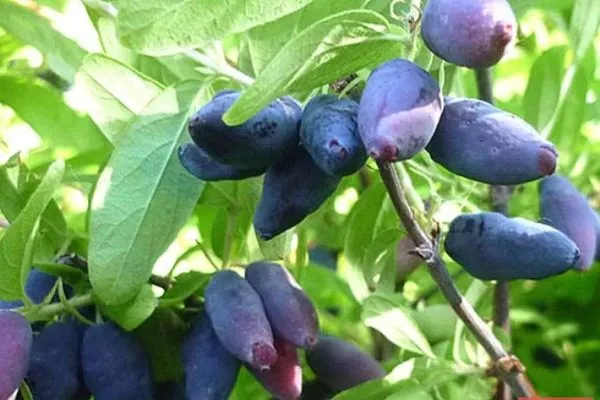
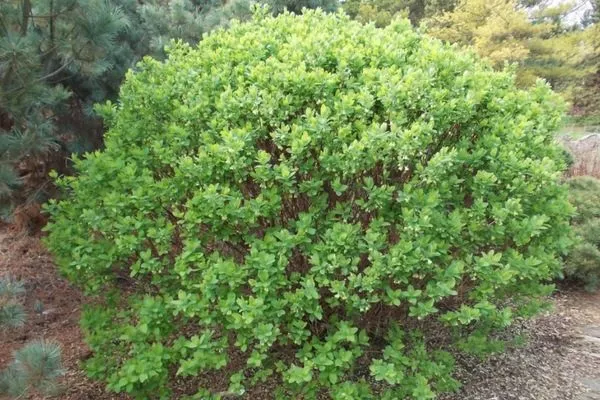
Honeysuckle "Izyuminka" is a low-growing (medium-sized) shrub, reaching a height of 1.3 m. This variety's bushes are slightly spreading, resulting in a compact appearance. The shoots are thin and curved, with a purple-brown hue and slight pubescence.
The leaves are medium-sized, light green, and finely pubescent. The leaf blades are concave, and the tips are pointed. The flowers are small, bell-shaped, with pale petals.
Description of fruits
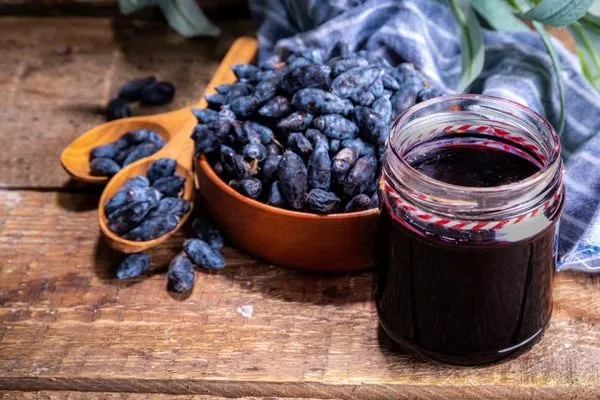
The fruits are medium-sized, with a bumpy surface and a standard shape for this crop.
Brief description of fruits:
- Coloring: rich blue.
- Form: elongated, slightly bumpy surface.
- Length: from 1.8 to 2.7 cm.
- Skin: smooth and dense, without pubescence, with a bluish tint.
- Pulp: with a fibrous consistency.
- Average weight: 1.1 g.
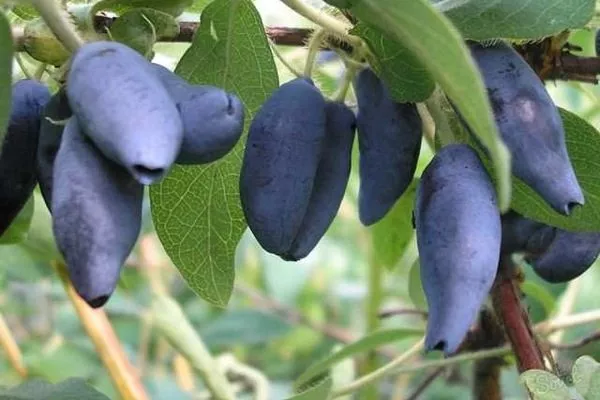
Individual fruit specimens can reach 1.6 g.
The history of the Izuminka variety
The Izyuminka variety was developed at the South Ural Research Institute of Horticulture and Potato Growing in the Chelyabinsk Region. It was obtained through open pollination of Kamchatka honeysuckle seedlings.
You can get acquainted with the best varieties of this berry crop, according to domestic gardeners Here.
Taste and purpose
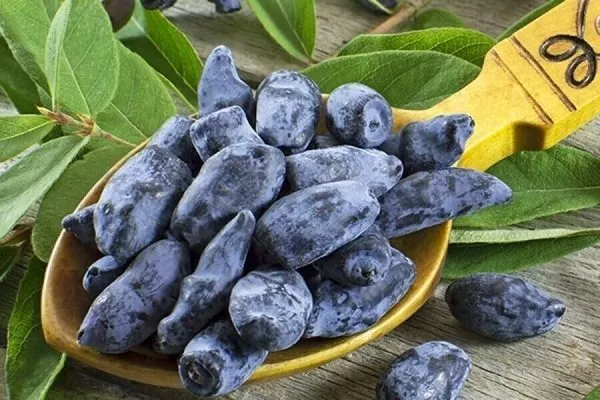
The taste of the Izyuminka honeysuckle is sweet and sour with a spicy aftertaste, but without any bitterness. According to tasters, the taste of ripe berries ranges from 4 to 4.8 points. The sugar content in the fruits is four times higher than the acidity. The taste and size of the berries are largely influenced by the regularity of care of the honeysuckle bushes.
Fruit composition:
- Sugar - 7.4%.
- Acids – 2.2%.
- Vitamin C - 31 mg/%.
- P-active compounds - 950 mg/%
The berries have versatile uses. They are eaten fresh, dried, and frozen. They are also used for processing—to make jams, preserves, marmalades, and juices.
Characteristics
The Izyuminka variety has excellent agronomic characteristics, so it grows and bears fruit well in a wide range of climatic conditions.
Characteristics of honeysuckle Izuminka:
- PrecocityFruiting begins 3-4 years after planting in a permanent location.
- Disease resistance. The variety has increased immunity to fungal, bacterial and viral diseases, but under unfavorable weather and/or climate conditions, aggravated by improper care, it can be affected by powdery mildew and various types of spotting.
- Productivity. On average, 27 centners of fruit are harvested per hectare in commercial cultivation. A single bush yields between 0.9 and 1.4 kg of berries.
- Frost resistance. The bushes can withstand temperatures down to -50°C. During flowering, the Izyuminka honeysuckle can withstand temperatures as low as -8°C.
- Self-fertilityThis variety is self-sterile and requires pollinators to set fruit. Suitable varieties include honeysuckle 'Goryanka,' 'Atlant,' 'Altair,' 'Viola,' 'Volshebnitsa,' and 'Zarnitsa.'
Pros and cons
The Izyuminka honeysuckle, along with its advantages, also has some disadvantages. It's helpful to learn about all the characteristics of this variety before planting.
Landing
To ensure honeysuckle grows well and produces fruit, it's important to create optimal growing conditions. It's important not only to purchase high-quality seedlings but also to select a suitable location and then plant them correctly, following the recommended planting techniques.
Site selection and preparation
Although honeysuckle is easy-to-grow, it shouldn't be planted in just any spot. If you plant it without considering its needs, it will grow poorly or even die.
Features of site selection:
- Lighting. Honeysuckle Izyuminka grows best in sunny, warm areas with plenty of light and no drafts. The ripening of the berries depends on the amount of light. The tops of the bushes should receive the most light.
- Relief. The Izyuminka variety, like honeysuckle in general, does not tolerate waterlogged soil, so lowlands and areas with high groundwater are not suitable for planting. The optimal planting depth is 0.7-0.9 m.
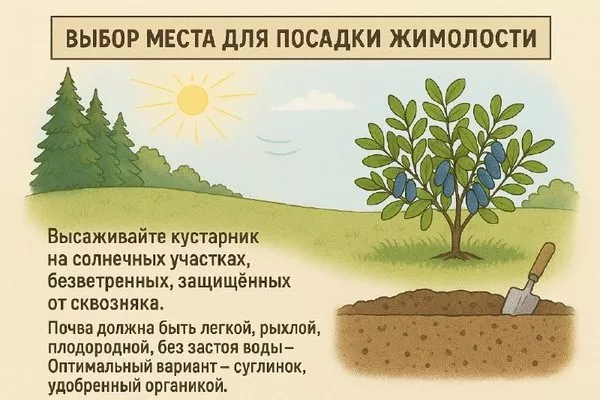
Honeysuckle grows well in slightly acidic or neutral soils with a pH of 5.5–6.5, with good water and air permeability. If the groundwater table is high, it's recommended to add drainage material to the planting holes. In heavy and poorly drained soils, you can add organic matter such as humus, compost, or river sand.
Selecting a seedling
For planting, select 2-3-year-old seedlings. The optimal height is 30-40 cm. The number of branches is 2-3. The shoots should be flexible, not dried out, and free of defects, signs of disease, or damage. A healthy seedling will have green, vibrant buds, and well-branched, moist, and robust roots.
For planting, it's best to use seedlings with closed roots—they're sold in containers. These honeysuckles will take root quickly and well. Furthermore, they can be planted not only in spring and fall, but also in summer. Peeling bark may occur; this isn't a sign of disease, but rather a characteristic of the plant.
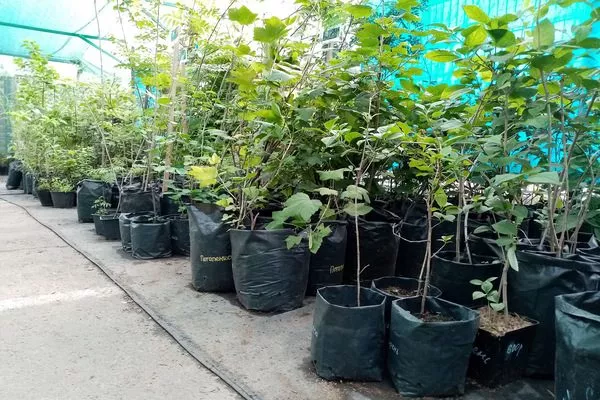
It's best to purchase planting material from garden nurseries or reputable sellers who specialize in growing honeysuckle. Buying seedlings from random people at the market is not recommended—the risk of purchasing substandard seedlings is too high.
Storage and preparation of seedlings
Bare-root seedlings need to be stored properly if planting must be delayed. Wrap the roots in a plastic bag with holes punched in it for ventilation. Store the seedlings in a cool place (at temperatures between -2°C and +5°C)—in a cellar or on a balcony. Optimal humidity is 85-90%.
Bare-root seedlings need to be prepared for planting. For several hours, or better yet, a day, the roots are immersed in water or a solution containing a growth stimulant, such as Kornevin. This procedure can restore even slightly dried-out roots.
Planting dates
The best time to plant honeysuckle is early spring or late fall. In spring, plant after the snow has melted, but the buds have not yet begun to open. Planting honeysuckle in May and June, when active growth begins, is not recommended.
Planting times depend on climate conditions and are specific to each region (climate). In the south, where winter is warm and arrives late, honeysuckle is planted from the second half of October to mid-November, while in central Russia, planting occurs from mid-September to the first ten days of October. In the north, planting is completed by early October.
Preparing the planting hole
Planting holes are prepared 1-2 weeks in advance to allow the soil to settle slightly and the fertilizer to be evenly distributed.
Features of preparing a planting hole:
- The optimal hole size is 40x40x40 cm. Leave 1.5-2 cm between adjacent bushes. Leave 2.5-3 m between rows.
- A drainage material—crushed stone, broken brick, or expanded clay—is placed at the bottom of the hole. The layer should be approximately 10 cm thick. This type of drainage is especially important in heavy and clayey soils, as well as in areas with a shallow groundwater table.
- The topsoil obtained from digging the hole is set aside to be used to prepare a nutrient mixture. It is mixed in equal parts with humus or compost (10-15 liters), 1/2 part peat and wood ash are added, as well as mineral fertilizers (50 g each of superphosphate and potassium sulfate). All components are thoroughly mixed and poured into the hole.
- If the site has heavy clay soils, loosening components such as sand or peat are added to the planting mixture.
You can fill the hole with purchased soil, but it must be mixed with local soil so that the plant can more easily adapt to the new location.
Landing at a permanent location
Honeysuckle is planted when there is no sun—in the morning, in the evening, or on a cloudy, windless day. If planting seedlings with closed roots, water them beforehand to make them easier to remove from the planting container.
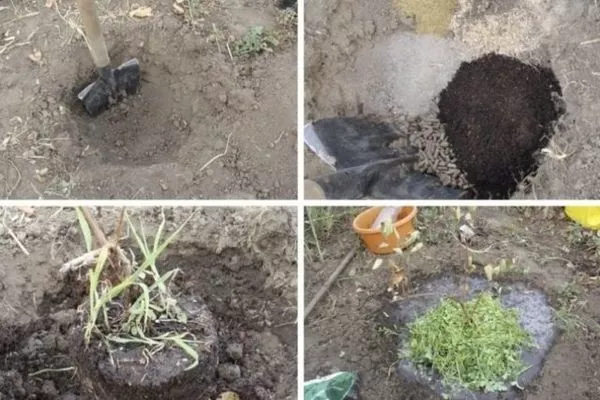
Features of planting honeysuckle Izuminka:
- The seedling is placed in a planting hole, in which a mound is formed from the nutrient mixture.
- A seedling is placed on the top of the hill, its roots are carefully straightened, and then covered with fertile soil.
- After planting, the root collar of the seedling should be 3-4 cm below the ground surface.
- The soil is lightly compacted, and a trunk circle is formed around the trunk, into which about 10 liters of non-cold water are poured.
- When the water is absorbed, the trunk area is mulched with humus, peat, straw, and mown grass.
Care
Honeysuckle Izuminka, like the crop as a whole, is unpretentious and hardy, but to obtain a good harvest it will require some care.
Watering and loosening
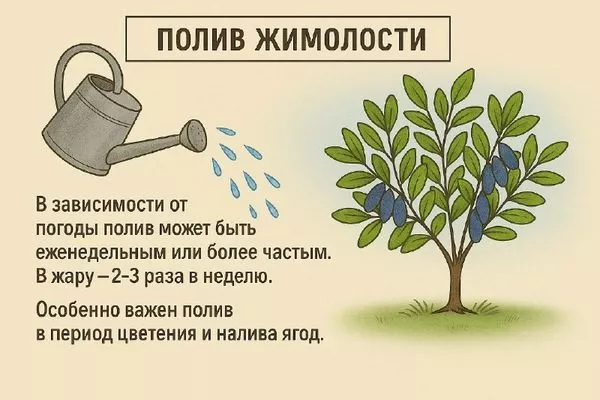
The Izyuminka honeysuckle requires regular watering, especially in the first half of summer—during flowering and ripening. Insufficient moisture and prolonged drought negatively impact the yield and flavor of the berries. However, it's important not to overwater the soil to prevent root rot.
Watering features:
- One adult plant requires 20 liters of water.
- Water is poured under the roots; it should moisten the soil to a depth of 50 cm.
- Water honeysuckle after 7 PM, when the sun sets. Watering during the day, in sunny weather, is not recommended, as water droplets splashing on the leaves can cause burns.
After watering, when the soil has dried out slightly, loosen it and then mulch with sawdust or straw. Apply a 5 cm thick layer. This will prevent rapid evaporation of moisture from the soil and slow down weed growth.
Fertilizing
Honeysuckle Izyuminka requires fertilization throughout the season—spring, summer, and fall. Apply organic and mineral fertilizers.
Features of fertilizing in spring:
- Nitrogen fertilizers are applied 2-3 weeks before flowering to stimulate new shoot growth. For example, urea (15-30 g per square meter) or ammonium nitrate (20-30 g per square meter) can be used.
- During the bud formation stage, plants require phosphorus and potassium for good flowering and fruiting. For example, you can add wood ash or complex mineral fertilizers high in phosphorus.
- After flowering, honeysuckle needs potassium, which promotes the ripening of berries, increasing their size and sugar content.
In July, repeat nitrogen fertilizer applications are made to stimulate a second wave of shoot growth. You can use, for example, urea (15-30 g per square meter) or ammonium nitrate (20-30 g per square meter). In late July or early August, honeysuckle requires potassium supplements. Suitable options include potassium nitrate or monopotassium phosphate (1 tablespoon per 10 liters of water).
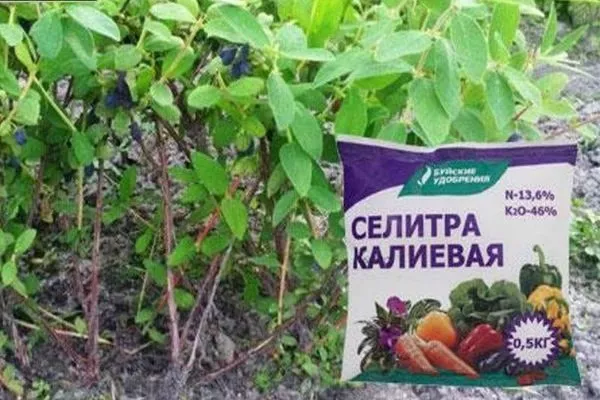
In early September, you can add superphosphate and potassium sulfate (30-50 g per square meter). In late October, you can feed the bushes with rotted manure. Mineral fertilizers can be replaced with organic matter, such as a wood ash solution (200-300 g per 10 liters of water).
Trimming
The Izyuminka honeysuckle is pruned annually. Pruning is necessary to ensure even distribution of light, which determines the size and flavor of the fruit. Furthermore, good ventilation reduces the risk of fungal diseases.
The following types of pruning are carried out for the Izyuminka honeysuckle:
- Sanitary. Remove diseased, broken, dry shoots and small branches at the bottom of the bush.
- ThinningStarting from the age of 8-10 years, the top of the skeletal branch is completely cut off with pruning shears, transferring it to a young branch.
- RejuvenatingOld and neglected bushes require this type of pruning. Branches are pruned in early spring, before the sap begins to flow, to a height of 40–50 cm above ground level. This drastic pruning awakens dormant buds at the base of the bush and encourages the formation of new skeletal branches.
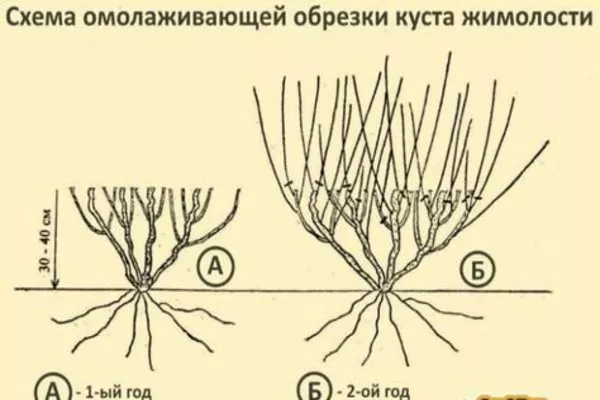
Prune branches to the outer bud to prevent shoots from crossing. All weak and diseased shoots are trimmed back to the base, to the ring. Cuts should be even and smooth, with no splitting of the stumps. You can find more details on pruning honeysuckle bushes here. Here.
Propagation of honeysuckle
Honeysuckle 'Izuminka' is propagated by seeds, layering, and cuttings. Young plants up to six years old can be propagated by division. Older honeysuckle plants are more easily propagated by layering or cuttings.
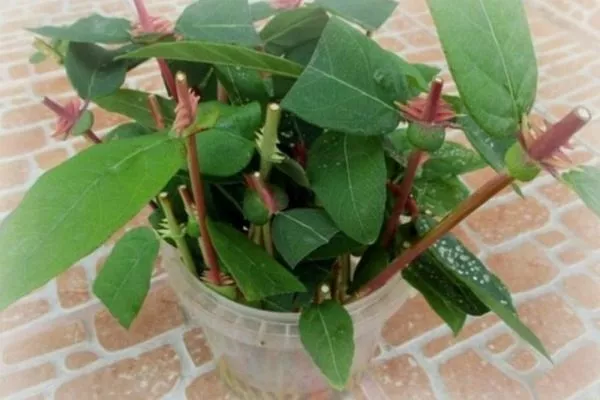
Green cuttings—young shoots 10–15 cm long—can be used for propagation. The base should be firm, the center flexible, and the top grassy. A 1:1 mixture of sand and peat can be used to root the cuttings. Several dozen cuttings can be taken from each honeysuckle bush.
Pest and disease control
Under unfavorable growing conditions and poor agricultural practices, honeysuckle Izyuminka can be affected by various diseases, primarily of a fungal nature.
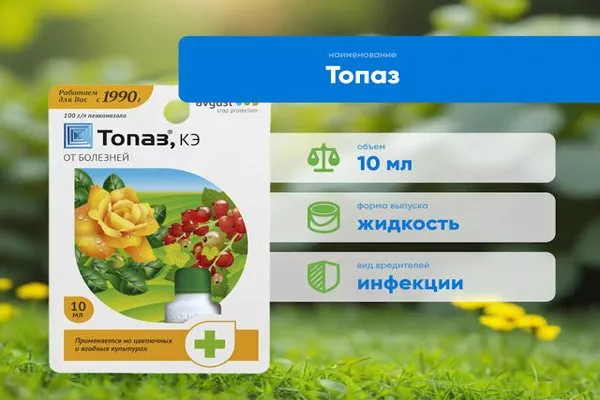
The Izyuminka variety is most often affected by powdery mildew and various types of spotting. These are controlled with copper sulfate, Fundazol, or Topaz—sprayed on the foliage.
Plants may also develop a characteristic black coating on the surface of leaves or bark—this is mycelium with spores. Affected parts should be cut off and burned.
Among the pests, the greatest danger to the honeysuckle Izyuminka is posed by:
- Honeysuckle fingerwing. The pest eats the seeds and pulp of the fruit. The berries, unripe, darken, shrivel, and fall off. The bushes must be treated after harvest, for example, with poisons such as "Karbofos" or "Chlorophos."
- Honeysuckle aphid. It feeds on the sap of leaves, which first wilt and then dry out. Early insecticide treatments are recommended—before bud break.
- Leaf roller. During the caterpillar stage, it attacks leaves. It's important to treat bushes before bud swelling and during widespread pest infestations. Use products such as Actellic, Fufanon, and Biotlin. It's also recommended to spray bushes after berry picking.
- Honeysuckle moth. Spraying is carried out in late summer or early fall, when the butterflies are laying eggs. Suitable products include Fitoverm, Karbofos, Fufanon, Actellic, and Kinmiks.
Application in landscape design
Honeysuckle Izuminka is easy to maintain and has excellent decorative qualities, making it ideal for landscape design. It's an excellent choice for mixed borders, topiaries, and arched structures.
Harvesting and storage
Izyuminka honeysuckle berries are harvested in May. In the south, the fruits ripen as early as mid-month. Ripeness is determined by the berries' color and taste; they should acquire a deep blue hue and a sweet-tart flavor. If you press on a ripe berry, you'll feel its softness.
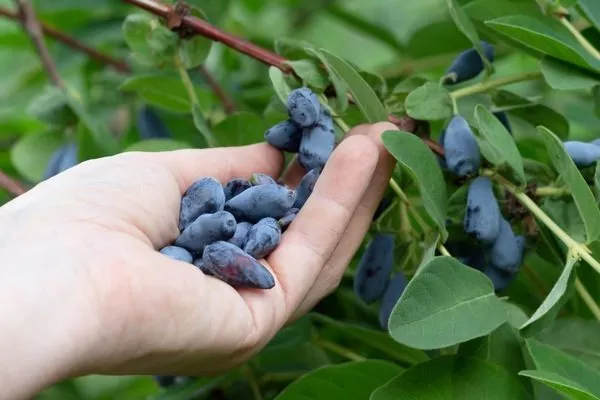
Honeysuckle berries are easy to pick by shaking the branches and placing plastic wrap or bags underneath them. Ripe berries fall off, while unripe ones hold on tightly, don't fall, and are left to ripen.
Picked berries can be stored in the refrigerator for 1-2 days. The riper the berries, the less well they store. They can be frozen—this preserves many of their nutrients, but heat treatment destroys their vitamins.
Reviews
The Izyuminka variety is an excellent choice for honeysuckle lovers. By planting a couple of bushes in your garden, you'll be well-stocked with delicious and nutritious berries. You can then propagate the plants by cuttings or any other convenient method, creating hedges and mixed borders.