
Honeysuckle Violet is an edible variety with large, tasty berries. It can be planted both for its fruit and as a garden ornamental, making a beautiful hedge.
Origin of the variety
The Violet variety was developed in the 1990s by breeders from St. Petersburg. Testing was conducted at the Pavlovsk Experimental Station of the All-Russian Institute of Plant Genetics (VIR) using open pollination of Roxana honeysuckle seeds. In 1992, the variety was submitted for state trials.
Description of the plant
Honeysuckle bushes are often used to decorate garden interiors. The Violet variety is no exception; in fact, it possesses all the qualities valuable for landscape design.
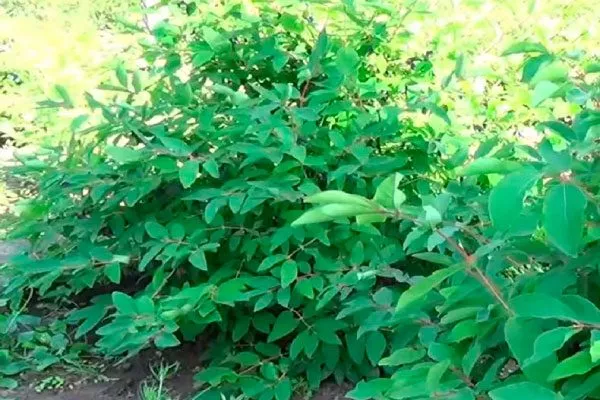
Brief description of the plant:
- Bushes Honeysuckle Violet is a medium-sized plant, growing up to 1.3-1.5 m in height. Its crown is dense, rounded, and slightly spreading.
- Escapes thick and straight, greenish-brown.
- Leaves bright green, oblong-oval, large.
- Flowers Medium-sized, pale green, in two-flowered inflorescences. Diameter: up to 2 cm.
Description of fruits
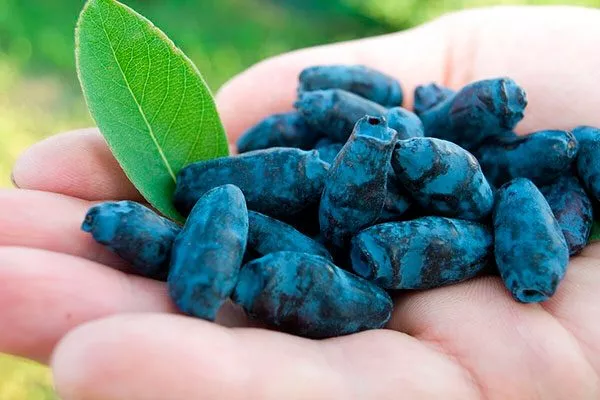
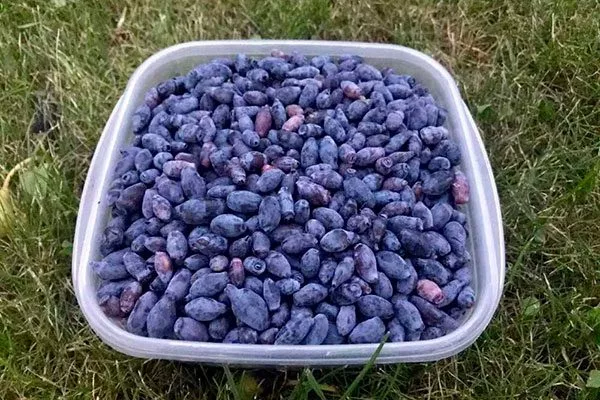
The fruits are large, pitcher-shaped, slightly curved, and elongated. The tops are pointed, and the surface is slightly bumpy. The skin is blue-violet, thin, and covered with a waxy coating. The flesh is dense and fibrous.
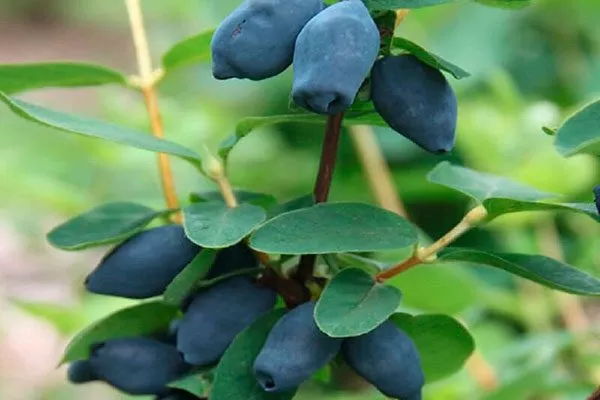
Fruit characteristics:
- Average weight: 1.14-1.5 g.
- Fruit diameter is 1.2 cm.
- Length - up to 2.8 cm.
Growing regions
In 1995, the Violet honeysuckle was zoned for the Northwest region (Leningrad Oblast). This variety is easy to grow, so it is now grown in virtually every region of Russia.
Taste qualities
The fruit has a sweet and sour flavor, with a light and pleasant aroma. Professional tasters rate the flavor of the Violet honeysuckle at 4.3-4.7 points on a five-point scale. In 1996, this variety was awarded 5 out of 5.
Chemical composition:
- Sugars - 9.11%.
- Acid - 1.35%.
- Vitamin C - 69 mg/100 g;
- P-active substances - 637 mg/100 g.
Pollination
This variety is characterized by weak self-fertility, almost self-sterile. It requires cross-pollination to bear fruit. If pollinating varieties are not planted nearby, the bush will produce only a few berries.
To ensure a consistent harvest each season, plant 3-4 honeysuckle bushes, which bloom at similar times, near the Violet variety. The best varieties for pollination are Blue Spindle, Viola, and Amphora. The optimal distance is 2.5 meters.
Features of fruiting
This variety is a fast-growing variety, beginning to bear fruit within 3-4 years of planting. Harvesting is regular, without interruption. The average yield is 1.3-1.8 kg per bush.
Pros and cons
Before planting the Violet honeysuckle in your garden or summer cottage, it is useful to evaluate all the advantages and disadvantages of this variety.
Location and soil requirements
The variety prefers sunny, well-lit, and abundantly moist areas. It grows particularly well in loams, light loams, chernozems, and sod-podzolic soils. The soils should be loose, permeable, and neutral in pH. Waterlogging is avoided.
When and how to plant?
It's recommended to plant honeysuckle in the fall. The plant tolerates low temperatures well, so it can be planted even in October, or even November in the south. Spring planting is also possible, but it should be done before the sap begins to flow. Planting honeysuckle later is not recommended.
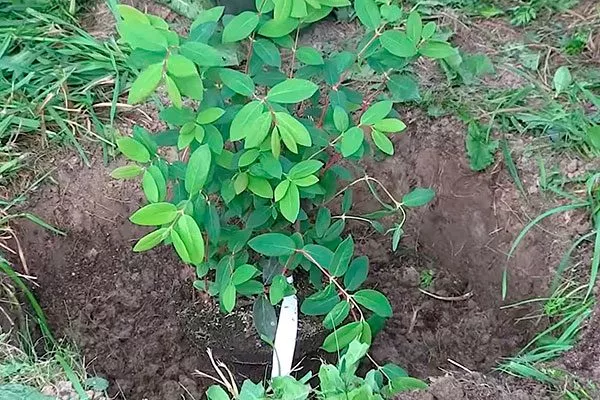
- ✓ Seedlings must have a healthy root system without signs of rot or damage.
- ✓ Seedlings with a closed root system are preferable, as they take root better.
The planting holes should be 50 cm deep and 50 cm wide. Planting should be done using a 20 x 50 cm pattern. One- to three-year-old seedlings are used for planting. Two- to three-year-old honeysuckle plants can produce fruit even during the current season. The minimum distance between adjacent seedlings, other plants, fences, and buildings should be 1.5-2 m.
Place a 2-3 cm layer of broken brick or expanded clay at the bottom of the planting holes. Top this with 10 liters of nutritious potting soil. Place the seedling in the hole, carefully spread the roots, and cover them with soil. Firm the soil and water. Then mulch with peat or compost.
Growing and care
Despite its low maintenance, the Violet honeysuckle requires some care. This not only ensures a high yield but also maintains the plant's health and attractive appearance.
Growing features:
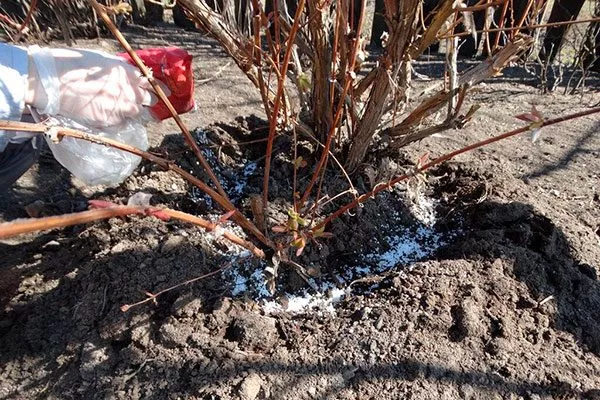
- Watering Watering should be frequent, not heavy. The plant should be watered sparingly. During the growing season and in extreme heat, 10 liters of water are poured under each bush. After watering, the soil is loosened, simultaneously removing weeds.
- Feed The bushes begin to be watered immediately after the snow melts. Urea diluted in water is added (30 g per 10 l). During flowering, diluted manure is added (1 kg per bush), and before wintering, 40 g of superphosphate is added.
- Trimming Only sanitary pruning is required; shaping the honeysuckle bush is not necessary. This is done in the fall. Dry, diseased, and damaged branches are removed.
Prevention of diseases and pests
The variety is resistant to diseases and pests, but poor agricultural practices and adverse weather conditions can lead to fungal infections or insect attacks. Neglecting preventative spraying and pathogen/pest attacks can lead to the death of the plant.
Potential problems with Violet honeysuckle and how to deal with them:
- Aphid. When the pest appears, honeysuckle leaves turn yellow, curl, and fall off. Aphid colonies can be seen at the tips of shoots and on the undersides of leaves. Timely ant control helps prevent aphid infestations.
If aphids have already appeared on the bushes, they should be treated with insecticides. To enhance the effect, it is recommended to cover the sprayed bush with plastic wrap overnight. - Leaf roller. Caterpillars can migrate to honeysuckle from other plants. Leaf rollers appear in May, when the fruits begin to ripen. Small infestations are collected by hand; large infestations are treated with pesticides.
- Fungal diseases. Their appearance is usually provoked by rainy and damp weather. Most often, honeysuckle is affected by powdery mildew, which causes the leaves and shoots to become covered with a whitish coating. The disease is controlled with copper sulfate or other copper-containing products.
As a preventative measure in the spring, as soon as the snow melts, honeysuckle bushes are sprayed with Bordeaux mixture. This procedure helps prevent fungal infections.
Winter hardiness and need for shelter
This variety is highly winter-hardy, able to withstand temperatures down to -38°C. Plants in temperate climates easily survive frosty winters, and their flowers tolerate spring frosts well. However, in areas with heavy snowfall, it is recommended to cover small bushes with an upturned bucket to prevent melting snow from breaking the young shoots in the spring.
Reproduction
This variety is usually propagated by cuttings. These are taken after the fruit sets. The current year's shoots are used as the "raw material." These are cut into sections approximately 15 cm long. Each section should have two leaves. The top cut is straight, and the bottom cut is at an angle.
- ✓ Cuttings should be taken from healthy shoots of the current year.
- ✓ High humidity and a temperature of about 20-25°C are required for rooting.
The cuttings are grown in a peat-sand mixture, covered with plastic film, and after about 10 days, when roots appear, the covering is removed. Planting takes place in the spring. Honeysuckle can also be propagated by other vegetative methods, such as layering and division.
Harvesting
Honeysuckle ripens gradually on the side branches and within the bush. The top berries ripen first, followed by those on the lower branches. Ripeness is determined by taste; the harvested berries are stored in the refrigerator for no more than three days.
Application
The Violet variety produces berries that are not only delicious but also healthy. They can be eaten fresh or processed. The bushes can be used for ornamental purposes, making a beautiful, dense, and attractive hedge.
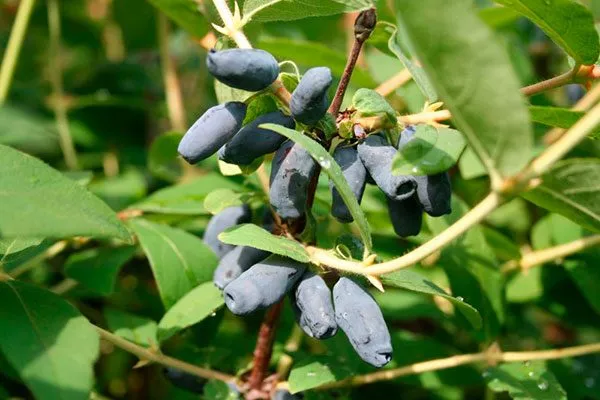
The fruits of the violet honeysuckle are eaten fresh, frozen, dried, and used to make all kinds of preserves, juices, compotes, jams, and jellies, as well as wines and liqueurs.
Reviews of the variety
The Violet honeysuckle has excellent flavor and remarkable growing characteristics. Even novice amateur gardeners and summer residents can grow this hardy and undemanding plant.