
The "Daughter of the Giant" honeysuckle is characterized by its large bush and gigantic fruits. This variety belongs to a group of edible, high-yielding varieties, distinguished by their ease of cultivation and impeccable resistance to drought, frost, disease, and pests. To successfully grow it, simply master the basics of cultivation.
Origin
This honeysuckle hybrid was developed from the Bakcharsky Velikan and Turchaninovka varieties by breeders N.V. Savinkova, A.P. Pavlovskaya, and other specialists. Testing began in 2009 and it was officially registered and approved for cultivation in 2017.
Technical specifications
Despite the hybrid's youth, gardeners across the country have already assessed all its positive and negative characteristics, which can help them determine whether or not to plant the seedling in their garden.
Description of appearance, taste qualities
| Name | Disease resistance | Flowering period | Soil requirements |
|---|---|---|---|
| The Giant's Daughter | High | June | Undemanding |
| Velvet | Average | May-June | Prefers fertile soils |
| Violet | High | June | Undemanding |
| Berel | Average | May-June | Prefers fertile soils |
| Yugana | High | June | Undemanding |
| Fire opal | Average | May-June | Prefers fertile soils |
The Giant's Daughter is a vigorous, multi-stemmed shrub that reaches 160-180 cm in height at maturity. The variety can be identified by other characteristic qualities:
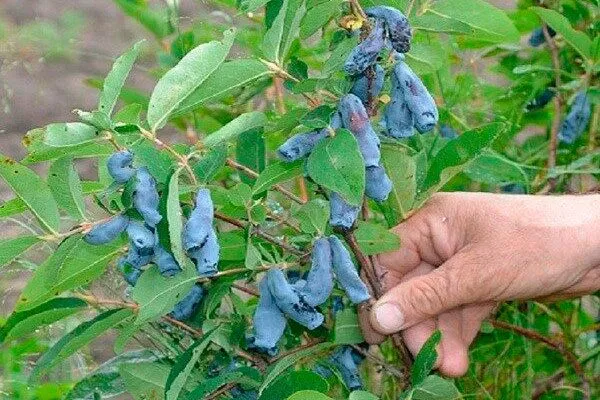
- Bush. It has an oval crown of medium density, grows slowly, but produces fruit vigorously. It has a medium spread, no more than 120-130 cm in diameter. The shoots are straight and upright, deforming only when diseased.
A distinctive feature is the bark's raspberry-anthocyanin hue, which is especially noticeable in young branches. The leaves are medium-sized and a classic green. - Flowers. They are characterized by large parameters and a pale yellowish color.
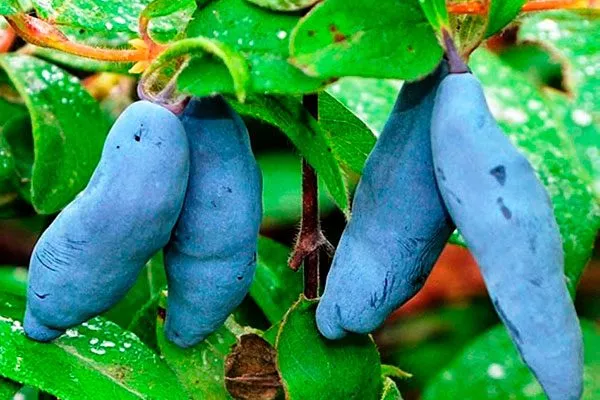
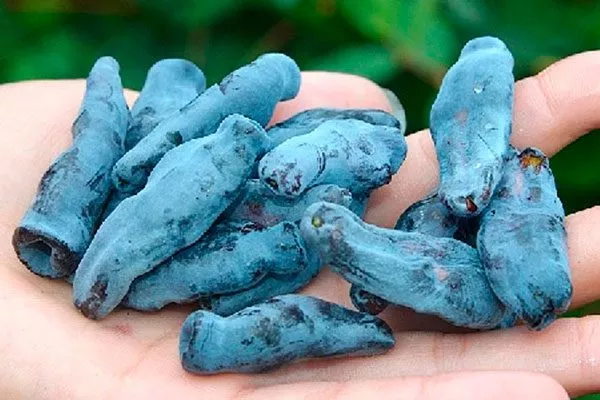
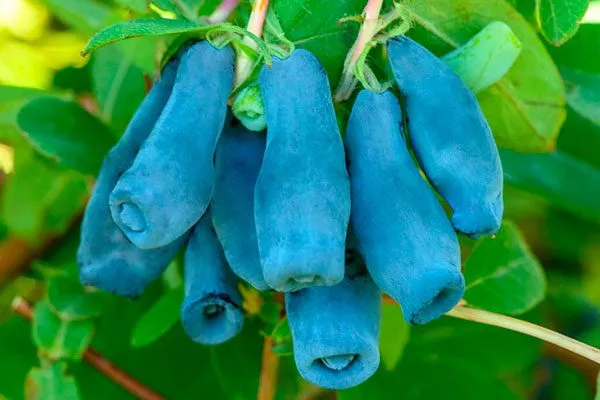
- Berries. They weigh 2.2-2.5 grams and are dark purple in color, but appear black upon closer inspection. They are irregularly shaped and pear-shaped, with a medium-thick skin and a pronounced waxy coating. The flesh is juicy, sweet and sour. Many consumers note that it imparts a fresh taste.
- ✓ The bark of young branches has a raspberry-anthocyanin hue.
- ✓ The berries are pear-shaped and dark purple, almost black in color.
Beneficial properties
The berries are enriched with a unique combination of vitamins C and P, which gives them therapeutic properties. They are recommended for anemia and hypertension. The fruits also contain other vitamins, tannins, and micro- and macroelements. Iodine, also found in the berries, is second only to strawberries in iodine content.
Thus, regular consumption of berries helps strengthen the immune system and has a beneficial effect on the functioning of the cardiovascular and digestive systems.
Features of application
Honeysuckle berries can be eaten both fresh and processed. They are used to make healthy jams and preserves, and are also added to fresh compotes and homemade berry lemonade. If overripe, they make a delicious wine.
Ripening period, yield and fruiting
This variety is characterized by early maturity, but high yields begin 5-6 years after planting. One bush produces an average of about 3 kg of berries, and maximum yields can reach 3.5 kg. A hectare can yield 10 to 15 tons of fruit, with yields varying depending on growing conditions and care.
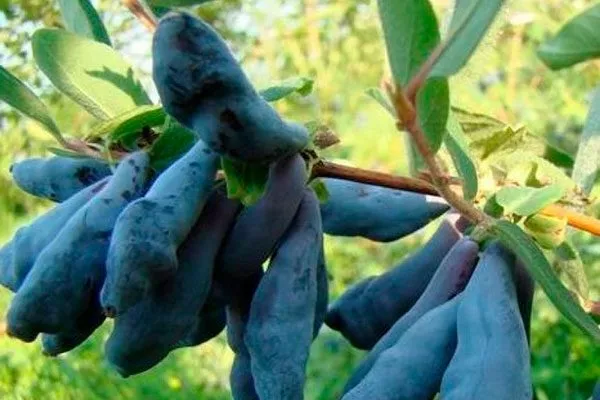
The giant's daughter bears fruit every year, the fruit is harvested during July, but the exact ripening period depends on the climatic conditions of the region.
Pollinators
This variety requires pollinators for effective fruiting, as it is self-sterile. A single bush in a plot will result in abundant blooms but only a small number of berries, even with proper care and favorable weather conditions.
To ensure a bountiful harvest, at least 2-4 plants of different varieties should be planted nearby. Pollination occurs by bees and bumblebees, attracted to honeysuckle as a honey plant. Donor varieties:
- Bakcharsky Giant;
- Delight;
- Strezhevchanka.
Resistance to cold and drought
The Giant's Daughter is frost-resistant – it can withstand temperatures down to -50 degrees, while its fruit buds can withstand temperatures down to -40 degrees.
The bushes are poorly resistant to overwatering, which can lead to stunted growth and rot. However, a lack of moisture also negatively affects the flavor of the berries, imparting a bitter taste.
Which regions is it best suited for and what are the climate requirements?
Ideal for growing in the climatic conditions of Central Russia, it can be successfully cultivated in the southern regions provided sufficient moisture is provided.
The variety is included in the State Register of our country and is recommended for cultivation in a wide range of regions, from the North to East Siberia.
The main advantages and disadvantages of the variety
What is the difference from other varieties and hybrids?
To illustrate the differences between the Giant's Daughter and other honeysuckle varieties and hybrids, you can use a comparison table that includes the following parameters:
| Variety | Fruit weight (average values in grams) | Taste | Shade | Yield per bush in kg |
| The Giant's Daughter | 2 | Sweet and sour | Dark purple, almost black | 3.2 |
| Velvet | 1.2 | Sweet and sour | Dark blue | 2.5 |
| Violet | 1.3 | Sweet and sour | Blue-violet | 2.5 |
| Berel | 0.5-0.9 | Sweet and sour | Dark blue | 3.5 |
| Yugana | 1.7 | Sweet and sour | Dark purple | 5 |
| Fire opal | 0.9-1.0 | Sweet and sour | Blue-black | 4 |
Planting and care
This variety prefers sunny locations, but lower branches need shade to ensure a healthy plant. This can be achieved by planting flowers or groundcover nearby, which will retain soil moisture and prevent it from overheating. If strong winds prevail in your region, consider protecting the shrub from them.
- ✓ Soil pH should be between 6.0-6.5 for optimal growth.
- ✓ Groundwater should not rise higher than 1.5 meters to the surface.
Cultivation is standard, but please note the following important nuances for this variety:
- It's undemanding regarding soil, but won't yield rich harvests in overly acidic or damp soils where groundwater is too close to the surface. It can grow on sandstone.
- It's recommended to purchase honeysuckle seedlings 2-3 years old, as they take root better. Container-grown plants are preferable, as they can be planted year-round. Bare-root seedlings are best planted in the fall, around September.
- Planting holes should be prepared in advance, a week before planting, by enriching the soil with fertilizer.
- The distance between planted specimens should be 150-180 cm; when planting honeysuckle in rows, the distance should be 200-230 cm between rows.
- Before planting, the bush is not pruned, only damaged or dried branches are removed.
- The root collar is buried to a depth of 4-6 cm.
- Watering should be generous. In warm summers without prolonged droughts, water four times per season, using 10-12 liters of water per bush. During periods of drought, water more frequently to prevent the berries from becoming sour or bitter.
- After water treatments, the next day, loosen the soil, removing weeds.
- Gardeners in drought-stressed areas use organic mulch to conserve soil moisture.
- Fertilizers for plants under two years old are applied only in the spring, using a urea solution (25 g per 10 liters of water). As plants mature, fertilize twice a year—in spring and fall—alternating between humus and charcoal. Additional nutrition can be provided with special complex fertilizers for honeysuckle, available at gardening stores.
Propagation of edible honeysuckle
There are several methods of hybrid propagation that are considered the most effective:
- Seeds. They have a high germination rate, making them easier to grow. However, in most cases (80-90%), the plants do not retain the characteristics of their parents.
- Cuttings. Using green or woody cuttings allows you to preserve varietal characteristics, but the rooting process is complex and requires careful care.
- Layers. Despite the risk of damaging the cuttings during gardening, this method allows the mother plant's traits to be passed on to the offspring. Rooting occurs quickly.
- Dividing the bush. This method is suitable for healthy and well-developed mature bushes. The cuttings root quickly and begin to bear fruit after transplanting.
Diseases and pests
Despite the variety's resistance to diseases and pests, damage can occur under unfavorable conditions. This can include:
- Powdery mildew: treatment with Fitosporin.
- Leaf rollers: use of insecticides Confidor or Actellic.
- Honeysuckle larvae, scale insects, mites, aphids: pre-harvest spraying of the plant with a vodka solution (100 ml per 1 liter of water) three times at weekly intervals and after harvesting the fruits with Calypso or Aktara.
Harvesting
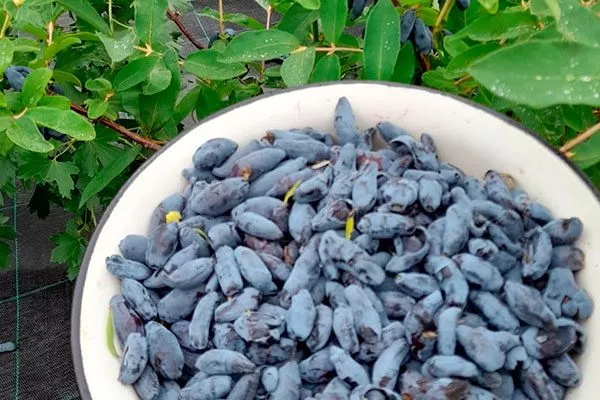
The berries ripen in the second ten days of June. Harvesting occurs in 2-3 stages, by manually separating the berries from the branches. The fruit is stored at temperatures between 0 and 3°C (32°F) in the refrigerator for no more than three days.
What difficulties might arise when growing?
Honeysuckle 'Daughter of the Giant' is unpretentious, has excellent immunity and frost resistance, and, as a rule, does not create problems in cultivation even for novice gardeners.
But the main concern is the risk of reblooming, which can negatively impact yield. In commercial gardening, it is recommended to remove emerging buds as early as possible.
Reviews
The "Daughter of the Giant" hybrid is popular due to its advantages, such as disease resistance, frost hardiness, large fruits, and pleasant berry flavor. Growing the bushes is easy, but most importantly, no shaping is required until the plant is 15 years old.