
Honeysuckle Long-fruited is an early-ripening berry variety. Domestic gardeners cultivate it in many regions of the country and value it for its large fruits, good yield, and ease of care.
Origin
Dlinnoplodnaya is an early variety developed by the South Ural Research Institute of Fruit, Vegetable, and Potato Growing, specifically its employees V.S. Ilyin and N.A. Ilyina. This achievement of Chelyabinsk breeding was included in the State Register in 1994.
Description of the variety
The fruit is the hallmark of this honeysuckle. Long-fruited honeysuckle is characterized by large, elongated berries with a pleasant, fresh flavor. This variety also has other distinctive characteristics, making it easy for experienced gardeners to recognize.
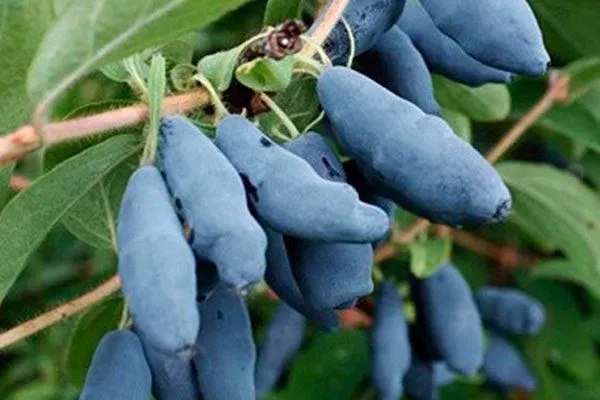
Appearance of the plant
An adult bush has distinctive features:
- height - from 1 m to 1.7 m;
- strong spreading (the bush reaches 1.5-1.7 m in diameter);
- thin curved branches of purple color;
- leaves: small or medium in size, lanceolate in shape, pointed, dark green in color;
- flowers: large, funnel-shaped, white-yellow.
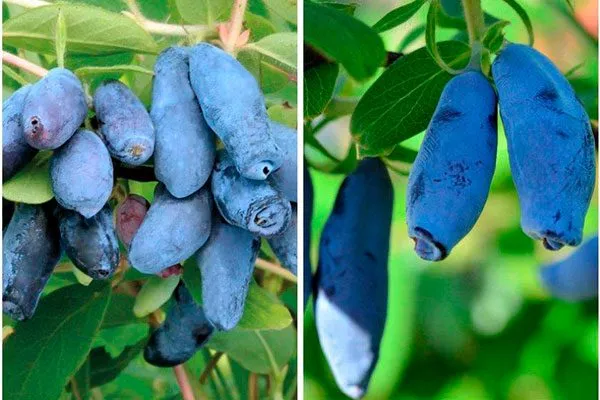
Berries and their taste qualities
Long-fruited berries have the following characteristics:
- oblong;
- with a long stalk;
- slightly flattened on the sides;
- with a bumpy surface;
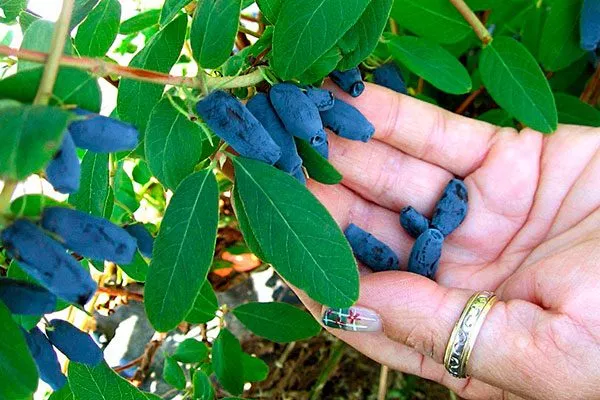
- length indicator - 2.3-2.7 cm;
- average weight is 1.3-1.5 g (under favorable growing conditions, the weight of the berry reaches 2 g);
- skin: thin, rich purple-blue color, with a waxy coating;
- the pulp is juicy, with a delicate aroma.
The flavor of this variety's honeysuckle berries is pleasant. It's refreshing, sweet and tart, without bitterness or astringency. This variety received a tasting score of 4.6.
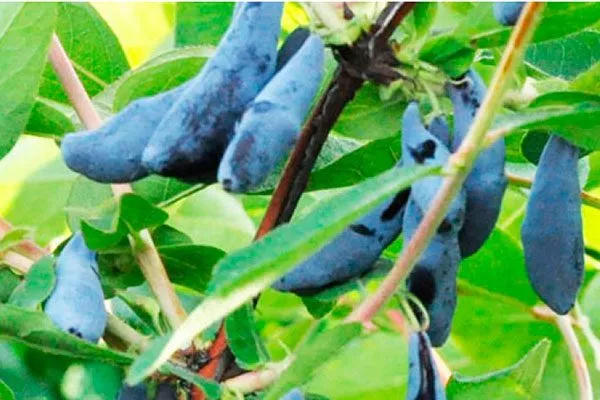
The content of the constituent substances in the fruits is as follows:
- sugars - 9%;
- acids - 2.2-3% acids;
- vitamin C - 48 mg/100 g;
- dry matter - 13.8%.
The fruits of this berry have healing properties due to their high content of vitamins, macro- and microelements. Eating them helps strengthen the immune system and improve vitality.
Characteristics
The Long-fruited honeysuckle variety is characterized not only by its good fruit quality but also by its high yield. It also possesses other characteristics that make it popular among gardeners.
Pollinators and self-fertility
| Name | Ripening period | Disease resistance | Winter hardiness |
|---|---|---|---|
| Blueberry | Early | High | High |
| Blue-eyed | Average | Average | High |
| Chelyabinsk resident | Late | High | Average |
| The highlight | Early | Average | High |
The bushes are self-sterile. To ensure fruiting, several additional pollinators will need to be planted in the garden. Experienced gardeners prefer to use Ural-bred varieties for pollination of Long-fruited:
- Blueberries;
- Blue-eyed;
- Chelyabinsk;
- The highlight.
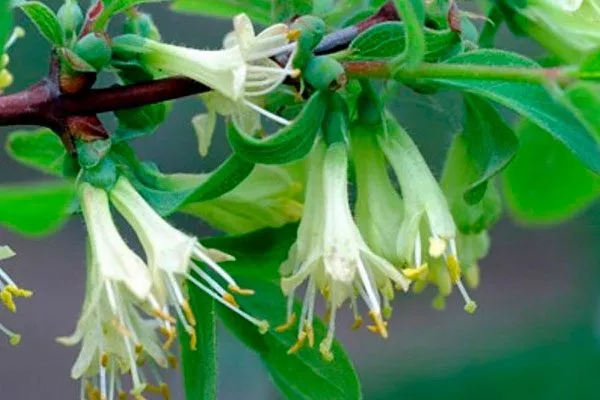
Ripening period, yield
Bushes of this variety begin bearing fruit in the third year after planting. Flowering occurs in the first ten days of May. The fruits ripen 30-35 days later (the first week of June).
The yield of the Long-fruited variety depends on weather conditions. In the harsh Ural climate, a mature plant yields 1.5-2 kg of berries. In regions with mild winters, the yield is 2.5-3 kg.
Features of application
Honeysuckle fruits are versatile in their purpose:
- they are eaten raw;
- processed to produce jam, preserves, marmalade, and compote;
- make juice and wine;
- freeze;
- are subjected to drying.
Resistance to diseases and pests
This variety exhibits good resistance to the main diseases and pests of edible honeysuckle. Adherence to proper agricultural practices will prevent disease problems from becoming a concern for gardeners. Adverse weather conditions rarely provoke the development of diseases in Long-fruited honeysuckle bushes.
Winter hardiness and need for shelter
This variety is considered frost-resistant. Its winter hardiness rating is above average. The bushes can withstand harsh Siberian winters and temperatures down to -45°C. The inflorescences are resistant to frosts down to -7°C.
Begin preparing for winter in the fall before frost sets in. Moisten the soil generously. Cover young, fragile plants with agrofibre. Mature bushes do not require insulation.
Suitable regions
This honeysuckle variety is recommended for cultivation in home gardens in the Chelyabinsk region. It is also suitable for cultivation in other parts of the Russian Federation:
- Middle zone;
- Leningrad region;
- Moscow region.
Pros and cons
The honeysuckle variety Long-fruited has become a favorite among domestic gardeners for its many advantages, such as:
The variety does have one minor drawback: its spreading bush form. This causes the lower branches to lodge, resulting in dirty berries.
Landing
The planting time for honeysuckle bushes is different from that for other varieties. They are planted from early August until the end of September. Rooting occurs quickly, with the seedlings having time to establish themselves before the cold weather sets in. Spring planting is not recommended due to the variety's early growth (early April). If you plant a Long-fruited bush in your garden in April, its development will be slow.
- ✓ The seedling must have at least 3 healthy shoots.
- ✓ The root system must be well developed, without signs of rot.
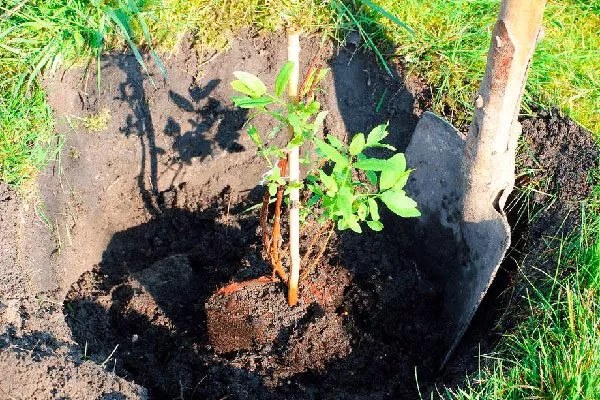
Honeysuckle will produce a good harvest if it is allocated a place in a plot that meets the following requirements:
- well lit;
- protected from drafts;
- sublime;
- with loose soil.
Long-fruited sage doesn't tolerate waterlogging. When planting in clay soil, ensure good drainage. Before planting, dig a hole 50 cm deep and 60 cm wide. Fertilize the soil with:
- rotted manure (10-12 kg);
- potassium salt (100 g);
- superphosphate (100 g).
Follow the landing algorithm:
- Soak the seedling in water with a growth stimulator added to it for 24 hours.
- Spread the roots of the seedling. Place them in a hole half-filled with a mixture of soil and fertilizer.
- Cover the roots with soil. Lightly compact the soil under the seedling.
- Water it at the roots with water (10 l).
- Mulch the soil under the honeysuckle with sawdust.
When planting in light soil, plant the seedling 5 cm deep. This will promote root development. In clay soil, do not plant the seedling too deep. This will cause root rot.
Care
Getting a bountiful harvest of Long-fruited Honeysuckle won't be difficult if you care for it properly. Caring for this variety involves the following steps:
- GlazeHoneysuckle does not tolerate overwatering. Water the bushes moderately. Water the first time in spring on a warm day. Apply 10-20 liters of water per plant. Water the bush a second time during bud formation. After fruiting, water the planting as needed. The last watering should be in September.
- Loosening the soilLoosen the soil after each watering and rainfall. Do this to ensure free oxygen access to the plant roots. Combine loosening with weeding.
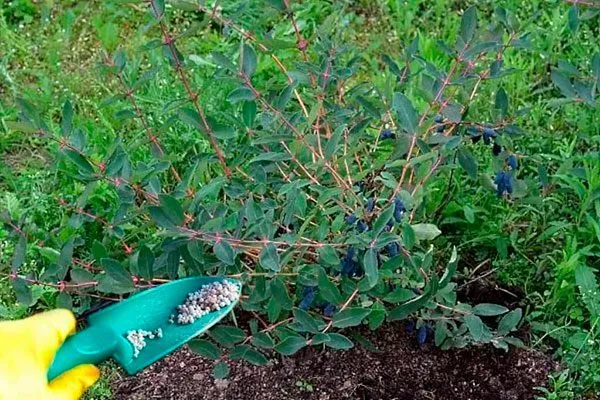
- FertilizingFertilize the plant regularly with organic and mineral fertilizers. Use mixtures containing potassium and phosphorus. After planting and during flowering, fertilize the bushes with manure or ash.
- TrimmingsThis variety tends to grow rapidly. Regular pruning is necessary, both to shape the crown and for sanitary purposes. Prune branches in the spring or fall.
- Disease treatmentsIf agricultural practices are not followed, Long-fruited bushes are susceptible to fungal attacks. Treatment with Fundazol or a soap solution with copper sulfate (10 g per 10 l) will help solve the problem. Spraying with wood ash infusion or Topaz will protect the plant from powdery mildew.
- Protection from pests. Poor care can also lead to infestations of bushes by insects such as aphids, scale insects, caterpillars, and honeysuckle mites. Treating your bushes with Confidor will help protect them from these attacks. When your honeysuckle is fruiting, replace insecticides with folk remedies like tobacco infusion.
- Apply nitrogen fertilizer in spring to stimulate growth.
- In summer, use potassium-phosphorus fertilizers to maintain fruiting.
- In the fall, apply organic fertilizer to prepare the plant for winter.
Reproduction
Gardeners propagate this honeysuckle in different ways:
- LayeringThe lower shoot is bent down toward the ground and pushed deeper into the soil at the center. After a few days, the shoot will begin to root. It will need to be separated from the mother plant and planted in its permanent location.
- In divisionsThe plant is dug up and its root is divided into several parts. The divisions are then planted.
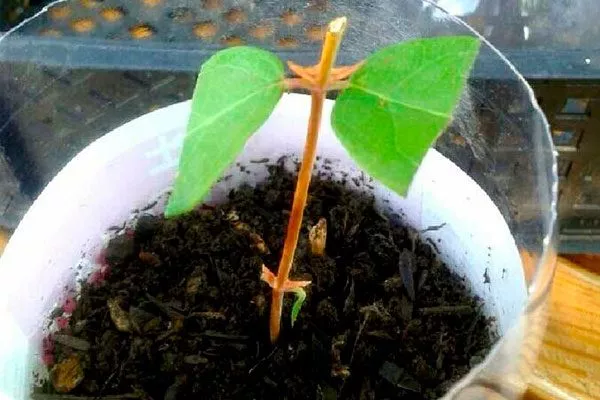
- CuttingsIn the spring, young shoots are cut. They are placed in water with a growth stimulant added for 24 hours. After planting, they are covered with plastic. After the cuttings have rooted, the plastic is removed.
Harvesting
Harvest the fruit in the morning, as soon as the dew has dried. Begin harvesting when the berries have turned a rich blue-violet color. Collect fallen berries as well. They can be used to make jam.
Reviews
Long-fruited is a great choice for the gardener. With minimal care, this variety produces abundant fruit, is rarely susceptible to disease, and delivers tasty and nutritious berries. This variety can be propagated in a variety of ways, ensuring the seedlings take root quickly.