
Honeysuckle Boreal Beauty is a relatively new variety of Canadian origin. Characterized by its frost resistance, it is ideal for cultivation in the northern regions of the country. It is distinguished by its very rapid growth and undemanding nature, adapting not only to cool climates but also to warm ones.
Who developed the variety and when?
Boreal Beauty, or Northern Beauty, as the variety is known, dates back to 2014 but was approved for use in 2017. Canadian breeders and scientists worked on its development in Saskatchewan.
Peculiarities
Boreal Beauty is one of the most popular varieties in the Boreal series, characterized by rapid yield growth and early maturity—good yields can be harvested as early as the third year after planting. Peak yields are reached in the fifth or sixth year.
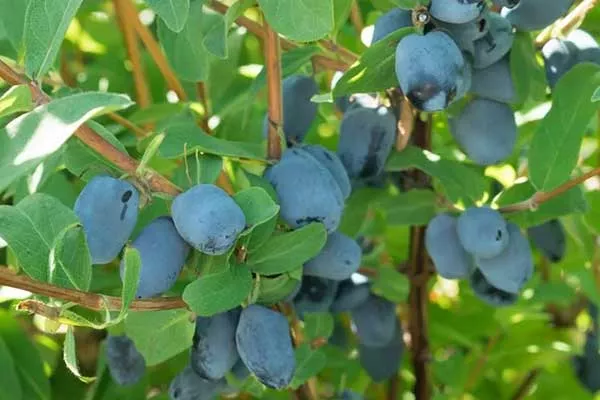
Appearance of the plant
Boreal Beauty is an upright, vigorous shrub that has the following characteristics:
- crown shape – rounded;
- shoots – straight, strong;
- height of the bush – 120-150 cm and more;
- leaves - oval, classic green;
- flowers – snow-white and cream.
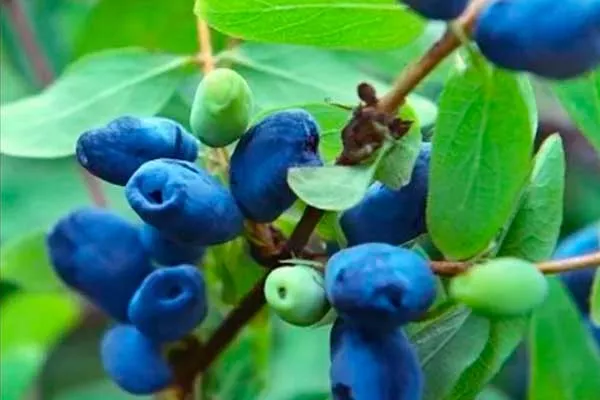
Berries and their taste qualities
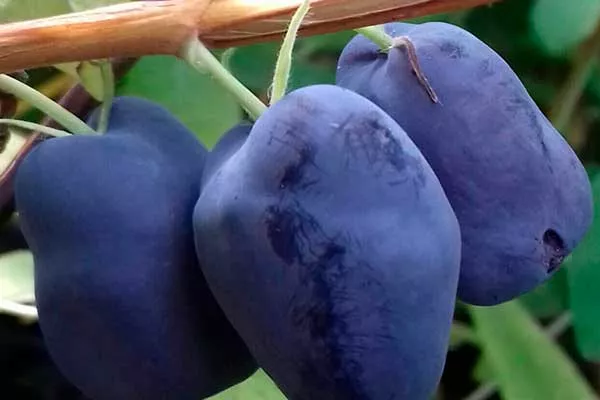
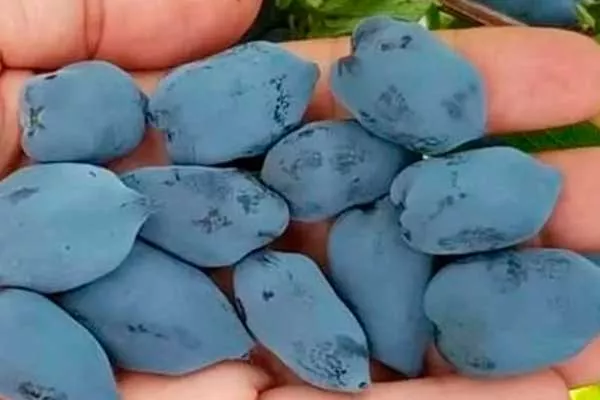
The fruits are quite large, weighing between 3 and 3.7 g. They also have other characteristic features:
- length of berries – about 2-2.5 cm;
- diameter – 0.8-1.0 cm;
- shade – purple, with a waxy, bluish coating on the surface;
- skin – compacted, due to which the shelf life and transportability are at a high level;
- pulp – fleshy texture and dense structure, juicy;
- form - oval-elongated;
- taste - sweet and sour, no bitterness or astringency;
- type of separation – dry;
- aroma – honeysuckle.
Medicinal and culinary uses
Honeysuckle berries have a unique combination of vitamins C and P, giving them medicinal properties. They are particularly beneficial for anemia and hypertension. The fruit also contains vitamins A, B, carotene, calcium, and other minerals.
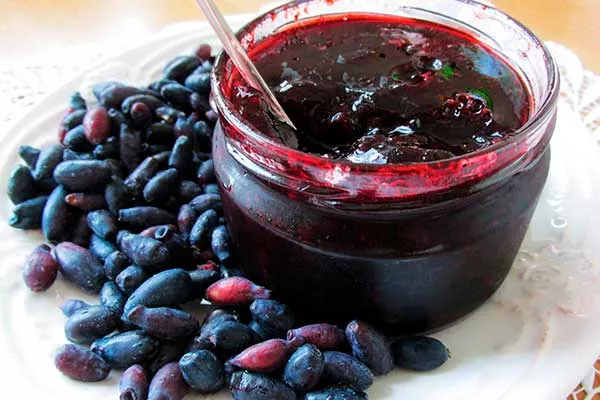
Regular consumption of the berries has a positive effect on the cardiovascular and digestive systems, strengthens the immune system, and stabilizes the body. The berries are used for bleeding, gallbladder disease, and malaria. Decoctions of the branches and bark are used as a diuretic for dropsy.
Self-fertility and pollinators
Honeysuckle requires pollinators because it is self-sterile. This variety responds well to cross-pollination when planted next to varieties such as Boreal Blizzard or Boreal Beast, resulting in large fruits and a bountiful harvest. It is recommended to plant these varieties in groups of 3-5 bushes.
| Pollinator variety | Percentage increase in yield | Recommended distance between bushes |
|---|---|---|
| Boreal Blizzard | 30-40% | 1.5-2 m |
| Boreal Beast | 25-35% | 1.5-2 m |
Ripening period and yield
This honeysuckle variety ripens later than other varieties, from July to September. Abundant fruiting begins in the third year of the bush's life, with yields reaching 2-6 kg per plant.
Location and soil requirements
When choosing a site for planting a shrub, it is worth giving preference to level, sunny places with well-drained soil, avoiding dry, sandy or excessively waterlogged soil.
Winter hardiness
The bush can withstand temperatures down to -50 degrees and is suitable for growing in open ground.
Landing
To plant honeysuckle, prepare planting holes measuring 40x40x40 cm. Space them 130-150 cm apart. For each hole, you will need:
- approximately 12-16 kg of compost, and on sandy soils 2 times more;
- 35-45 g of single Superphosphate or 20 g of double;
- 0.7-0.9 kg of charcoal
- ✓ The soil pH level should be between 5.5-7.0 for optimal honeysuckle growth.
- ✓ The soil should have high moisture capacity, but without stagnant water.
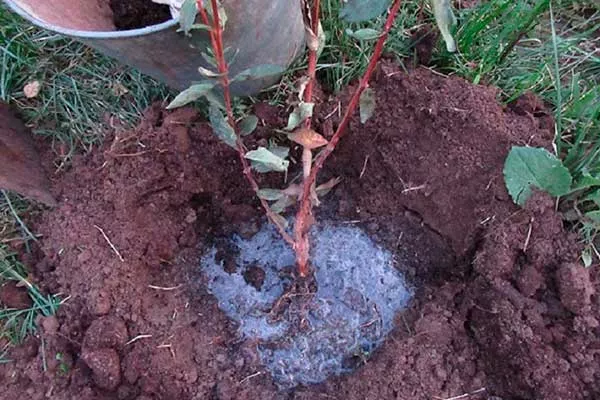
The landing process is standard:
- Before planting, water the hole with warm, settled water.
- In the center of the hole, create a small mound of earth.
- Carefully place the seedling on the mound, spreading the roots evenly on all sides.
- Sprinkle a little compost over the roots and water again until the soil covers them tightly.
- Fill the hole to the top, water generously again and mulch the soil around the bush to retain moisture.
Care
Skincare treatments are also classic. They are categorized by season:
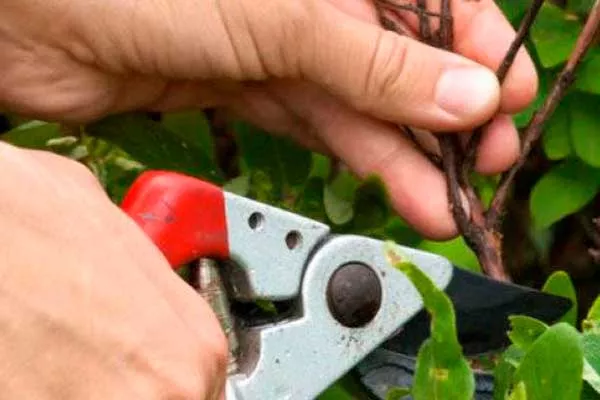
- Autumn care. Prune dried and cross-shaped living branches to prevent the bush from becoming too dense.
- Spring care. At the beginning of the growing season, apply nitrogen fertilizer, regularly fertilize the bushes with organic fertilizers and weed.
- Summer care. During flowering and fruiting, feed the bushes with phosphorus-potassium fertilizers once a month. Water the plants generously in hot weather, especially since honeysuckle thrives in moisture.
Reproduction
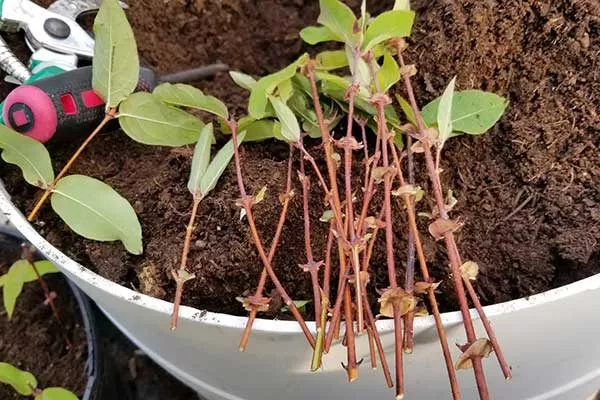
Honeysuckle propagation occurs vegetatively – through rooting cuttings or dividing the bush, which allows the plant to retain its parental properties.
Diseases and pests
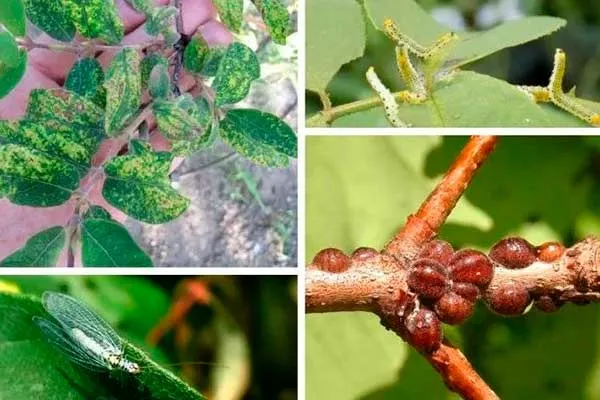
The Boreal Beauty honeysuckle variety is highly resistant to various diseases and insect attacks. The shrub is also resistant to mold and powdery mildew. However, if proper growing conditions are not met, the following may occur:
- Striped sawfly. Adults emerge in June and remain active until mid-July. Females lay eggs in leaf tissue, and the caterpillars feed on them, leaving only the petioles. If the pest infestation is high, leaves can be completely consumed. Control measures for the striped sawfly include:
- Mechanical and agronomic: manual collection and destruction of false caterpillars, autumn digging of the soil under the bushes and destruction of plant debris.
- Chemicals: Treatment of bushes after flowering and in summer, after harvesting with Fitoverm, Inta-Vir, Iskra, Fufanon, Actellik, Kinmiks according to the instructions.
- Aphid apical. A small, sucking insect that feeds on the sap of young leaves. Damaged leaves become deformed, turn yellow, and dry out. Control measures for the terminal aphid:
- Mechanical and agronomic: removal and burning of affected leaves, destruction of anthills to prevent the spread of pests.
- Chemicals: treatment of bushes with the previously mentioned preparations after flowering and in the summer.
- Ascochyta leaf spot. It appears on leaves as gray spots that lighten over time, developing into black spots called pycnidia. The disease reduces frost resistance and causes premature leaf drop. Control measures:
- Mechanical and agronomic: collection and disposal of fallen leaves, removal of infected parts of the plant.
- Chemicals: spraying before and after flowering with 1% Bordeaux mixture or other preparations such as HOM, Abiga-Peak, Topaz, Skor, Previkur, Fitosporin, according to the instructions.
Pros and cons
Boreal Beauty is a fairly popular and sought-after variety, despite its young origins. This is due to the following positive aspects:
Gardeners did not notice any critical shortcomings.
Reviews
Honeysuckle Boreal Beauty is considered an innovative variety with impeccable characteristics and delicious, sweet-and-tart fruits. Their distinctive feature is the absence of bitter or astringent notes, and the berries remain intact until harvested. With minimal care, you'll achieve maximum yields, but pollinators are required for this.