
Boreal Blizzard is a Canadian-bred variety from the Boreal series. Translated into Russian, it means "blizzard" or "northern snowstorm." It is characterized by large berries, a dessert aroma and flavor, and a highly decorative bush. It is considered an easy-to-care-for plant, suitable for even the novice gardener.
Origin of the variety
Boreal Blizzard was developed at the Saskatoon Research Centre in Saskatchewan, Canada. The cultivar was developed by Bob Bore himself and was released in 2016. The origin of this cultivar dates back to 1999, but Boreal Blizzard initially developed small fruit, so further development was undertaken.
The authors crossed different honeysuckle varieties, including only Russian and Japanese varieties. After years of experimentation, they achieved positive results.
Characteristics
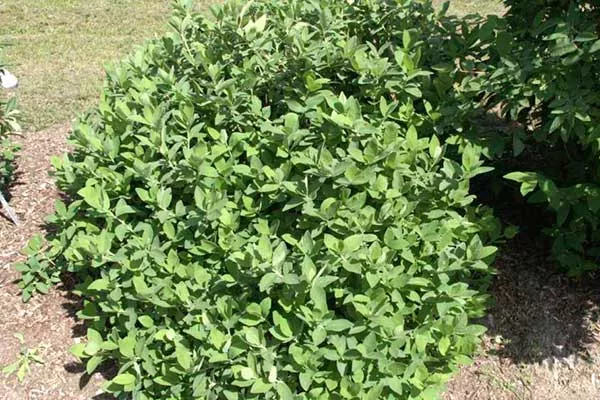
The variety is a medium-sized plant with a neat crown, which means it does not take up much space in the garden.
Description of appearance, taste qualities
| Name | Disease resistance | Frost resistance | Fruiting period |
|---|---|---|---|
| Boreal Blizzard | High | Up to -40 degrees | Before the autumn cold |
| Boreal Beauty | Average | Up to -35 degrees | Until mid-September |
| Boreal Beast | High | Up to -38 degrees | Until the end of September |
The Boreal Blizzard variety is characterized by a spherical crown, completely covered with dense foliage. Canadian honeysuckle also has other distinctive features:
- height - 100, maximum 150 cm;
- shoots – erect (like all Boreal), elastic and hardened with a gray-brown tint of bark;
- leaves - oval and small, dark green;
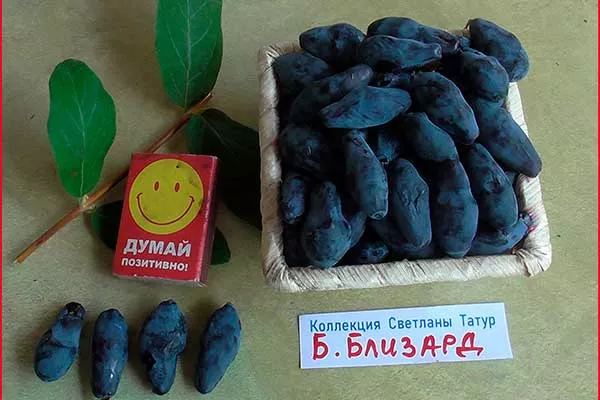
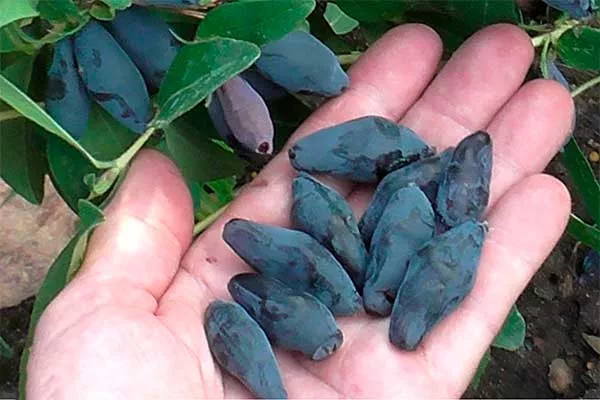
- fruits – large, about 3-3.5 cm in length and 0.8-1.0 cm in diameter;
- weight - varies from 2.8 to 4 g, but the average is 3 g;
- fruit shape – oval;
- color - dark blue;
- surface – with a waxy coating;
- pulp – fleshy texture, juicy;
- aroma – high intensity;
- taste - sweet, with a slight harmonious sourness, which completely disappears when the fruit reaches biological ripeness.
Features of application
The berries of this honeysuckle are edible and very aromatic, so they are often used to make jam and compotes. They are also suitable for drying and freezing.
Productivity and fruiting
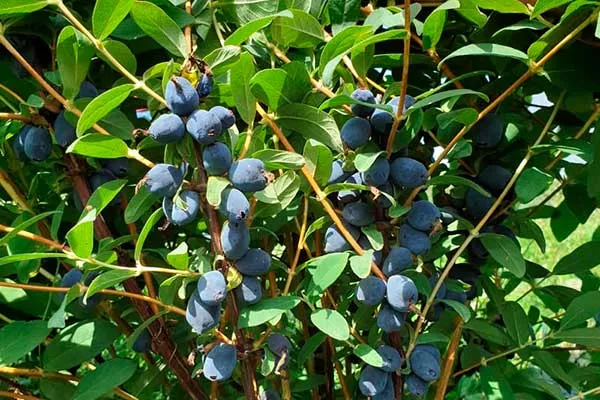
This variety is characterized by rapid yield growth: at 3-4 years old, bushes already produce up to 2.5-3 kg of large berries, whereas other varieties only reach this level 5-7 years after planting. The maximum yield at 6-7 years is 6 kg per bush. Harvesting occurs in several stages.
Ripening period
Boreal Blizzard berries begin to ripen later than other varieties, namely in the last days of June or the first ten days of July, depending on weather and climate conditions.
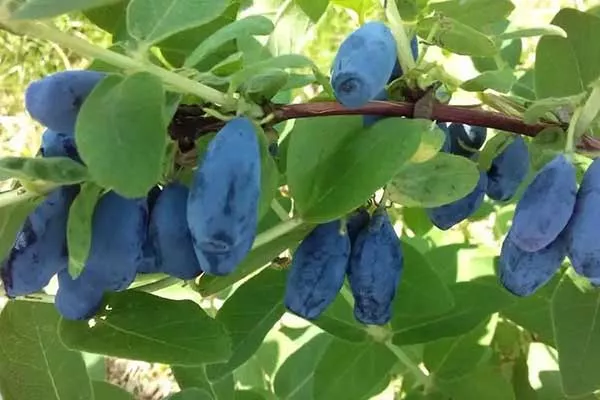
Particularly impressive is the length of the fruiting period, during which fresh berries can be picked – right up until the onset of autumn cold weather.
Pollinators of honeysuckle Boreal Blizzard
For successful fruiting, pollinators are necessary, as this variety is not self-fertile. It is recommended to plant 2-4 bushes of other Boreal series varieties, such as Boreal Beauty or Boreal Beast, in the same area, at a distance of no more than 20-25 meters.
Resistance to diseases and pests
This variety is highly resistant to diseases such as powdery mildew, but care should be taken carefully. Without preventative measures, pest infestations are possible.
Resistance to cold and drought
Boreal Blizzard is distinguished by good frost resistance, surviving temperatures as low as -40°C (-40°F) without damage. The flowers are resistant to spring frosts down to -8°C (-8°F). Honeysuckle thrives in moisture and does not tolerate prolonged droughts.
Suitable regions
This variety is ideal for growing in northern latitudes due to its ability to withstand late spring frosts. It can also be successfully cultivated in southern regions.
Soil requirements
The variety does not tolerate acidic soils, but prefers moderately loose and necessarily fertile ones.
Advantages and disadvantages of the variety
Over the years of cultivation in our country, gardeners have appreciated both the positive and negative qualities of this variety. Among its advantages, the following stand out:
There are no particular disadvantages, but gardeners note the late ripening period.
Difference from other varieties and hybrids
This variety, with its many advantages, is popularizing honeysuckle as a garden plant and expanding its cultivation areas. Farmers appreciate its consistent annual yield increase and gradual ripening—berries can be harvested within 3-4 weeks.
Landing
Canadian honeysuckle can thrive and bear fruit for up to 30 years with proper care and suitable conditions. Site selection is key – the ideal location should be well-lit and protected from northerly winds. A spot with light shade is also suitable. Honeysuckle is planted against a wall or fence.
Other characteristics of the variety:
- the variety is sensitive to stagnant water and does not tolerate waterlogged soils;
- the groundwater level should be no closer than 150-200 cm from the surface;
- If there is no alternative to the site, it is necessary to provide good drainage or a drainage trench;
- Preferred soil types are loam or sandy loam with a neutral or slightly acidic pH.
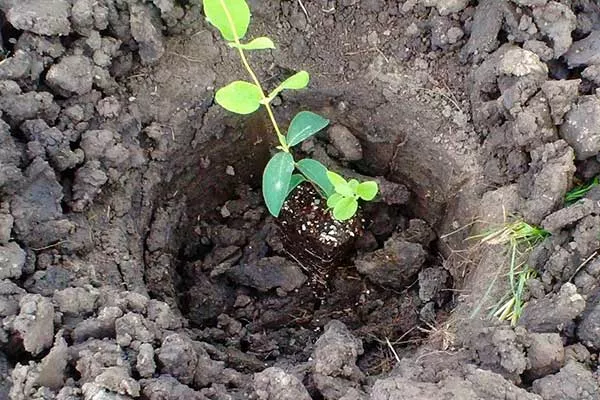
- ✓ The seedling planting depth should be such that the root collar is 5 cm below ground level, which is not mentioned in the article.
- ✓ The use of drainage is mandatory in areas with high groundwater levels, which is critical to prevent root rot.
It is important to use healthy planting material and adhere to the correct planting technology:
- Fill the hole two-thirds full with soil mixture, forming a mound in the center.
- Position the seedling, carefully spreading the roots – the root collar should be 5 cm below ground level.
- Fill in the remaining soil mixture, compacting it as you go.
- Water and mulch using compost, straw or grass clippings.
Features of cultivation
Water the seedling regularly to prevent the surrounding soil from drying out. It's important to loosen the soil and remove weeds. Other necessary measures include:
- Watering. A mature bush requires 3-4 irrigations per season, stopping during the period of active fruiting. During drought or heat, increase the frequency of irrigation to prevent bitterness of the fruit and weakening of the plant.
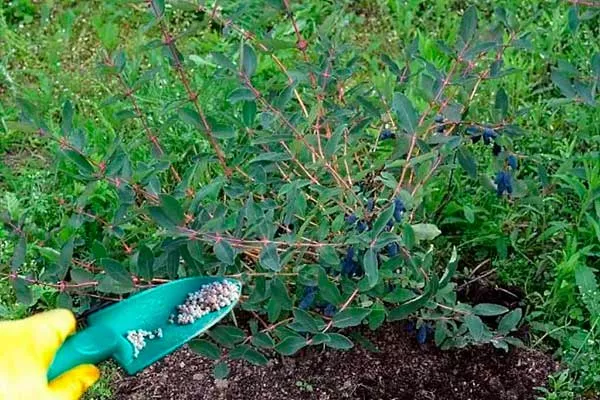
- Fertilizer. Fertilizing begins at 3-4 years of age. In spring, the root zone is mulched with humus and nitrogen-rich mineral fertilizers. To improve fruit quality and increase their size, charcoal and urea are added in the spring. Superphosphate and potassium salt are added before wintering.
- Trimming. It begins at the age of 6-8 years, but every year dry, damaged and unproductive branches are removed.
Pest and disease control
Adherence to proper agricultural practices significantly reduces the risk of pathogens and pests. Incorrect care, inappropriate location, prolonged rainfall, or drought can all lead to problems.
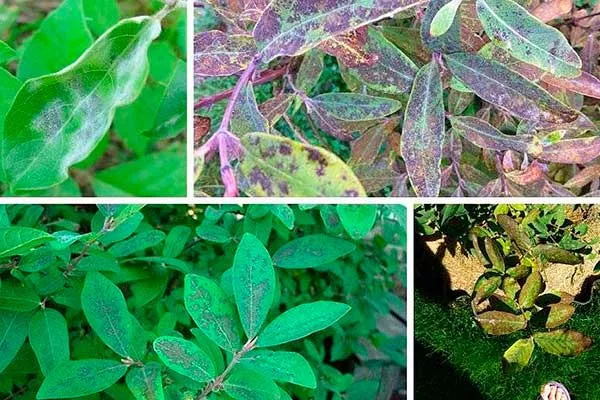
The most aggressive diseases:
- Ramulariasis. Gray-white spots appear on the leaves in early spring, then the stalks and stems are affected.
- Cercospora leaf spot. A fungus that appears as brown spots with a red border, causing the leaves to dry out and die.
- Mosaic of Arabidopsis. A viral disease spread by nematodes or already present in planting material. It causes foliage deformation, bush thickening, and stunted growth.
- Red-olive spot. A fungal disease whose spores overwinter in the soil.
Preventive measures include spring treatment, timely removal of affected areas, and the use of preparations (Mancozeb, Thiovit, Fundazol, and Bordeaux mixture) to suppress spores at any stage of development.
Pests dangerous for this variety:
- Leaf roller. It feeds on sap, twisting leaves and laying larvae in them.
- Honeysuckle fingerwing. This is a fruit-destroying caterpillar.
- Aphid. Forms colonies on the underside of leaves, causing yellow-brown spots.
- Scale insect. Affects shoots, causing the formation of hardened, unripe fruits.
- Honeysuckle mite. A small sucking parasite that causes curling and drying of green mass.
During the growing season, regularly inspect the bushes for pests and infection. If any are detected, treat with insecticides at 15-20 day intervals. Suitable products include Aktara, Actellic, Confidor, and Fitoverm.
Preparing for winter
Preparation for the dormant period includes mulching young bushes in northern regions for additional protection.
Difficulties in growing
Difficulties may arise during cultivation, such as cracks in the bark after wintering, which need to be cut out by treating the cuts with garden pitch.
Summer planting can be risky due to high temperatures and lack of moisture, which negatively impact the plant's condition.
Reproduction
This variety is propagated exclusively vegetatively. Three key methods, considered the most effective, are used:
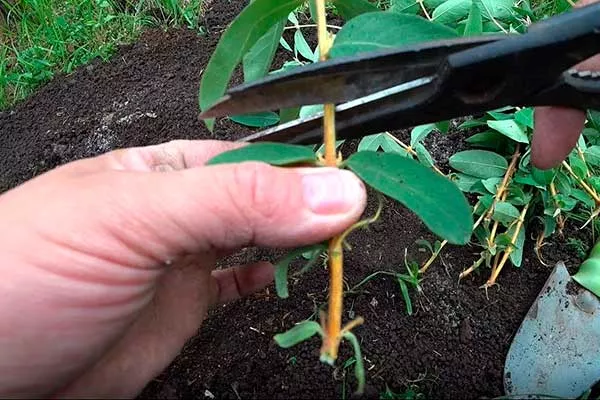
- Cuttings. In the spring, select a young shoot and cut it into 15 cm pieces. Then, place it in a nutrient-rich substrate, and when roots form, transplant it with a root ball to a permanent location.
- Layers. Throughout June, bend the stems to the ground and pin them down. In the spring, replant them, first separating them from the mother plant. To speed up rooting, make cuts near the buds.
- Dividing the bush. The optimal age is 6-8 years. The plant is removed, and the root is cut into pieces, which are immediately replanted in their permanent locations.
Harvesting
Harvesting begins in mid-summer, with the berries harvested without their stems. Honeysuckle can be stored in the refrigerator for up to five days and can be transported short distances. Wooden crates with ventilation holes are the most convenient for storing and transporting.
Reviews
Boreal Blizzard honeysuckle has a pleasant aroma and flavor, is hardy and easy to grow, and produces excellent yields. However, it does not tolerate prolonged drought and requires the planting of nearby pollinator varieties.