
The Bakcharskaya Yubileinaya honeysuckle is an excellent choice for gardeners who value high-quality berries and easy-to-grow plants. It not only adds fresh and healthy berries to your menu but also helps you stock up on jams, preserves, and other winter preserves. Proper care and attention to growing conditions are the key to a bountiful harvest.
Breeding history
This variety was developed at the M.A. Lisavenko Bakcharsky Northern Horticulture Support Center at the Research Institute of Seed Breeding (NIISS) thanks to the work of breeders Ivan Karpovich Gidzyuk, Anna Petrovna Pavlovskaya, and Nadezhda Viktorovna Savinkova. They crossed Kamchatka honeysuckle with the Turchaninov variety. It was approved for use in 2013.
Description of the variety
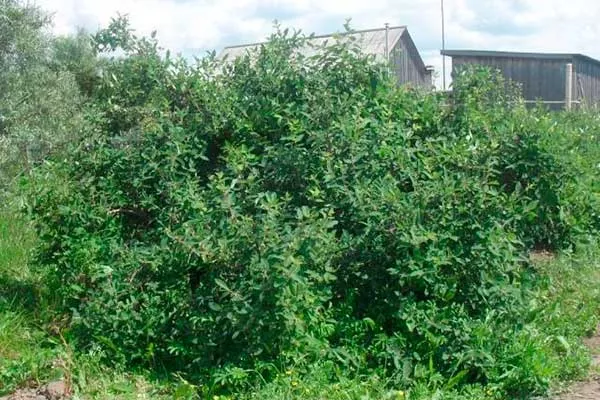
This variety belongs to the Bakchar honeysuckle group. The bush is medium-sized, sparse, and moderately spreading, forming an oval crown. Its height is 160-180 cm, and its width is approximately 120 cm. The branches are straight, the shoots are medium-sized, brownish-red, and pubescent.
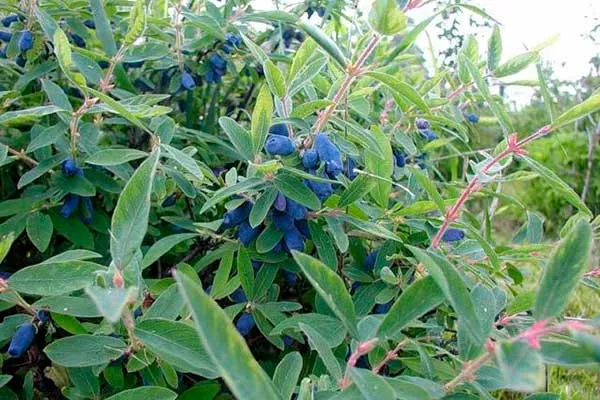
The leaves are small, oval, and green in color, with a smooth, matte, and leathery surface. The flowers are pale yellow.
Characteristics of fruits
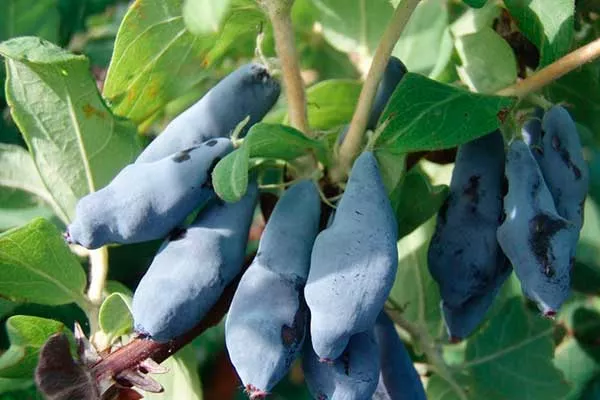
The fruits are large, weighing between 1.4 and 2.1 g. They are elongated oval in shape with a slightly rounded tip. They are dark blue in color and covered with a slight waxy coating.
Technical specifications
The Bakcharskaya Yubileinaya honeysuckle delights gardeners with its bountiful yields of berries with a harmonious flavor. This easy-to-grow shrub requires little care and is easily grown by both novice and experienced growers.
Taste qualities
The fruits have a sweet and sour taste, are juicy and not bitter, and have a refreshing aroma. They receive a very high tasting score of 4.8 points.
Use cases
Berries have a versatile use. They are used for a variety of culinary purposes:
- They are great for snacking and added to salads.
- They are used to make preserves, jellies, and compotes. They retain their flavor and aroma well when preserved.
- Due to the delicate texture of the flesh and thin skin, the berries are best frozen immediately after picking. Frozen fruits are perfect for smoothies, desserts, or baked goods.
- They are used to make freshly squeezed juices, fruit drinks, or compotes, which are refreshing and rich in vitamins.
Bakcharskaya Jubilee is planted as an ornamental shrub. Here are some possible uses:
- It looks great in the garden, adding greenery and vibrant colors. The bushes are cultivated to create hedges or group plantings that will liven up any corner of the garden.
- This plant is ideal for landscaping cottages and public spaces. Its compact size makes it suitable for use in small gardens or parks.
- With its medium height and sparse crown, honeysuckle looks great along borders or paths, adding structure and depth to the landscape.
Honeysuckle combines well with other ornamental plants, such as flowering shrubs and perennials, creating harmonious compositions.
Ripening and fruiting
This early-ripening crop begins bearing fruit as early as 2-3 years after planting, and then produces a harvest annually. It's considered a mid-late variety in terms of ripening time.
Productivity
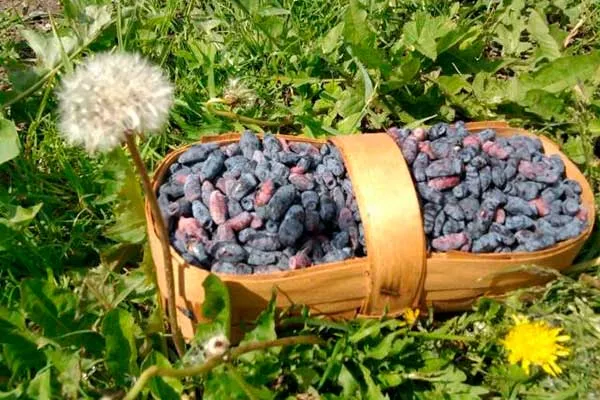
The Bakcharskaya Yubileinaya variety attracts attention with its high productivity. On average, one bush produces about 3.5 kg of berries, and in industrial conditions, this figure reaches 106 centners per hectare.
Growing regions
The plant is successfully cultivated throughout almost the entire country, but the best conditions for its growth are observed in the temperate climate of the central zone.
Necessary climatic conditions
The richest harvests of honeysuckle are found in Eastern Siberia, Central Russia and the Far East.
Self-fertility and the need for pollinators
It is a self-sterile variety. For a good harvest, plant several honeysuckle bushes nearby. The best pollinator for Bakcharskaya Yubileinaya is the Silginka variety.
Winter hardiness
The plant is highly winter-hardy, drought-resistant, and heat-tolerant. Regarding cold tolerance, it easily tolerates temperatures down to -48°C to -56°C, and its flowers remain blooming even at -7°C.
Harvesting and transportation of the crop, shelf life of berries
Begin harvesting when the skin becomes a uniform dark color. Experienced gardeners say that the disadvantage of fruit falling off is considered an advantage: spread plastic or fabric under the bush, shake the plant, and all the ripe berries will fall to the ground.
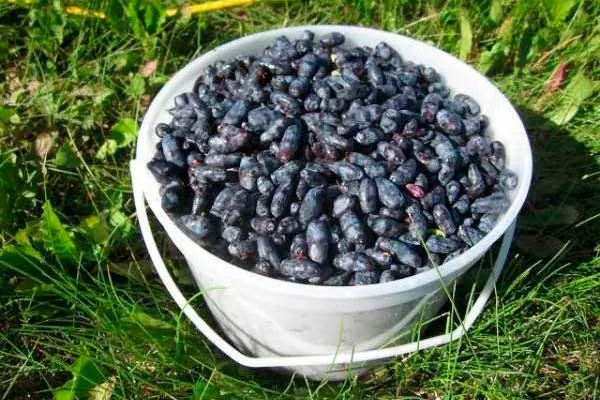
Bakcharskaya Yubileinaya transports well if the harvest is collected in shallow containers and laid in a thin layer. Honeysuckle has thin skin and tender flesh, so even in the refrigerator, the fruit doesn't keep for long. Process most of the fruit into jam, preserves, or compote, or freeze.
Placement on the site
Planting a crop is a fairly simple procedure, but to achieve the best results, it's important to follow certain guidelines. The subsequent development of the shrub depends on planting.
- ✓ The optimal soil pH level should be between 5.5-6.5 to ensure better absorption of nutrients.
- ✓ The soil must have good drainage to avoid water stagnation at the roots.
Soil requirements
The shrub can be planted in various soil types, but it grows best in fertile, loose soil. Improve areas with high sand and clay content. Clear the area of weeds before planting.
Selection of planting material
Purchase planting material from nurseries that offer the best quality honeysuckle and that match the varieties listed on the labels. Purchase 2-3-year-old plants in late summer or fall, with the root system still attached.
The root should be elastic and not too damaged during digging, and the branches should be straight, with identical internodes.
Selecting a suitable location and preparing the soil
Honeysuckle is an easy-to-grow crop, but to ensure a good harvest, grow it in well-lit areas. Insufficient sunlight can result in a poor harvest and small fruits. Avoid growing the plant in low-lying areas where moisture and cold air often stagnate.
- Test your soil for pH and nutrient content 2-3 weeks before planting.
- Add organic fertilizers (compost or humus) at a rate of 10 kg per 1 m² to improve fertility.
- If necessary, deoxidize the soil with dolomite flour or lime a month before planting.
Areas with high clay or sand content require drastic improvement. First, dig holes measuring 40x40x40 cm and fill them with a planting mix made from equal parts fertile soil, peat, compost, or humus.
Planting a bush
Cultivate honeysuckle in late summer or early fall. Although the plant finishes growing early, growth continues, allowing the bush to gain strength before winter. In spring, plant only container-grown seedlings or perform an emergency transplant to another location with a large root ball.
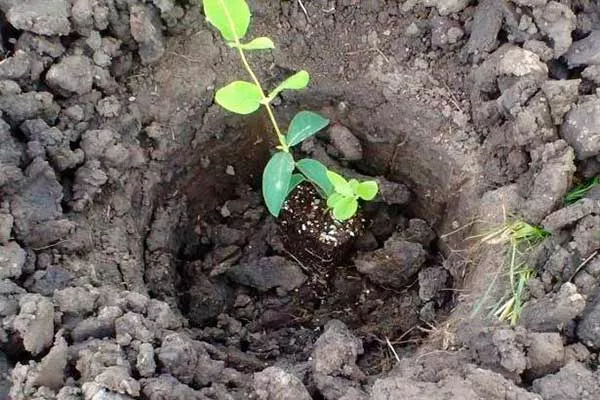
Space shrubs at least 1.5 m apart from each other and from other trees to ensure they have ample space to grow and receive light from all directions. Leave 2.5 m between rows.
Step-by-step algorithm:
- Fill the hole completely with water and let it soak in.
- Add 50 g of superphosphate and potassium salt under each root system, and if the soil is poor, add another 10 kg of organic matter.
- Form a mound of earth in the center of the hole and place the plant so that the root collar is 3-5 cm below the soil level.
- Fill the root system with the prepared mixture, compact it lightly, water generously and mulch.
Growing
Only young plants require careful care during the first year after planting. Mature, well-established, and healthy honeysuckle plants require little attention from gardeners.
Caring for a young plant
During the first few months, water the bushes regularly, loosen the soil to allow oxygen to reach the roots, and remove weeds. During the first three years, the plant does not require regular fertilizing if fertilizer was applied at planting.
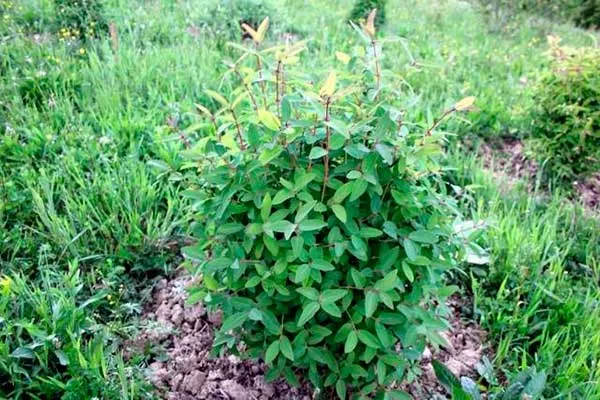
Honeysuckle grows slowly at first: the root system develops first, followed by the above-ground part. The Bakcharskaya Yubileinaya variety is distinguished by its early fruiting, which reduces this period to 1-2 years.
Caring for an adult plant
In its third year, the plant begins to bear fruit and requires additional feeding. In early spring, literally while the snow is still wet, apply nitrogen fertilizer under each bush. In late summer, add 1 kg of ash and 10 kg of organic matter to the soil.
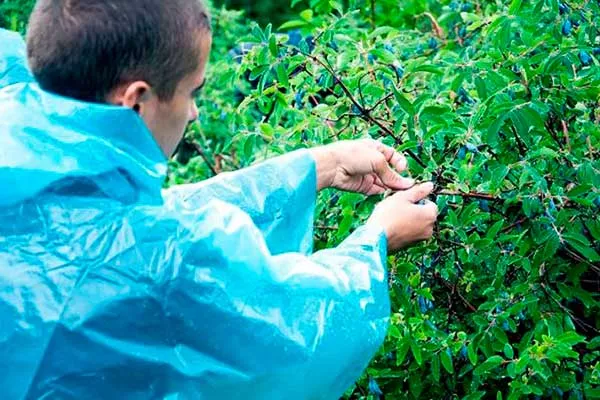
Further care includes weeding, loosening the soil around the tree trunk to a depth of 5-8 cm, and periodic watering during dry periods. Honeysuckle branches are very fragile, so avoid damaging them.
Pruning and wintering
During the first 15 years, honeysuckle doesn't require pruning, other than removing broken, dry, downward-growing, or overhanging branches that crowd the crown. Thin the plants by cutting off the oldest branches at the base.
At 20 years of age, honeysuckle begins to age, and if proper cultivation practices are followed, yields may decline. To rejuvenate the bush, prune it completely, leaving a height of about 15 cm above ground level. The following year, it will recover and can bear fruit for up to 10 more years.
Resistance to diseases and pests
Honeysuckle 'Bakcharskaya Yubileinaya' has strong immunity to common diseases and insects, but in some cases it can be attacked. The most dangerous insects for this plant are:
- Leaf roller caterpillars. They damage young shoots and foliage during the fruit ripening period.
- Aphid. It feeds on the juice of the leaves, causing them to turn yellow.
- Plum scale insect. It sucks the juice from the bark, weakening the bush.
To combat these pests, use specialized insecticides. Biological products include Iskra-bio, Fitoverm, and Agrovertin. Sometimes shrubs can suffer from powdery mildew, which can be treated by spraying the plant with Fitosporin.
Methods of reproduction
You can increase the number of seedlings yourself at home. There are several popular propagation methods, each with its own advantages and disadvantages.
Seeds
Collect the seeds from ripe honeysuckle berries, rinse, and dry them. Then stratify them by placing them in a moist environment and storing them in the refrigerator for 1-3 months. Plant the seeds in open ground or as seedlings, providing the necessary humidity and light.
This method takes more time, as the plants only begin to bear fruit after 2-3 years.
Cuttings
This is a faster and more effective method. In June or July, take one-year-old shoots 10-15 cm long. Trim the cuttings so that 2-3 leaves remain, and place them in a moist substrate (peat and sand) at a depth of 2-3 cm. To accelerate root formation, use rooting stimulants.
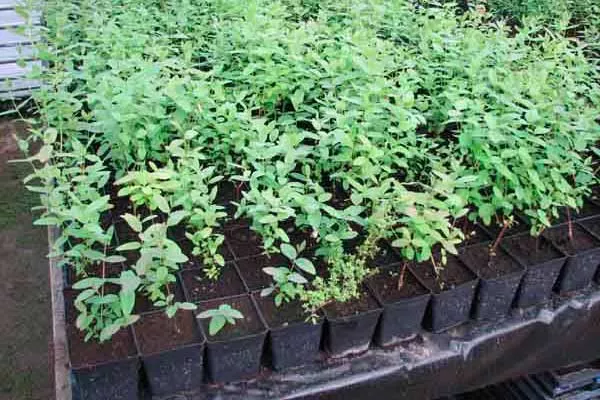
Cover the cuttings with plastic wrap or glass to create a greenhouse effect. After 3-4 weeks, roots will appear, and you can plant the cuttings in a permanent location.
Layering
In spring, select a healthy, flexible shoot and bury it in the soil, leaving the tip exposed. Water the area to maintain moisture.
Over the summer, the shoot will take root, and in the fall, you can separate it from the mother plant and transplant it to a new location. This method ensures a high survival rate.
Positive and negative qualities
Before planting a crop, it's important to carefully consider its advantages and disadvantages. Bakcharskaya Yubileinaya has many advantages:
Some gardeners consider self-sterility and a slight tendency for berries to fall off due to uneven ripening to be disadvantages.
Reviews
The Bakcharskaya Yubileinaya honeysuckle is one of the most sought-after berry crops. Thanks to its excellent taste and high nutritional value, this variety has earned recognition not only in Russia but also abroad. It is suitable for growing in a variety of climates and is disease-resistant. Proper care is essential.