
Bakcharskaya honeysuckle is an early domestic variety, bred specifically for harsh growing conditions. It appeals to gardeners with its excellent flavor, hardiness, and consistent yield.
History of creation
The Bakcharskaya variety was developed by breeders from the Tomsk region. After extensive and painstaking work, they succeeded in creating a whole group of honeysuckle cultivars, united under the name "Bakcharskaya."
Description of the plant
The Bakscharskaya variety has medium-density, spreading bushes. Young shoots have a distinct anthocyanin hue, which fades as the branches grow and develop. The shoots are vigorous, reaching a height of 1.7-1.9 m. The average diameter of the bush is 1.2-1.4 m.
Description and taste of fruits
| Name | Ripening period | Disease resistance | Frost resistance |
|---|---|---|---|
| Bakcharskaya | Average | High | High |
| Amphora | Late | Average | High |
| Nymph | Early | High | Average |
| Pride of Bakchar | Average | High | High |
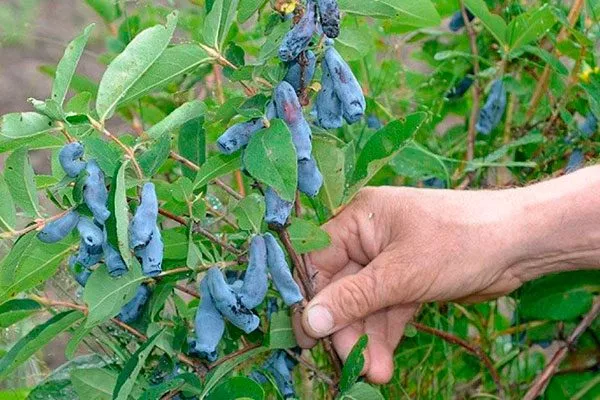
Its fruits are large and arranged in compact clusters, making harvesting quick. The berries adhere fairly well to the branches but are easily removed.
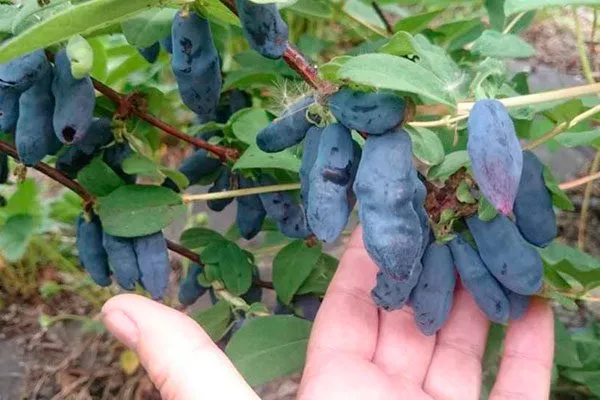
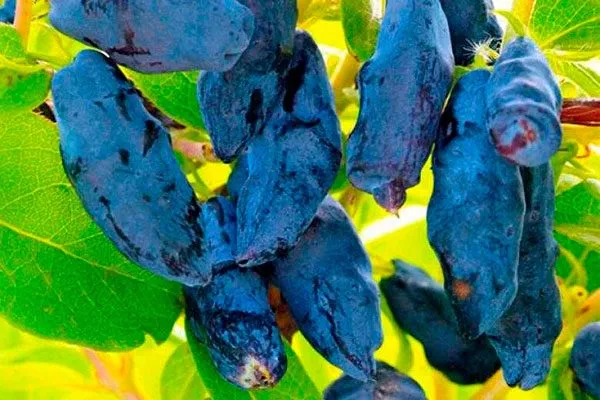
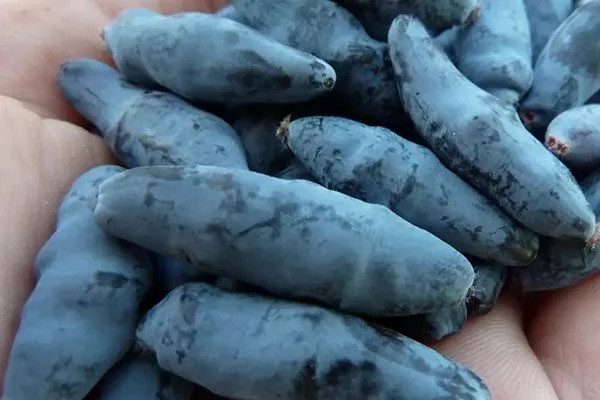
The fruit is elongated oval in shape, with rounded tips. The color is dark blue, and the skin has a uniform waxy coating. The surface is slightly bumpy. The flesh is juicy, with a balanced flavor, sweet and sour, with virtually no bitterness or astringency.
Fruit characteristics:
- Average weight: from 1.8 to 2.4 g.
- The length of the fruits is 4.5-5 cm.
- Diameter: 1-1.2 cm.
Characteristics of the variety
Bakcharskaya honeysuckle is a mid-season variety with a prolonged fruiting period. It produces quite a high yield, with a single bush yielding approximately 2-2.5 kg of berries. The bushes begin bearing fruit in the second year after planting.
The variety is self-sterile. The best pollinators for Bakcharskaya are considered to be the honeysuckles Amphora, Nymph, and Pride of Bakchar. This honeysuckle is known for its long fruiting period, with the bush capable of producing crops for at least 20 years.
Pros and cons of Bakchar honeysuckle
Before planting Bachkarskaya honeysuckle in your garden, evaluate all its advantages and disadvantages. This will help you determine whether this variety is suitable for your garden and your goals.
Pros:
- high yields even in unfavorable weather conditions;
- endurance;
- tolerates rainy and damp weather well;
- easy to assemble (optimal tear-off force);
- ripe berries are easily separated from the branches;
- ripe fruits are not prone to falling off;
- high early fruiting;
- possibility of mechanized harvesting;
- long fruiting;
- suitable for cultivation on an industrial scale;
- excellent frost resistance;
- good immunity;
- easy care;
- good transportability;
- pleasant taste (no bitterness).
Cons:
- does not grow particularly well in southern regions, as it is not adapted to extreme heat;
- pollinator varieties are required;
- complexity of reproduction.
Landing
Choose a warm and sunny site for planting. The soil should be fertile and loose. Honeysuckle grows and bears fruit best in rich, black soil. Good soil promotes rapid root development and growth.
- ✓ The groundwater level should not be higher than 1.5 m from the soil surface.
- ✓ Soil pH should be between 5.5-6.5 for optimal honeysuckle growth.
Landing features:
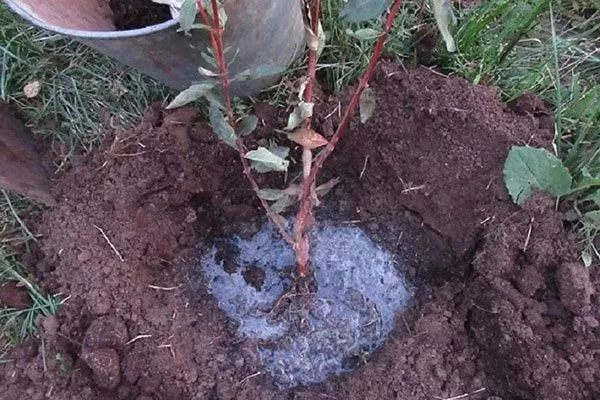
- The best time for planting is the first half of September. Young seedlings should be covered during their first winter. It's recommended to choose a level and well-lit site, as light affects the flavor of the berries. It should be well-ventilated to ensure proper pollination, but avoid strong winds. A building or tall trees should ideally provide a barrier on the north side.
- The planting site should not be subject to flooding or waterlogging, as honeysuckle roots react negatively to high humidity.
- The planting hole should be approximately 40 cm deep. Leave 0.5-1 m intervals between adjacent bushes.
Care Features
Bakcharskaya honeysuckle is an unpretentious variety, but the quality and quantity of the harvest directly depends not only on growing conditions, but also on care.
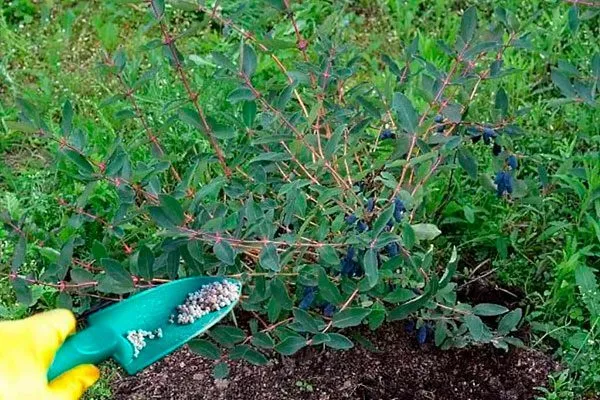
Care features:
- Watering Watering is required as the top layer of soil dries out. It's especially important to water honeysuckle bushes when they are flowering and bearing fruit. The rest of the year, the plant doesn't require much moisture; watering should be infrequent and generous.
- They feed Honeysuckle as needed, usually fertilizers are applied at the flowering stage and after harvesting to prevent the bushes from becoming depleted.
- Trimming This is done in early spring, before the sap begins to flow. The shoots are shortened by 1/3. At the same time, all dry, diseased, and damaged branches are removed.
Prevention
To prevent fungal infections, honeysuckle is sprayed with Bordeaux mixture or other copper-containing preparations. This procedure is carried out in early spring, before fruiting begins, and then during flowering.
Treatments are also carried out when signs of disease or pest infestation appear; plants are treated with fungicides and insecticides, respectively. All fallen leaves and damaged shoots are burned.
Reproduction
When propagating Bakcharskaya honeysuckle by cuttings and division, the survival rate is low—around 50%. Layering is a more effective method for propagating this variety. Seed propagation is not used, as the resulting plants lose the varietal characteristics of their parents.
Application
Honeysuckle can be eaten fresh or frozen. The berries are used to make juices, compotes, jams, jellies, and sauces for meat dishes, as well as wine and kvass. The fruit also makes an excellent filling for pies and various pastries. The berries can be pureed with sugar to make fruit drinks, syrups, smoothies, and sorbets.
Benefits of honeysuckle
Honeysuckle is the earliest berry in the garden, ripening just as strawberries are setting fruit. In spring, when the body lacks vitamins, honeysuckle berries are very welcome.
Honeysuckle berries are extremely beneficial for those with heart disease and hypertension, as they stabilize blood pressure. They are also helpful for anemia, stomach, liver, and gallbladder disorders.
Fresh berries:
- boost immunity;
- strengthen the walls of blood vessels;
- reduce the manifestations of atherosclerosis;
- normalize the functioning of the gastrointestinal tract;
- prevent cell aging;
- have an antitumor effect.
Reviews
Bakcharskaya honeysuckle is the product of extensive work by Russian breeders, combining all the best qualities of this fruit crop. Professional gardeners rightly call the Bakcharskaya variety a true miracle, and breeders consider it worthy of the "seal of quality."