
The Aurora honeysuckle variety is distinguished by its large fruits, prized for their attractive appearance, pleasant flavor, and medicinal properties. It is popular among commercial farmers and can also be successfully cultivated by home gardeners.
Characteristic features of the variety
Honeysuckle is one of the first garden crops to yield a harvest in early summer. The Aurora variety will provide delicious berries ripening by mid-June and has its own unique qualities, advantages, and disadvantages.
History of origin
The variety was bred by the Maxine agricultural firm at the University of Saskatchewan, with breeding efforts spanning from 2007 to 2016. This new edible honeysuckle variety was created by crossing the Solovey variety (of Russian origin) with the Japanese MT 46.55 as part of the Thompson State Breeding Program. The Aurora honeysuckle has become widespread in Russia and neighboring countries.
External characteristics of the species, taste and aroma
Recommended for creating alley plantings, where it looks harmonious in combination with other species, forming compact and neat bushes.
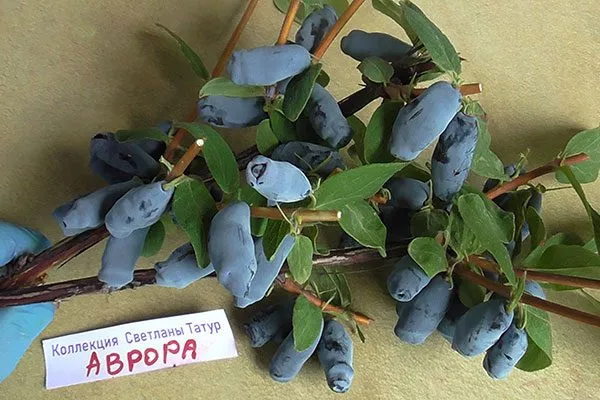
Characteristics of the honeysuckle variety Aurora:
- The bush reaches a height of approximately 160-200 cm and comprises 10 to 16 slightly drooping shoots. This plant is an evergreen species with deciduous leaves, and its crown has a diameter of approximately 120-140 cm.
- One-year-old shoots have an average growth rate and minimal pubescence.
- The bark can vary in dark and reddish-brown shades.
- The leaves are elongated, up to 8-11 cm long, with sparse pubescence on the underside and dark green on the top.
- The flowers are small, yellow, and evenly distributed along the stem. The fragrance develops as the flowers darken, attracting nocturnal pollinators.
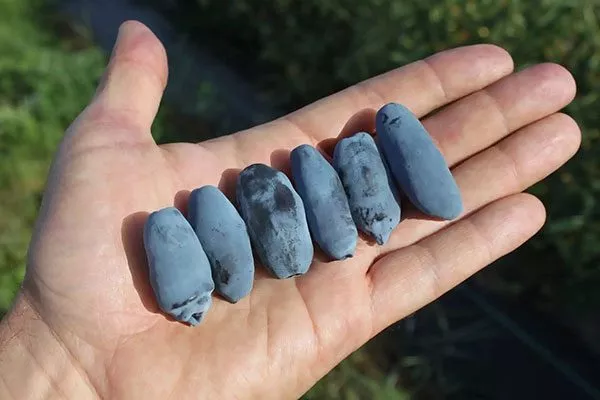
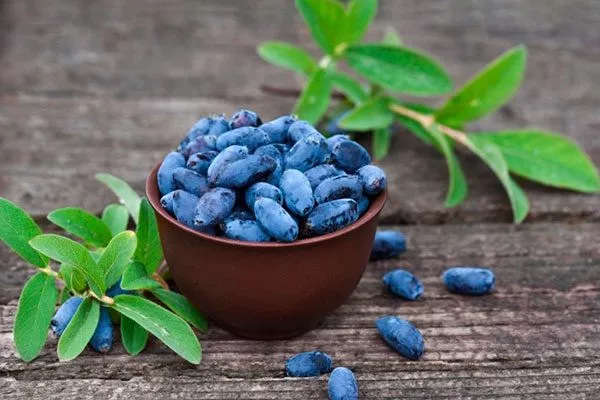
- The fruits are elongated, weighing up to 2-2.5 g, can be up to 2.5-3.5 cm in length, and up to 8-10 mm in diameter. They are pitcher-shaped with a small ridge at the end, and have a blue-green, waxy, and dense skin.
- The pulp of the fruit is dense, fleshy, juicy and tender, and tolerates transportation well.
- The berries have a sweet, lightly aromatic flavor, earning them a high tasting score of 5. The Aurora variety is considered one of the most delicious, with no bitterness and a pleasant tartness that accentuates the sweetness.
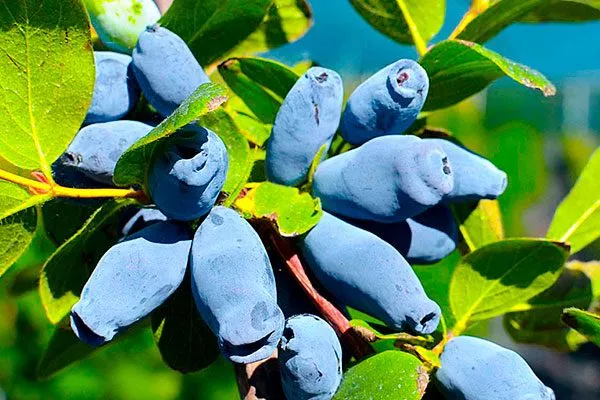
Despite the sweet taste, there is a slight tartness that makes the fruits especially attractive.
Features of application
It is considered an edible species. The fruits of this plant are widely used in cooking to create jams, jellies, and ice creams, as well as for all kinds of honeysuckle preserves. Many berry connoisseurs also enjoy them freshly picked for their flavor.
Yield and fruiting data
The onset of fruiting may vary depending on climatic conditions. For example, during rainy summer periods, harvesting may be delayed by one week. The Aurora variety is distinguished by its early onset of fruiting – the first harvest can be expected as early as 2-3 years after planting.
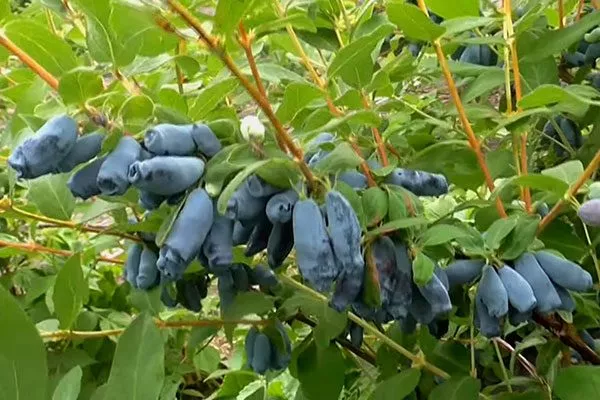
The berries are resistant to falling and can remain ripening on the branches for a long time—up to a month. The top of the bush produces the first fruit, making it convenient for mechanical harvesting. The average yield of this variety is impressive: a mature bush can yield 5 to 7 kg of berries. Even for young bushes, a yield of 2-2.5 kg is considered significant. As the bush ages, its productivity increases.
Ripening period
In spring, the Aurora honeysuckle bush graces the garden with its bright yellow, fragrant flowers, which last for about 2-3 weeks, adding a special touch of beauty. The plant can live for 15-20 years, making it a worthwhile long-term investment in your garden.
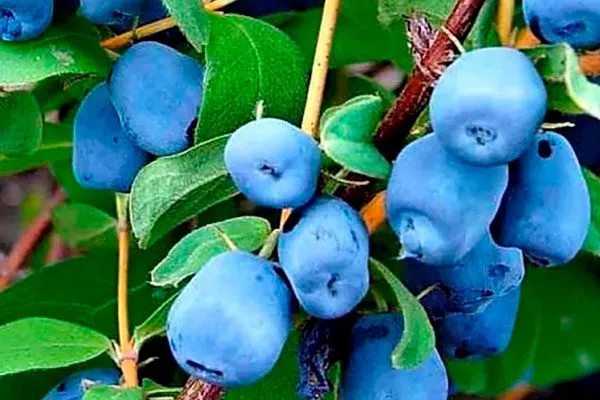
In the Russian Federation, the fruits ripen in late June, in Ukraine – from early June, and in warmer climates, the first berries can be sampled as early as May. The harvest arrives within a month.
Pollinators
The Aurora variety is partially self-fertile, but to ensure consistent fruiting, it is recommended to plant additional crops nearby for cross-pollination. Ideally, at least three to four bushes of compatible varieties are used, such as Northern Beauty, Northern Buran, Indigo Jam, Honeybee, Northern Monster, Borealis, Tundra, Blue Velvet, Tomichka, and others.
- In early spring, before the buds open, treat the bushes with a 1% solution of Bordeaux mixture to prevent fungal diseases.
- After harvesting, spray with Actellic to protect against honeysuckle mites.
- In the fall, after the leaves have fallen, repeat the treatment with Bordeaux mixture to destroy overwintering forms of pests and diseases.
Diseases and pests - how to fight them
Honeysuckle can be affected by fungal diseases and pests. Common plant diseases and treatments:
- Ramularia leaf spot. Characterized by the appearance of brown spots on foliage and wilting of green foliage. To combat the disease, affected areas should be removed and destroyed, followed by treatment of the plant with a 0.5-0.6% copper sulfate solution.
- Cercospora leaf spot appears as dark green spots with a black border on the leaves. A 1% solution of Bordeaux mixture is used to treat the plant.
- Powdery mildew. Identified by a gray coating on the leaves. To combat it, bushes are treated with colloidal sulfur at a concentration of 2%.
- Tuberculosis. It manifests itself as the formation of red bumps on the entire above-ground part of the plant. Bordeaux mixture is used as a treatment.
- Leaf mosaic. Visible as large white spots. Affected areas are removed, as honeysuckle treatment is ineffective in this case.
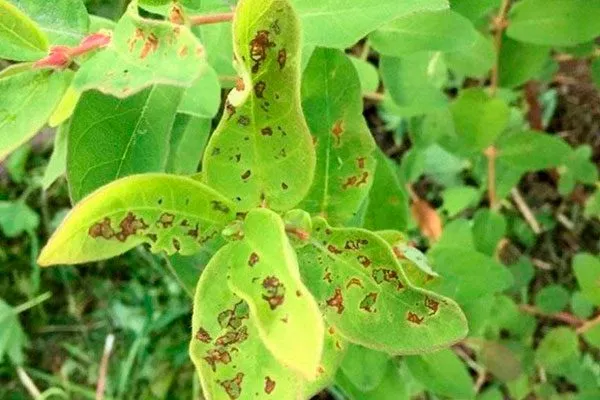
Pests and methods of control:
- California scale insect. Reddish spots and gray scales are visible on shoots. To control them, spray the bushes with Aktara and Actellic, and collect and destroy adult insects.
- Aphids. Leaves become covered in a sticky coating, distorted, and yellowed. To kill the pest, use a soap solution (150 g of laundry soap per 5 liters of warm water).
- Honeysuckle mite. Causes leaves to curl and fall off. Honeysuckle is treated with Actellic after harvest, in late June.
- Leaf roller. Webbing and green caterpillars are found inside the leaf. Plants should be sprayed with Aktara.
- Honeysuckle wing. Infection manifests itself through damage to leaves and berries. Treatment is carried out with Rogor or Inta-Vir.
- Mealybug. Causes shoots and leaves to wilt. Actellic or Rogor are used against it.
Resistance to frost and drought
This variety is highly winter-hardy in USDA zones 9-4, so it won't freeze at temperatures as low as -40-46 degrees Celsius. It also has excellent drought and heat tolerance.
Growing regions
Honeysuckle can withstand temperatures down to -46°C and is suitable for growing in the central part of Russia, the Urals, and Siberia. In southern regions, it may lack humidity and coolness, but Canadian varieties are adapted to the climate of the Krasnodar and Stavropol Krais.
- ✓ The optimal soil acidity for Aurora honeysuckle should be within the pH range of 5-6, which is not always taken into account when preparing the site.
- ✓ To ensure high yields, it is necessary to have at least 3-4 pollinator bushes of compatible varieties, which is often ignored when planning plantings.
Soil requirements
Loamy or sandy loam soils with good air and moisture permeability and nutrient content are preferred. The acidity should be at a pH of 5-6.
Advantages and disadvantages
The variety has many advantages, but the following benefits are particularly emphasized:
- early ripening of berries;
- large fruit size;
- high resistance to drought and cold;
- easy to care for;
- formation of a compact, neat bush;
- Suitable for creating berry plantations and alleys.
There are also disadvantages:
- weak immunity to some diseases;
- requirement for more space to ensure normal development of the bush.
How does it differ from other varieties and hybrids?
This variety is most often pollinated exclusively by nocturnal moths. Unlike other honeysuckles, Aurora has very elongated leaf blades and no hairs on the fruit tips.
Agricultural technology
It is strongly recommended to transplant a newly acquired plant to its permanent habitat as soon as possible. If immediate transplantation is not possible, the plant can be temporarily stored in a cool place, maintaining a temperature between 0 and 5 degrees Celsius and ensuring adequate soil moisture.
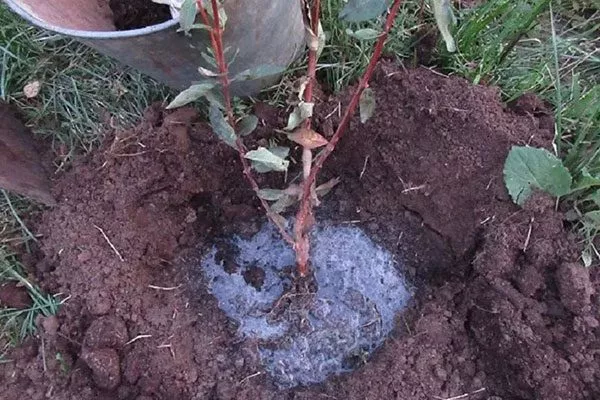
Plants purchased in the fall are best stored by burying them in the ground until spring. To do this, choose a shallow spot and place them at a 45-degree angle. Cover the roots and partially the trunk with soil, then water thoroughly and cover with spruce branches and snow. It is recommended to dig up the plant before planting.
Features of growing the variety:
- Just before planting, you can soak the root ball in cool water with a growth stimulant such as Epin, Kornevin, or Ferovit, which will help the roots acclimatize and strengthen.
- Planting can be done throughout the season, from early spring to fall, but the best time is spring, before bud break. For fall planting, the optimal time is late September or early October.
- To plant honeysuckle, prepare a hole about 35-45 cm deep and in diameter.
- To improve drainage in heavy soils, add a layer of pebbles, expanded clay or gravel approximately 9-12 cm thick to the bottom of the hole.
- Form a mound of fertile soil in the middle, carefully distribute the roots, and then fill the hole with nutrient substrate, compact it, and deepen the root collar 3-4 cm below ground level.
- After planting, pour 20-30 liters of water onto the root system and mulch with peat or humus.
- When planting several plants, maintain a distance of 1-3 m between them.
- It is advisable to plant honeysuckle next to apple, cherry and plum trees, but avoid placing it next to bird cherry, walnut and apricot trees, as the root system of these plants secretes substances that hinder the growth of honeysuckle.
Honeysuckle care involves regular watering, root zone treatment, pruning, and fertilizing, which will help the plant remain healthy and pest-resistant. Necessary agricultural practices include:
- Watering. Water young plants 2-3 times a week, after a year – once, using 20 liters of water per bush.
- Soil care. Regularly remove weeds around the plant, loosen the soil and add a layer of mulch.
- Trimming. At the end of April, remove weak branches using clean and disinfected gardening tools.
- Top dressing. Fertilizing Aurora honeysuckle bushes should begin in the second year after planting. In the spring, it is recommended to apply a complex fertilizer consisting of 20-25 g of ammonium nitrate, the same amount of potassium fertilizer, and 20 g of superphosphate per square meter of soil. In the fall, add 4-6 kg of compost, 35-45 g of superphosphate, and 100-150 g of crushed charcoal. Apply 450-550 g of fertilizer directly under the bush.
Preparing for winter
The Aurora honeysuckle variety is winter-hardy and requires no additional cover. However, to ensure the plant survives the winter better, gardeners carry out a number of autumn activities, including:
- weeding;
- digging the soil around the bush;
- removal of old mulch;
- leveling the soil in the tree trunk circle;
- collection and destruction of fallen leaves;
- spraying bushes with a 1% solution of Bordeaux mixture to prevent fungal diseases.
If the shrub was supported with supports during the season, these should be removed for the winter. It is recommended to protect the plants from rodents by installing protective nets around the shrubs.
Reproduction
Propagation methods such as root division or root layering can be ineffective, as young plants often don't establish well. Cuttings are the most effective:
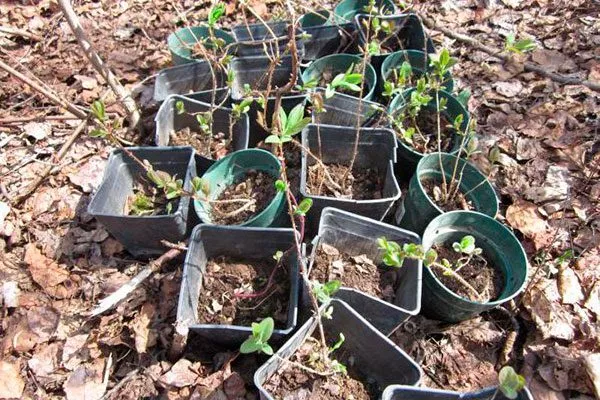
- Select a healthy shoot in the fall, divide it into 2-4 parts 12-17 cm long, make sure that each section has at least 2-3 buds.
- Plant these cuttings in a mixture of peat and sand.
- Store containers with cuttings at a temperature of about 0°C and humidity of at least 80-85%, for example in a basement.
- In the spring, plant the cuttings in a permanent location in prepared holes. Young cuttings usually root within two weeks.
Harvesting
The berries of the Aurora honeysuckle variety ripen unevenly and may fall off when overripe. Harvesting takes place in June, in 2-3 stages. Early in the morning, place a clean film under the bush and gently shake the berries onto it. The harvested berries should be stored in the refrigerator for no more than 3-4 days, or they can be frozen or processed.
Gardeners' reviews
The Aurora honeysuckle is an excellent choice for adding berries to your garden. This variety is less well-known, but popular among gardeners due to its resilience and productivity. Successful cultivation is achieved by following planting guidelines, monitoring pests and diseases, proper watering, and carefully preparing the bush for winter.