
The Amphora honeysuckle is the work of experienced Russian breeders. This shrub boasts excellent fruit flavor, frost resistance, and drought tolerance.
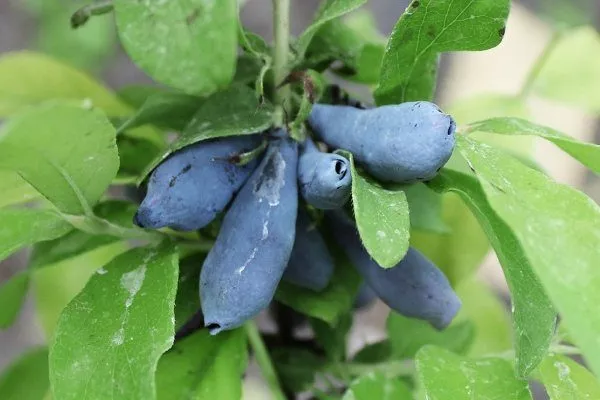
Honeysuckle 'Amphora'
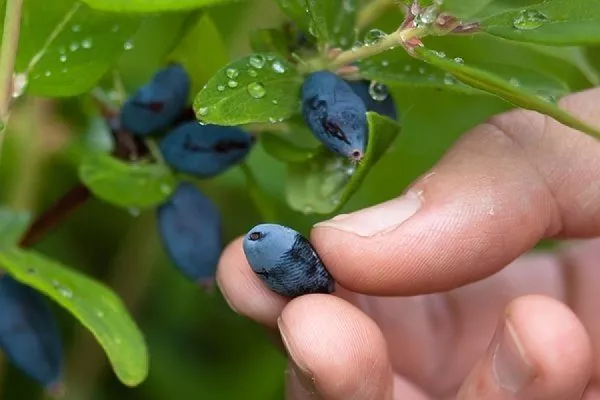
The fruits of the honeysuckle "Amphora" are distinguished by good transportability and shelf life
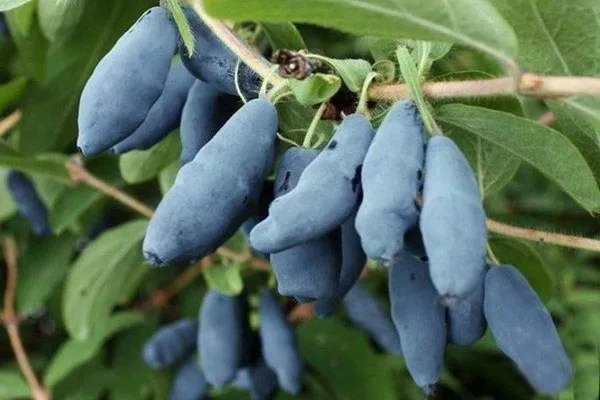
Honeysuckle 'Amphora' produces a stable harvest of large berries with a dessert taste
What is interesting about honeysuckle?
Honeysuckle is a beloved berry in the CIS countries. It ripens much earlier than raspberries and significantly surpasses them in nutritional value. The shrub is grown not only for fresh consumption but also for garden decoration. Gardeners love growing honeysuckle because it's easy to care for and can thrive in any climate.
The second unique feature of honeysuckle is its amazing healing properties. The berries contain a large amount of vitamin C and a number of essential micronutrients. The berries also have an antipyretic effect, making them a great choice for those with the flu.
Honeysuckle occupies a leading place in folk medicine. The berries of the shrub are used as an antimalarial and antiseptic. The fruits are an excellent antiseptic. The plant's benefits don't end with its medicinal properties; honeysuckle can be used to make a wide variety of delicious dishes, such as jams, preserves, and jellies.
Description of the honeysuckle variety Amphora
The shrub reaches 1.5 m in height. The foliage forms a round crown with abundant green foliage. The skeletal branches are burgundy in color, from which smaller shoots grow. The foliage of this variety is oval-shaped, slightly elongated, green in color, and has an uneven, slightly compacted surface.
The berries are large, approximately 20 mm long, and shaped like water lilies. Each berry weighs approximately 1.3 g. The maximum weight of a honeysuckle berry is 3 g. The fruits are blue or light blue, with a slight waxy layer. They are sweet and sour, with a hint of bitterness. The skin is firm, making them easy to transport. A single plant can yield approximately 2 kg of fruit.
Advantages and disadvantages of the variety
The culture has both pros and cons, although some gardeners believe that Amphora has no drawbacks. Let's consider each in turn.
Advantages of the honeysuckle variety Amphora:
- the berries are large in size, the taste is characteristic of the culture;
- the scope of application is universal, the fruits can be consumed fresh, or they can be used to prepare various preserves;
- cold resistance – the variety can be grown even in the most remote corners of the country;
- characteristic repeated flowering – accordingly, the harvest can be obtained several times in one season;
- The fruits do not fall off during full ripening and remain firmly attached to the branches.
Disadvantages of the honeysuckle variety Amphora:
- pollinators are necessary – the bush cannot pollinate itself;
- Other varieties and crops need to be planted next to the plant.
Characteristics of the variety
This variety is native to St. Petersburg. Its ancestor is the Kamchatka honeysuckle. 1998 was the year the plant was officially registered in the State Register of Breeding and Horticulture in the Russian Federation.
The first harvest of Amphora honeysuckle can be enjoyed in the third year after planting. The berries ripen in late June and remain fruitless for a long period. This variety is characterized by large fruits and cold tolerance.
A gardener provides a review of the honeysuckle variety "Amphora" in the video below:
Pollinators
| Name | Yield (kg per bush) | Ripening period | Disease resistance |
|---|---|---|---|
| Violet | 1.5 | early | high |
| Gzhelka | 2.0 | average | average |
| Viola | 1.8 | early | high |
| Moraine | 2.5 | late | high |
| Bazhovskaya | 2.2 | average | average |
The Amphora variety is self-sterile, so other varieties should be planted nearby. The best pollinators for this honeysuckle are:
- Violet;
- Gzhelka;
- Viola;
- Moraine;
- Bazhovskaya.
| Pollinator | Yield increase (%) | Flowering period |
|---|---|---|
| Violet | 25 | early |
| Gzhelka | 30 | average |
| Viola | 20 | early |
The bushes are planted 1.5-2 m apart from each other and must be arranged in one row or group.
Features of fruiting
One healthy bush produces approximately 1.5-2 kg of healthy fruit. This depends directly on the climate in which the honeysuckle grows and the quality of care provided. Sometimes, fruit appears within the first year after planting—these are signal berries.
The bush will bear a full harvest only in the third year after planting. The berries are firmly attached to the branches, so harvesting requires some effort. The fruit transports well.
In the Moscow region, the plant begins to bear fruit as early as early summer; in colder regions, the fruits ripen in mid- to late June. However, this still occurs before strawberries or raspberries are fully ripe. With proper care, the bush can live for approximately 30 years, with consistent yields and berries that don't become smaller.
Plants have been documented producing berries for over 80 years in a row.
Honeysuckle berries are unique; they make excellent jam with a slightly bitter flavor. The berries can be frozen and used to make a nutritious preserve.
How to grow Amphora honeysuckle
The shrub awakens very early in the spring, so planting should be done in the fall. The exception is southern regions, where the plant can be planted until mid-spring.
- ✓ Optimum soil pH for Amphora honeysuckle: 6.0-6.5.
- ✓ Minimum distance between bushes to ensure pollination: 1.5 m.
A bush with a closed root system is planted only in the spring.
Selecting a location and soil
To ensure the plant grows and develops properly, special attention should be paid to the bush's location and soil selection. Amphora honeysuckle prefers sunny spots with some shade—this is the case if it is grown for its berries.
Honeysuckle can also be planted in the shade, but it will likely not bloom and will remain as a garden decoration. The plant can be placed in an open area; strong winds do not affect the shrub, but the yield may be significantly reduced.
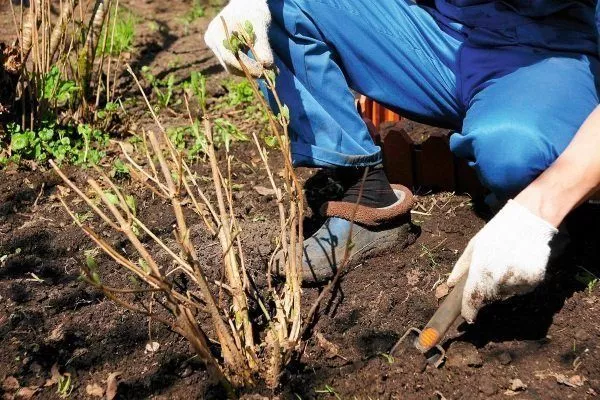
The Amphora honeysuckle thrives in moisture, but avoid sites with close groundwater levels. Also, avoid areas where rainwater or meltwater drains. Honeysuckle should not be planted in low-lying areas.
The plant thrives in light soils with a slightly acidic or neutral pH. In heavy soils, a mixture of equal parts nutrient-rich soil, humus, and river sand is added to the hole. Gardeners recommend planting the plant near an apple tree, as this fruit tree is considered an excellent companion for Amphora.
We recommend reading the article about How to care for honeysuckle in autumn.
Planting diagram
For a fruit-bearing shrub, select a two- or three-year-old seedling with a root diameter of approximately 15-20 cm, no larger. Prepare a planting hole in the selected area seven days in advance.
Planting algorithm for honeysuckle Amphora:
- Prepare a hole measuring 0.3x0.3x0.3 m.
- Place a drainage layer of pebbles or ceramics on the bottom, it should not be less than 0.1 m.
- Mix the soil with humus, 1 liter of wood ash, 60 g of potassium sulfate and 150 g of superphosphate.
- Before planting, water the hole, add a small mound of nutritious soil, and carefully place the plant roots on it.
- Fill the hole, deepen the root collar by 30 mm.
- Compact the soil around the root circle and water the seedling with warm, settled water.
- Mulch the soil with grass, sawdust or peat.
Do not prune honeysuckle after planting, otherwise the plant will weaken and die.
Care
Honeysuckle bushes don't require much care, but a bountiful harvest will only be achieved with proper attention. The soil should be loosened to a depth of 50 mm, taking care not to damage the plant's roots. Weeds should be pulled out, as they can harbor pests.
Five-year-old plants develop a root system closer to the soil surface, so from this age onwards, care should be much more careful and thrifty.
Watering
In the south, the plant should be watered every two days. In temperate climates, watering is not particularly different, but should be done during the fruiting period and before fruiting. To ensure the plant receives sufficient water, water it after harvesting.
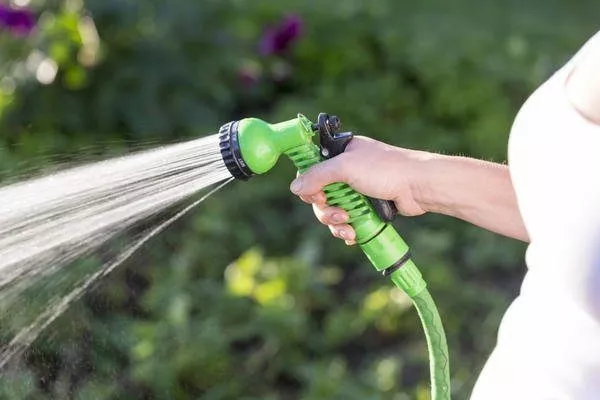
Basic rules for watering Amphora honeysuckle:
- Make a furrow along the line of the bush crown, its depth should be about 100 mm, fill with water.
- When watering, do not soak the soil, but make it moist and crumbly.
- On dry days, water the plant morning and evening using sprinkler nozzles. Don't allow the leaves to dry out.
Top dressing
In the third year of life, the honeysuckle plant begins to bear fruit, so additional fertilizers are necessary for the bush.
Rules for applying fertilizers:
- In early spring, use a gardening activity called mulchingFor this, use compost and humus.
- Before flowering, feed the ovaries with a mullein solution in a proportion of 1 part of the product and 10 parts of water.
- In August, apply natural fertilizer with potassium under the honeysuckle: 0.5 l of wood ash and 10 l of water.
- Spring feeding option: 10 liters of water and 20 g of urea.
- After harvesting, use the following fertilizer: 10 g urea, 20 g ammonium nitrate, 60 g superphosphate, 1 bucket of water.
- At the end of August, dissolve 30 g of superphosphate and 20 g of potassium sulfate in 10 liters of water.
If the area has high acidity, then honeysuckle is constantly watered with water with diluted ash (volume 0.5 l).
Trimming
Newly planted seedlings are pruned only to remove dead and diseased branches. After seven years of growth, the shrub is pruned to remove excess foliage. Old and thickening branches are removed; about 10 mature branches should remain.
Rejuvenation pruning occurs at 15 years of age, during which time virtually all branches are removed. The main goal of this procedure is to preserve the strongest shoots that will produce a bountiful harvest. Rejuvenation pruning is performed again after 10 years.
Reproduction
This honeysuckle variety is propagated by layering, by bending the lower branch into a dug hole in the spring. The top of the branch should be left exposed, the shoot should be watered, and the resulting shoots are replanted in the fall or the following spring.
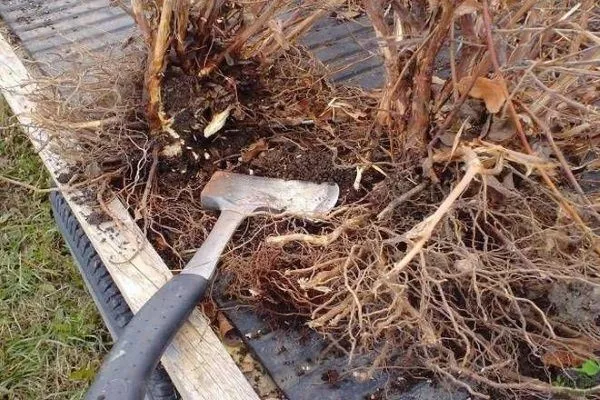
The plant can also be divided using a sharp spade. Another option is to use spring cuttings to propagate the Amphora honeysuckle.
Protection from diseases and pests
Fungal diseases attack the plant, but only during rainy summers. The most dangerous are downy mildew and rust. To prevent them, preventative measures should be taken in early spring.
Means for the prevention of fungal diseases:
- The drug Actellic or Rogor (0.2%).
- In summer, use the chemicals Skor, Flint or Topaz.
- The preparations Epin and Zircon are diluted according to the instructions.
Young shoots are sometimes attacked by pests such as aphids, whiteflies and scale insects.
Pest control and prevention products:
- Aphids are destroyed by hot pepper tincture.
- The following preparations are used: Iskra, Fitoverm and Actellik.
- The substances Gliocladin, Fitosporin and Gamair are used during the period of active fruiting of the plant.
Preparing for winter
The Amphora honeysuckle can be grown anywhere in the country. It tolerates frost and cold well. More vulnerable seedlings should be protected for the winter under cover. Agrofibre is best for this purpose. They can also be covered with snow.
Reviews of Amphora honeysuckle
Amphora honeysuckle is not only a great addition to your garden but also a source of beneficial vitamins and minerals. This low-maintenance shrub yields a bountiful harvest.