
American Beauty honeysuckle is an ornamental variety used for garden decoration. It is highly resistant to frost and drought, but requires proper and comprehensive care. It is important to follow proper cultivation practices to ensure the plant thrives and is not susceptible to disease or pest attacks.
Description of the variety
It is one of the most sought-after varieties of ornamental plants. This vigorous bush has a semi-spreading habit, reaching a height of up to 3 m and a diameter of 1 to 1.5 m. The shoots are covered with medium-sized, green-hued leaves.
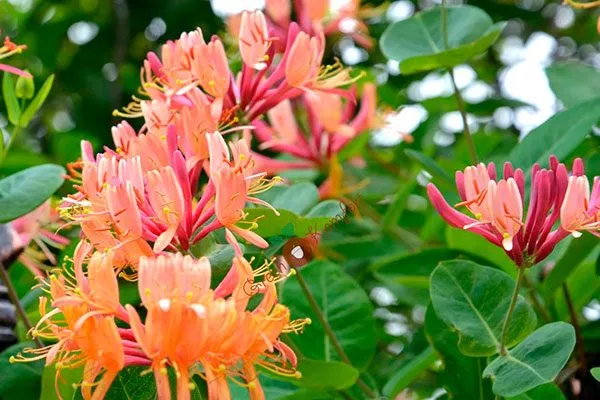
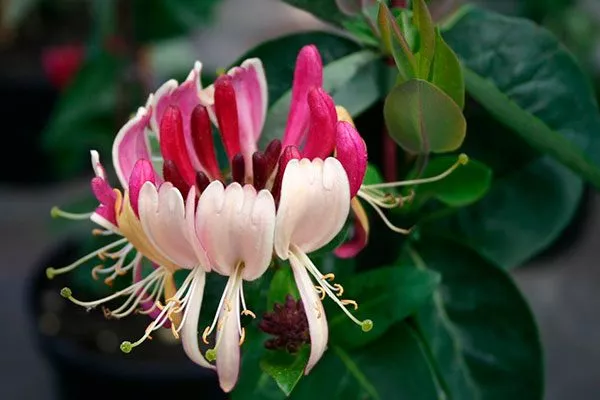
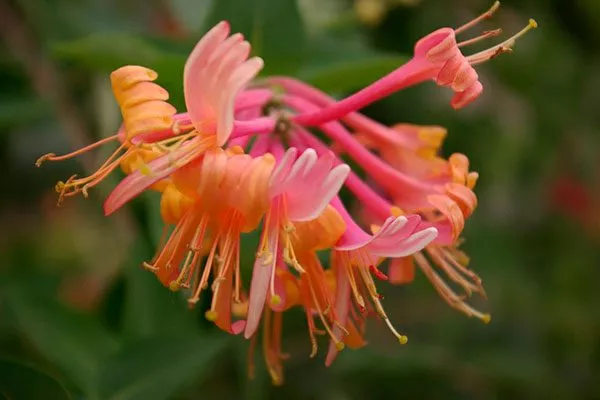
The flowers are pale, with a pink tint inside and cream or yellow iridescence on the outside. They are large and lightly fragrant.
Characteristics of fruits
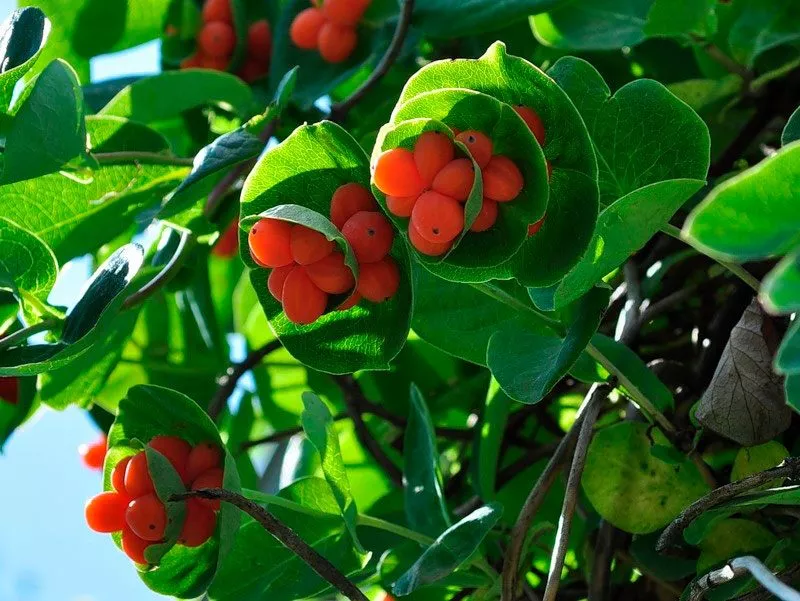
The main characteristic of this variety is its fruits, which are round and red in color, reaching 5-7 mm in diameter.
Climate conditions
Honeysuckle tolerates low temperatures well, but seedlings require shelter in the first few years after planting. It is drought-resistant.
Using berries
American Beauty honeysuckle is an ornamental vine often used for landscaping gardens and parks. The fruits are not edible.
Application in landscape design
The plant gracefully twines around a support and is attractive when in bloom. It is a vine with purple-orange flowers. Honeysuckle is often used as a hedge, a specimen plant, or to create accent areas in the garden.
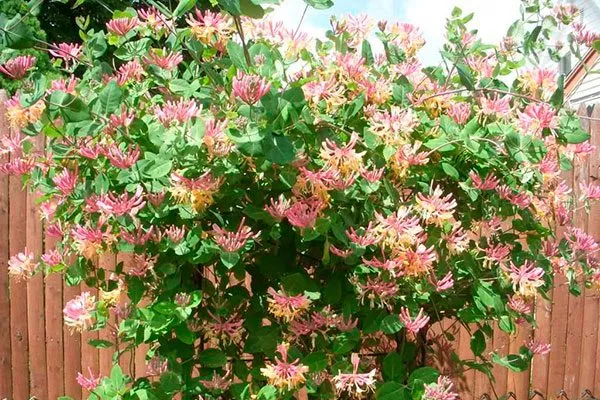
Its vibrant flowers and attractive foliage make it a wonderful addition to gardens, parks, and other landscapes. It attracts birds, insects, and other beneficial animals, making it a valuable component in creating sustainable gardens.
Advantages and disadvantages
Before planting a new variety in your garden, study its pros and cons. Advantages include high winter hardiness, abundant flowering, and fruiting. During flowering, the plant is covered in large flowers, reaching up to 8 cm in length, and is characterized by rapid rooting.
Growing and care
This variety is picky about soil composition, preferring loose, nutritious, and slightly acidic soils, with the groundwater level at least 1 meter below the surface. Dig the area and clear it of weeds. Adjust the soil acidity with lime or ash if necessary, then water with a hot copper sulfate solution.
- ✓ Soil pH should be between 5.5-6.5 for optimal growth.
- ✓ It is mandatory to have a drainage layer at least 10 cm thick to prevent water stagnation.
Choose well-lit areas, but protected from the wind, as flowering may be less abundant in the shade.
Step-by-step algorithm:
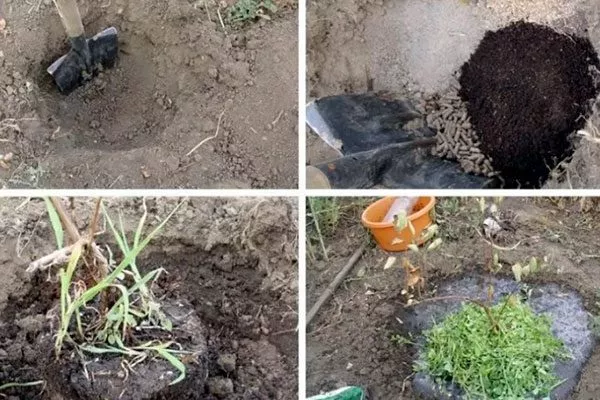
- Dig a hole 40 cm in diameter and depth.
- Mix the excavated soil with fertilizer.
- Place a layer of drainage at the bottom of the hole and form a mound of nutritious soil.
- Soak the roots of the seedling in a solution of potassium permanganate and a root formation stimulator.
- Place the seedling in the hole, distributing the roots evenly.
- Fill the hole with soil, compact it and water with warm water.
- If necessary, add soil and mulch the tree trunk circle.
To ensure proper development and abundant flowering, provide the bush with appropriate care. Follow these important agricultural procedures:
- Watering. Water the bushes regularly. If they don't get enough moisture, the leaves will curl, the flowers will become small, and the blooms will be sparse. On dry, hot summer days, water daily, using warm water to prevent root rot.
- Fertilizer. Begin fertilizing two years after planting. In the spring, use complex mineral fertilizers or a solution of superphosphate and potassium compounds. Before flowering, apply organic fertilizers, and in midsummer, apply foliar fertilizer.
- Trimming. Pruning plays an important role in caring for the plant. Sanitary pruning involves removing diseased and damaged branches, while shaping ensures the bush is properly formed and maintains an aesthetically pleasing appearance.

Moisten the soil the day before fertilizing. This will help the plant better absorb the nutrients. Providing timely care will ensure abundant flowering and strong immunity.
Wintering
This is a frost-hardy variety, but it requires proper preparation to survive the winter in northern and central regions. To protect against frost, remove the bush from its support and cover it with a thick layer of mulch. If there's snow, cover the bush with it. If there's insufficient snow, use spunbond.
The nuances of reproduction
The crop is propagated exclusively vegetatively, which ensures the preservation of varietal characteristics. There are three main propagation methods:
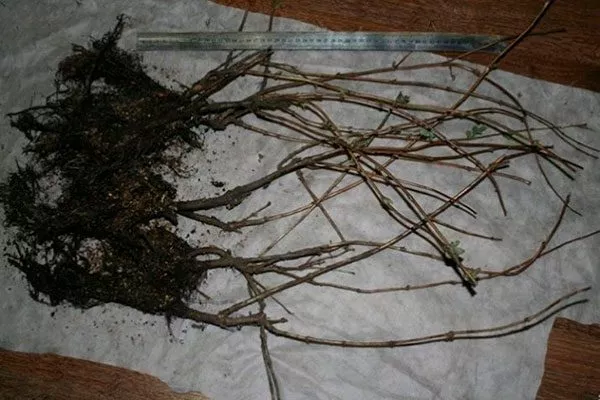
- Cuttings. Select healthy, flexible branches without damage or disease and divide them into 10-15 cm long sections. Each section should have at least three live buds.
Treat the cuttings with a manganese solution and a growth stimulant, then plant them in containers with fertile soil. After rooting, transplant the cuttings into the ground. - Propagation by layering. Bend and secure the branches that reach the ground, then water and fertilize. After roots and new shoots form, separate the branch from the parent plant, divide it into sections, and replant.
- Dividing the bush. Carefully dig up the root system, divide the bush into parts and plant them in separate holes.
- ✓ Cuttings should be taken only from healthy, non-flowering shoots of the current year.
- ✓ The optimal length of the cutting is 10-15 cm with at least three live buds.
Disease and pest control measures
American Beauty honeysuckle has a strong immune system and is rarely susceptible to disease. To maintain its health and development, take the following preventative measures:
- Remove dead branches and thin out the bush to ensure good ventilation and air circulation.
- Avoid placing gooseberries and currants next to each other, as these plants may share pests with honeysuckle, which can contribute to the spread of diseases.
- Treat the seedling and soil before planting to prevent contamination by possible pathogens.
Sometimes the crop may be attacked by aphids. In such cases, timely pest control is recommended, including whitewashing the plant, pruning, and treatment with tobacco infusion.
Reviews
American Beauty honeysuckle is a popular variety distinguished by its beautiful blooms and large berries, but it requires careful and meticulous care. Successful cultivation of this plant requires gardeners to adhere to specific agricultural practices and regular attention.