
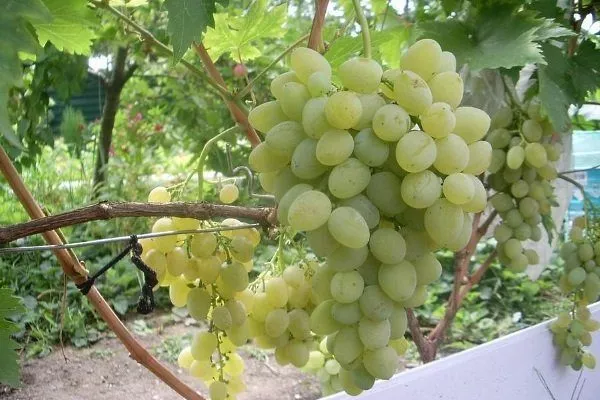
"Vostorg" is one of the most popular varieties among Russian winegrowers. It is prized for its flavorful berries and the beauty of its white clusters, its high yield and ease of cultivation, and, most importantly, its ability to withstand harsh Russian winters.
When and by whom was the variety bred?
The hybrid grape "Vostorg" was developed by Russian breeders at the Potapenko All-Russian Research Institute of Viticulture and Winemaking. Breeding work began in the 1960s. The new variety was obtained by crossing "Zarya Severa" with "Dolores," and then with "Russkiy Ranniy" (Russian Early).
The hybrid was added to the State Register in 1992 and received cultivar status. Vostorg's creators were plant breeders I. Kostrykin, Ya. Potapenko, and A. Skripnikova.
Description of grapes
Botanical description of the Delight grape:
- Bushes. Vigorous and spreading, with strong shoots, the vine grows 2-2.5 m per year. Medium-sized, light green leaves with serrated edges are heart-shaped. Flowers are bisexual.
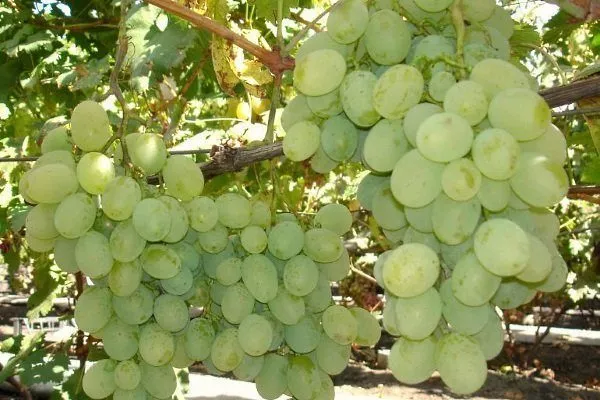
- Clusters. Large, moderately dense, they vary in shape and size. They can be conical, cylindrical, or shapeless. They weigh from 0.5 to 2 kg.
- Fruit. Variable size, oval-round. Size: 2.4 x 2.7 cm. Weight: 6-7 g. Color: depends on variety (white, black, red). Skin: moderately thick.
- Roots. A powerful root system. The roots grow vertically and reach a depth of up to 2 m.
What are the characteristics of Rapture?
The "Vostorg" grape is considered one of the best varieties grown in Russia. This is due to its high marketability and excellent agronomic characteristics.
Taste and marketability
The bunches are highly marketable—they are beautiful, retain their shape, and don't dent or deteriorate during transport. The clusters are moderately dense, so the berries don't crush or deform each other.
The berries have a harmonious flavor, with a pleasant crunch. They are high in sugar—19-26%. They have low acidity, 5-9 g/l. The moderately dense skin, without detracting from the flavor, facilitates easy transportation.
Productivity
"Vostorg" is a high-yielding variety, yielding up to 120 centners of grapes per hectare. Yields are responsive to irrigation and fertilization, which influence the quality and quantity of the harvest.
The bushes are productive – about 80% of their shoots are fruit-bearing, each of which contains 1.6 bunches.
Application
This is a white Muscat variety. It belongs to the table grape group. Possessing excellent flavor characteristics, it is intended for fresh consumption.
Berries are not only delicious but also healthy—they're rich in antioxidants and iron. They're used to make juices, jams, and wines.
Ripening time
This is an early-ripening variety—the fruits ripen in 110-120 days. The exact ripening time depends on the growing region. In the south, the bunches are ready as early as late July, while in more northern regions, they ripen by mid-August.
Watch a review of the "Vostorg" grape variety in the following video:
Resistance to diseases and pests
The variety offers satisfactory resistance to the most dangerous grape diseases—gray rot, powdery mildew, and mildew. "Vostorg" is resistant to all types of fungi, but like other grape varieties, it requires preventative spraying.
The variety is vulnerable to phylloxera, an insect imported from America. Plots infested with phylloxera have not been used for grape planting for 20 years. Grafting onto phylloxera-resistant rootstocks, such as 'Riparia Kober 5BB' and 'Berlandieri,' helps protect against this foreign scourge.
There is no effective way to combat phylloxera – if the insect has appeared, the bushes must be uprooted and destroyed.
Frost resistance
This variety is prized for its relatively high frost resistance. Even without insulation, the bushes can withstand temperatures down to -25°C without losing their yield. The variety tolerates harsh winters well and is successfully cultivated in central Russia, the Urals, Siberia, and the Far East.
Drought resistance
The variety tolerates drought well. Short periods of lack of water do not have a significant impact on yield.
Varieties of the variety
Breeders, inspired by the excellent agronomic characteristics of Vostorg, have developed several varieties that differ in the appearance and taste of their fruits.
Dozens of varieties were created from this grape—Ecstasy, Elegant, Kesha, Sashenka, and many others. But only six varieties retained the name of their progenitor. Let's take a closer look at the varieties of Vostorg grapes.
| Name | Ripening period (days) | Yield (c/ha) | Disease resistance |
|---|---|---|---|
| Nutmeg | 105-110 | up to 250 | resistant to fungi, susceptible to anthracnose, chlorosis and phylloxera |
| Black | 109-125 | up to 250 | resistant to phylloxera, mildew, oidium, and gray mold |
| White | 115 | 120 | affected by phylloxera |
| Red | 120-130 | not specified | resistant to mildew, oidium, and gray mold |
| Ideal | not specified | 120 | susceptible to phylloxera, resistant to mildew and gray mold |
| Baklanovsky (oval) | 115-125 | not specified | resistant to mildew, gray mold and oidium, almost not damaged by wasps |
Nutmeg
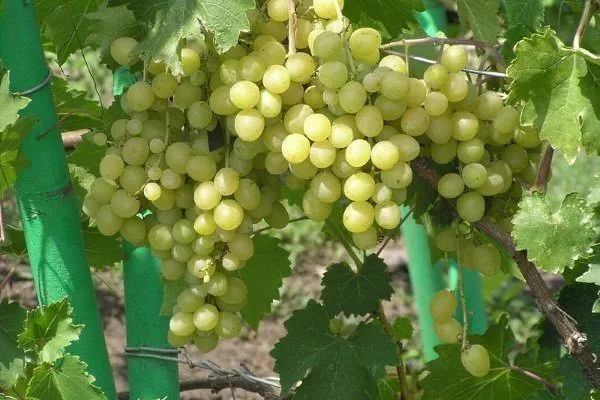
An ultra-early table variety. Ripens in 105-110 days. Fruiting begins in the second or third year after planting. Ripening in the temperate zone is early August. Bunches are conical or shapeless, dense, weighing 0.4-1 kg. Two bunches per shoot.
The berries are round and white, turning amber when fully ripe. They weigh 7 g. The flavor has a muscat aftertaste. Sugar content is up to 25%. They are resistant to fungi and susceptible to anthracnose, chlorosis, and phylloxera.
Black
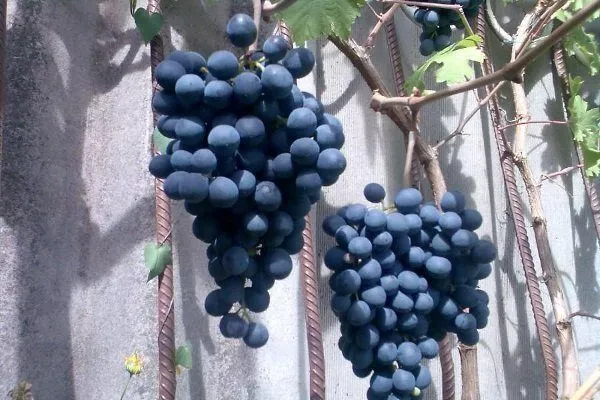
Known as "Black Baron," it requires pollinators—it produces only female flowers. It's early maturing, maturing in 109-125 days. It bears fruit in the second or third year after planting. Clusters are large and dense, weighing 0.8-2.5 kg. Yields up to 250 c/ha.
The fruits are large, weighing 7-12 g. The color is dark blue, almost black. The shape is round, slightly elongated. Resistant to phylloxera, mildew, and oidium. Affected by gray mold. Sugar content is up to 26%.
White
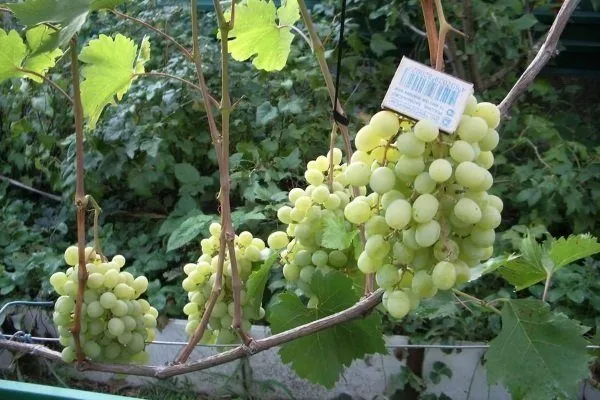
The growing season is 115 days, yield is 120 centners per hectare. Ripening occurs from mid-August to late September. Berry weight is 5-7 g. The white and white-green fruits have a golden hue on the sunny side. The fruits are oval or round, sweet, and juicy. Sugar content is 25%. Susceptible to phylloxera.
Red
Ripening occurs 120-130 days after flowering. Flowers are exclusively female. Bisexual varieties are required nearby. Clusters are loose and conical, weighing 0.55-0.8 kg. Maximum yield: 1.5 kg. Berry shape: oval or nipple-shaped. Color: pink. Weight: 6-8 g. Juicy, tasty, and fleshy. Sugar content: up to 23%. Resistant to mildew, oidium, and gray mold.
An overview of the "Red Delight" variety is presented in the video below:
Ideal
A white table variety. Yield: 120 centners per hectare. Clusters are pointed-conical, sometimes with wing-shaped branches. Weight: 1-1.5 kg, up to 2.5 kg on larger bushes. The berries have a single small seed, oval-round or nipple-shaped. Weight: 5-6.5 g. The flesh is juicy and crisp. Sugar content: up to 19%. Susceptible to phylloxera. Resistant to mildew and gray mold.
Baklanovsky (oval)
Ripens 115-125 days after bud break. Clusters are large, conical, and dense, weighing 0.65-0.9 kg. The fruits are oval or nipple-shaped, large, and white, weighing 6-7 g. They acquire a golden tan in the sun. The flesh is juicy and crisp. Sugar content is up to 23%. Resistant to mildew, gray mold, and powdery mildew. Resistant to wasp damage.
The grape variety "Vostorg Oval" is presented for review:
The Pros and Cons of Rapture
Advantages of the Delight grape:
- high yield;
- large clusters;
- rapid growth of vegetative mass;
- moderate immunity to major grape diseases;
- high frost resistance;
- pleasant taste and aroma of nutmeg;
- the fruits, when ripe, remain on the bushes for 1-1.5 months;
- easy to transport and store;
- propagated by cuttings - rooting is satisfactory;
- many fruiting shoots;
- possibility of decorative use.
Flaws:
- the variety is affected by phylloxera;
- The bushes tend to become overloaded with fruit, so bunch rationing is necessary.
Landing features
To give grapes a good start, it's important to plant them correctly. First, select a suitable site, prepare the soil and planting material, and then plant the seedlings—all while following the proper planting techniques.
When does planting begin?
Planting of seedlings is carried out:
- In autumn. Experienced winegrowers believe that fall planting is more suitable for this frost-hardy variety. In the fall, you can plant both rooted seedlings and graft cuttings. Young plants tolerate their first winter well with additional cover.
- In the spring. This type of planting allows the seedling to take root and grow strong before winter sets in. However, it requires immediate care after planting—regular watering is especially important.
Selecting and preparing a landing site
Optimal conditions for the site:
- southern or southwestern side of the site;
- there should be no shading from buildings or plantings;
- absence of drafts and northern blowing winds;
- soil – black soil or loose loam;
- groundwater level – from 2.5 m.
Swampy areas and places where cold air stagnates are absolutely not suitable.
The soil is regularly fertilized with organic and mineral fertilizers for two years prior to planting. The plot intended for planting grapes is prepared in advance. For spring planting, it is advisable to prepare the soil and holes in the fall. For fall planting, prepare the soil several weeks beforehand.
First, the area is cleared of weeds, any uneven areas are leveled, and rotted manure is spread. The manure layer is 10 cm thick. The soil is dug to a depth of 70-80 cm. If the soil is acidic, it is deacidified with wood ash; if it is heavy clay, sand is added.
Selection and preparation of seedlings
It is recommended to purchase seedlings from specialized nurseries – this reduces the risk of infection of planting material with fungal and viral diseases.
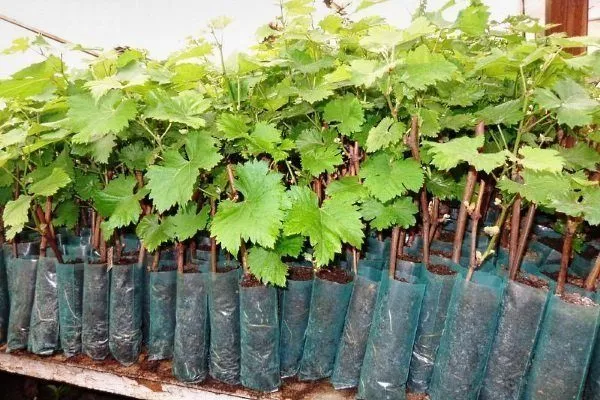
When choosing seedlings, pay attention to the following signs:
- roots - fresh and elastic;
- the root cut is white;
- the top cut is green.
Before planting, the roots of the seedling are kept for several hours in a solution of Heteroauxin (200 ml per 1 liter of water).
Step-by-step planting instructions
The order of planting seedlings:
- Dig planting holes, leaving appropriate spacing between them. The planting pattern depends on the size of the seedlings. Medium-sized seedlings should be planted at intervals of 4 m, while vigorous seedlings should be planted at intervals of 6 m. Dig the holes in the shape of a cube with sides measuring 80 cm.
- Place drainage material—pebbles, crushed rock, or broken brick—on the bottom. Install a drainage pipe and a support for the seedling.
- Place a bag of composted manure at the bottom of the hole, then add wood ash, superphosphate, and a mixture of fertile soil and sand. The seedling's roots should not touch the fertilizer.
- Place the seedling's roots in fertile soil, spreading them out evenly in all directions. Position the seedling so that its root collar is 3-4 m above ground level.
- Cover the roots with fertile soil and compact it tightly so that there are no voids.
- Pour several buckets of room-temperature water under the roots. Mulch the area around the trunk with peat or humus.
Post-planting care
Immediately after planting, seedlings are watered generously, but after that, they don't need frequent watering. Watering through a drainage pipe is usually sufficient.
The soil around the seedling is mulched after each watering to conserve moisture. The grapes won't need any additional feeding during the first year—the fertilizer applied at planting will be sufficient for just a couple of years of active growth.
Features of vaccination
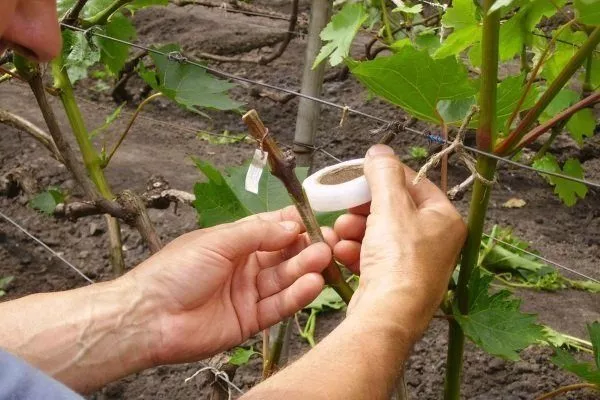
Graft cuttings with 2-3 buds. Select healthy, dry planting stock with a green cut. To retain moisture, the tops of the cuttings are coated with paraffin wax by dipping them in melted paraffin for a few seconds.
- ✓ Seedlings must have at least 3 healthy buds.
- ✓ The diameter of the seedling at the grafting site must correspond to the diameter of the rootstock for better fusion.
To ensure better rooting, the lower part of the scion—the part that will be inserted into the rootstock split—is trimmed on both sides. Before grafting, soak this end of the scion in water for a day or two. It's helpful to soak the trimmed portion of the scion in a solution of "Humate," a root growth stimulant.
Preparation of rootstock:
- An old grape vine will serve as the rootstock. Cut it down, leaving a 10 cm tall stump.
- Clean the surface of the stump.
- Split the stump to create a slit for inserting the cutting. Don't split the stump too deeply to avoid damaging the rootstock. If the trunk is wide enough, you can make several splits to accommodate multiple cuttings.
- Place the cutting into the split and clamp it firmly. Coat the graft site with clay. A secure clamp increases the chances of survival.
- Dig in a support for the bush near the rootstock. Water generously and mulch the soil.
Caring for newly grafted grapes
Features of caring for a grafted bush:
- Loosening the soil to improve aeration and rooting of the cuttings. When grafting into a cleft rootstock, the junction of the scion and rootstock should not be covered with soil.
- After 15-20 days, the graft is checked - if there are no shoots, the procedure is repeated, cutting the rootstock below the split.
- Every two weeks, check the progress of the fusion process. Any roots that protrude—those growing outside the rootstock—must be trimmed. Otherwise, the roots will grow into the soil. Essentially, it will be a soil planting, not a graft.
If the grafting was done in the fall, then before the frost the scion and rootstock are covered with spruce branches or dry grass.
If the grafting is carried out correctly, the harvest on the new bush will appear in 1-2 years.
Agrotechnical features during the growing period
The Vostorg variety isn't particularly demanding or fussy. To obtain a full harvest, simply follow simple cultivation techniques.
Watering
The Vostorg variety doesn't require abundant watering. Moreover, it easily copes with drought. Watering requirements depend on the weather, the age of the bushes, and the permeability of the soil. The average watering rate for one seedling is 10-15 liters.
Approximate watering schedule:
- early spring;
- before the flowers bloom;
- during the ripening of the bunches;
- At the end of October – moisture-recharging irrigation.
The frequency of watering depends on the weather and the growing season. Plants will need additional watering around June, before and after flowering. Watering should be stopped two to three weeks before harvest.
Top dressing
In the second year, young grapes need to be fertilized. The Vostorg variety responds well to fertilizer, which affects its yield.
The order of feeding is presented in the table:
| Period | Composition and standards |
| Spring. Before flowering. | Fertilizer is applied before flowering, when the bush begins to grow rapidly. Nitrophoska (50 g) and boric acid (0.4 g) are dissolved in 10 liters of water. This mixture strengthens the ovaries and inflorescences, preventing them from falling off. |
| 2-2.5 weeks after the first | The composition is similar to the first feeding. |
| Before the fruits ripen | In a bucket of water, dissolve nitrophoska (25 g), potassium salt (1 tbsp) and potassium magnesium sulfate (1 tbsp). Potassium mineral fertilizers can be replaced with wood ash. |
Dry fertilizers should not be added to the soil as they may burn the root system.
Trimming
Vostorg grapevines are vigorous and require short pruning. Like other table grape varieties, Vostorg produces fruit primarily from the lower portion of the vine. Unlike other varieties, Vostorg is left with 3-4 buds rather than 1-2. This approach allows for the potential for vine death during the winter.
Principles of pruning:
- No more than 45 buds are left on the bush.
- Before flowering, the tops of the shoots are pinched.
- 20-25 shoots are left on one bush.
Pest control
The variety is characterized by moderate resistance to the main grape diseases – mildew and oidium. However, the main threats to Vostorg are pests – grape aphids and phylloxera. The variety requires mandatory preventative spraying.
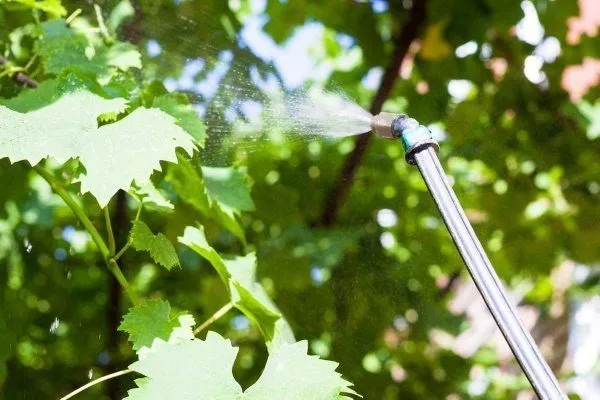
Principles of pest control for Vostorg grapes:
- The best treatment for powdery mildew is sulfur vapor. Spraying bushes with sulfur is recommended in warm, dry weather. Powdery mildew is especially dangerous in hot years, when summer temperatures rise to 30°C.
- To prevent powdery mildew, remove excess leaves and shoots – the bushes must be well ventilated.
- All above-ground parts showing signs of powdery mildew are immediately cut off and destroyed.
- Phylloxera is controlled by spraying the bushes with Lindane (an insecticide) or carbon disulfide. The lethal dose of carbon disulfide is 300-400 cubic centimeters per square meter. However, this dose is also harmful to the bush, so 70-90 cubic centimeters is used.
- Leaf rollers are controlled by spraying with insecticides.
- Sticky baits are installed against wasps, and the clusters are covered with mesh bags.
Wintering
Vostorg is a frost-resistant variety. It's classified as a non-covered variety. However, young seedlings should be protected during their first winter, especially if they're planted in the fall.
- Perform a moisture-charging watering at the end of October to increase frost resistance.
- Cover young seedlings with spruce branches or spunbond before the first frost.
- Make sure the cover allows air to circulate to prevent damping off.
A vessel-shaped structure is built over the seedlings. It is filled with sand and covered with spruce branches and moss. If the seedlings can be bent down, the vines are secured to the ground with staples. The top is covered with spruce branches, peat, moss, and straw. Snow is then piled on top of the shelter.
When to harvest and how to store the crop?
The bunches are picked around August. In central Russia, harvesting occurs around August 15-18. The exact harvest time depends on the growing region and the Vostorg subspecies.
Bunches can be stored for long periods. These grapes will keep in the refrigerator for 1.5 months.
Reviews of Vostorg grapes
When naming the new grape variety, the breeders were surely counting on rave reviews from amateur gardeners and professional winegrowers. And they were right – the Vostorg grape is rightfully considered one of the best domestic varieties – delicious, hardy, and winter-hardy.