
Solaris grapes are a commercial grape variety designed for growing in harsh climates. Cold adaptation was the primary goal of their selection. They are characterized by high productivity, hardiness, and ease of care. Please note some cultivation nuances, particularly those specific to the Solaris hybrid.
History of breeding
The variety was developed by German breeders at the State Institute of Viticulture in Freiburg. Becker is considered the official author, and the hybrid was approved for commercial cultivation in 2001.
Two grape varieties were used for the crossing: Muscat Ottonel (aka GM 6493) and Severny (German name – Merzling).
A detailed description of the Solaris grape variety
The grape variety has been assigned the selection number FR 240-75. It is widely grown in many European countries and throughout Russia, but the Krasnodar Krai and other southern regions are considered the most optimal climate zone. Under these conditions, the vines do not require winter cover.
Bushes
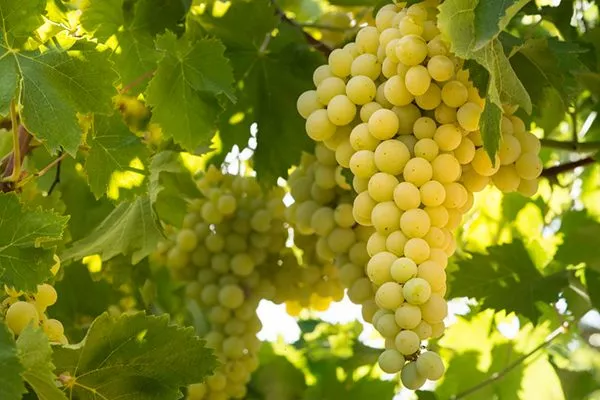
Solaris is a vigorous, densely foliated hybrid grape. Its vines grow up to 5 meters in just a couple of years, and its young shoots are capable of fully ripening within a season.
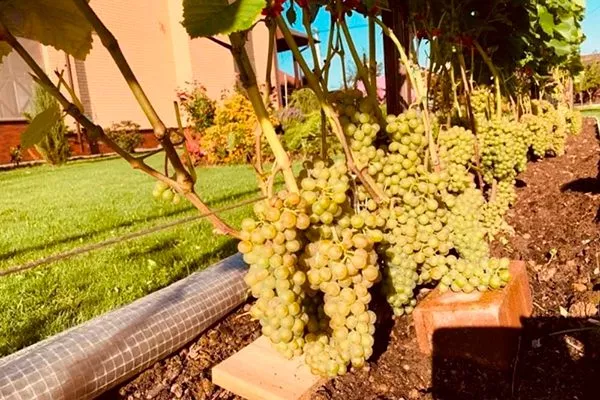
Other characteristic features of the shrub:
- shoot formation is powerful;
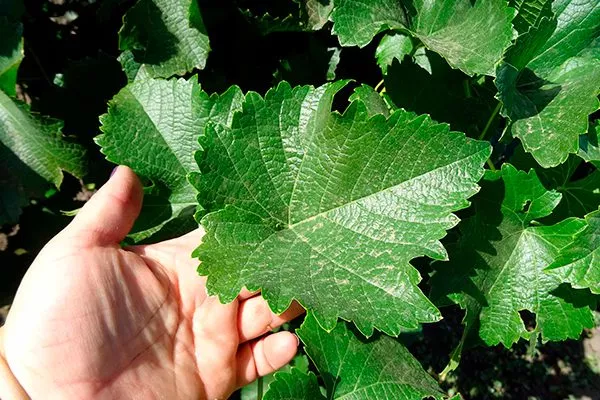
- the leaves are large and dark green in color;
- the leaf blades are highly dissected and their surface is rough;
- The root system is powerful.
Berries
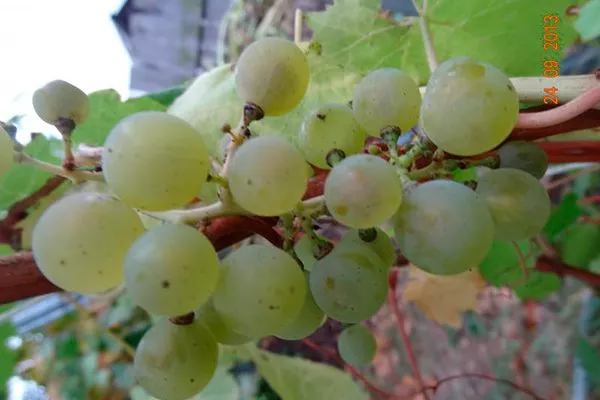
Solaris is classified as a white grape variety, but its skin is yellowish-green. When it reaches peak ripeness and receives ample sunlight, it turns golden or amber.
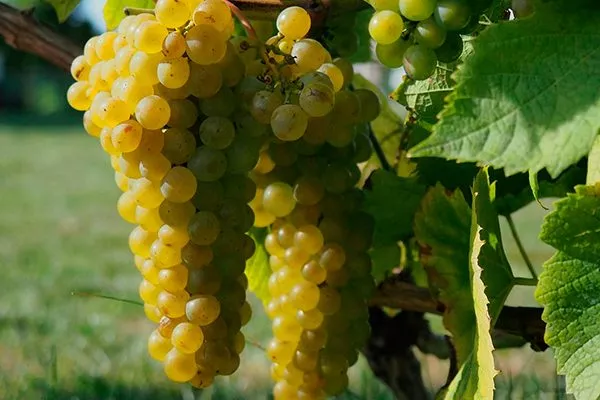
Other features of the berries:
- shape – round;
- weight – varies from 4 to 6 g;
- the pulp is juicy;
- bones - small in size, brown in color;
- the skin is thin.
Clusters
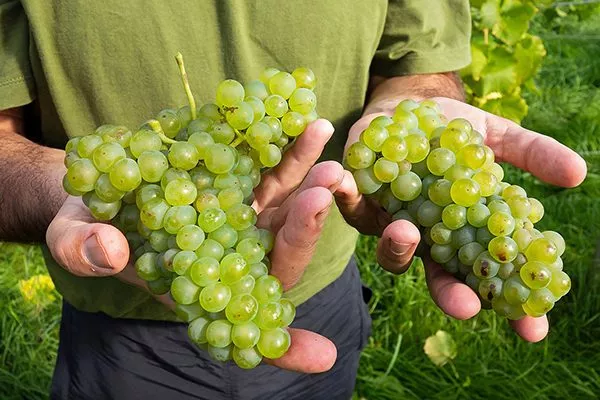
Grape clusters are conical in shape and have a medium-loose structure. They reach up to 25 cm in length and weigh between 300 and 400 g. When grown in the south and under proper agricultural practices, the cluster weight increases.
Taste indicators
The flavor is quite sweet, with a sugar content of 23% (average) and an acidity of only 8.1%. A distinctive feature of this variety is its ability to retain sweetness even in late autumn, but only in warm, dry weather. The aroma and flavor are grape-like, but other notes, such as hazelnut and pineapple, are also noticeable.
Characteristics
This variety has excellent characteristics, making it a favorite choice for both experienced and novice winegrowers. Before planting, carefully review all the details.
Drought resistance, frost resistance
Frost resistance is average—shoots don't freeze at temperatures of -26 degrees Celsius, but according to reviews, the bushes can easily withstand temperatures as low as -30 degrees Celsius. Despite this, experts recommend providing cover when the temperature drops to -21-22 degrees Celsius.
Drought resistance is good – grapes can go several weeks without watering, but without proper irrigation, it is unlikely that you will achieve a decent harvest.
Resistance to diseases and pests
The Solaris grape variety has a strong immune system, so the plant is rarely susceptible to pests and diseases. However, problems can arise if proper cultivation practices are not followed.
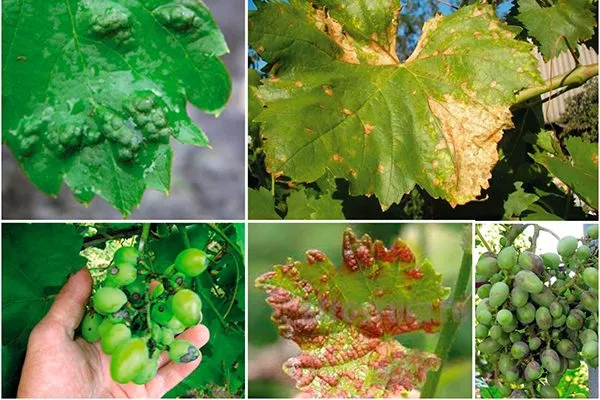
For example, a lack of fertilizing weakens the immune system, and overwatering promotes rotting. A lack of pruning leads to overcrowding and a lack of ventilation. Other factors also contribute to disease, such as prolonged rains or excessively dry summers, or proximity to infected crops. Therefore, preventative treatments are crucial.
Pollination, flowering period and ripening time
The flowers are bisexual, so the bushes don't require pollinating plants or insects. This is especially important if spring weather is unfavorable for pollination.
Solaris is an early variety, ready to harvest in 100-115 days, depending on climate conditions. In the southern regions of the country, the first bunches are picked as early as August, while in the central part of the country, the first bunches are picked in early September.
Productivity, fruiting
High yield is one of the hybrid's main advantages. Up to 5 kg of harvest can be collected per square meter at home. On an industrial scale, 80 to 105 centners can be harvested per hectare.
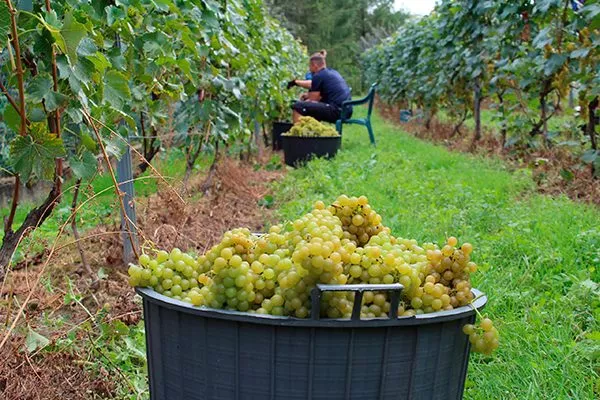
Fruiting is standard - the first clusters appear in the second or third year after planting, but the peak is considered to be 5-6 years of age of the bush.
Application of fruits
Because the berries have a high sugar content, they are used for fresh consumption, juices, compotes, jams, and preserves. Winemakers use this variety to produce white wine.
Advantages and disadvantages of the variety
Being a hybrid, Solaris has a huge number of positive aspects, among which the following stand out:
Features of planting seedlings
The steps for planting grape seedlings are classic, but it's important to pay attention to some specifics regarding varietal soil requirements, timing, and other factors:
- Recommended timeframes. Specific planting dates are not worth mentioning, as they depend not only on climate conditions but also on the current year's weather. It's best to base the planting on temperature. Seedlings thrive if the soil warms to 10-11 degrees Celsius and the air temperature remains stable at 12-15 degrees Celsius.
In autumn, plant 1-1.5 months before the expected first frost. Autumn is only suitable for southern regions. - Selecting a suitable location and proximity to other cultures. Solaris prefers plenty of light, so it's best to plant the bushes in open areas with at least 15 hours of daylight. Avoiding cold winds, drafts, and a high water table are important factors.
The site should have loose and breathable soil with neutral acidity and rich organic composition (this problem can be solved by adding organic matter).
It is also important to choose the right neighbors so that there is no competition for nutrients:- bad neighbors – tomatoes, eggplants, corn, sunflowers, any fruit trees;
- Good neighbors are roses, grapes, annual flowers and crops.
- Preparation of planting material and site. You shouldn't ignore the preparation rules, because the speed of seedling development depends on them:
- Planting material. First, inspect it and trim off any unsuitable parts. Then, trim the roots and shoots and soak them in any growth stimulant.
- The plot. It is cleared of debris and dug over three months before planting, while simultaneously adding organic matter—approximately 9 kg of humus and manure per square meter is required. If preparation is carried out a couple of weeks before planting, the manure should be well-rotted.
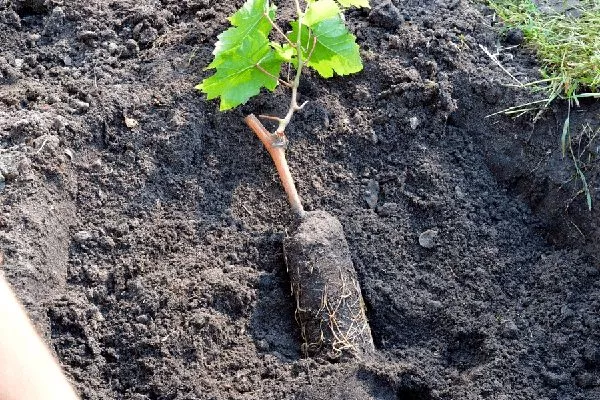
- The process of planting young seedlings. Dig planting holes 80 cm deep and 50-60 cm in diameter. Space the seedlings at least 2.5-3 m apart. Add drainage material to the bottom and a small amount of nutrient-rich soil on top. Place the seedling and cover with the remaining soil mixture. Mulch and water.

Rules for caring for grapes
Care is fairly simple, but in the first year of planting, the seedlings should be treated with special care, as the shoots and roots are not yet fully formed. General guidelines:
- Prevention and protection from pests and diseases. Spray the bushes with insecticides and fungicides three times annually in the spring, at intervals specified by the specific product. Bordeaux mixture, which suppresses many fungi, kills larvae, and prevents various diseases, can be used.
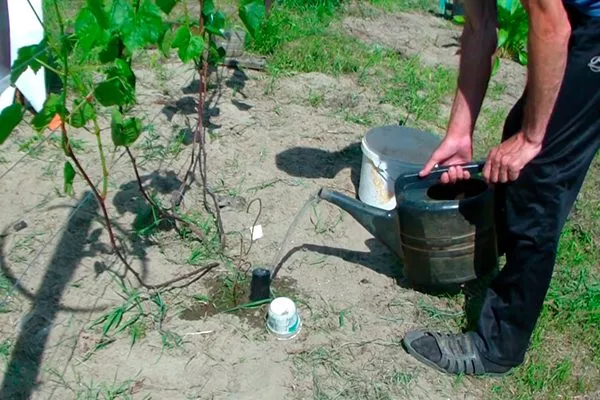
- Watering. This variety tolerates drought well and dies from overwatering, so avoid stagnant water when watering – water should be completely absorbed within 3-4 hours. Young bushes should be watered once every 1-2 weeks, while mature plants should be watered before flowering, after budding has finished, when berries begin to form, and before wintering.
Supplemental watering can also be provided as needed, when a dry crust begins to form on the soil surface. The recommended amount of water for one mature plant is 80-120 liters. - Feeding scheme. If planting was carried out according to all the rules (organic fertilizers were added during preparation, and minerals during planting), then the next feeding is carried out after a year. Scheme:
- The first time, in the spring, nitrogen is applied. You can use ammonium nitrate or urea, rotted manure, or bird droppings.
- The second time is during flowering. Since this variety requires magnesium, MagBor is the best option.
- The third time is when the berries begin to form and the flowers fall off. Use Plantofol, Florovit, or Bona Forte.
- The fourth time – before wintering – you can apply a mixture of 45 g of monopotassium phosphate and 10 liters of water. In this case, apply root and foliar feeding.
Unique feeding requirements- ✓ Solaris is particularly sensitive to magnesium deficiency, which requires the inclusion of magnesium-containing fertilizers in the feeding regimen.
- ✓ Avoid excess nitrogen in the second half of the growing season to avoid stimulating growth at the expense of fruiting.
- Pruning and shaping the bush. Sanitary pruning is required annually in spring and fall. Starting at age three, bushes are thinned as needed. In spring, shoots are shortened, and those without buds are completely removed. In fall, if trunk insulation is needed, stems are shortened to a height of 45-50 cm.
- Preparing for winter. Pruning, fertilizing, moisture-replenishing irrigation (approximately 150 liters of water), hilling, and mulching are recommended. If temperatures are expected to drop below 25 degrees Celsius, wrap the bushes in non-woven material. And when snow falls, sprinkle it over the grapes.
Harvesting and storage
Harvesting should be done in dry weather, as wet bunches quickly rot. Use sharp pruning shears. For 90-day storage, the following conditions are required:
- indoor air temperature – from 0 to +5 degrees;
- humidity level – no more than 85%;
- container – a wooden box with holes;
- layer of grapes - one.
Gardeners' reviews of the Solaris grape variety
Solaris grapes are a versatile variety—they can be grown in various regions of the country and used in a variety of ways. The key is to consider the varietal characteristics when planting seedlings and growing mature vines. This will ensure bountiful harvests every year.