
Victor grapes lead the popularity of pink varieties. Thanks to their large fruits, high yields, and excellent flavor, this plant is widely grown in both private gardens and stores. Proper care ensures strong immunity and high yields.
Origin and zoning
The breeder Viktor Kraynov developed the hybrid, basing it on the Talisman (Kesha) and Kishmish Radiant varieties, naming it after himself. As a result, the plant has excellent characteristics, including rapid adaptation to various conditions and excellent rooting ability.
Recommended for cultivation throughout Russia, thriving in a variety of climatic conditions:
- Adapted to the hot southern climate.
- Tolerates the coolness and humidity of the middle zone.
- Provides high yields in the north due to early ripening.
In the south it can withstand cold without loss, with resistance to temperatures down to -24°C.
Description of the variety
This cultivar stands out among many other hybrids for its rapid growth and rapid vine maturation. It attracts the attention of both experienced and novice gardeners.
- ✓ Leaves are glossy, without pubescence, with moderate dissection.
- ✓ The berries are round in shape, tapering slightly towards the end, with 2-3 seeds.
- ✓ Clusters can be conical, broadly conical or shapeless, with medium density.
Bushes
They are characterized by vigorous growth, ensuring the formation of strong and healthy plants. The flowers are bisexual, eliminating the need for pollinators. The shoots are covered with five-lobed, or less commonly, three-lobed, medium-sized leaves, moderately dissected, and pubescent. The foliage is glossy.
The vine's ripening process is rated as satisfactory to good, which influences fruit quality. It has the ability to produce a significant side-fruit crop, approximately 2-3 weeks after the main fruiting.
Berries
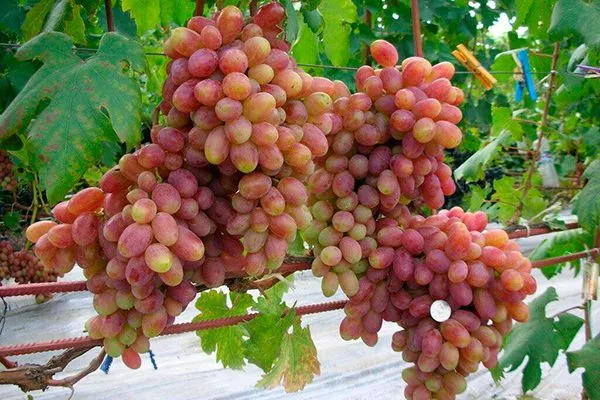
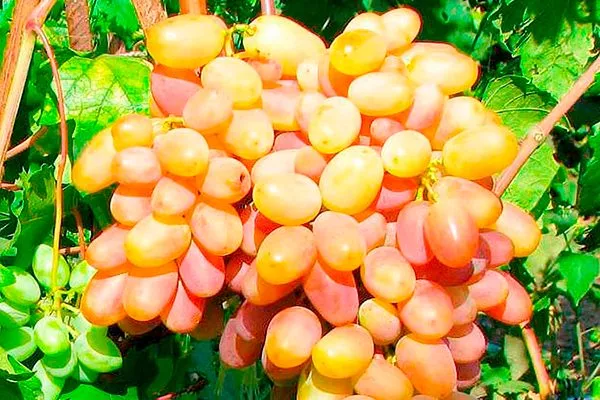
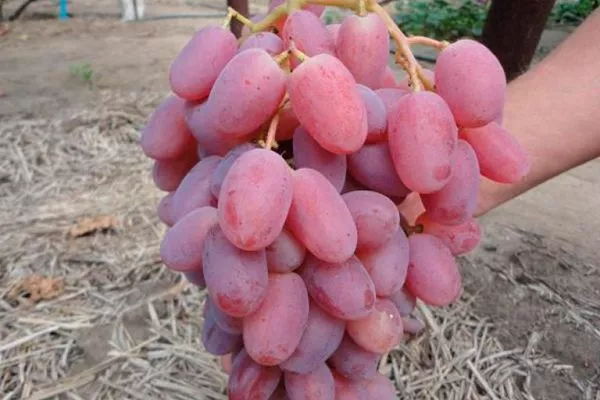
They are round, tapering slightly toward the tip. They contain no more than 2-3 seeds. Their color ranges from bright pink to deep purple, depending on the duration of exposure to direct sunlight. All fruits are uniformly colored.
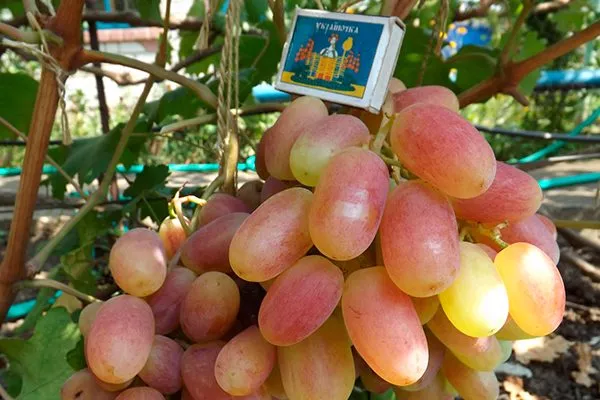
They are excellent for fresh consumption due to their rich flavor and texture. The berries are also suitable for raisin production. All these characteristics make Viktor a versatile and sought-after variety, satisfying a variety of consumer needs.
Clusters
They can be conical, broadly conical, or shapeless. They typically have a medium density and a loose structure. Clusters weigh from 800 g, with individual specimens reaching up to 1.8 kg.
Taste
It has a harmonious and simple flavor. A fresh bunch receives a tasting score of 8.6 points, indicating high quality. The berries' sugar content is 18.1%, adding sweetness, while the acidity, at 6.5 g/dm3, imparts a distinctive refreshing note.
Brief description
The characteristics of the Victor hybrid make it popular and in high demand. Let's look at its current characteristics:
- Productivity and ripening time. It reaches maturity within 90-115 days from planting, depending on the specific growing region. This makes it an attractive choice for those seeking a quick harvest in a variety of climates.
The yield is significant, with one bush yielding 6 to 8 kg. - Resistance to adverse factors. One of the hybrid's main advantages is its excellent frost resistance, making it suitable for cultivation throughout virtually all of Russia. Even without additional shelter, the vine can withstand low temperatures during the cold season.
The seedlings adapt quickly to a new region after transplantation. Drought resistance is rated as high.
Thanks to its developed and deeply rooted root system, the crop is able to effectively extract moisture from deep layers of soil.
Advantages and disadvantages
Distinguished by its excellent taste and appearance, Victor boasts a number of significant advantages:
The only drawback is damage to the berries by wasps. Early flowering can increase the risk of damage to the ovaries by spring frosts.
Landing
Choose a sunny spot for planting. Planting in the shade of trees or on the north side of buildings or fences is not recommended, while a south-facing location is ideal. Buildings facing south will provide protection from cold north winds, create a screen for sunlight, warm up during the day, and gradually release heat at night.
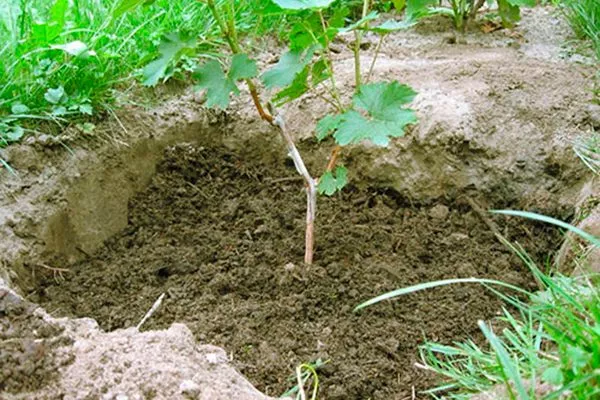
Maintain a minimum distance of 70 cm from the foundation, and the groundwater level should be at least 1.5 m deep. The optimal row orientation for optimal light exposure is north to south. The distance between bushes and rows is 2.5 m.
Helpful tips:
- Dig a planting hole measuring 60x60x60 cm.
- Add 15 cm of nutrient soil to the prepared hole, lightly sprinkle with earth to avoid contact of the roots with fertilizer.
- Sprinkle the Vallar preparation against cockchafer larvae (according to the instructions on the package).
- Place the seedling in the center, lightly covering it with soil, then add nutrient soil (about 15 cm).
- Do not fill the hole completely, leave it open, and gradually fill the voids as the seedling grows.
Deep planting accomplishes two things: it makes it easier to cover the sleeves for the winter and protects the roots from freezing, as they are located at a depth of 50-60 cm. For the first two weeks, protect the seedling from direct sunlight.
Growing and care
Growing the crop doesn't require much effort, time, or experience. Maintenance involves implementing important agricultural practices.
Watering
The plant exhibits some tolerance to dry soil, but yield may suffer if moisture is deficient. The abundant clusters and large, juicy berries require significant amounts of moisture. Water the bushes regularly and generously throughout the growing season until the fruit is fully ripe.
During the wet season, supplemental irrigation may not be necessary. During prolonged hot weather and severely dry soil, water at least once a month, using up to 50 liters of water per mature plant. Frequent, shallow watering can be harmful to the plant.
Top dressing
Fertilize your grapes several times throughout the season. Follow a specific fertilization schedule:
- First half of summer and spring. During this time, nitrogen is needed for active green growth, photosynthesis, and metabolism. Use fertilizers such as mullein, chicken manure, nettle infusion, ammonium nitrate, urea, and Plantafol 30:10:10.
- The second half of summer. At this stage, potassium (to regulate vine and berry ripening) and phosphorus (for root development and inflorescence formation) are needed. Use the following fertilizers: Plantafol, ash, potassium humate, and monopotassium phosphate.
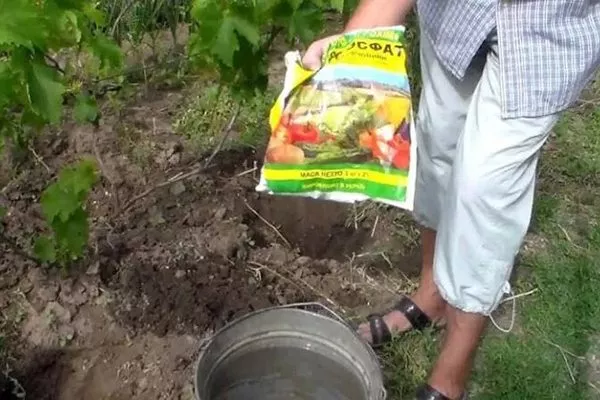
The simplest method for fertilizing with nitrogen is to mix 10 kg of fresh manure with three 30 liters of water, let it sit for a week, dilute it 1:5 with water, and apply 10-20 liters under the bush. The best method for fertilizing with potassium and phosphorus is to dilute 1 kg of ash in 10 liters of water, let it sit for five days, dilute it 1:1 with water, and water at the roots.
Pest and disease control
Pest and disease control requires preventative treatments against mildew, oidium, and gray mold. Follow this plan:
- First treatment. Apply when 4-5 leaves have formed on each shoot. Use a 1% Bordeaux mixture or Strobi, which is effective against powdery mildew and downy mildew.
- Second treatment. Start a few days before flowering. Use a tank mix containing Falcon (5 ml/10 l) to combat powdery mildew, Ridomil Gold (25 g/10 l) to combat mildew, and Switch to prevent gray mold. If spider mites are detected, add Actellic or Fufanon (10 ml/10 l).
- Third treatment. Apply when the berries reach pea size. Use the same products as in the second treatment. You can also use Topaz (2 ml/10 l) against powdery mildew, Ordan and Metaxil against mildew, and Teldor and Skala against gray mold.
Follow these recommendations to avoid complete infestation. Otherwise, the bush and its clusters will rot.
Formation
The formation process begins in the very first year of cultivation, and the desired result after the first growing season should be two fully developed shoots. To achieve this, plant the seedling in a deep hole and provide it with careful care.
To achieve the desired result, regularly prune young shoots to lengths of 2-5 cm, leaving only the two strongest. Be sure to prune them in September. Grape bud formation begins in October, when only three buds remain on each shoot. Then, cover the vines thoroughly to prevent them from getting wet and rotting.
Trimming
This variety is noted for its vigor and productivity, so it's essential to regulate the number of shoots and clusters. The minimum distance between vertical shoots is at least 15 cm. If the shoots are planted too close together, remove any excess shoots.
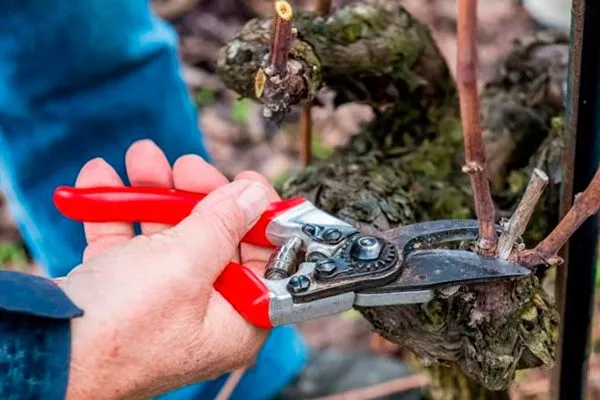
Helpful tips:
- Duplicate and weak shoots, as well as all growth located below the first wire of the trellis, must be removed.
- Standardization is carried out when small berries become visible and pollination of the grapes is determined, identifying which bunch is larger and on which peas are not noticed.
- Leave only one bunch on each shoot.
- Pinch off the stepsons immediately after the first leaf appears on them.
- Pinching involves removing the tops of the shoots when they reach the top wire.
- Leave two leaves above the wire and cut off the top.
Preparing for winter
Even in regions with a southern climate, it's common to cover vines to maintain their productivity during the winter. After pruning, carefully remove the shoots from the trellis and prepare them for covering.
Bend them down to the ground and secure them with metal or plastic pins. Cover the vines with 2-3 layers of agrofibre and cover with a 20-25 cm layer of soil.
Reproduction
Due to the rapid rooting and excellent growth of grapes, there are several methods for propagating them. To increase the number of seedlings, choose your preferred method:
- Cuttings. This method preserves all the varietal characteristics and qualities of the parent plant. Select mature cuttings that root for subsequent planting.
- Layers from the mother bush. To do this, select strong young shoots, gently bend them to the ground, and cover them with soil. After rooting, separate them from the parent plant and transplant them to their permanent location.
- Bones. This method is the most labor-intensive. Select large, fresh seeds, then plant them in nutrient-rich soil. Care for the seedlings requires attention, as they can be weaker and more demanding.
- ✓ Optimum soil temperature for rooting: 20-25°C.
- ✓ Air humidity should be maintained at 85-90%.
- ✓ The use of root formation stimulants increases the chances of successful rooting by 40%.
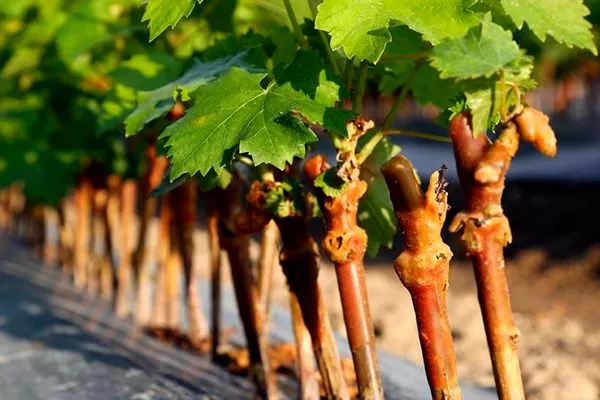
The Victor grape variety attracts winegrowers with its early ripening and harmonious fruit flavor. The plant's attractive appearance can brighten up any garden plot, filling it with unusual colors. Growing this variety in the garden isn't as difficult as it might initially seem.