
The fall fertilizing is finishing, and the grapes need strength for the next harvest season. It's time for spring fertilizing—an important step for both the vines and the gardeners.
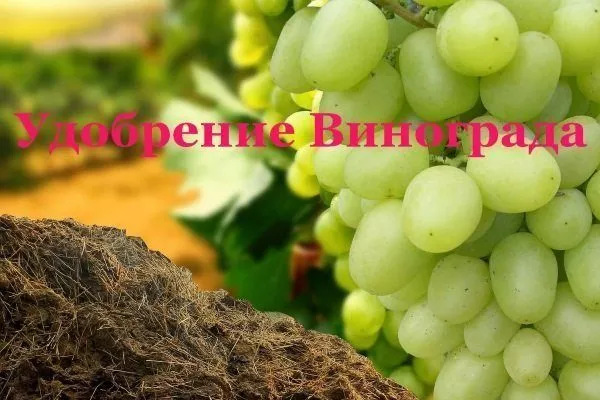
The need for spring fertilizing of grapes
After the dormant phase ends, in early spring, grapes draw nutrients from the soil. If the soil is depleted, the lack of nutrients will affect the growth and growing season of the vines. To ensure a good harvest, the plant needs to be fed.
Reasons for spring fertilization:
- when receiving the optimal quantity and quality of nutrition, the grapes become large and tasty;
- inflorescences and formed grape clusters are preserved as much as possible;
- after difficulties in the winter period, it is possible for weak grape vines to survive and bear fruit;
- feeding is a preventative measure against diseases and parasites;
- the cumulative effect lasts for 1-2 years.
Micronutrient requirements can be determined by the condition of the green part of the grapes. This allows for adjustments to fertilizers.
Signs of component deficiency:
- pale green leaves and slow growth - needs nitrogen;
- brown leaf edges - lack of potassium;
- leaves are deep green with brown spots - phosphorus deficiency;
- green veins against the background of yellow leaves - iron is needed;
- vine base rot - requires sulfur.
As a top dressing, instead of chemical fertilizers, you can use organic ones, or try folk methods of preparing nutrient solutions.
Young grapevines don't require fertilizing for three years, provided it's applied at planting. This is because frequent fertilizing prevents the plant from bearing fruit. It devotes its energy solely to developing the vines and root system.
Timing of fertilizer application
The timing of fertilization is determined by the climate of the region, so you should focus on the plant's growth stage:
- First application - the plant is still in the dormant phase, end of March - beginning of April.
- The second application is when the rudiments of the brushes appear, 10-14 days before the formation of inflorescences, the second ten days of May.
- The third application is after the formation of ovaries, in the first days of June.
If you don't adhere to this schedule, the grapes will either suffer from a deficiency of nutrients and micronutrients, or they will be overabundant. In either case, there's no point in expecting a good harvest. However, following the proper fertilization guidelines can help you achieve a good harvest.
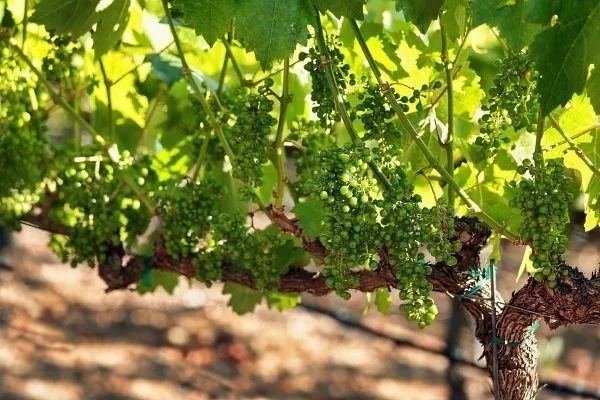
Fertilizing methods
Let's look at two popular methods.
Foliar feeding of grapes
Foliar feeding can only be used in addition to root feeding. Add 40-60 g of sugar or glycerin to the spray solution along with the fertilizer. When applying the fertilizer, it's important to consider:
- Times of Day. The best time would be in the evening, when the dew has not yet settled and the sun's rays are no longer dangerous.
- Weather during the day after treatment. When spraying grapes with fertilizer, you should apply it to dry leaves, and there should be no precipitation for at least a day so that the nutrients have time to be absorbed.
- Condition of the bush. An initial fungicide treatment may be necessary or spraying grapes to kill pests. If the bush is very weak, it may be more beneficial to apply fertilizer directly to the roots.
- ✓ The concentration of the solution should be 2 times lower than for root feeding to avoid leaf burns.
- ✓ The water temperature for the solution should not exceed 20°C to avoid stressing the plant.
If the plant is in satisfactory condition, foliar feeding can be combined with disease prevention, if necessary. This way, the grapes will receive both nutrients and medicinal substances simultaneously.
The first phosphorus spray is applied two weeks before flowering to nourish the grapes during fruit formation. This element, quickly absorbed by the shrub's foliage, provides a positive effect for a month. The recommended application rate is 150-200 g per square meter of soil.
Foliar feeding mixture may contain: potassium sulfate, ammonium sulfate, zinc, boric acid, calcium sulfate and molybdate.
In addition to the main ones, foliar treatments with nutrient mixtures are done 3 more times, but the amount of phosphorus in them is reduced:
- after the formation of inflorescences;
- before the berries ripen;
- when preparing grapes for winter cold.
Watch the video below to learn about foliar feeding of grapes in the spring before flowering:
Root feeding
Root dressings can be liquid - all kinds of nutrient solutions and infusions, and dry - these are practically the same fertilizers, not diluted with water.
Dry fertilizers are applied during digging or by scattering them over the vineyard. After this process, watering is required to ensure the nutrients dissolve and reach the roots.
For wet root feeding, dig an asbestos or plastic pipe 50-70 cm from the base of the bush. The pipe should be 100-150 mm in diameter and buried at least 40 cm deep. All nutrient solutions are poured into it, ensuring they reach the roots quickly. Instead of pipes, you can dig a trench 40-50 cm deep around the perimeter of the bush. Pour the fertilizer solution into it and cover it with soil.
Green manure is very useful: peas are sown between the rows and dug in after ripening.
What to fertilize grapes with in spring? Types of fertilizers and their specifics
Fertilizers enrich the soil with nutrients essential for grape growth and development. Each fertilization process requires a specific fertilizer composition. All applications are scheduled according to a specific seasonal schedule to maximize the effect of a bountiful harvest without harming the grapevines.
In spring, single-component, complex and compound fertilizers are used.
Potash fertilizers
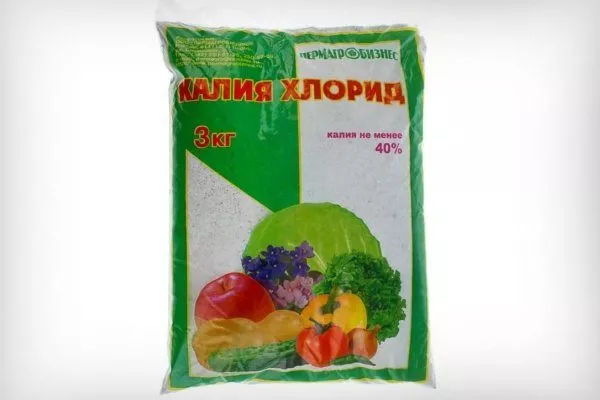
The main active ingredient is potassium, a vital element for grapes. Knowing that it is washed away by rain and irrigation, it's difficult to overestimate the role of potassium fertilizers. These come in chloride and sulfate forms.
The leaves of the grapevine contain a significant amount of chlorine, but as the foliage grows and rainfall increases, its concentration decreases. Chloride-based fertilizers restore and maintain the balance of this element. They must be applied carefully, as excess chlorine is dangerous for grapevines.
Potassium chloride is 40-60% rich in potassium. To reduce acidity, lime should be added. It can be used in combination with any other element, but urea is not suitable for use with potassium chloride.
Sulfuric acid fertilizers not only promote healthy plant growth but also affect the sugar content of grapes. They penetrate the root system well with rain, so it's best to use them in the fall rather than in the spring.
Phosphorus fertilizers
Phosphorus is essential for grapes during the growth and flowering stages, especially for young plants. Its balance helps produce large, healthy fruits.
You can use the following tools:
- Superphosphate Contains 20% phosphoric acid. It is compatible with a variety of soils, but lime is added to the fertilizer if the soil is highly acidic. Another option is to lime the soil before fertilizing. The positive effects of superphosphate include increased yields and disease resistance. For fertilizing, dilute the fertilizer with water at a ratio of 1:10 and apply 0.5-0.7 liters per plant.
- Double superphosphateContains a double dose of phosphorus. When diluted with water, the fertilizer dosage is reduced by half. It is used as a liquid fertilizer in spring and summer, and before winter, it is sprinkled around grape bushes.
- Precipitate It's 35% rich in phosphorus. It's practically insoluble in water, so the powder is scattered over grape vines when loosening or weeding. It's most compatible with acidic and gray soils.
- Defluorinated phosphateSuitable for chernozem, turf, and podzolic soils. Contains 32% phosphate.
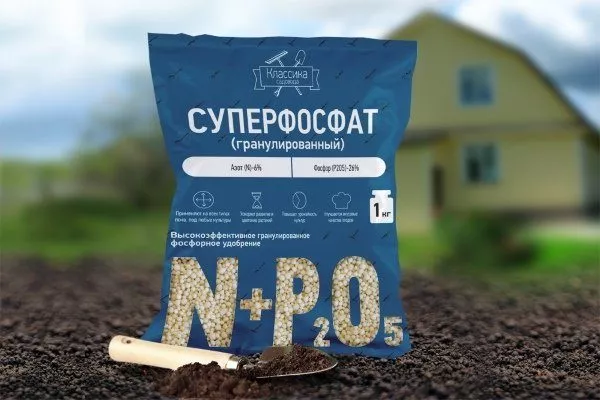
Superphosphate fertilizer
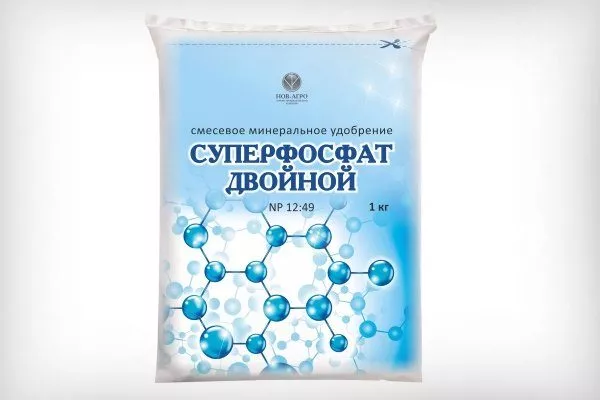
Double superphosphate fertilizer
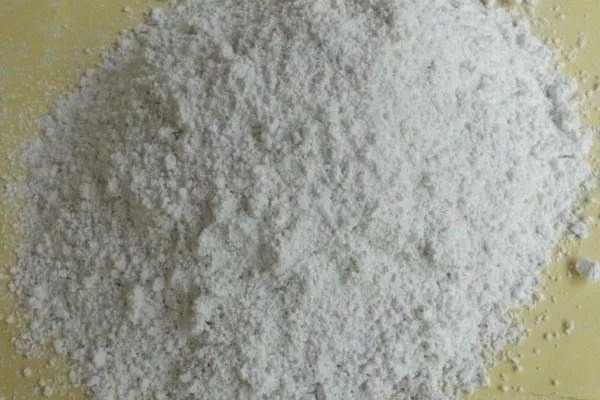
Precipitate fertilizer
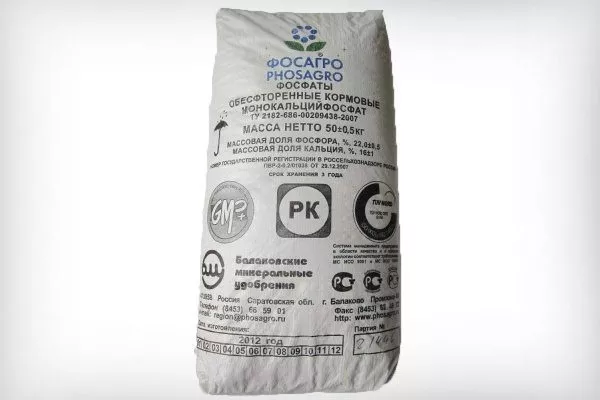
Defluorinated phosphate fertilizer
Complex and compound fertilizers
Complex fertilizers combine at least two elements. They are produced in two ways:
- Single-component fertilizers are mixed together.
- By means of chemical reactions of various components.
Such supplements include:
- Nitrophoska. Nitrogen content: 16%, phosphorus: 16%, potassium: 16%. Available in a classic form—made from only these components, with additional elements (copper, cobalt, boron, zinc, etc.).
- Azofoska Based on three key elements—N, P, and K—it's available as a solution and a dry mix. The dry fertilizer is applied to the vineyard, while the liquid form is poured under the roots.
- Bischofite Contains more than a dozen elements—magnesium, boron, iodine, bromine, and others. It is used for foliar feeding. The dilution rate is 100 ml of fertilizer per 10 liters of water.
- Florovit— a fertilizer designed for grapes. It is used during planting and as a primary root dressing. The fertilizer consumption rate is 50 g per plant.
- Agro-Nova This Ukrainian fertilizer, in addition to micronutrients, contains bioadditives to stimulate grape growth. It is used in spring as a liquid root dressing. For this, 90 g of fertilizer is dissolved in 10 liters of water. For foliar application, it is diluted in water at a ratio of 1:100.
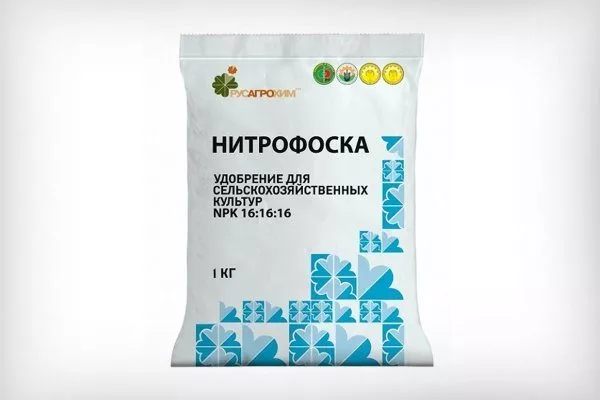
Nitrophoska fertilizer
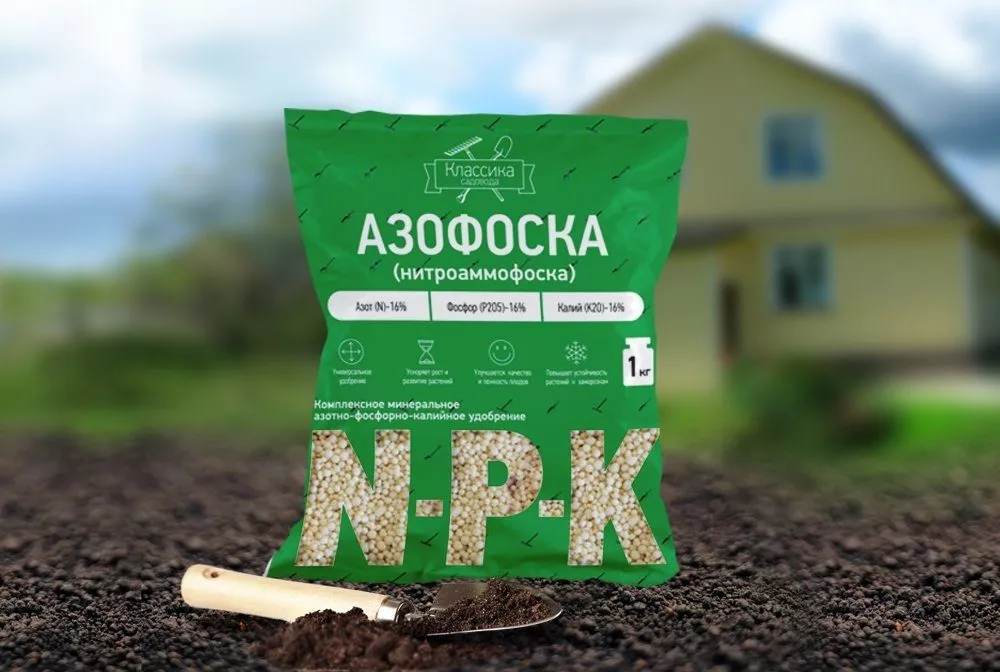
Azofoska fertilizer
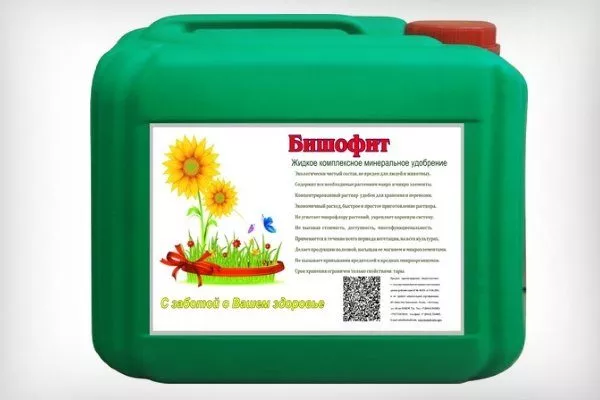
Bishofit fertilizer
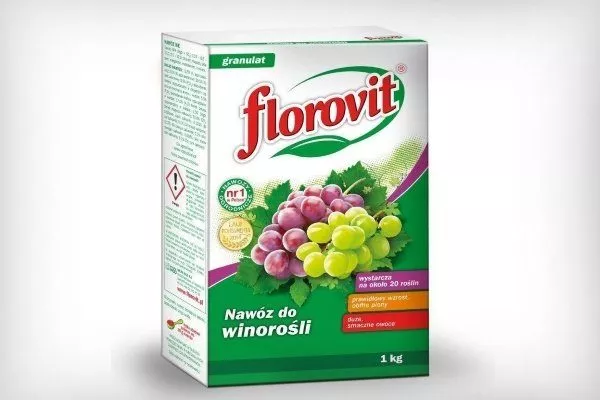
Florovit fertilizer
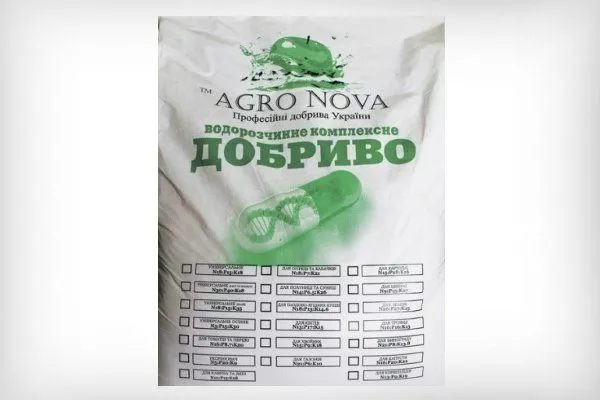
Agro-Nova fertilizer
Organic fertilizers
Animal waste and plant waste decompose to form substances that are beneficial and readily available to plants. Organic fertilizers have their pros and cons.
Benefits of organics:
- There are no material costs in their production, because they are natural free fertilizers for farming.
- They contain a balance of essential nutrients and microelements required for grapes.
- The activity of bacteria during the decomposition of organic matter has a beneficial effect on the soil. It increases air permeability and moisture retention, which benefits vineyard development.
Disadvantages of organics:
- Gardeners don't know the exact composition of organic fertilizers. This makes it difficult to determine whether plants are deficient or overexposed. The composition of mineral fertilizers is indicated on the packaging or in the instructions for use.
- When adding organic matter, the grapes may become infected with diseases, or the larvae and adult pests, as well as weed seeds, may be transferred.
- Hygiene and aesthetics make working with such fertilizers difficult.
The most popular organic fertilizers are compost, manure and bird droppings.
Manure — animal waste products, their excrement. When fresh, it contains a large amount of nitrogen. This makes it impossible to use it in concentrated form when planting young grape vines due to the risk of burning the root system.
To apply, dilute the manure with water at a ratio of 1:10. In the spring, use compost. Manure that has been rotted for at least 2-3 years is used to fertilize planting holes and existing bushes by tilling the soil.
Avoid applying manure to the soil without control, as it can lead to excess nitrates. This negative effect is especially common in black soil. Lighter, more porous soils drain well and are washed away by rainfall and irrigation. Therefore, to reap the undeniable benefits of manure application, it's important to carefully and responsibly approach the grape fertilizing process.
CompostIt's prepared by mixing grass clippings, household organic waste, and tree and shrub leaves with soil or peat. The mixture is moistened and stirred periodically to oxygenate it. After a year or two, it produces a valuable fertilizer rich in plant nutrients.
If healthy plant residues were used for fertilizer preparation and no manure was added, the absence of pathogens and pest larvae is almost 100%. Humus is suitable for root fertilization of grapes and for preparing planting holes.
Bird droppingsIt can be used dry or dissolved. A small amount is sprinkled into depressions around the perimeter of the bush, covering it with soil. To prepare the solution, dilute a handful of chicken manure with 5 liters of water. Let it steep in a warm place for 7-10 days, stirring occasionally. Dilute this infusion again with water in a ratio of 1:10. Pour the fertilizer between the rows, keeping in mind that 500 ml of liquid is required per bush.
The video below discusses adding bird droppings to grapes:
Don't add chicken manure solution to the plant. This can burn the roots.
Before and after fertilizing, water the area.
Folk remedies
One popular and effective folk remedy is yeast. It's prepared in several steps:
- Dissolve dry baker's yeast in warm water in a ratio of 1:1000.
- For each liter of solution, add 1 teaspoon of granulated sugar.
- Let it brew for 2-3 hours.
- Before use, dilute with clean water in a ratio of 1:5.
This solution can also be prepared using live yeast, but do not add sugar. The recommended application rate for this fertilizer is 2 liters per plant.
Ash — the most suitable organic-based mineral fertilizer for grapes. It nourishes the plant and prevents diseases and pests. It is especially important in acidic soils, as it effectively reduces their acidity. Burning deciduous trees produces ash, which is rich in potassium. Coniferous fertilizer contains primarily phosphorus.
- Collect the ashes from burning hardwood trees to create a potassium-rich fertilizer.
- Sift the ash through a sieve with 2-3 mm mesh to remove large unburned residues.
- Store the ashes in a dry place in a tightly sealed container to prevent loss of nutrients.
Dry ash can be used in unlimited quantities when digging and loosening soil. For root feeding, prepare an ash solution:
- add 250-300 g of ash to 10 liters of water;
- let it sit for a week;
- water the grapes, making furrows around the bush;
- liquid consumption - 5 liters per bush;
- The ash solution is also used for spraying the above-ground part of the plant.
An experienced gardener talks about fertilizing grapes with ash in his video:
EggshellIt's rich in potassium, magnesium, and phosphorus. However, 95% of its composition consists of calcium compounds. All components, when released into the soil, quickly convert into a form readily absorbed by grapes. To preserve the shells, they must be thoroughly washed and dried. Before applying to the soil, grind this fertilizer into a powder.
More information about eggshell feeding can be found here. here.
Green manureIt is prepared from weeds, remains of garden plants after thinning and weeding, etc. For this:
- Place the greens in a container, filling it 3/4 full.
- Add water until the herbal mixture is completely covered.
- Cover the container with plastic wrap, making several small holes in the top.
- Let it sit until the smell of fermentation appears (10-14 days).
- Dilute with water to fertilize grapes using the root method - divide the entire volume into 10 feedings.
By adding wood ash to the solution and straining it, you can use it to spray bushes.
Features of the first feeding
After opening, the vine requires a generous dose of complex fertilizer. It should contain all the components that will restore strength and stimulate vigorous growth. You don't need to buy complex fertilizer; organic fertilizers are suitable. Humus and organic-based solutions are suitable.
How to feed grapes to increase the yield?
It's important to apply fertilizers according to the specific needs of the plant. To ensure nutrients reach the main root system more quickly, make a circular pit around the bush with a radius of 25-80 cm (depending on the size of the bush) and a depth of about 40 cm. All fertilizer solutions are poured into the dug circle.
Humus and slurry are spread over the surface of the circle, and then dug to a depth of 15 cm. After this loosening, the fertilizer should be covered with a layer of soil.
Common mistakes
Novice gardeners often make mistakes when fertilizing in the spring due to inexperience. The most common mistakes are:
- Sprinkling dry fertilizers on the soil surface. In such cases, nitrogen evaporation is inevitable, and potassium and phosphorus are unable to reach the grape's root system.
- Uncontrolled fertilization leads to plant disease and reduced yields.
- Fertilize only young grapevines. Provided the planting holes have been dug with fertilizer, grapes don't require any additional fertilizer for up to three years. Mature vines, on the other hand, experience micronutrient and nutrient deficiencies as they grow.
Helpful tips
To ensure your grapes produce a rich and tasty harvest, follow these recommendations:
- Before and after applying root fertilizer, water the grapes. This will dissolve the fertilizer components and make them easier for the roots to access.
- Dry forms of fertilizers and nutrient solutions for irrigation should not be applied to the surface of the soil, but rather into depressions made around the perimeter of the bushes or between rows.
- If necessary, use spraying in combination with the root method of fertilizing.
- Carefully monitor the schedule and rates of fertilizing.
Fertilizer application methods depend on the fertilizer composition, the weather, and the condition of the vines. Rational and responsible fertilization of a grape plot will help you achieve a bountiful harvest even on seemingly hopeless soil.