
Valiant is a grape variety noted for its adaptability to the harsh climates of northern regions and central latitudes. It is also highly susceptible to fungal diseases. Before planting, it's important to study its key characteristics and learn how to properly care for it.
Authors and history of appearance
The creator was R. M. Peterson, a scientist at Brookings State University in South Dakota, USA. It was developed by crossing two different varieties – Fredonia and SD 9-39. The development of Valiant was completed in 1967.
Description of the variety
It's a versatile table variety. Despite its foreign origins, it adapts well to Russian garden conditions and produces high yields.
- ✓ High resistance to frost down to -46°C in the presence of snow cover.
- ✓ Specific “Isabella” berry aroma, which may not be to everyone’s taste.
Bushes
They are characterized by rapid growth and positive productivity. Annual growth is very vigorous, and shoots are capable of fully maturing even in moderate climates. They are thick and light brown in color. The vines are covered with large, irregularly shaped, light green leaves.
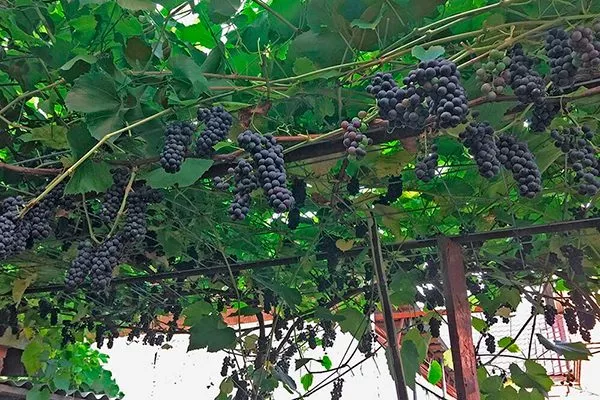
Berries
They have a regular, round shape but are small in size. Their skin is black and peels off easily, resembling a small bag when removed. The weight of a single berry ranges from 1.8 to 3 grams.
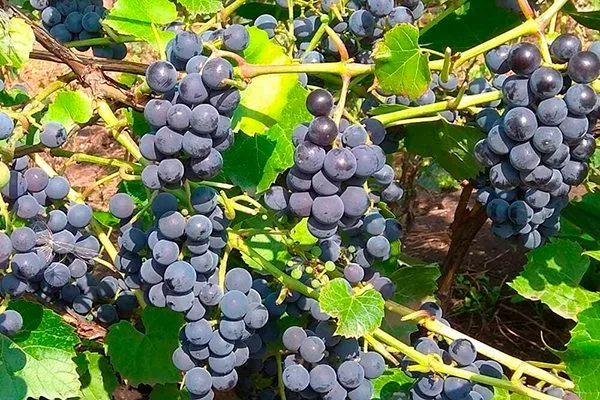
Clusters
Characterized by a dense structure and small size, the hybrid forms cone-shaped clusters no more than 10 cm long. A single shoot typically bears 3 to 5 such clusters. The average weight is 100 g, with some specimens reaching 200 g.
Taste
Characterized by a blueberry-currant flavor with a hint of labrusca, this variety is prized by gardeners for its floral and fruity aroma and light strawberry scent.
The skin has a rich hue, and the juice within the flesh is lightly colored. The flesh is not too dense, but slimy.
Ripening time, yield
It's considered quite early, even in northern viticultural conditions, ripening as early as late August or early September. Yield depends on various factors, such as the age of the vine and soil fertility, and ranges from 5 to 12 kg per plant.
Growth characteristics
The Valiant grape is characterized by strong growth and productivity.
Growing regions, winter hardiness
The crop is resistant to severe frosts and productive in limited summer conditions. Due to its increased susceptibility to fungal diseases, cultivation in regions with drier climates is recommended.
Winter hardiness reaches -46°C in snow cover. In open-air cultivation, this temperature drops to -35-37°C.
Application
This versatile fruit can be consumed in a variety of ways. The berries are eaten fresh and used to make compotes, juices, and jellies. They are also used to produce a dry wine with a rich aroma and burgundy hue.
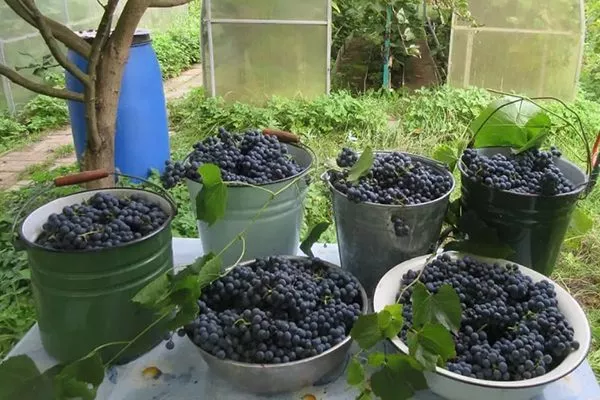
The wine production process uses a special malolactic fermentation technology. This variety is often used to create blended wines. It is also frequently used for decorative outdoor decoration.
Pros and cons
Culture has its advantages and disadvantages. Valiant has many advantages:
Landing
Plant in spring, between April and May, when soil temperatures reach 10°C. Choose sites with minimal risk of flooding, full sun, and protection from the wind.
- ✓ The hole depth should be at least 80 cm to provide sufficient space for the root system to develop.
- ✓ The distance between seedlings should be 2.5-3 meters to prevent competition for resources.
Step-by-step instructions:
- Dig a hole about 60 cm deep and wide. Grapes root deeply, so depth is important.
- Prepare the soil by adding compost or humus to ensure fertility. Add mineral fertilizers and phosphorus to promote root development.
- Before planting, remove the seedling from the container. Carefully straighten the roots, removing any damaged or overly long ones.
- Place the plant in the hole, compact the soil around the roots, and water thoroughly. Make sure the roots are covered with soil and the root ball is firmly pressed down around the trunk.
- Install a supporting structure, such as a trellis or stake, to provide support for the growing vines.
- Water the seedling generously. Maintain moisture levels, especially during dry periods.
Mulch the soil surface to retain moisture using straw, sawdust or wood chips.
Growing and care
The plant exhibits remarkable undemandingness, allowing it to thrive even with minimal care and boasting high vitality. To fully realize its potential, this hybrid requires standard care:
- Watering. In temperate climates with sufficient rainfall, watering is not required, except during periods of prolonged drought. A mature plant requires 40-50 liters of water.
Once the berries start to color, stop watering, regardless of weather conditions. - Top dressing. Start fertilizing the seedlings three years after planting. In spring, in May, mulch the soil around the tree trunks using humus or a mullein solution. During flowering, apply foliar fertilizer with complex fertilizers. In September, apply superphosphate and potassium sulfate.
- Minting and removal of stepsons. The procedures help maintain order in the vineyard.
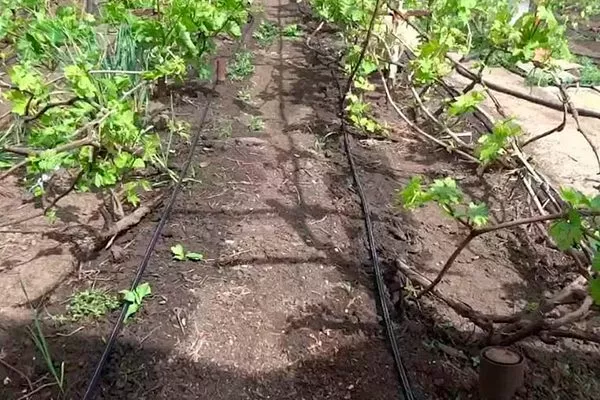
Pest and disease control
Valiant is resistant to diseases and pests, but if not cared for properly, gardeners can encounter problems. Learn the signs and methods of disease control to save your plant in time.
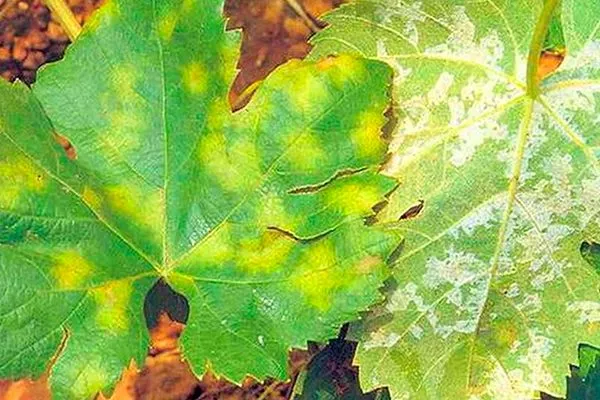
Mildew
The disease affects the leaves and other green parts of the grapevine, causing white spots and a powdery coating. Over time, the foliage turns yellow and falls off. Provide good care, ensuring adequate air circulation and avoiding overwatering. Apply fungicides, such as copper-containing products.
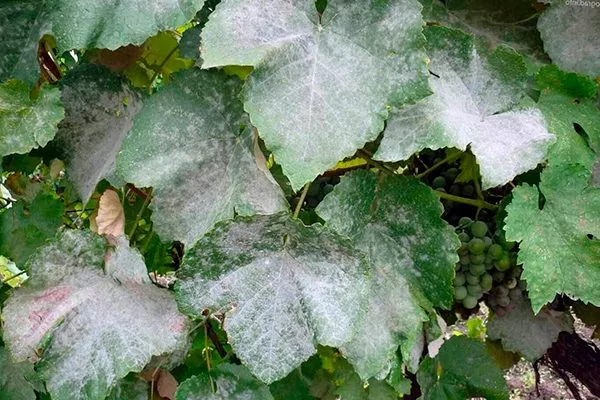
Powdery mildew
A white coating appears on leaves, shoots, and grape clusters. As the disease progresses, leaves turn yellow, and shoots may become distorted. Apply sulfur-based treatments and chemical fungicides. Thiophanate-methyl is effective against powdery mildew.
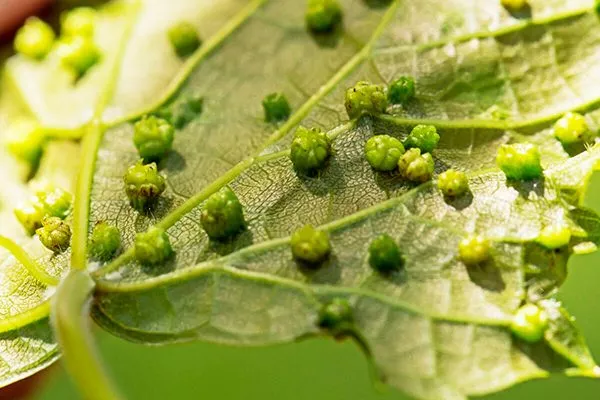
Phylloxera (grape aphid)
Grape aphids feed on the sap of leaves and shoots, causing them to deform, curl, and dry out. A sticky secretion appears, attracting ants. Remove affected parts and destroy the pests. Use chemical insecticides containing pyrethroids.
Harvesting and storage
Harvest in dry weather, after the dew has completely dried, as wet fruit stores less effectively. Carefully prune each cluster with sharp pruning shears. Disinfect harvesting tools before beginning.
Storing grapes after harvest requires certain conditions to preserve the freshness and quality of the berries. Store them in the refrigerator at a temperature of approximately 0-2°C. This slows down oxidation and preserves freshness.
Store grapes in plastic or cardboard containers with ventilation holes to prevent excess moisture and condensation. Avoid overpacking. Use containers that prevent compression.
Preparing for winter
Covering grapes for the winter is an important part of caring for the plant, especially in regions with cold winters. This helps prevent problems and protect the vines from the negative effects of cold temperatures.
Key points:
- Covering should be done closer to the beginning of permanent frosts, when the grapes have already entered a dormant state.
- Before the procedure, prune the vines, removing old and damaged parts. Leave only healthy branches.
- Apply a layer of mulch around the root area to protect the roots from severe frost.
- Use straw, dry leaves, agrofibre or special covering materials.
- Surround the base with a covering, leaving enough air space. Provide protection up to the level of the first branch.
- Secure the shelter so that it won't blow away. You can use rings, wooden poles, or other means to secure it.
- In spring, when the risk of frost is minimal, carefully remove the cover.
The procedure provides additional protection from the cold, promotes preservation and ensures a successful start to the growing season in the spring.
Reproduction
Grape cuttings are a propagation method that involves growing new plants from parts of the parent grape plant, called cuttings. This method is effective and widely used to preserve grape varieties and produce new seedlings with desired characteristics.
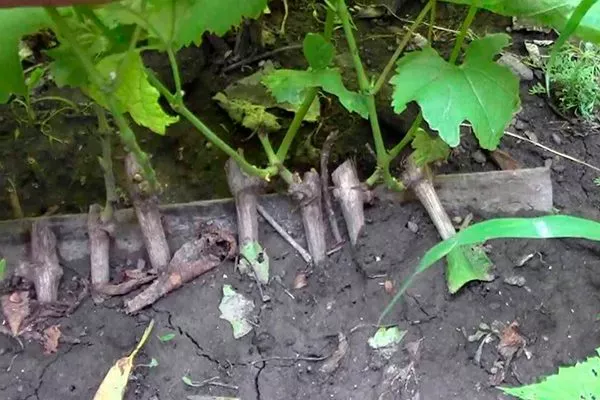
Step-by-step instructions:
- Select healthy, mature branches, preferably in spring or fall. These are the best times for successful rooting of cuttings.
- Select a section about 15-20 cm long containing 2-3 buds. Cut the cutting at an angle, making the cut just below the bottom bud from the bottom up. Remove any excess leaves, leaving only the top ones.
- Treat the lower end with a root growth stimulator.
- Prepare well-drained soil. Cuttings can be planted in pots or directly in the ground.
- Place the lower end of the cutting into the soil to a depth of 5-10 cm, leaving the top bud above the surface. Care for it, maintaining soil moisture.
- Established cuttings may require temporary protection, especially if planted during cold weather. This helps prevent frost.
- Once the cutting has developed and formed enough roots, transplant it to its permanent growing location, be it in a garden or vineyard.
Grape cuttings ensure genetic stability, as the new plant is a clone of the parent vine. This method allows for rapid increase in the number of seedlings.
Reviews
Valiant grapes are an early-ripening variety characterized by small, juicy fruits. Although primarily grown in southern regions, they are suitable for cultivation in cities with typically harsh conditions. Their exceptional frost resistance allows them to thrive in a wide range of climates.