
Growing grapes is a fascinating pastime, bringing not only aesthetic pleasure but also abundant fruits of labor. Among the many grape varieties, the Veles variety deserves special attention. With proper care, you can achieve high yields and a strong immune system.
The history of the hybrid's emergence
This grape variety was created by Ukrainian breeder V.V. Zagorulko from Zaporizhzhia in 2009. Kishmish Veles was developed based on the genetic characteristics of the Rusbol and Sofia varieties. The resulting hybrid successfully inherited the best qualities of its ancestors, surpassing in taste and characteristics even the leading variety, considered by many gardeners to be Kishmish Luchisty.
Description and characteristics of the Veles variety
Veles grapes are popular among both novice and experienced winegrowers. The plant attracts attention with its large clusters and excellent berry flavor.
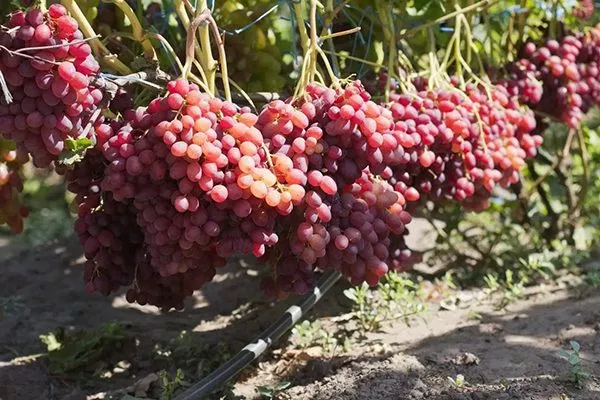
External signs
The Veles grape variety is distinguished by the formation of extremely large and vigorous vines. This early-ripening variety begins bearing fruit in the last ten days of July and continues until the first days of August, producing large bunches.
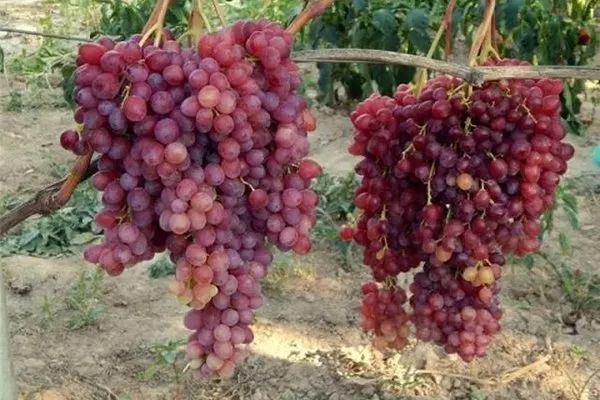
Features and external qualities of the variety:
- The first fruits of the Veles variety appear at the age of 4 years, when the bushes have already reached impressive sizes.
- The growth rate is impressive, with reddish shoots that have woody parts of the vine.
- The bushes branch out well, and the side shoots produce fruit that ripens a little later than the main crop.
What is special about this variety?
An important characteristic of the Veles variety is its ability to bear fruit twice. Other distinctive features of the variety include:
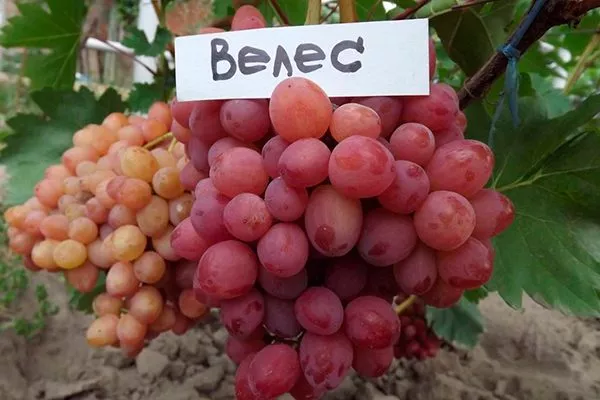
- The berries are oval in shape and firmly attached to the clusters, covered with a pink skin that does not affect the perception during consumption.
- The pulp is dense and has a nutmeg flavor.
- The variety has high frost resistance and can withstand temperatures down to -21-22°C.
- ✓ The ability to bear fruit twice, which is rare among other grape varieties.
- ✓ High frost resistance, allowing it to withstand temperatures down to -22°C without additional cover.
Characteristics
The Veles grape variety boasts numerous characteristics that make it a popular choice for gardeners. Read a detailed description of the grape variety.
Drought resistance, frost resistance
The Veles variety exhibits moderate frost resistance. Dry and sunny weather does not adversely affect the appearance of the grape clusters.
Ripe bunches can remain on the vine for up to 45 days, maintaining their flavor. Rain and humidity can negatively impact the harvest's marketability.
Resistance to diseases and pests
There is a certain level of resistance to downy mildew, rated at 3.5 points. The variety also has average resistance to other diseases and pests.
Pollination, flowering period and ripening time
Flowers of both sexes form on the shoots, making pollination easy. In this case, planting other grape varieties nearby for cross-pollination is not necessary.
The harvest ripens quite early. The berry ripening period ranges from 95 to 105 days, with harvesting occurring in the first ten days of August. However, in warm and sunny weather, the first berries are ready for picking in late July.
Productivity
The Veles grape variety deserves its reputation as a high-yielding hybrid. It delights gardeners with a generous harvest each year, yielding approximately 10 kg of grape clusters per vine.
Application of fruits
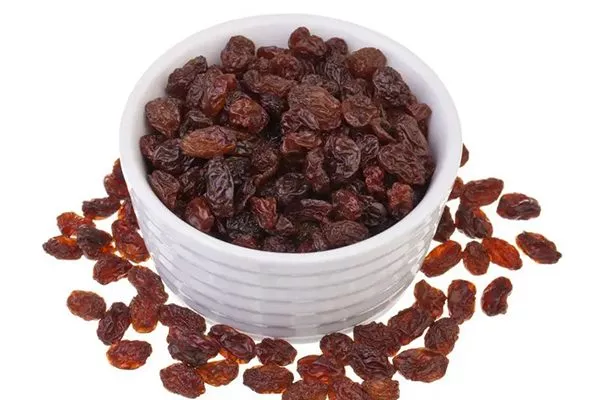
These fruits are used as food, raisins, wine, and juice. Their exquisite flavor and seedlessness make them an excellent raw material for high-quality products.
Chemical composition of fruits
Veles grapes have a pleasant flavor, accompanied by a light muscat aroma. Approximate characteristics of the berries are presented below:
- Sugar content – 17-22%.
- Acidity – 5-7 g/l.
More precise values may depend on the region and local climate, as well as soil composition, light levels, and humidity during the growing season.
Advantages and disadvantages
According to gardeners' reviews, the Veles grape variety has significantly more positive characteristics than disadvantages.
Advantages of the variety:
Features of cultivation
With proper care, you can expect a bountiful harvest. Below are some guidelines for growing.
Landing rules
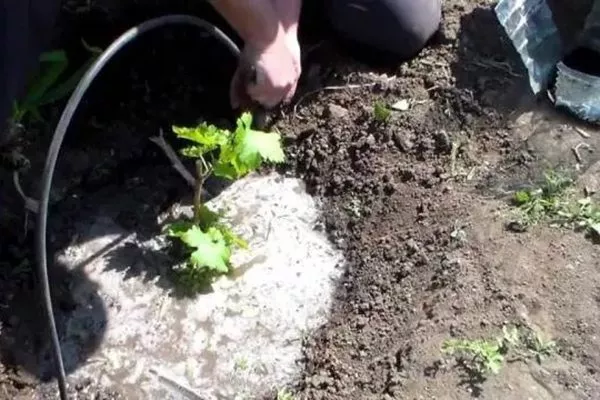
When planting, use fertile and well-drained soil, preferably black soil. The chosen planting site should receive adequate sunlight.
- ✓ The soil pH level should be within 6.0-7.0 for optimal growth of Veles grapes.
- ✓ The depth of groundwater should not exceed 1.5 m to avoid root rot.
Helpful tips:
- Sites with high groundwater levels or marshy terrain are not suitable for grapes. When planting, consider the south-to-north direction.
- Veles hybrid plants are large and require adequate space to grow and develop. Maintain a distance of 1.5-2 meters between plants and 3-4 meters from trees and buildings.
- Prepare a hole 2-3 weeks before planting, measuring 80x80 cm.
- Fill the hole with a soil mixture prepared from soil, humus and phosphorus-potassium fertilizers, then add 3-4 cm of clean soil on top.
- Treat the seedlings with the growth stimulator Humate at a concentration of 0.5 mg/l.
Plant carefully, avoiding damage to the delicate rootstocks. Cover the rhizome with soil, compact the surface, water with 20-30 liters of water, and mulch with sawdust.
Transplanting a bush
Repot the plant after the leaves have fallen, when it's preparing for winter dormancy. Repotting the plant with its root ball into a larger hole is preferable for young plants aged 1-3 years. Replace the old hole with new soil, and transplant the young plant into the center.
Watering and fertilizing
For a mature grape plant, watering just four times per season is sufficient. Overwatering and stagnant water can lead to cracking of the fruit and root rot.
For fertilizing, use a mixture prepared as follows: dilute 15 kg of cow manure and 7.5 kg of bird droppings in 10 liters of water and let sit for 7 days. Dilute 1 liter of the resulting mixture in 10 liters of water and use it to fertilize each bush. Perform this procedure in April.
Pruning and shaping
One of the characteristic features of this grape variety is the abundant formation of side shoots. In the southern regions of Russia, this can serve as the basis for additional harvests. To ensure the development of side shoots, they must be pinched.
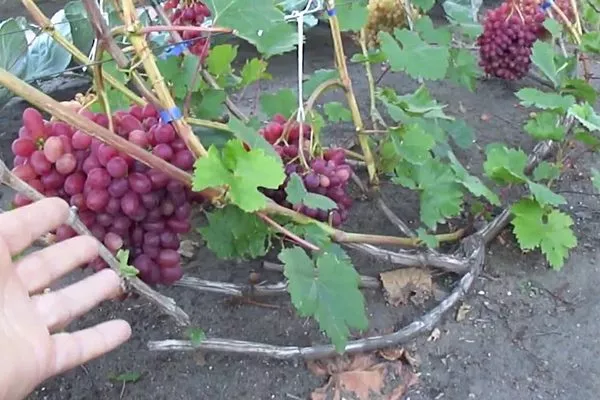
Prune shoots so that 6-8 buds remain on each. In early September, remove young shoots that are less than 50 cm long.
Features of gartering the Veles grapes
When growing Veles grapes, use trellises for support. The distance between rows of trellises should be at least 3 meters. When staking the shoots, ensure they are secure, but with some extra space to prevent them from being pulled too far as the branches grow.
Diseases and pests
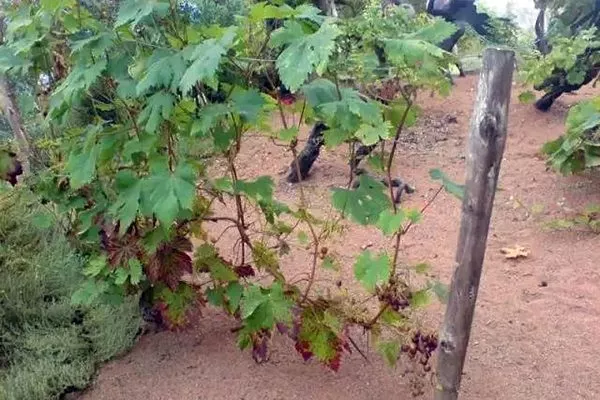
The Veles grape variety exhibits moderate resistance to common diseases. However, some diseases can still threaten the bush. Therefore, regular inspections of the bushes and prompt treatment when warning signs appear are essential parts of grape care.
Possible diseases and problems:
- Mildew. Characterized by oily yellow spots on leaves and fruit, which later begin to rot. For treatment, use a 1% solution of Bordeaux mixture.
- Oidium. It manifests itself as curly leaves. Later, the blades, shoots, and berries become covered with a white coating. Treatment is carried out with a 1.5% colloidal sulfur solution or Strobi.
- Anthracnose. It is characterized by the appearance of brown spots on shoots and leaves, which subsequently dry out, disrupting metabolic processes in the tissues. To treat, treat the bushes with a 3% solution of Bordeaux mixture.
- Spider mite. The infection manifests itself as small yellow spots on the leaves, a wilted appearance of the plant, and small webs on the tips of the shoots. Treat with Actellic or Fitoverm.
- Phylloxera. Characterized by swellings on the undersides of leaves and roots, affected bushes must be uprooted and destroyed, as treatment is ineffective. After this, it is recommended not to plant grapes in the affected area for at least 10 years.
Regional cultivation specifics
In southern regions, Veles grapes can be grown without additional winter cover. In central regions and the Moscow region, frost protection measures are recommended. Begin preparing for winter after the first frost, as this helps strengthen the plants' immunity.
Remove young bushes from the trellis, lay them on spruce branches or a layer of straw, and cover them with non-woven material. Mature plants are best insulated on the support by wrapping them in several layers of agrofibre.
Harvesting and storage
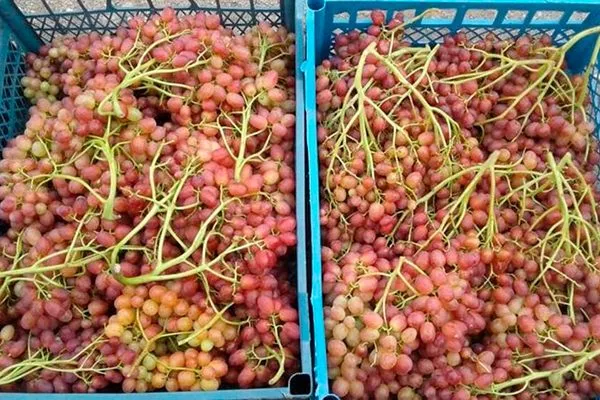
The grape harvest takes place in late July and early August. The second harvest ripens in October. The bunches can be stored in the cellar for up to three months. To ensure optimal preservation, arrange the bunches on taut twine, which ensures even distribution of the fruit and prevents damage.
Gardeners' reviews
This variety is a true treasure for any gardener. Its early maturity, high yield, and excellent berry flavor make Veles an ideal choice for those seeking to create a well-tended vineyard and harvest exquisite fruit. Successful cultivation requires careful maintenance.