
Spots on leaves and stems are one of the most common signs of grape diseases. The color of the spots can help determine the specific disease affecting the vines. An accurate diagnosis allows for effective control methods that not only cure the plants but also save the harvest.
Reasons for vine leaf color change
If the leaves and/or vines have changed color, it means the grapevine is under serious attack from bacteria, fungi, viruses, or chemicals. The appearance of spots is a serious sign that requires immediate intervention from the gardener.
Yellow spots on grape leaves
Yellow, oily spots are a characteristic symptom of downy mildew. This disease is widespread in our gardens and quickly affects grapes and other crops. If left untreated, grapes infected with downy mildew will spread to berry bushes and other plantings.
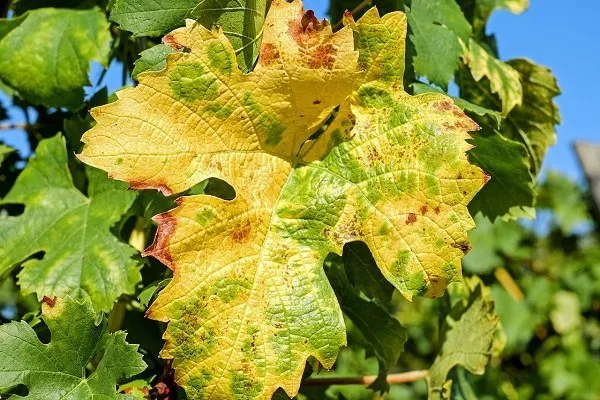
Mildew spores are spread by the wind, which is why the disease spreads so quickly through orchards and vineyards.
Symptoms of downy mildew:
- Along with the spots, a whitish coating appears on the leaves - it is concentrated on their reverse side;
- the leaves gradually dry out, die and fall off;
- The upper leaves of the vines are affected first, then the shoots, flowers, ovaries, and berries are affected;
- grapes - if they have already appeared, they darken and wrinkle.
Diseased bushes quickly weaken, lose leaves, and risk not surviving the winter—they may die.
How to fight mildew:
- Grape bushes are sprayed on top with fungicides. For example, Hom, Oxyhom, or their analogs. They effectively combat fungal infections.
- Spray with a 1% solution of Bordeaux mixture. This is done to prevent grapes from being affected by mildew and other fungal diseases. The procedure is carried out early in the spring, before bud break, and then repeated before flowering. If necessary, two more treatments are carried out: during the growing season and after.
As soon as signs of mildew are noticed, antifungal treatments are immediately applied to prevent the fungal spores from spreading deeper into the leaves. If the weather is favorable for the spread of fungal diseases, spraying should be done every two weeks.
Brown and tan spots
Most often, brown or russet spots are the result of anthracnose, a fungal disease that attacks grapes. High humidity facilitates the spread of anthracnose. The disease affects all above-ground parts of the plant.
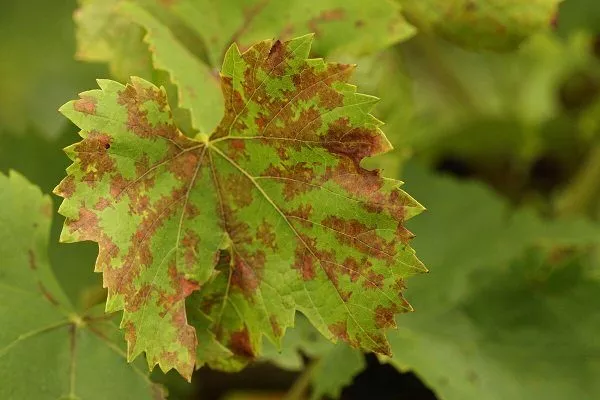
Signs of anthracnose:
- the leaves become covered with brown spots, the edges of which are darker than the core;
- spotted leaves gradually darken completely and then fall off;
- Brown spots also appear on the stem - in their place, putrefactive processes gradually develop;
- When the disease moves to the stalks, the berries fall from the bunches.
- ✓ The spots have a characteristic border that is darker than the core.
- ✓ Spots on the stems lead to the development of putrefactive processes.
How to combat anthracnose:
- Spray the grape bushes with 3% Bordeaux mixture, as well as fungicides - Skor, Medea, Abiga-Peak or their analogues, repeat the treatment after two weeks;
- bushes that are heavily affected by anthracnose should be uprooted and burned;
- For preventative purposes, spray the vineyards with a 1% Bordeaux mixture in the spring, and then repeat the treatment once every 2-3 weeks.
What other causes of brown spots are there?
- Bad weather. Grapes don't like cold, dampness, prolonged rain, or temperature fluctuations—under these conditions, the vines begin to become diseased and develop spots. To prevent this, plant varieties that are suitable for your region and resistant to fungal infections.
- The landing site was chosen incorrectly. Dark spots on leaves may be due to lack of sun. Grapes need full sun for normal development. Walls and barriers are only allowed on the north side.
- Nutritional deficiency. The appearance of brown and tan spots may be a sign of nutrient deficiency. If holes appear where the spots were, the plant needs potassium fertilizer. If the leaves first lighten in color and then develop dark spots, the grapes are likely deficient in calcium.
If large brown spots appear on yellowed leaves, the bushes probably need iron.
If you apply fertilizer promptly, the dark spots will stop spreading. It's recommended to trim off affected leaves to prevent the plant from wasting energy feeding them.
White spots
If light spots appear on grape leaves - white, grey or ash-coloured, this indicates a symptom of powdery mildew (oidium).
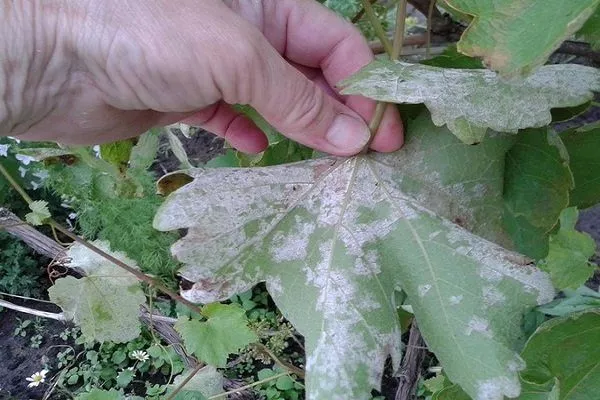
Signs of powdery mildew:
- leaves on which whitish spots appear dry out and fall off over time;
- the fungus feeds on the juices of the leaves, the spots on them become convex and curly;
- There is a powdery coating on the outer and inner sides of the leaves - the powder is similar to flour;
- the disease affects all parts of the plant - branches, leaves, inflorescences, berries - they crack and rot;
- The fruits that appear on bushes affected by powdery mildew become covered with a light coating - the crop is completely destroyed.
The disease usually affects densely populated vineyards that are not pruned frequently or properly enough.
How to fight:
- Spray affected bushes with colloidal sulfur. To prepare the solution, dissolve 90 g of sulfur in 10 liters of water. Apply early in the morning or in the evening. Apply several times throughout the season.
The first treatment with sulfur should be carried out before flowering, the second - after. - Pollinate grape bushes with sulfur three times per season. The norm is 2 g per 1 sq. m. For preventive purposes, prune the vine in a timely manner.
- Treat affected plants with fungicides. Topaz, HOM, Medea, or similar products. The frequency of spraying depends on the severity of the infestation, but on average, it's once every two weeks. The last spraying should be carried out no later than 3-4 days before harvest.
White spots may indicate a nutrient deficiency:
- The presence of mosaic-lightened spots on grape leaves. This indicates a boron deficiency. To correct this micronutrient deficiency, spray the bushes with a 2% boric acid solution. It is also recommended to add borax to the soil at a rate of 1.5 g per square meter.
- If the edges of the leaf blade are discolored. This means the bushes are lacking magnesium. Fertilizing with potassium magnesium sulfate can help replenish the deficiency. Apply 6-8 grams per square meter.
Black spots
The appearance of black necrotic spots on grape leaves indicates Alternaria wilt. The disease typically appears in hot and humid weather.
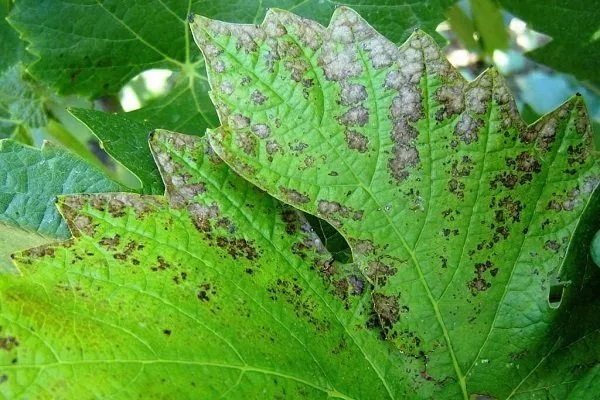
Signs of Alternaria:
- the leaves first darken and then become covered with a thick layer of fungal plaque;
- the disease affects not only the leaves, but also the vine;
- the berries are covered with a metallic sheen.
How to combat Alternaria:
- spray the affected bushes with Trichoplant or 3% Bordeaux mixture;
- For preventative purposes, remove all plant debris in the fall.
Black spots on grapes can also appear as a result of black spot (escoriosis). This fungal disease typically develops during rainy summers in poorly pruned vineyards.
Signs of escoriosis:
- numerous black spots appear on shoots, leaves, petioles;
- If the damage is widespread, the shoots become brittle and the berry clusters fall off.
How to fight escoriosis:
- remove fallen leaves and weeds from grape beds;
- cut off and burn the affected parts of the bushes;
- For preventative purposes, treat grape bushes with a 1% solution of Bordeaux mixture;
- Inspect your grape vines regularly for black spot, especially in late summer.
Red spots
Red spots on grapes are usually caused by poor agricultural practices. If a gardener doesn't care for their grapes properly, they can contract rubella. This disease can be infectious or non-infectious.
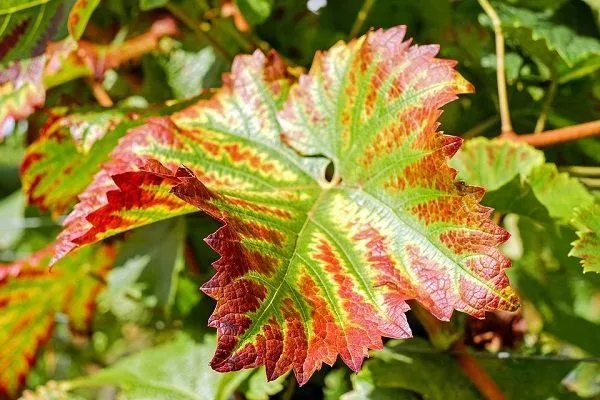
Causes rubella:
- potassium deficiency;
- prolonged drought;
- low air temperatures.
How to cure rubella:
- add potassium to the soil, for example, potassium salt - 15-20 g per 1 sq. m;
- Early in the morning or late in the evening, treat the bushes with a 1% solution of potassium nitrate.
Another cause of red spots is spider mite infestation. In this case, the spots are darker—reddish-brown.
If bumps appear on the outer side of the leaves, and pink or white pubescence appears underneath, this means that the bushes have been attacked by grape itch mites.
How to fight ticks:
- Be sure to clear the beds of plant debris in the fall;
- During the growing season, spray the vines with acaricidal preparations (anti-mite) - Aktara, Fufanon-Nova, Antikleshch, colloidal sulfur and similar products.
Rusty spots
The appearance of rusty or yellow-brown spots on grapes indicates rust. This fungal infection causes rusty-orange pads containing spores.
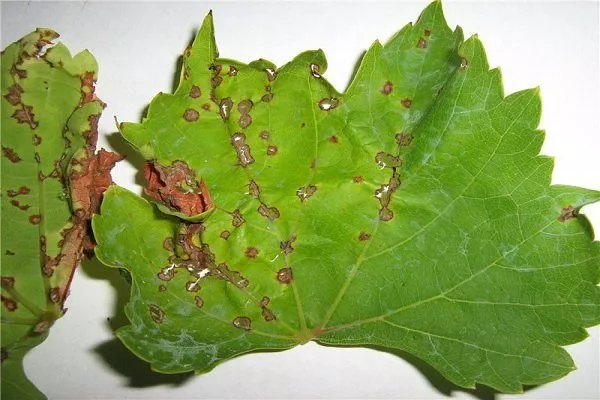
Rusty spots quickly increase in size, and the affected leaves dry up and fall off quickly. The diseased plant loses moisture and its metabolism is disrupted. The disease spreads to other crops and green spaces.
How to combat grape rust:
- Spray the affected bushes with fungicides. Suitable products include Agrolekar, Profi, or similar products.
- Repeat spraying after three weeks.
Reasons for decreased immunity in grapes
The weaker the plant, the more likely it is to become ill. Diseases and pests tend to attack weakened plants. To prevent blemishes from appearing on grape vines, it's important to grow them strong, resilient, and with enhanced immunity.
Why does grape immunity decrease?
- planting weakened seedlings in waterlogged and poorly lit areas;
- violation of agricultural technology - incorrect application of fertilizers, ineffective spraying against diseases and pests;
- violation of pruning technology, errors in trunk formation, allowing dense plantings;
- winter shelters for grape bushes are not properly arranged;
- a difficult winter, as a result of which the plant is weakened and frostbitten.
Grapes are most often affected by diseases in the spring, when the plants are weakened after winter. If fungal pathogens are not treated immediately, the spores will actively grow and multiply, infecting other grape vines.
Preventive measures
Often, the appearance of spots is the first sign of a major problem. If left untreated, you could lose 100% of your harvest. To avoid having to treat your grapes, preventative treatments are recommended—experienced gardeners never neglect them.
Preventive measures:
- Plant only completely healthy seedlings. No signs of disease or damage. Use only high-quality cuttings for grafting.
- Trim bushes on time, follow pruning technology. Don't neglect sanitation procedures—remove diseased, damaged, and frozen shoots. Also, remove any vines that are crowding the bush—it's essential to ensure adequate ventilation.
- Perform tying up of shoots in a timely manner. They shouldn't touch the ground. Also, avoid planting grapes in areas where water stagnates after rain or snowmelt.
- Follow the regime and schedule top dressing, observe the dosage. The stronger the vine, the less likely it is to become diseased. Regularly loosen the soil between the rows in the vineyards.
- Cut off all foliage affected by disease. And destroy them along with the pruned shoots. It's best to burn the infected parts of the bushes to kill pathogens and pest larvae. In the fall Dig around the tree trunks near the grapevines.
- If you notice signs of disease, spray the bushes promptly. This should be done with a 1% solution of colloidal sulfur or any antifungal agent - Topaz, Carbis, etc.
- Spray the vineyards with 1% Bordeaux mixture from time to time. 2 to 4 times per season. Spray bushes only in dry weather.
What folk remedies are there?
Most spots—yellow, brown, tan, and red—are caused by fungal diseases. It wouldn't hurt to spray your grape vines with folk remedies—they're effective, affordable, and, most importantly, safe for humans and the environment.
Popular folk recipes for spraying grape bushes:
- Potassium permanganate. Dissolve 4 g of powder in 10 liters of water. You should get a pink solution.
- Milk. Dilute 1 liter of milk in 10 liters of water.
- Infusion of mullein herb. Pour 150 g of the herb into 10 liters of water. Let it steep for 3 days.
- Laundry soap and soda. Mix 25 g of grated soap and 30 g of soda ash, and dilute the mixture in 10 liters of water.
- Wood ash. Pour 1 kg of raw material into 10 liters of water and let it steep for 5 days. Before use, add 20 g of coarsely grated soap to the solution.
It's also recommended to prepare a decoction from tansy (a medicinal plant). Take 300 g of crushed or dried tansy and steep it in 10 liters of water for 24 hours. Then, simmer for 2 hours. Cool and use the undiluted decoction to water the soil.
Proper care and proper agricultural practices are the key to preventing leaf spot. By promptly responding to signs of disease and regularly implementing preventative measures, you will protect your plants from disease and avoid crop losses.